The Lillieskold Family

– 3 min read


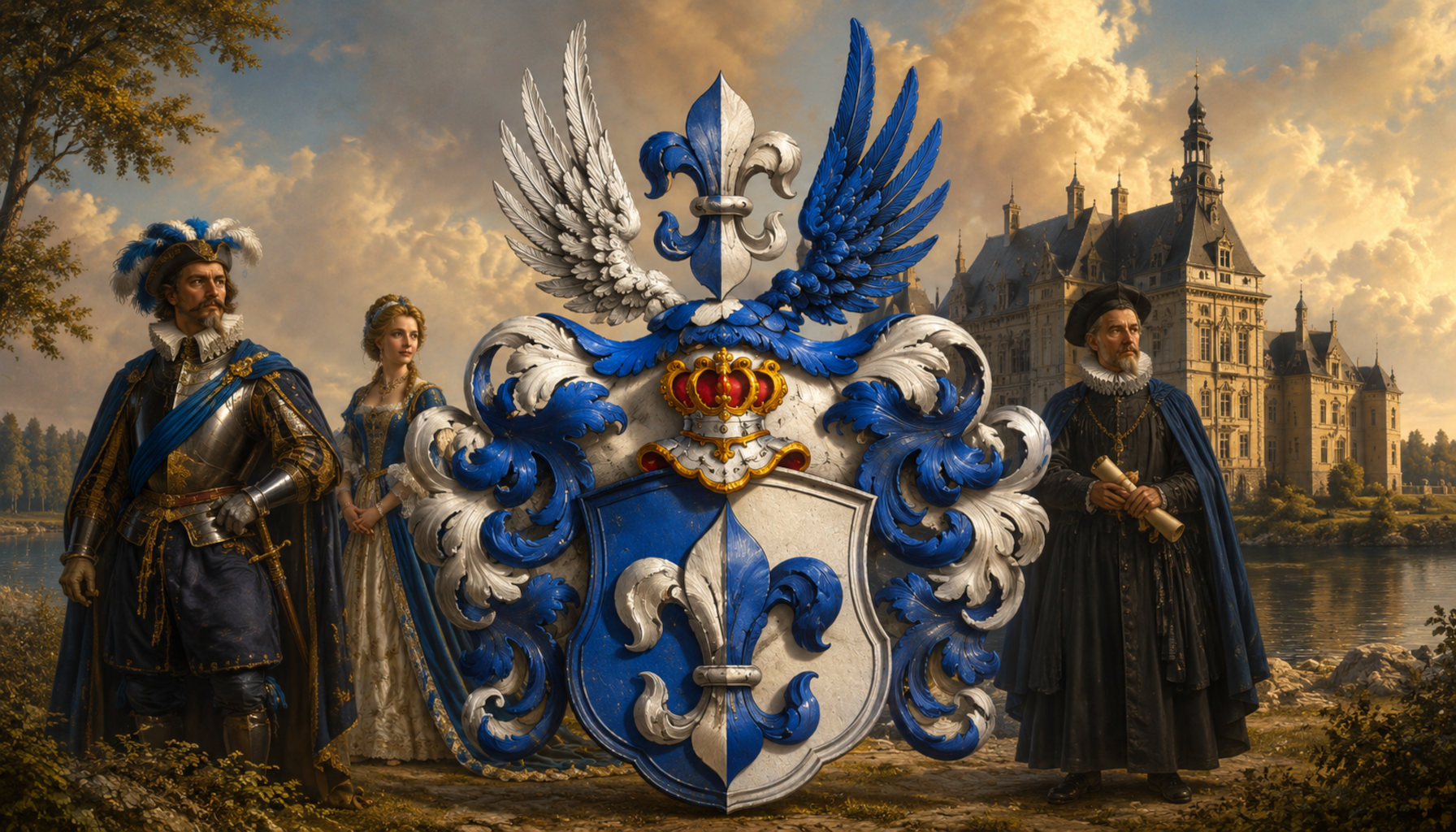
The Lillieskold family was a Swedish noble house of the great seventeenth-century empire, registered at Riddarhuset as noble family no. 566, ennobled on 20 September 1651 and introduced in 1654. In family DNA terms, the primary haplogroup linked here is R1b1a1b1a1a1c2b2a1b2. But the real interest of the family lies in where it came from: not from some misty ancient castle legend, but from the learned Protestant world of late sixteenth-century Sweden, especially Vastergotland and the clerical networks tied to Vadstena, Ullervad, Mariestad, Varmland, Vadsbo, and Valle.
That earlier world matters. The family's oldest known background is connected with Jesperus Marci (?-1591), a superintendent and church leader in the age when Sweden was still consolidating its Lutheran order after the Reformation. From those church roots came Erik Jespersson Lillieskold, born in 1584 in Vastergotland, who turned learning and literacy into state service. He entered royal service with the Swedish fleet in 1611, then moved through the machinery of empire as chamber clerk in Finland, revenue and provision master in Nyland and Tavastehus, and later in Viborg. He served as commissioner during the campaign associated with the siege of Riga, became governor of Nyslott in 1626, and later handled the deeply unglamorous but absolutely vital business of food transport from Ingria to Germany during Sweden's continental wars. This is how many noble families really rose: not merely by charging on horseback, but by writing, counting, provisioning, governing, and surviving on the empire's eastern edge.
The best location anchor for the Lillieskold story is the eastern frontier zone of the old Swedish realm: Viborg, Nyslott, Savolax, Karelia, and the Finnish provinces facing Russia and the Baltic war zone. Erik Lillieskold was tied to estates such as Haneberg in Jokkas parish and Merijoki in Viborg parish, and he received Rasalaks village in Viborg parish as a life fief. He also built Merijoki manor and later obtained manor privileges, which firmly planted the family inside the noble landscape of Swedish Finland. These were not quiet inland estates at the soft centre of the kingdom. They belonged to a tense border world of fortresses, supply routes, crown administration, military campaigning, and shifting sovereignty. Much of that historic landscape can still be visited today in one form or another, especially around Savonlinna, the historic Nyslott area, and the wider Karelia-Viipuri border region, though of course the political map has changed dramatically since the Lillieskolds' day.
Read Medieval Finland: Insights from Archaeogenetics
From a DNA perspective, the Lillieskold haplogroup is tagged here as R1b1a1b1a1a1c2b2a1b2. That does not allow us to claim direct descent from excavated ancient individuals, and we should not do that. What it does allow is a look at related or linked ancient men carrying comparable paternal signatures across early medieval and migration-era Europe. Among these are samples from Longobard Period Pannonia at Arrabona-Menfocsanak in Hungary (MFC016), Merovingian Bavaria at Altheim in Germany (Alh_268), Merovingian Frankish Moemlingen in Germany (Mln14), Norman Dynasty England at Lincoln Castle in Lincolnshire (I3044), Thuringii-associated Obermoellern in Germany (OBM054), Jutland's Alken Enge in Denmark (CGG019215), Viking Age Bogovej in Denmark (CGG106775), Frankish Hannover-Anderten in Lower Saxony (ADN014), and several Jutish and early Anglo-Saxon linked burials from Buckland Dover in England, including BUK040, BUK011, BUK001, and BUK006. The point is not that these men were Lillieskolds, plainly they were not, but that the family's paternal line sits within a wider northwest and central European story visible in ancient DNA, one stretching from Jutland and early Anglo-Saxon England to Frankish, Bavarian, and Norman contexts.
Explore the Silfverskiold Family
The later Lillieskolds carried this frontier tradition onward through service as cavalry officers, captains, lieutenants, life dragoons, forest officials, and provincial officers, while women of the family connected them to other clerical, military, and noble houses across Sweden and Finland. It is a family story about social ascent, yes, but more than that it is a story about the Swedish empire's working parts: fortresses, regiments, manors, parishes, marriage alliances, and the unstable eastern borderlands. If you have DNA results, you can upload them to MyTrueAncestry and see whether you match the Lillieskold family profile or related ancient DNA samples from the wider R1b1a1b1a1a1c2b2a1b2 world.
Comments