The House of Fane

– 2 min read


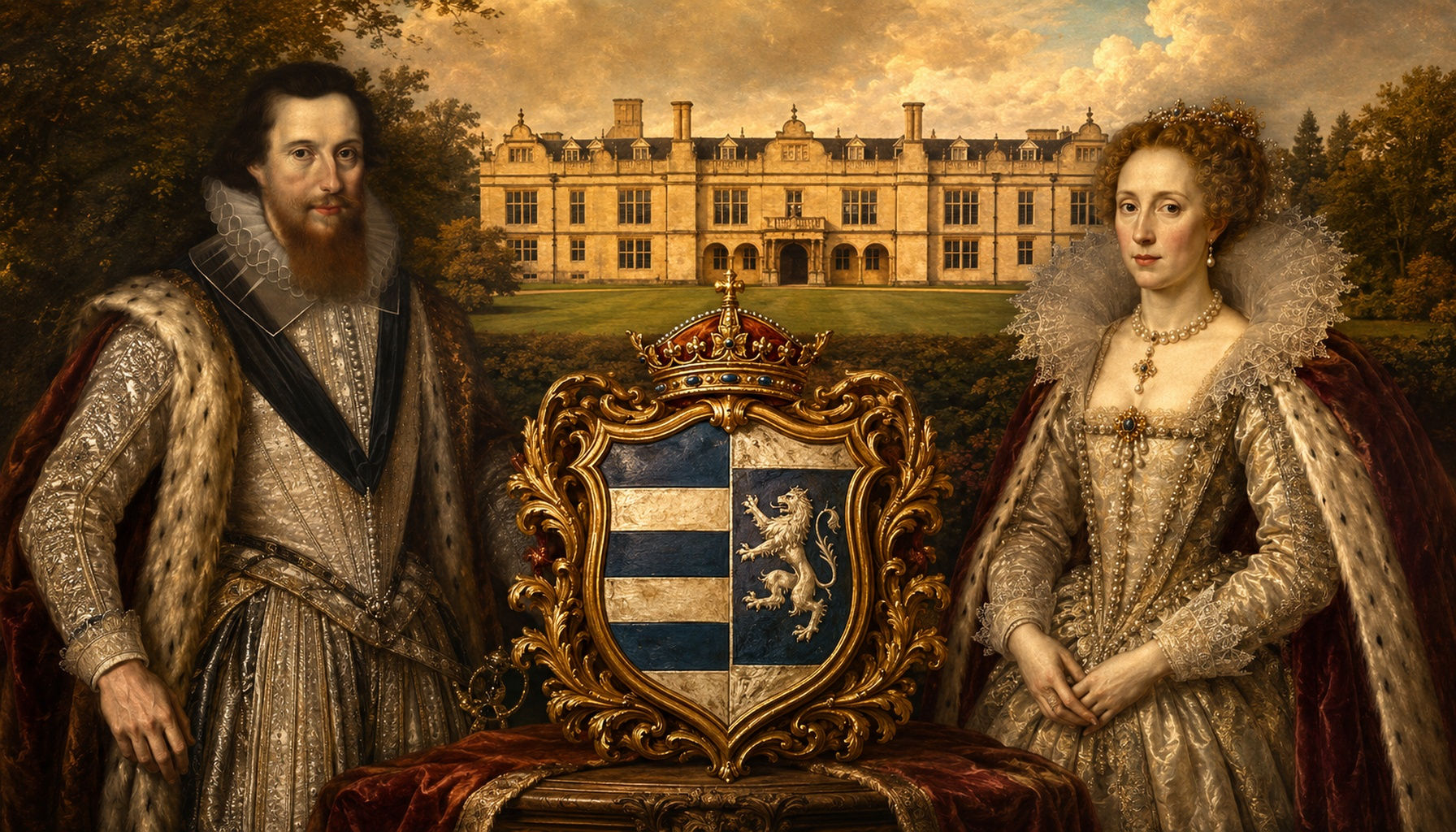
The House of Fane was an English noble and landed family whose identity was built in the classic manner of the English aristocracy: land, marriage, office, heraldry, and the steady performance of public duty. Associated above all with estate culture and county influence, the Fanes rose through the world of gentry service into the peerage, preserving their name across generations by tying family prestige to property and political usefulness. In haplogroup terms, the primary family line is linked here with I2a1a1a1a1a1a1f, a paternal marker that places the family within a much older European genetic story.
The family emerged within the historical landscape of southern England, with early roots commonly associated with Kent and with the wider post-medieval expansion of landed houses into national prominence. This was the age when ambitious families did not simply own land; they turned it into authority. Through marriages, parliamentary careers, court connections, and careful management of estates, the Fanes became part of that recognisable English ruling pattern in which the local gentleman could also be a national figure. Francis Fane, 1st Earl of Westmorland (1580-1629), and Sir Francis Fane (1612-1681) stand out as named examples of the family in public life, illustrating how the house moved comfortably between county society and the political world of the kingdom.
Read more about the House of Wentworth
A key location anchor for the Fane story is Apethorpe, sometimes loosely remembered in family-memory style as Agethorpe Hall, but historically known as Apethorpe Palace in Northamptonshire. This is not just a grand house in the abstract sense; it is one of those places where English political and domestic history seem to settle into the stonework. Originally a medieval manor house and later developed into an important Jacobean palace, Apethorpe became associated with the Fane family and with the social language of aristocratic life: reception rooms, formal display, royal visits, managed parkland, and the sense that a family seat was both home and statement. James I visited repeatedly, which tells you at once that this was not some obscure country retreat but a house plugged into the highest circuits of power and hospitality. The building survives, and while access has varied over time, it has been open to visitors through organised tours and heritage arrangements, so it is reasonable to say that it can still be visited in some form.
From an ancient-DNA perspective, the Fane haplogroup tag I2a1a1a1a1a1a1f can be placed beside a set of related or linked ancient samples rather than treated as proof of direct descent. Among those relevant comparisons are Gallic France Sequani Tribe Parancot samples CGG023678, CGG023698, and CGG023723, Sequani Tribe Les Moidons samples CGG023687, CGG023691, CGG023709, and CGG023692, as well as the Late Iron Age Gloucestershire Britain sample I12931. These individuals belong to the wider deep backdrop of Iron Age western Europe, spanning Celtic Gaul and Britain. In other words, the haplogroup connection hints at an older continental and British pattern that long predates the rise of the English nobility. It does not make the Fanes descendants of any one excavated man, but it does place their paternal line within a very old historical landscape of movement, settlement, and continuity across the Channel world.
Read more about the Noble House of Percy
If the House of Fane catches your imagination, the next step is to test the story against your own DNA. Upload your results to MyTrueAncestry and see whether you match the House of Fane, haplogroup I2a1a1a1a1a1a1f, or related ancient samples from Iron Age Gaul and Britain. It is a wonderfully direct way of asking whether your own family history belongs somewhere in this larger tapestry of estates, lineages, and deep ancestry.





Comments