The De la Gardie Family
– 3 min read


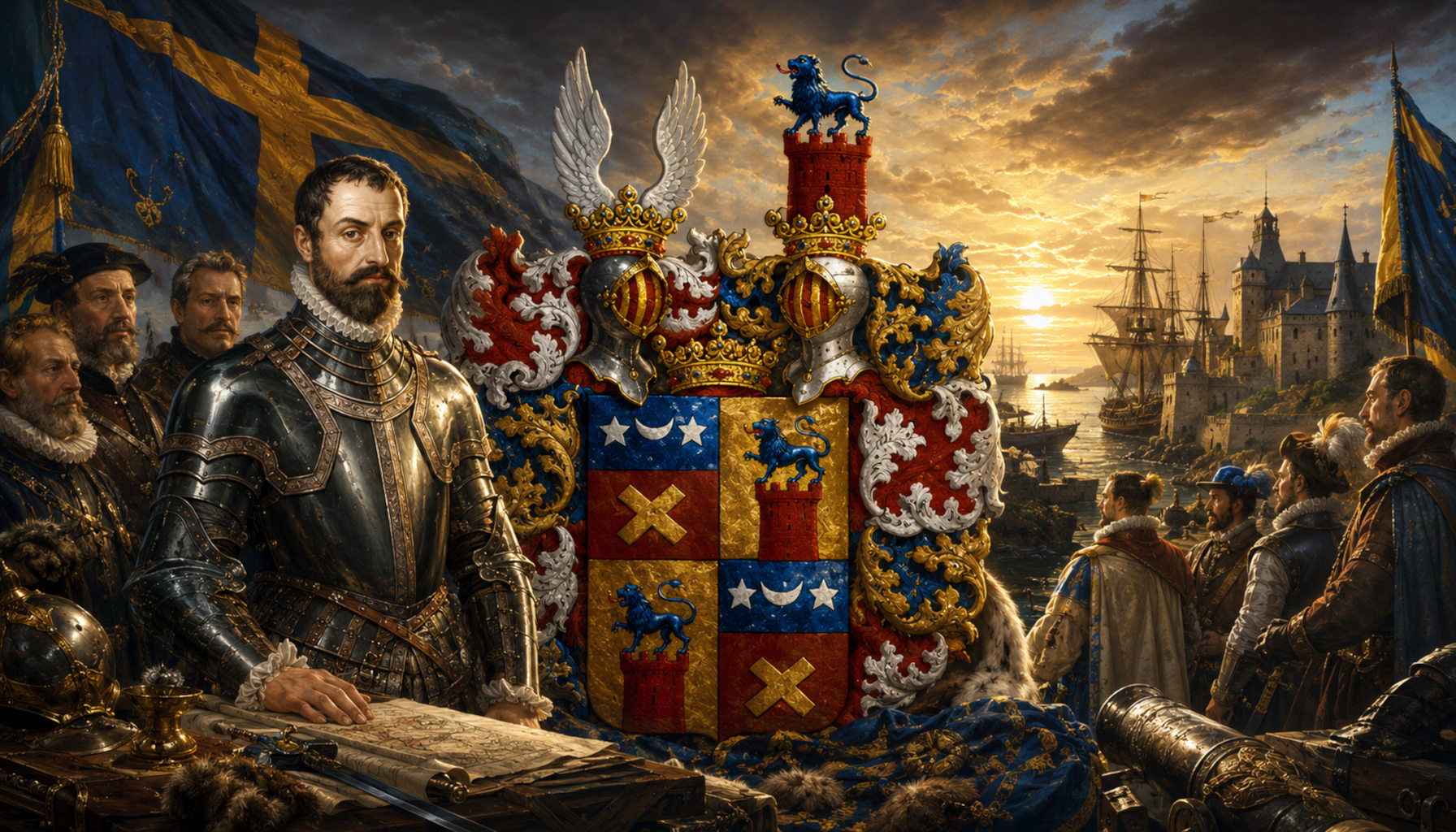
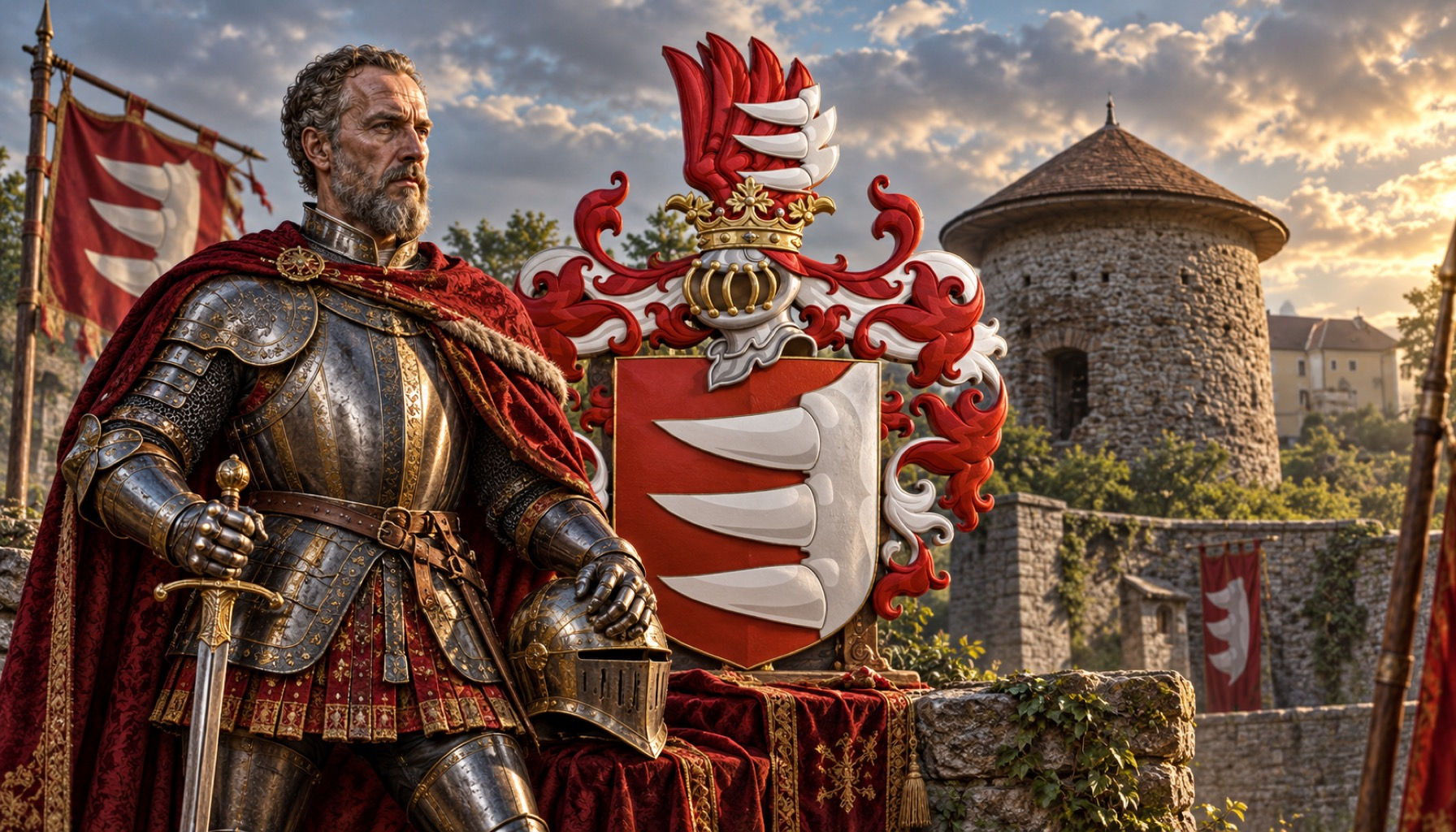
The De la Gardie family was one of the great noble houses of early modern Sweden: a baronial family entered at Riddarhuset as no. 4, with a story that began not in Scandinavia but in southern France. Their Swedish line formed out of an older noble lineage from Languedoc known as dEscouperie, with the first securely known ancestor, Robert dEscouperie, living around 1387. The primary family haplogroup associated here is R1b1a1b1a1a2a, a lineage with deep roots across western and central Europe. In other words, before the family became thoroughly Swedish in service, marriage, and power, it had already lived a long earlier life in the landscapes of medieval Occitania.
That Languedoc background matters. This was a region of walled towns, monastery lands, merchants, local seigneurs, and long memories of crusade and crown-building. Out of that world came Jacques Scoperier, a merchant in Caunes, and then his son Pontus De la Gardie (1520-1585), born at La Gardie in Languedoc, who made the astonishing leap from French provincial origins to the summit of Swedish aristocratic life. Intended for the church, he chose war instead, served in several European conflicts, entered Danish service, was captured by the Swedes at Varberg during the Northern Seven Years War, and then - in one of those splendidly improbable sixteenth-century career turns - transferred his talents to Sweden. Under Erik XIV and Johan III he rose quickly, was created a baron in 1571, and became one of Sweden's key commanders in the Baltic struggle against Russia, taking strongholds such as Narva, Ivangorod, Jama, Koporje, Keksholm, Wesenberg, and Tolsburg. Through his marriage in 1580 to Sofia Gyllenhielm, the natural daughter of King Johan III, the family was drawn right into the orbit of the Swedish royal house. Their descendants included Johan De la Gardie (1582-1640), a councillor and governor of major importance, and later Magnus Gabriel De la Gardie (1622-1686), perhaps the most glittering and controversial De la Gardie of them all, a statesman whose name became almost synonymous with wealth, magnificence, and the high politics of Sweden's Age of Greatness.
Read more about the Gyllenstierna Family
The family's great Swedish location anchor is Lacko Castle, or Lacko Slott, on the southern shore of Lake Vanern in Vastergotland. It began in the late thirteenth century as a bishop's fortified residence and, like so many castles, changed character as power changed hands: from medieval stronghold to aristocratic showpiece. Under the De la Gardie family, especially in the seventeenth century, it was transformed into one of Sweden's most striking baroque residences. Count Magnus Gabriel De la Gardie invested heavily in reshaping the castle, giving it the theatrical halls, decorative interiors, and courtly air that still make it so memorable. It is not simply a military shell but a place where one can see the culture of power on display: noble ambition, royal favour, artistic patronage, and the desire to turn stone into status. Better still, Lacko Castle can still be visited today, which means the De la Gardie story is not trapped in archives. You can quite literally walk into it.
Explore the Royal House of Bernadotte
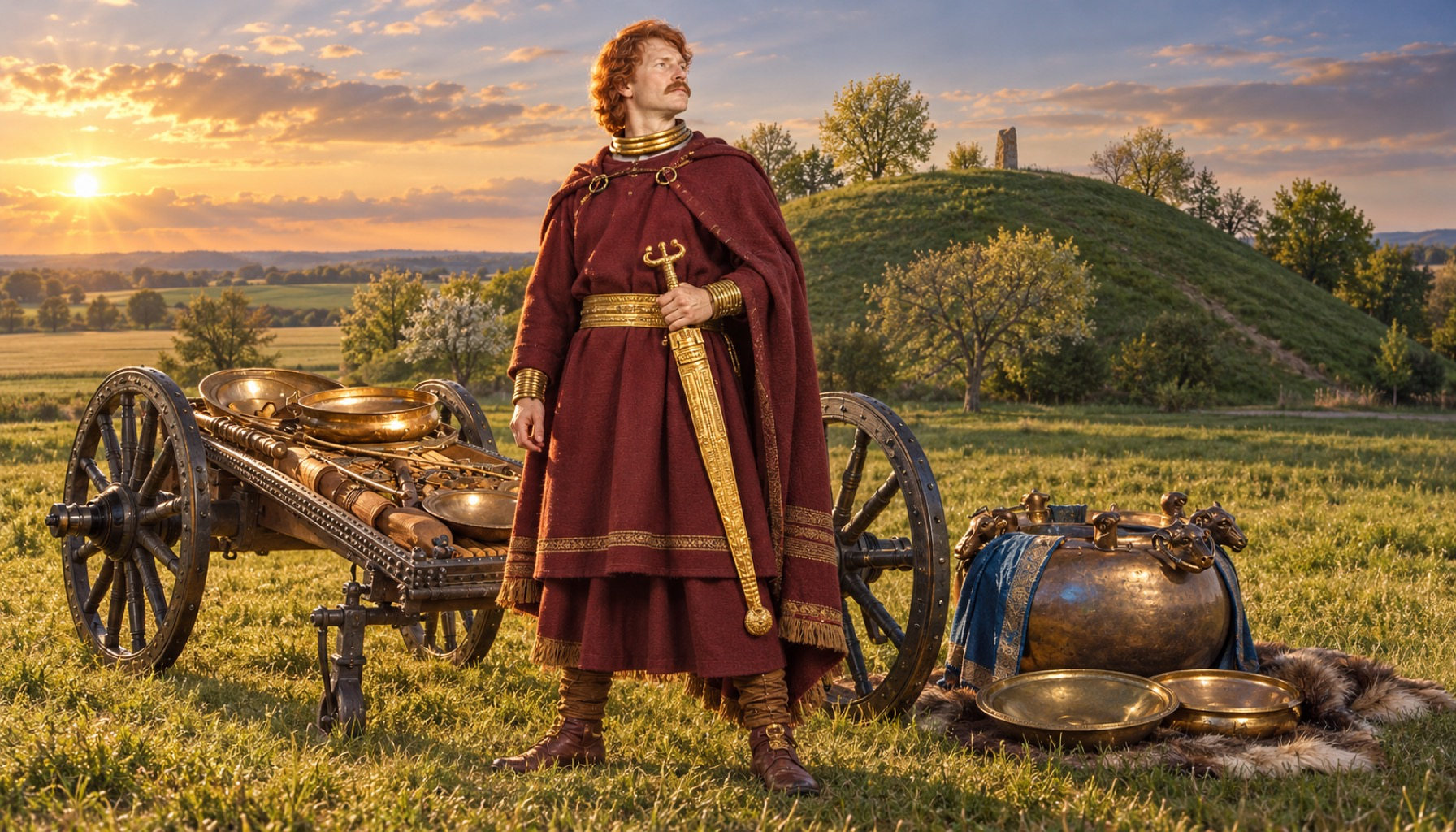
From a DNA perspective, the De la Gardie family's tagged paternal lineage, R1b1a1b1a1a2a, sits within a broad and very well-attested western European pattern. Related or linked ancient samples under this branch appear across a wide historical spread: for example Medieval Northern Spain Las Gobas individuals such as ldo066, ldo037, ldo046, ldo048, ldo040, and ldo062; elite Celtic burials from Germany including Magdalenenberg MBG013, Asperg-Grafenbuehl APG001 and APG003, and Hochdorf HOC001; Roman and post-Roman Britain samples such as NWC009, FEN008, ARB003, and DUX003; Gallo-Roman France at Metz Lunette Sablon including R2055 and related entries; Lombard-associated Collegno warrior burials such as COL_150; medieval Scandinavian examples including Sigtuna mbs092 and Vendel Age Uppsala ven001; and even deeper Bronze Age and Bell Beaker linked individuals from France, the Netherlands, Bohemia, and Iberia. That does not prove direct descent from any one of these people, of course. What it does show is that the De la Gardie paternal line belongs to a long and mobile European genetic landscape stretching from Bronze Age western Europe through Celtic, Roman, medieval Iberian, Frankish, Germanic, and Scandinavian worlds - a rather fitting background for a family that itself crossed from Languedoc into the heart of the Swedish state.
Explore ancient DNA and Celtic origins
If you are curious whether your own DNA shows links to the De la Gardie family or to related ancient R1b1a1b1a1a2a samples from Iberia, Gaul, Britain, or Scandinavia, upload your results to MyTrueAncestry and compare your matches. Family history becomes much more exciting when the paper trail meets the archaeological one.


Comments