House of le Strange
– 3 min read


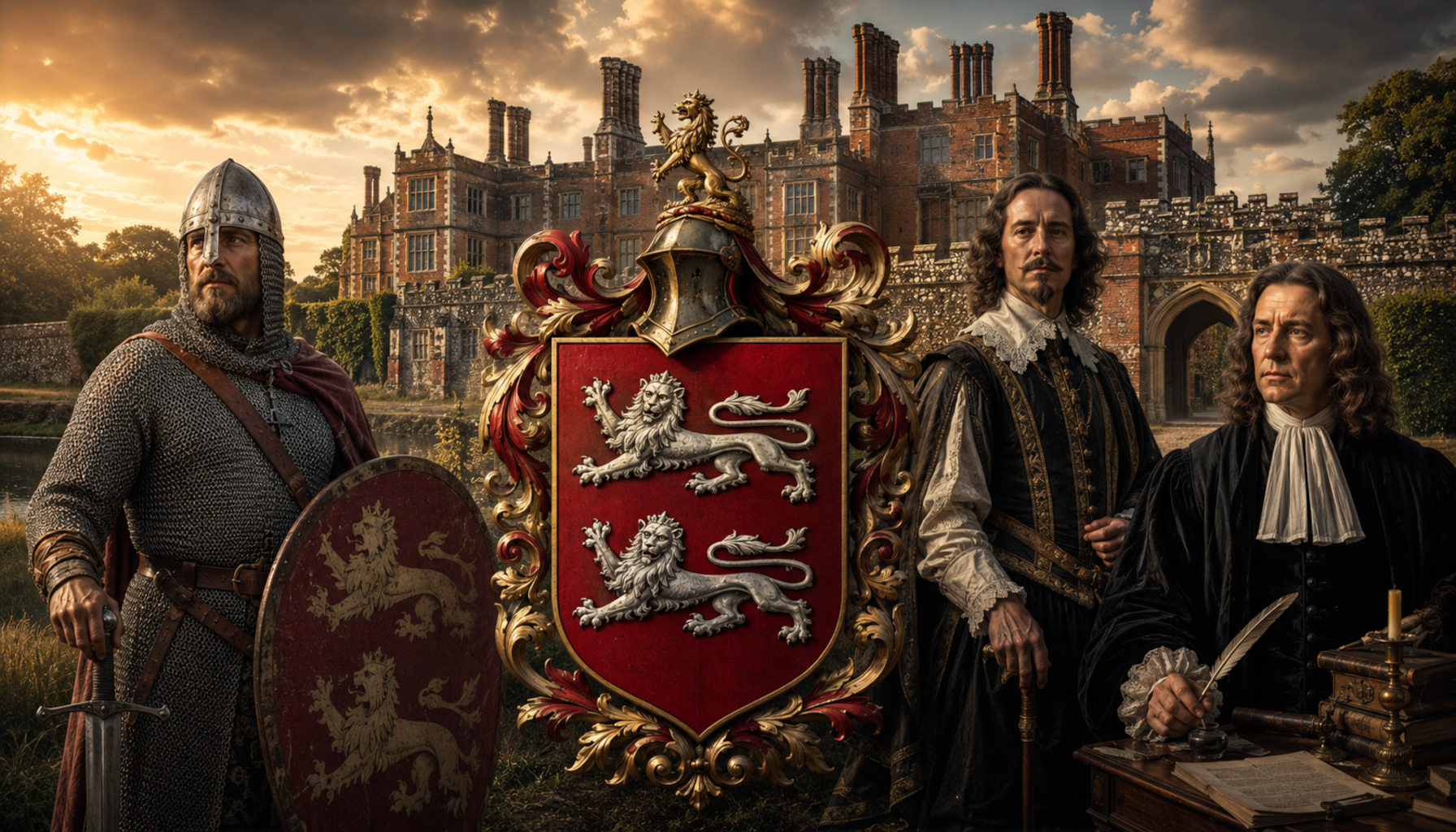
The House of le Strange was an Anglo-Norman noble family whose story runs from the age of conquest into the later world of county gentry, with its best-known English roots in the Welsh borderlands and then in Norfolk. Tradition liked to place a Roland le Strange among the followers of William the Conqueror, though the firmer documentary trail belongs to the medieval centuries that followed. In historical terms, the family emerged from that hard, practical Norman world in which landholding, castle lordship, military obligation, and royal favour all went together. Their primary family haplogroup is tagged here as R1b1a1b1a1a2c1a4b4a1a, a lineage with deep connections across later prehistoric and historic western Europe.
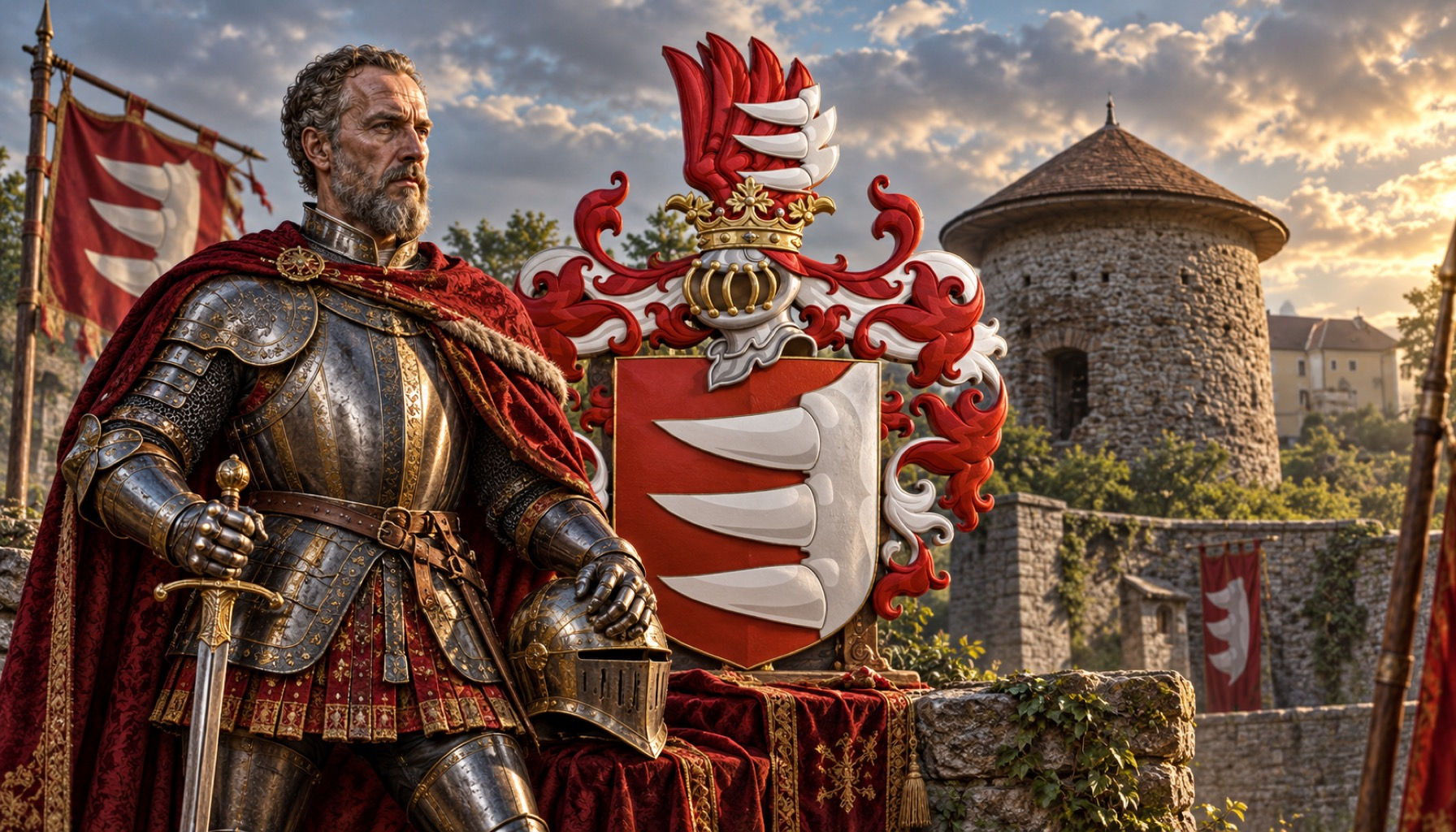
The surname itself, in forms such as le Strange, Lestrange, L'Estrange, and Strang, has the flavour of a nickname, meaning something like "the foreigner" or "the stranger", which is exactly the sort of label that could cling to a newcomer in the generations after 1066. The documented family became especially associated with Knockin in Shropshire, where the le Strange lords occupied a marcher position close to Wales: not a quiet corner, but a frontier of raids, fortifications, shifting loyalties, and royal business. That is the world in which names such as Home le Estraunge in 1255 and Thomas de Strang in 1340 belong. Across time the family branched, adapted, and survived, carrying with them their striking heraldry, a red shield with two silver lions passant, and later producing figures such as Sir Nicholas L'Estrange and Sir Roger L'Estrange, the formidable royalist pamphleteer, translator, and press censor of the Restoration.
If Knockin speaks for the family's medieval border past, Hunstanton Hall in Norfolk anchors their later identity in a very different landscape: seigneurial, settled, and deeply tied to the rhythms of estate life. Hunstanton Hall is a notable moated house near Old Hunstanton, long associated with the L'Estrange family and one of the most evocative survivals of their history. The present hall is famous for its great brick gatehouse, a handsome and early Tudor piece usually dated to the late 15th century, while parts of the house incorporate work from different periods, reflecting centuries of rebuilding rather than a single frozen moment. It is the sort of place where architecture quietly records social change: from medieval lordship to early modern household display, from fortified identity to landed gentility. The hall remains a private house, but it is well known as a historic site and has been open to visitors on selected occasions, so it can still be visited in a limited and reasonably supported sense.
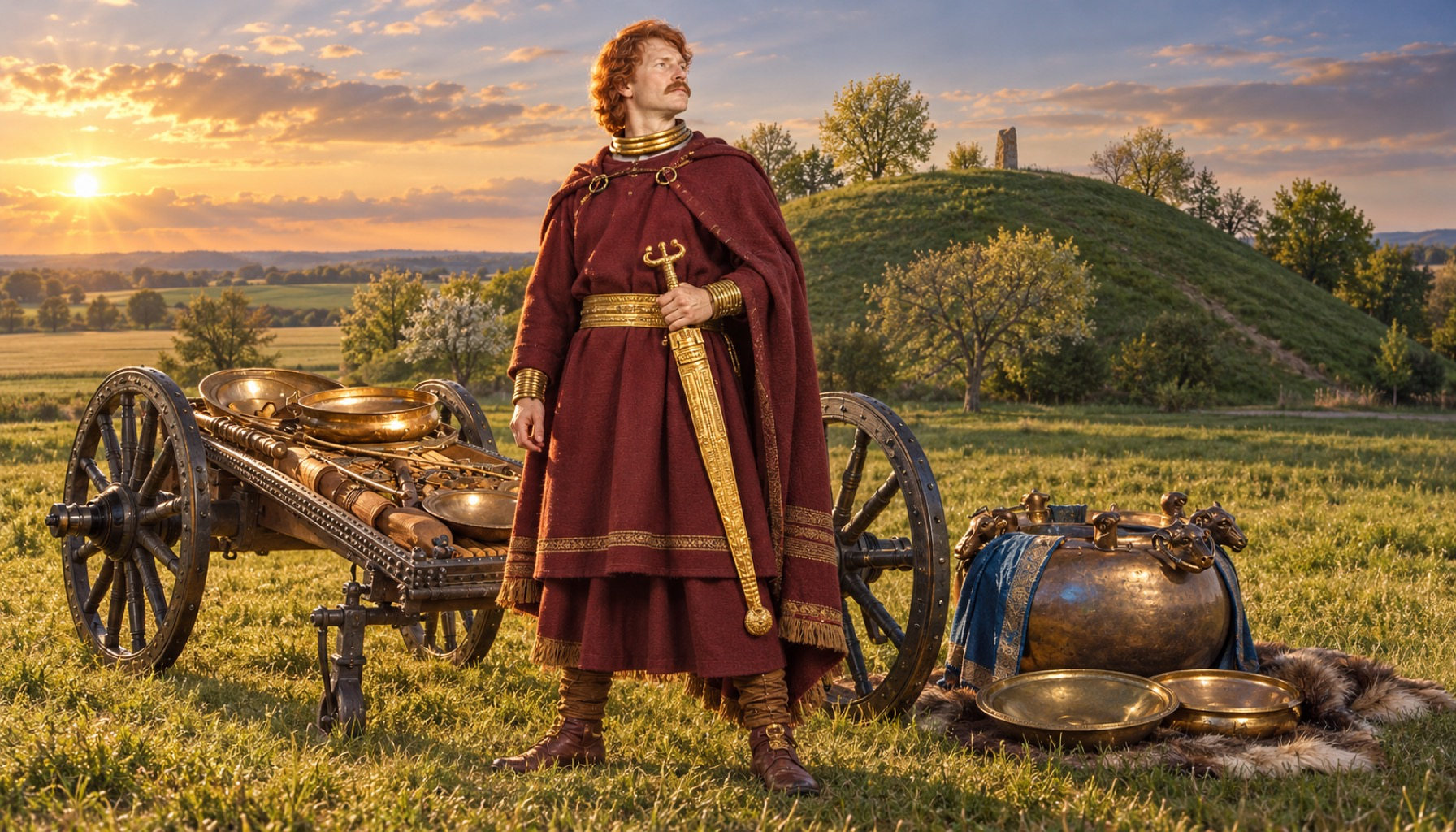
The le Strange family's tagged paternal line, R1b1a1b1a1a2c1a4b4a1a, sits within a wider western European genetic story rather than offering any simple claim of direct descent from named ancient individuals. Related or linked ancient DNA samples connected to this branch include a remarkable spread of finds: Celtic Durotriges from Duropolis at Winterborne Kingston in England such as WBK12, WBK20, WBK29, WBK41, WBK05, WBK30, WBK43, WBK06, WBK08, WBK18, and WBK191; Iron Age and post-Roman British samples like I11991 from Worlebury, I21309 from Battlesbury Bowl, and I11580 from Worth Matravers; medieval and early medieval individuals such as ATP_PSN_192 from Cambridge St Johns Hospital, ST2025 and ST1308 from Sint-Truiden in Belgium, and IND013 from Alt-Inden in Germany; and even deeper prehistoric links including KD061 from Bronze Age Orkney, GMO015 from Bronze Age Calabria, I3256 from Trumpington Meadows, I2417 from Amesbury Down, I4950 from Bell Beaker Upavon, I7576 and I7577 from Bedfordshire, I5473 from South Lanarkshire, HI2 from Iron Age Hinxton, I5377 from the Early Bronze Age Thames, and Rathlin2B from Copper Age Ireland. There are also later continental and Roman-era linked samples such as I26776 from Zadar in Croatia, R10656 from Klosterneuburg in Austria, R10488 from Conimbriga in Portugal, and CGG023699 from Gallic France. What this gives us is not a family tree with neat labels, but a properly long view: the same broad paternal line turning up across Iron Age Britain, Roman provinces, medieval towns, and Bronze Age communities, before eventually appearing in historic families like the le Stranges.
Explore the Princely House of Powys
The le Stranges are a fine reminder that family history is rarely just one thing. It can begin in conquest legend, harden into border lordship, settle into Norfolk estate culture, and still leave traces in heraldry, archives, architecture, and DNA. If your own results point toward this family or toward related R1b1a1b1a1a2c1a4b4a1a-linked ancient samples, you may be looking at echoes from the same broad historical world. Upload your DNA to MyTrueAncestry to see whether you match the House of le Strange or any of the related ancient individuals.


Comments