House of Courtenay

– 3 min read


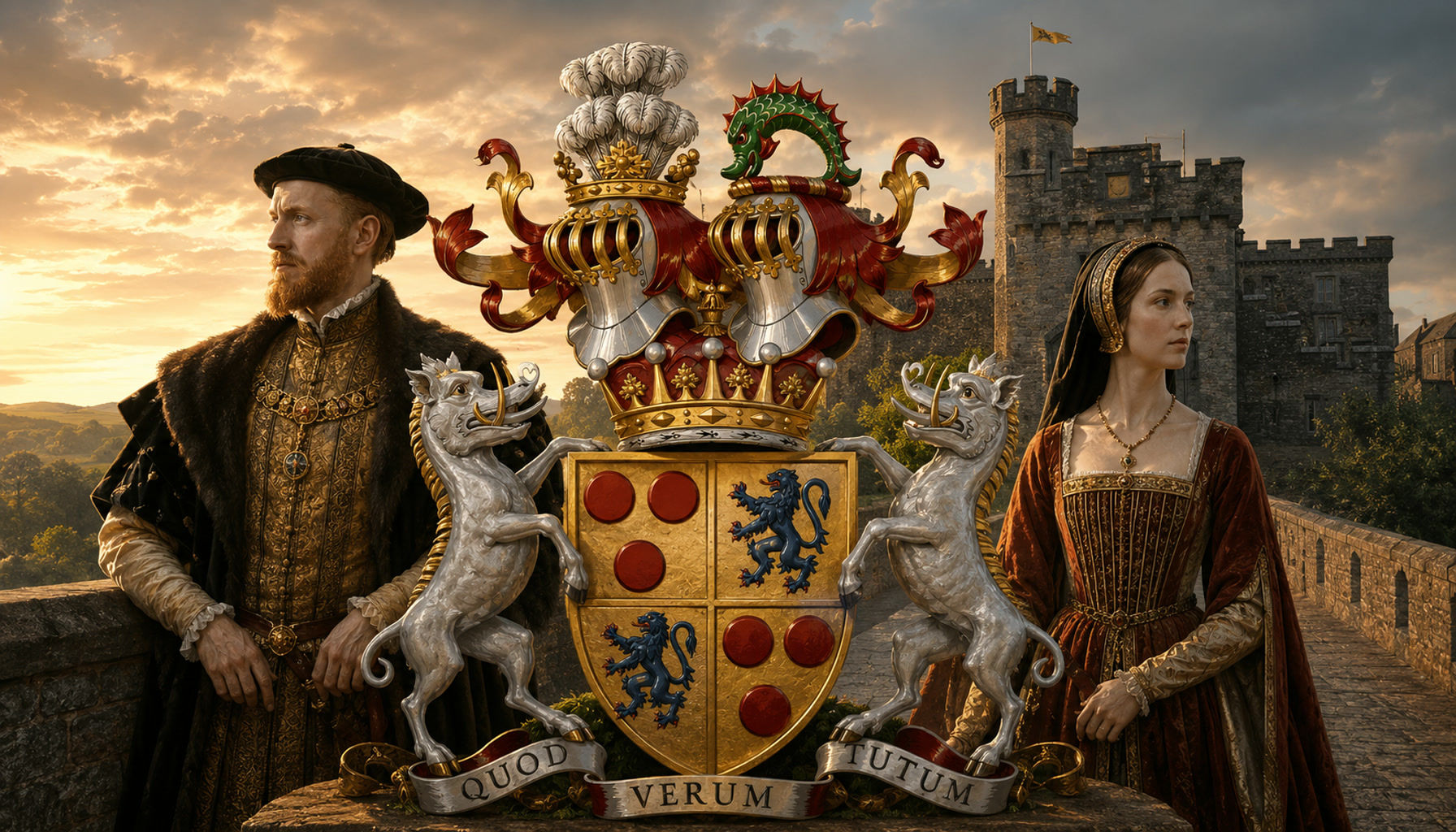
The House of Courtenay was one of the great medieval noble dynasties of western Europe: French in origin, later powerful in England, and famously entangled with the crusader world of the eastern Mediterranean. The family took its name from Courtenay in the Gâtinais region of north-central France, where its early lords emerged in the feudal landscape that grew around Capetian kingship. In genetic tagging terms, the primary family haplogroup linked here is R1b1a1b1a1a2c1a3a2a1a2e, a branch within the broad R1b lineage that appears widely across western Europe.
What makes the Courtenays so interesting is not just rank, but range. From their French beginnings, the family spread into the wider aristocratic network that bound together France, England, the Holy Land, and Byzantium. One line achieved extraordinary prominence in the crusading era and produced rulers of the Latin Empire of Constantinople. Another became deeply rooted in England, especially in Devon, where the Courtenays built regional influence through landholding, inheritance, marriage, and office. Figures such as Reginald de Courtenay, who died in 1190, mark the family's establishment in England; Hugh de Courtenay, 2nd Earl of Devon, lived from 1303 to 1377 and represented the house at the height of its English power; and William Courtenay, Archbishop of Canterbury from 1342 to 1396, shows just how far the family's reach extended beyond castles and earldoms into the upper levels of the medieval Church.
Explore the Royal House of Capet
For the English Courtenays, Powderham Castle in Devon is an especially vivid location anchor. Set beside the River Exe near Exeter, Powderham began in the late 14th century after Sir Philip Courtenay acquired the manor and built up the house from around 1391. It is not a fairy-tale fortress perched on a lonely crag, but something in many ways more revealing: a fortified manor that grew over centuries, with medieval cores, later grand domestic additions, and the unmistakable marks of a family adapting to changing politics, wealth, and taste. The castle passed through the Courtenay line and became the seat of the Earls of Devon of the Powderham branch. During the English Civil War it was involved in military action and siege, and later centuries layered in further architectural changes. In other words, Powderham is not a frozen medieval relic but a long family archive in stone, and yes, it can still be visited today.
Read more about the House of Neville
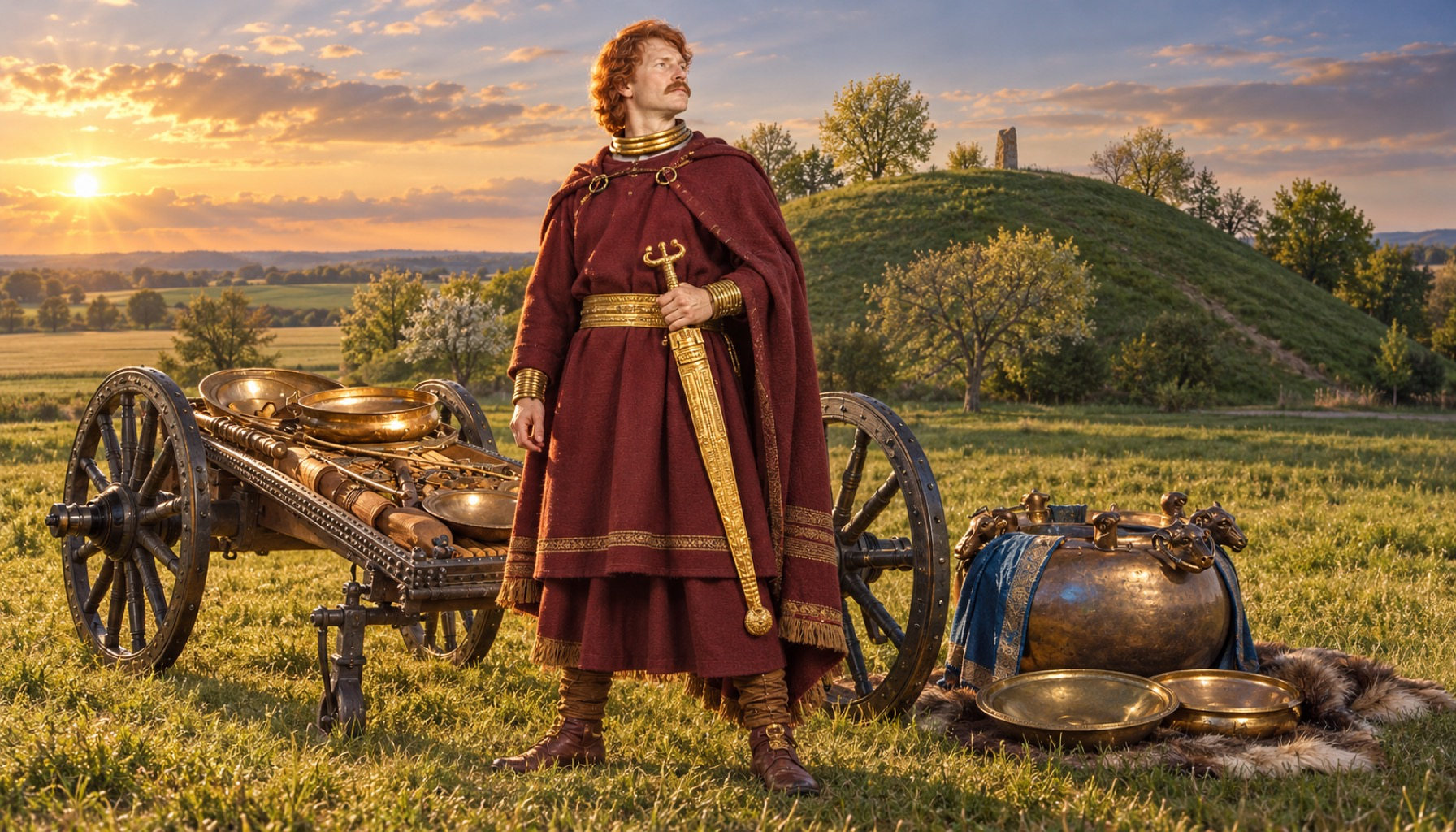
From an ancient DNA point of view, the Courtenay haplogroup tag R1b1a1b1a1a2c1a3a2a1a2e links the family to a much deeper western European story rather than to any single proven named ancestor. Related or linked samples include several Iron Age and later individuals from Britain and continental Europe, such as the Celtic Durotriges from Duropolis at Winterborne Kingston in England including WBK12, WBK20, WBK29, WBK41, WBK05, WBK30, WBK43, WBK06, WBK08, WBK18, and WBK191; Iron Age Worlebury Somerset England I11991; Iron Age Hillfort Battlesbury Bowl England I21309; Post Roman Era Worth Matravers Dorset England I11580; Bell Beaker Wiltshire Upavon England I4950; Bronze Age Amesbury Down Wiltshire England I2417; Bronze Age Trumpington Meadows Cambridge England I3256; Bronze Age Bedfordshire England I7576 and I7577; Bronze Age Boatbridge Quarry South Lanarkshire Scotland I5473; Early Bronze Age England Thames I5377; Scotland Late Bronze Age I2859; Ireland Copper Age Rathlin2B; as well as broader continental matches such as Imperial Roman Era Zadar Croatia I26776, Early Medieval Belgium Sint-Truiden Groenmarkt ST2025, Medieval Belgium Outsider Sint-Truiden Onze-Lieve-Vrouwekerk ST1308, Gallic France Parancot CGG023699, Merovingian Grave North Rhine-Westphalia Germany Alt-Inden IND013, Late Roman Era Klosterneuburg Lower Austria R10656, Late Roman Conimbriga Portugal R10488, Bronze Age Calabria Cosenza Grotta della Monaca Sant Agata di Esaro GMO015, and Bronze Age Orkney Westray Links of Noltland KD061. These do not prove direct descent from the House of Courtenay, but they do help place the family's tagged paternal line within the long archaeological backdrop of Atlantic and western European ancestry.
If the Courtenays catch your imagination, that is really the point: a medieval dynasty is never just a surname, but a web of places, marriages, ambitions, and migrations stretching across centuries. Upload your DNA to MyTrueAncestry to see whether you match the House of Courtenay or any of the related ancient DNA samples linked with haplogroup R1b1a1b1a1a2c1a3a2a1a2e.


Comments