House DuBose

– 3 min read


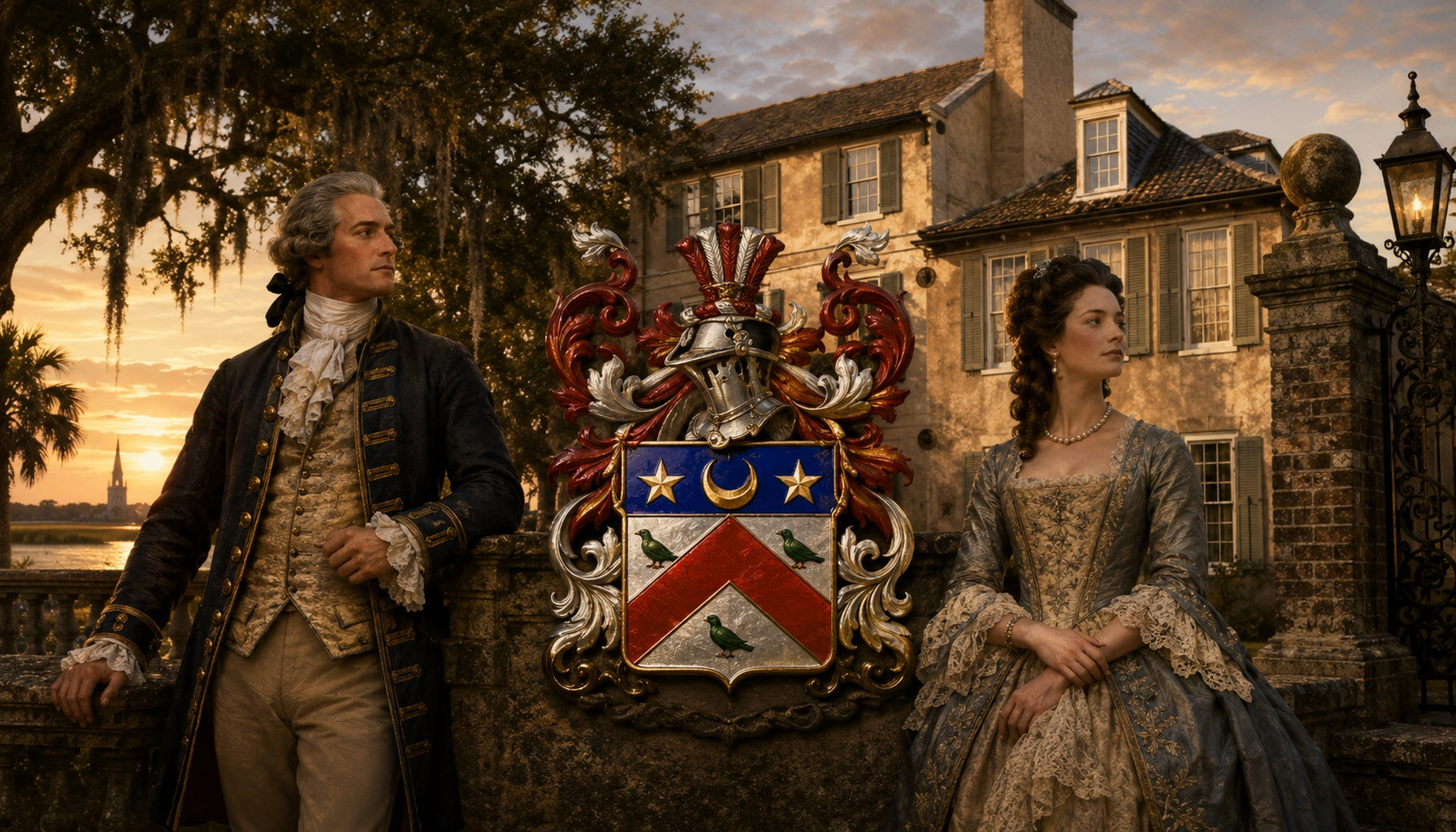
House DuBose was a French-origin family line associated in later memory with Huguenot identity, migration, and the remarkable persistence of a surname across the Atlantic world. In family-history terms, the DuBose story begins in France, in a landscape shaped by regional loyalties, confessional tension, and the long early modern habit of families attaching themselves to land, seigneurial houses, and place-names. The primary haplogroup linked with the family in this report is R1b1a1b1a1a2c1a6c, a branch within the broad R1b world that appears again and again in western European ancient DNA. For a house like DuBose, that matters not because genetics replaces history, but because it adds another layer to an already mobile family story: origin, movement, adaptation, and endurance.
The DuBose name, often seen in older forms such as du Bosc or du Bose, carries the unmistakable flavor of place-based French naming. That is exactly the sort of thing one expects in a family emerging from the social fabric of old France, where identity was tied not just to blood and belief but to estate, parish, and remembered origin. Families of Huguenot or French Protestant background often had to convert displacement into continuity: they moved, married into new communities, acquired land elsewhere, and kept the surname as a portable piece of ancestry. In that sense House DuBose stands for a larger historical pattern, one familiar across the French diaspora. It is not only a family of departure, but a family of refounding. Among the named historical figures associated with this heritage is Pierre Du Bosc, or Pierre Du Boscq, traditionally dated 1590-1633, a figure whose very name reminds us how close family identity remained to landed and regional roots.
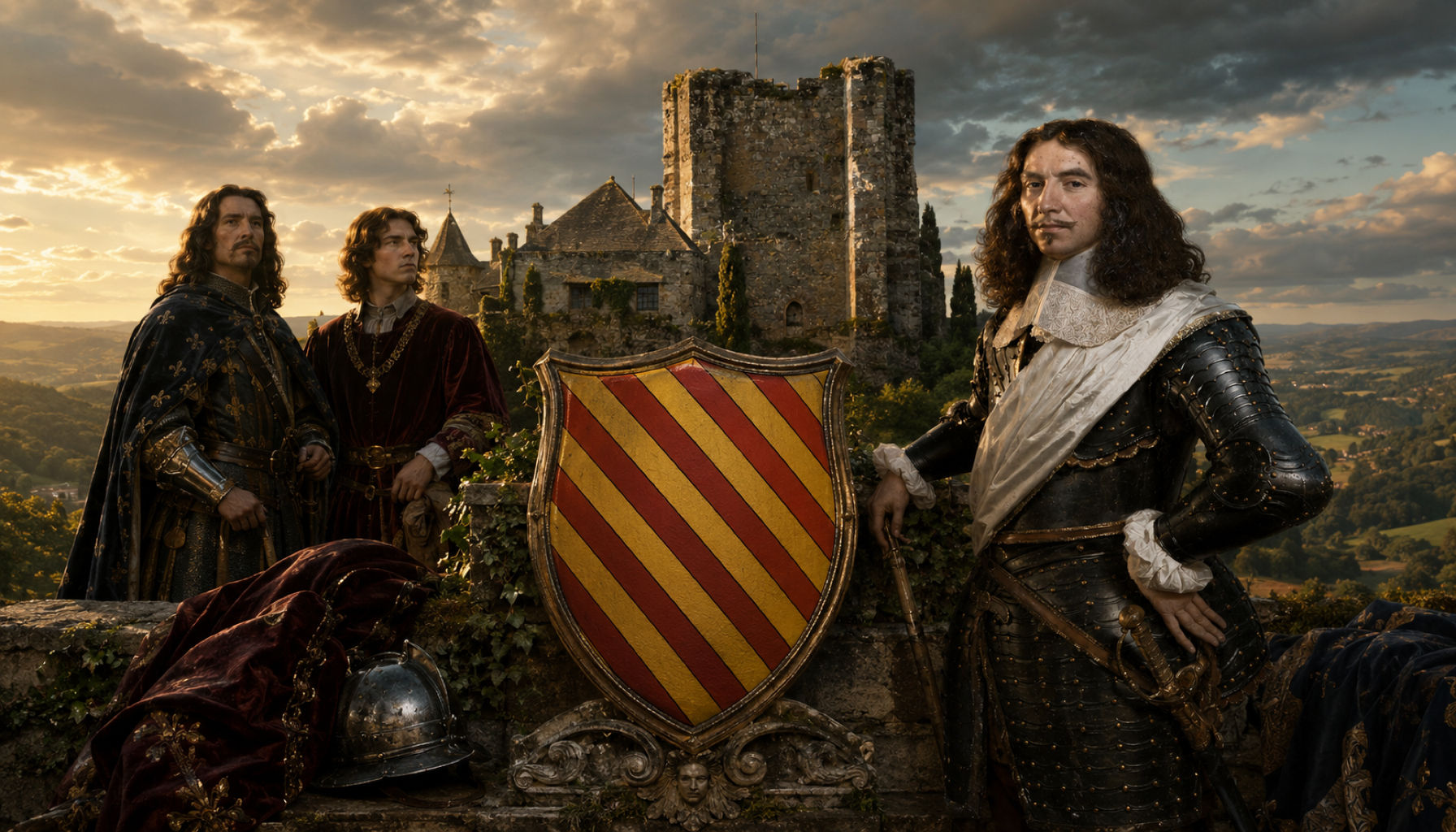
A particularly evocative anchor for the wider du Bosc tradition is the Chateau du Bosc in Aveyron, in southern France, near Camjac. This is not merely a decorative backdrop for family romance. It sits in Rouergue country, a region where layers of medieval lordship, provincial identity, and later religious history overlap in very French fashion. The chateau known today is especially associated with the later writer Toulouse-Lautrec through his maternal line, but the site itself preserves the older sense of a rural noble residence rooted in local power and memory. Architecturally, it reflects the long life of such houses in the south of France: fortified in spirit, adapted over time, and closely tied to the surrounding landscape rather than set apart from it. In practical terms, yes, it can still be visited, which gives the DuBose story a satisfying solidity. One can stand in the region, look at the stone, and grasp that surnames like du Bosc were not abstractions. They belonged to actual places, and those places helped shape the families who bore them.
The haplogroup tag R1b1a1b1a1a2c1a6c also opens a wider archaeogenetic window. Related or linked ancient samples carrying this branch or nearby placement appear across a strikingly broad western European and Atlantic-facing map: Celtic Durotriges individuals from Duropolis at Winterborne Kingston in England such as WBK12, WBK20, WBK29, WBK41, WBK05, WBK30, WBK43, WBK06, WBK08, WBK18, and WBK191; Iron Age and Celtic-era Britain more broadly, including East Kent, Yarnton, Rowbarrow, Worlebury, Pocklington, Ham Hill, Broxmouth, Applecross, and South Cadbury; Bronze Age and earlier examples from Amesbury, Lechlade, Sussex, Bedfordshire, Yorkshire, Orkney, and Scotland; and later linked individuals from Northern Spain at Las Gobas, Belgic and Gallic contexts in France, early medieval Belgium, Merovingian Germany, Saxon England, medieval Ireland, Hedeby in southern Jutland, late Roman Austria and Portugal, and even Viking Age Iceland. These samples should not be described as direct ancestors of House DuBose without specific documentary and genetic proof. But they do show that the paternal world associated with this lineage sits within a very old western European continuum, one that touched Celtic Britain, Gaul, Iberia, the North Sea zone, and the later medieval Atlantic world from which French diaspora families emerged.
If the House DuBose story feels familiar, that is because so much family history lives at the meeting point of archive, landscape, faith, and migration. Upload your DNA to MyTrueAncestry to see whether you match House DuBose, or any of the related ancient DNA samples linked with haplogroup R1b1a1b1a1a2c1a6c, and place your own family story inside the longer history of Europe and the Atlantic world.


Comments