House Allaire

– 3 min read


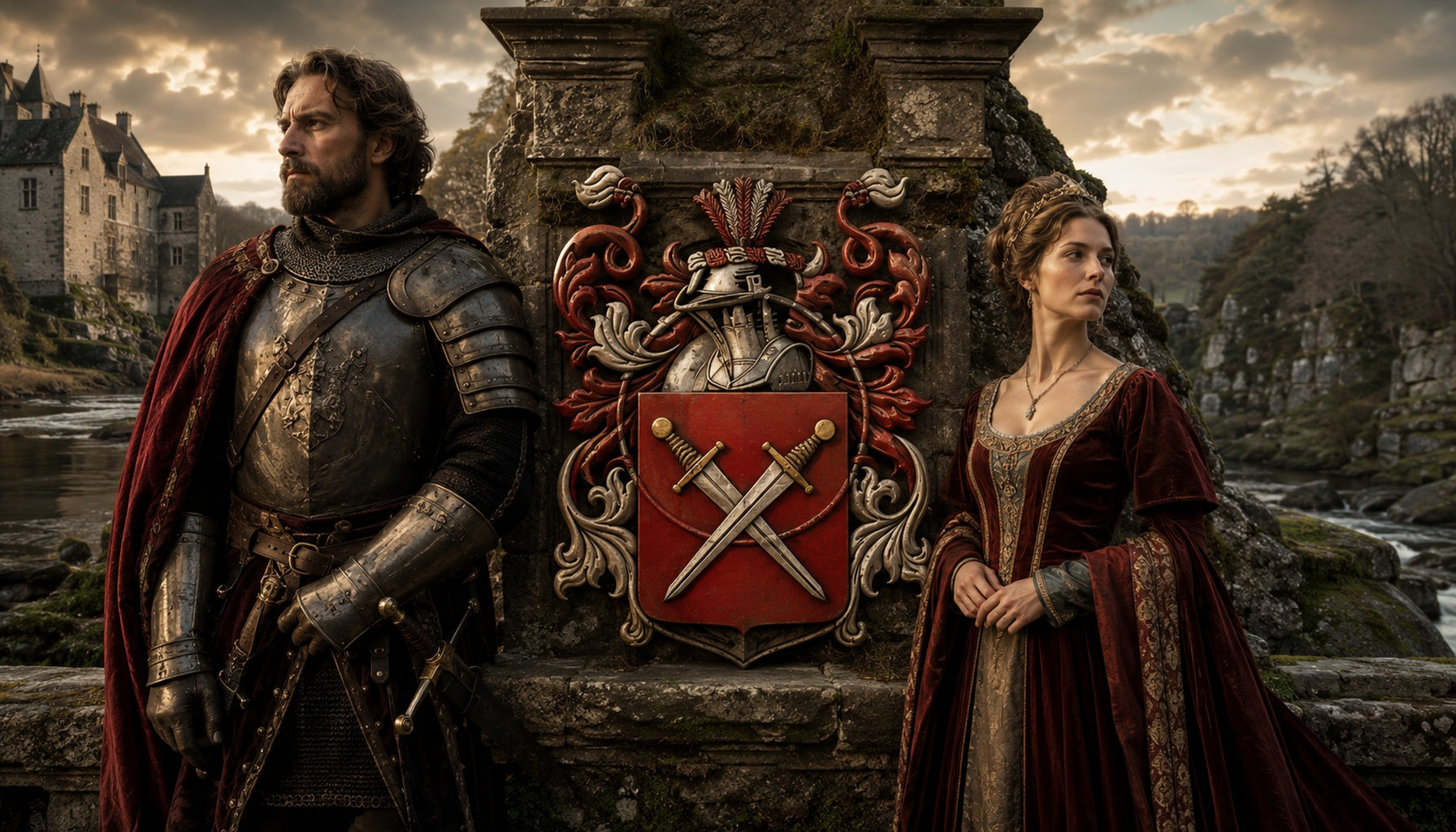
House Allaire is best understood not as a ruling dynasty with a fixed principality, but as a French-origin family house rooted in surname heritage, regional memory, and the long continuity of kinship. The name belongs to that wide and rather fascinating world of French family identity in which place, community, service, marriage, and migration all helped shape a lineage across centuries. In this case, the family is linked here with the haplogroup G2a2b2a1a1b1a1a2a2a2, a marker that gives the story an added genetic dimension while the surname itself speaks to the endurance of ancestral identity through changing historical settings.
The Allaire story sits comfortably in the historic pattern of French surnames spreading well beyond their first local setting. Families carried names with them into neighboring regions and, later, into wider European and Atlantic worlds, sometimes through settlement, sometimes through military or civic service, and very often through the simple but powerful machinery of family continuity. That is why House Allaire is best seen as a house of memory as much as a house of bloodline. Named figures associated with the family record help anchor that continuity across time, including Marie Collings (1791-1853) and Paul Arthur Allaire (1938-2019), reminders that a surname can remain meaningful across very different eras and social landscapes.
Read more about the House of Gervais
A useful location anchor for House Allaire is the Manor of Deil, a historic manor site recorded in Wikidata as Q22927126. In the old French world of landed memory, a manor mattered not only because of walls, fields, or rights, but because it fixed a family name to a landscape. That is the important thing to grasp. A manor was an address in history: a place where records accumulated, obligations were remembered, marriages were noticed, and identity became local in a very concrete sense. The Manor of Deil therefore offers a fitting geographical touchpoint for the Allaire heritage, connecting the surname to the texture of regional life rather than to the grand theatre of princely rule. If the site remains standing or marked as a heritage location, it may still be visited, and for anyone tracing family history there is something rather thrilling in going to the ground itself, to the place where name and landscape once met in everyday practice.
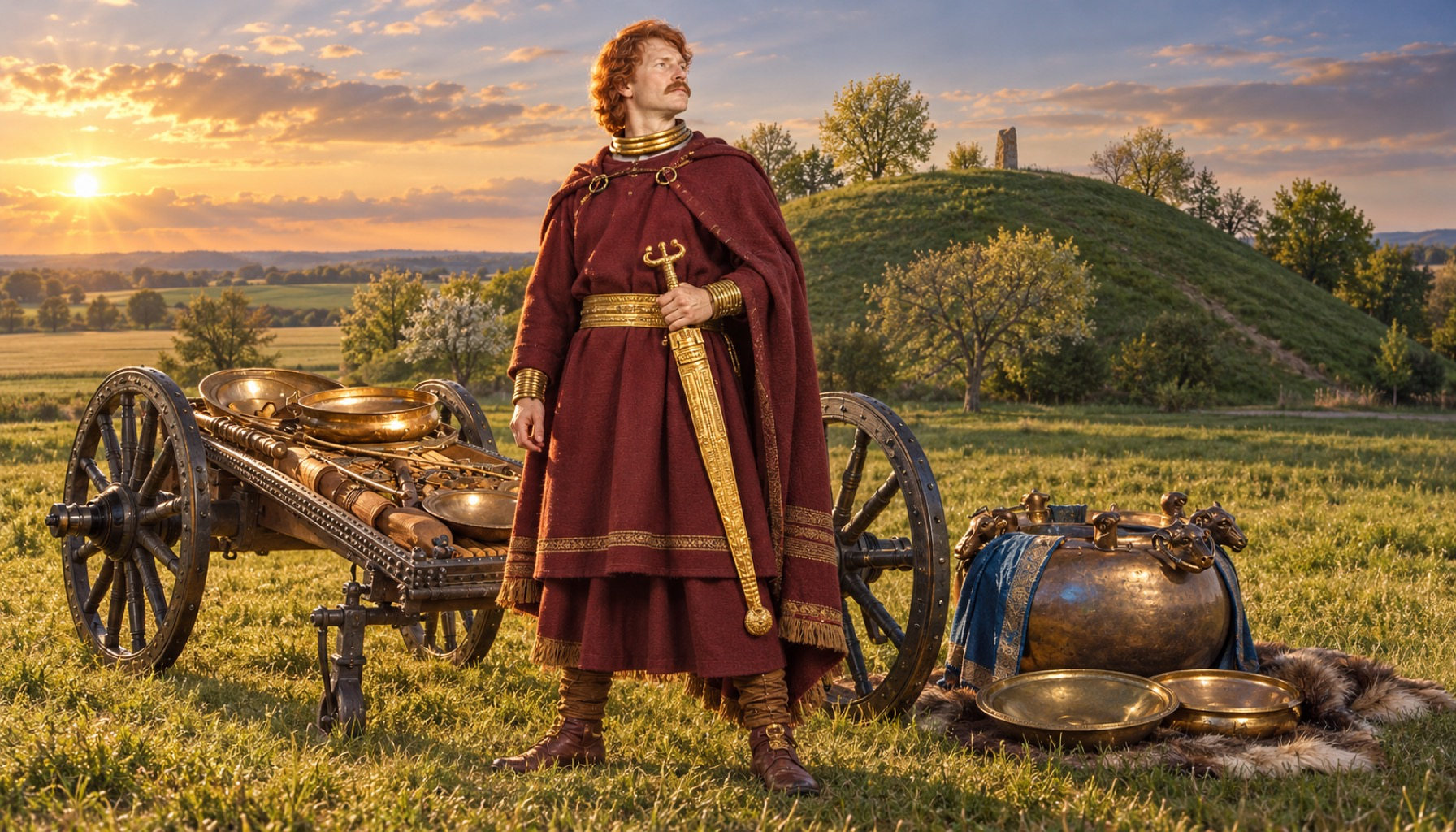
From the ancient DNA angle, the Allaire haplogroup link to G2a2b2a1a1b1a1a2a2a2 connects the family, not by proven direct descent but by related paternal signature, to a remarkable spread of ancient individuals across Europe and its borderlands. Related or linked samples include Elite Celtic Germany Eberdingen-Hochdorf Biegel (HOC002) and (HOC002b), Gallic France Sequani Tribe Iron Age Les Moidons (CGG023724), Celtic Iron Age France Tumulus de La Forat de Chatillon (CGG023644), Celtic Hallstatt Stradonice Czech Bohemia (I16327), Late Antique Roman Pannonia Arrabona Szechenyi Square Hungary (GYS041), Gothic Wielbark Poland Kowalewko Oborniki (PCA0015), Iron Age Pommerania Kowalewko Wielbark (PCA0063) and (PCA0062), Iron Age Zamardi Somogy Hungary (I25516), Viking Age Trelleborg Kingdom of Denmark (CGG106833), and Post-Roman Britain Randwick Long Barrow (CGG020724). What this shows is not a neat family tree stretching unchanged from prehistory to the present, but something more interesting: a deep archaeological backdrop in which this paternal line appears among Celtic, Gallic, Roman frontier, Gothic, Viking Age, and post-Roman contexts. It is a fine example of how a later French family identity can sit atop much older currents of European population history.
If you carry the Allaire surname, have French family roots, or are simply curious about how surname heritage and ancient DNA can illuminate one another, this is exactly the sort of story worth exploring further. Upload your DNA to MyTrueAncestry and see whether you match House Allaire or any of the related ancient DNA samples linked with haplogroup G2a2b2a1a1b1a1a2a2a2.


Comments