The House of de Soucy
– 3 min read



The House of de Soucy was a French noble family of the provincial aristocratic world, rooted in land, local lordship, and the long memory of lineage. Their name points to a place-based origin, exactly the sort of foundation on which many medieval French houses were built: an estate, a seigneurial center, a district where authority was exercised through tenure, obligation, and reputation. In that sense the de Soucys fit a recognisable historical pattern, not princes at the summit of the kingdom, but members of that deeply important layer of French nobility whose identity rested on landholding, service, marriage alliances, and heraldic continuity. Primary family haplogroup: R1b1a1b1a1a2b1c1b1a.
Like many families of this type, the de Soucy story belongs to the fabric of regional France, where noble status was lived out in charters, estates, kinship ties, and the management of rights over people and property. Their heritage is best understood not as a tale of dramatic royal power, but as the durable history of a house that carried its name across generations through local standing and family memory. Among the better-known figures linked to the family are Renee Suzanne de Soucy (1758-1841) and Louis Xavier de Fitte de Soucy (1775-1840), names that remind us that noble identity did not end with the Middle Ages, but continued into the modern era, adapting to a changing France while preserving the prestige of ancestry and place. Haplogroup tags linked here include R1b1a1b1a1a2b1c1b1a as the primary family line.
A key location anchor for the family heritage is Chateau de Souzy-la-Briche, in Essonne, south of Paris, a setting that captures the long afterlife of noble estates in France. The chateau known today is largely associated with later rebuilding and use rather than a single untouched medieval survival, but that is precisely what makes it historically interesting: it sits in a landscape where aristocratic identity, landownership, and residence evolved over centuries. Souzy-la-Briche became known not only as a noble estate but also in modern French political history, having later served as a presidential retreat. That layered past, from seigneurial association to national prominence, gives the site unusual depth. It is a reminder that houses such as de Soucy were tied above all to place, and that place itself kept being reused, reimagined, and invested with new meanings. The commune and surrounding area can certainly be visited, and the chateau is a real and documented historic site, though access to the building itself may depend on ownership, official use, or local conditions at the time of visit.
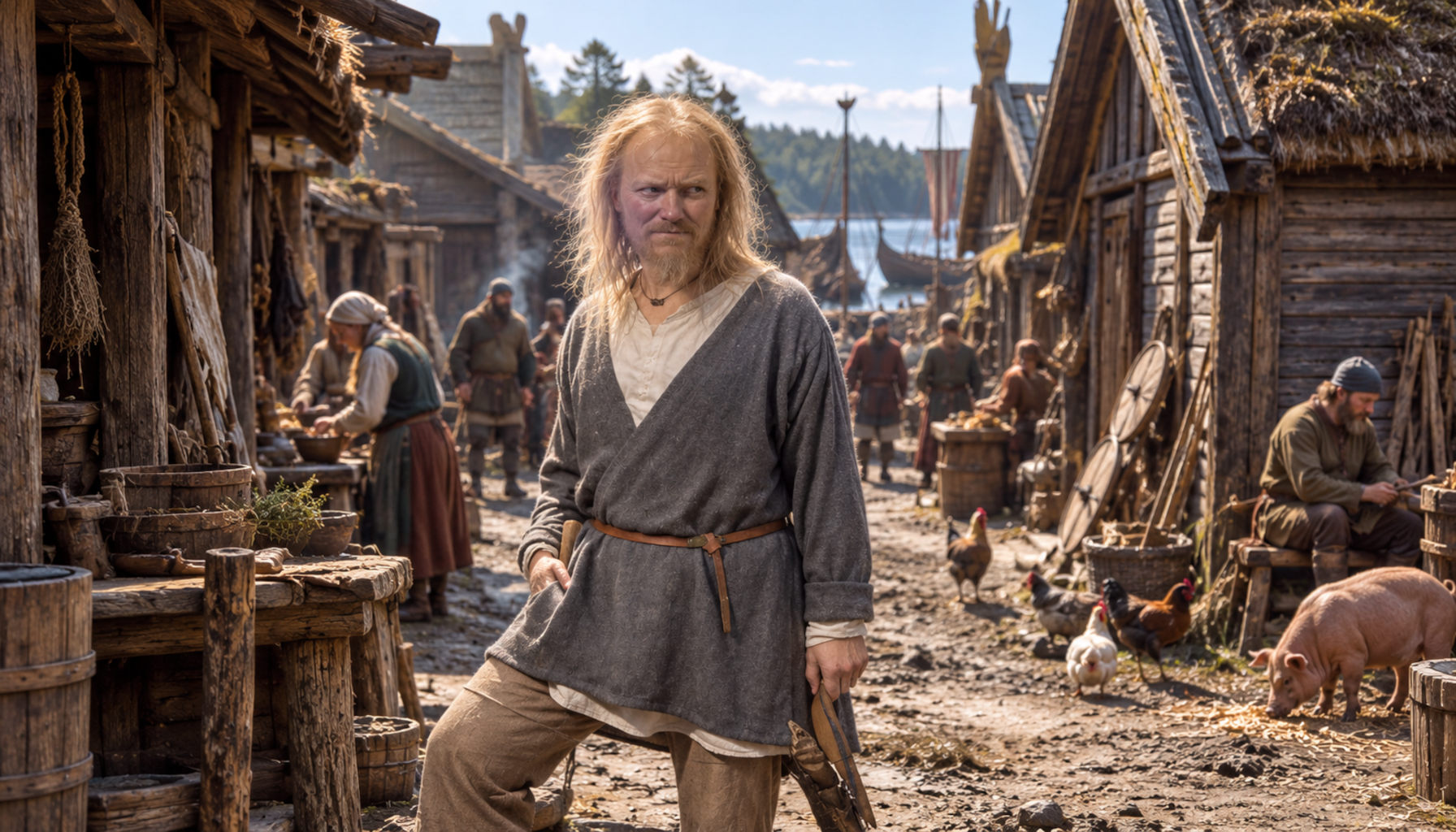
The haplogroup linked here, R1b1a1b1a1a2b1c1b1a, also appears in a wider ancient DNA landscape across Iron Age and early medieval Europe. Related or linked samples include Migration Period Hungary at Rakoczifalva (RKF247), Celtic Iron Age Harlyn Bay in Cornwall (I16440), Late Iron Age East Kent in England (I19873), a Quadi-associated sample from Bratislava, Slovakia (I11712), and Viking Age Skara Varnhem in Sweden (VK40). These individuals should not be presented as direct ancestors of the de Soucy family without documentary proof, but they do show the broader prehistoric and historic spread of paternal lineages connected to this branch. In other words, the de Soucy line belongs to a much older European story, one that stretches from Iron Age communities to the mobile, mixed populations of the Migration and Viking worlds before ever entering the written record of French nobility.
If the House of de Soucy sparks your curiosity, upload your DNA to MyTrueAncestry and see how your results may connect with the deeper human story behind noble houses, regional heritage, and ancient population movements. Family history becomes even richer when documentary ancestry and DNA evidence are allowed to speak to each other.



Comments