Haplogroup R1b1a1b1a

– 5 min read


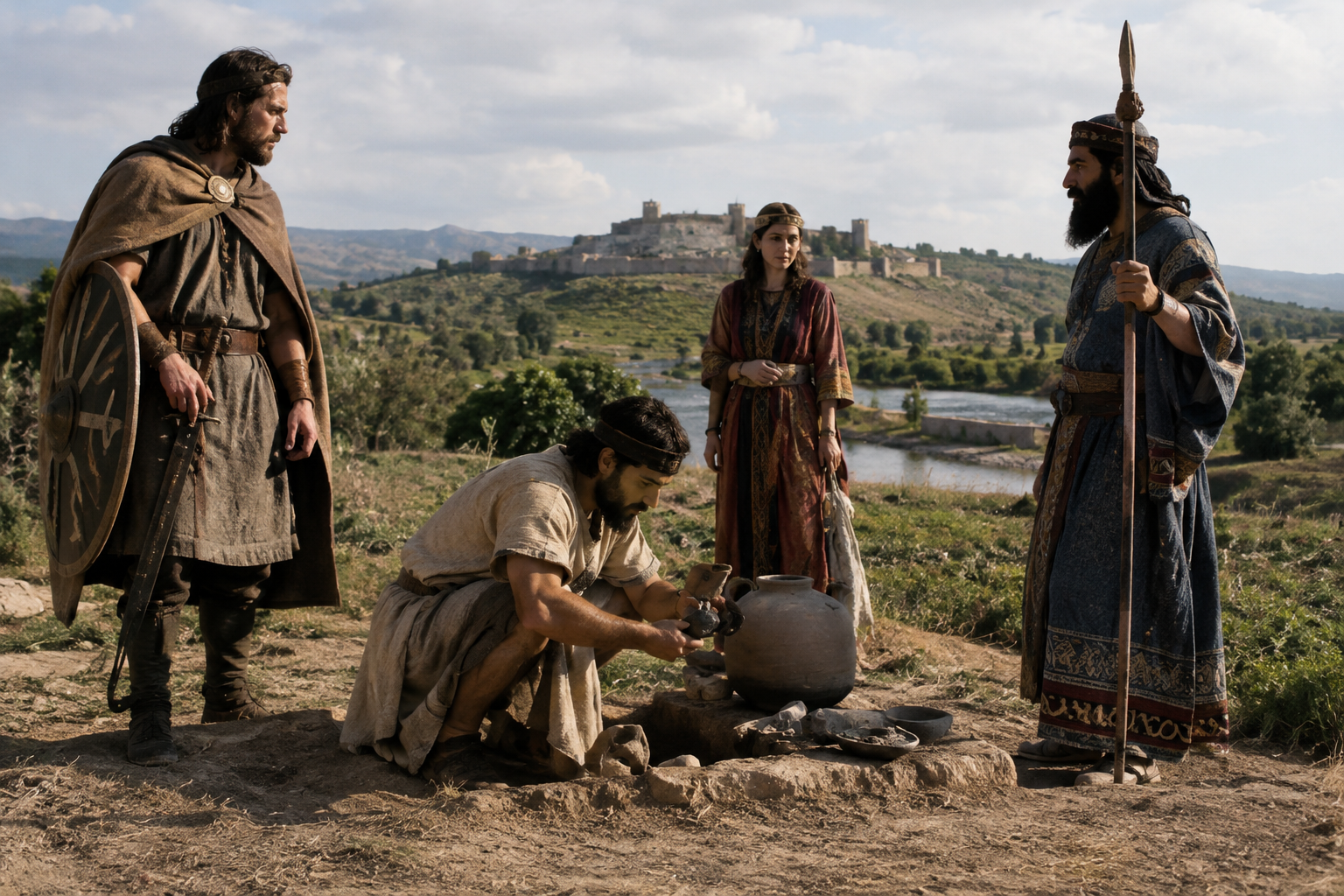
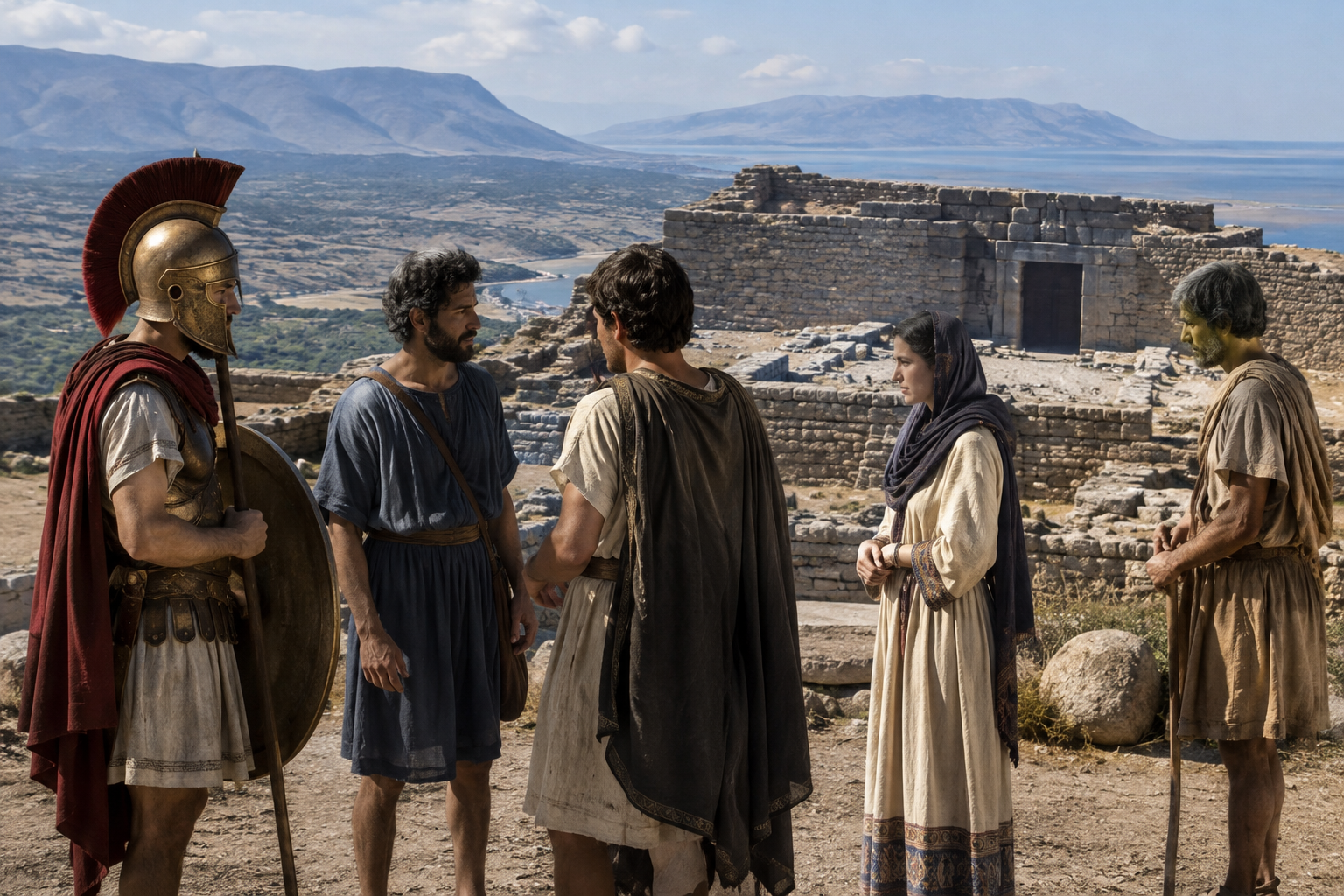
At Aigai in Macedonia, in a royal burial landscape famous long before genetics arrived, one male from Elite Tomb I, sample DEM3238, has been associated here with the Y-DNA haplogroup R1b1a1b1a. The date given is around 400 BC, and that alone makes the find arresting. A paternal line reported in a high-status tomb in the old Macedonian heartland reminds us that Y-DNA is not a badge of ethnicity or rank, but a single male line moving through very real historical worlds.
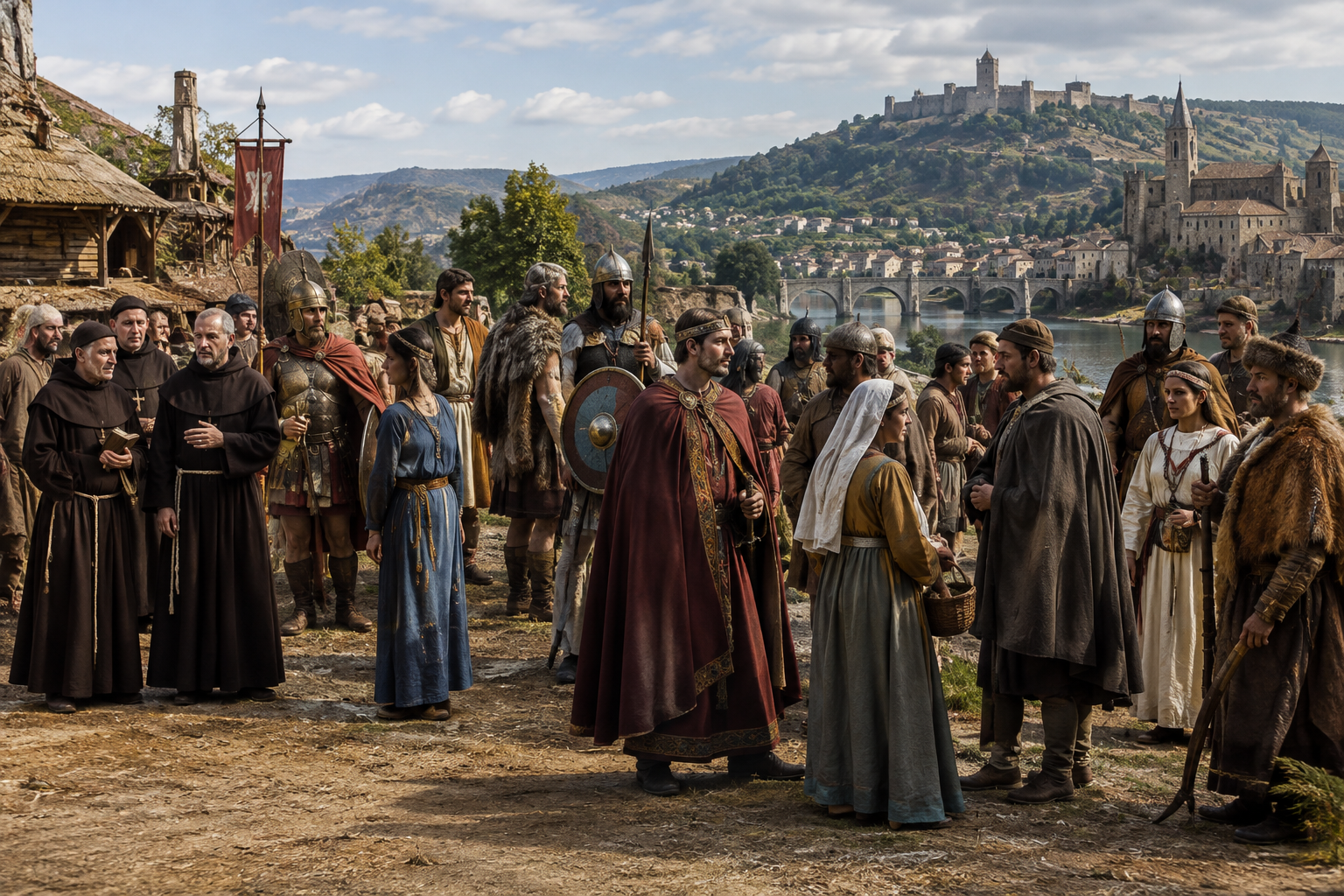
That is the useful way to approach R1b1a1b1a in this collection. Rather than one neat homeland and one tidy migration, the evidence points to a branch turning up in very different settings: Bronze Age burials in Iberia and Britain, a battlefield in northern Germany, an elite Macedonian tomb, Gothic and post-Roman cemeteries, medieval friars in England, and dynastic burials in Poland. The interest lies not in forcing these men into one story, but in seeing how one paternal line appears again and again across the western and central European past.
The earliest samples in this group sit firmly in the Bronze Age. At Monte da Cabida in Evora, Portugal, sample I7691 is dated to about 1950 BC. In northern Spain, El Hundido at Monasterio de Rodilla produced sample EHU001, dated to about 2171 BC. England contributes Boscombe Airfield sample I2464 from about 1680 BC and a Dorset burial at Monkton Up Wimborne, sample muw005, from about 1900 BC. There is also a Bronze Age individual from Wervershoof-Zwaagdijk in the Netherlands, I26829, dated to about 1450 BC.
These are not all one people in any simple sense. They belong to different local communities, separated by sea, language, and centuries. But taken together they fit a broader archaeological picture in which male lines within the wider R1b family were already widespread across Atlantic and northwestern Europe after the major population changes of the later third and early second millennia BC.
A major ancient DNA study on Bronze Age and Iron Age Europe helped establish just how substantial those long-term demographic shifts were, especially in central and western Europe, where lineages in the broader R1b family became prominent in many later prehistoric male populations: https://science.sciencemag.org/content/363/6432/1230. That does not by itself prove every fine-grained assignment here, but it gives the essential backdrop for why a branch like R1b1a1b1a appears so early and so widely in these regions.
Bell Beaker on the Lower Rhine
One of the most vivid appearances of this haplogroup in the list comes not from a tomb or settlement, but from the Tollense Valley battlefield in Mecklenburg-Vorpommern. Sample WEZ57, dated to about 1250 BC, belongs to one of the men caught up in what is now recognized as a large violent event in northern Europe.
Tollense matters because it is not merely a burial ground with a cultural label attached after the fact. It is evidence of organized conflict on a remarkable scale for the period. A man associated here with R1b1a1b1a was therefore part of a world of movement, alliance, and warfare that linked communities well beyond a single village horizon. In other words, this paternal line was not confined to quiet local continuity; it was present in the tense and mobile networks of Late Bronze Age Europe too.
The same broad spread appears further south and east in later prehistoric contexts: a North Alpine Bronze Age individual, AITI_40, dated to about 1788 BC; a Pre-Illyrian Bronze Age male from the Cetina Valley in Croatia, I18752, about 1800 BC; and later Iron Age examples from Hallstatt Hallein in Austria and Vas County in Hungary. None should be treated as one unbroken political population. But together they show that this branch, or reports associating individuals with it, sits comfortably inside the interconnected Bronze and Iron Age world stretching from the Atlantic to the Carpathian Basin.
It is tempting to imagine this as a mainly northwestern European story, and then DEM3238 at Aigai spoils that simplicity. So does I22241 from Middle Bronze Age Motya in Sicily, dated to about 1535 BC, and TAQ017 from Etruscan Tarquinii in Italy, dated to about 225 BC. Add the Byzantine-era males from Stratonikeia on the Aegean coast of Anatolia, I20140 and I20141, dated around AD 1090-1100, and the map broadens again.
The Mediterranean has always been awkward for tidy origin stories, which is precisely why it is so interesting. Sicily, Etruria, Macedonia, and coastal Anatolia were all zones of traffic, colonization, trade, empire, and military service. A paternal line appearing in such places is not surprising once we stop expecting haplogroups to respect the boundaries of textbook cultures.
For readers interested in island and peninsular complexity, MyTrueAncestry has also explored ancient Italian islands and medieval Sicily in more detail.
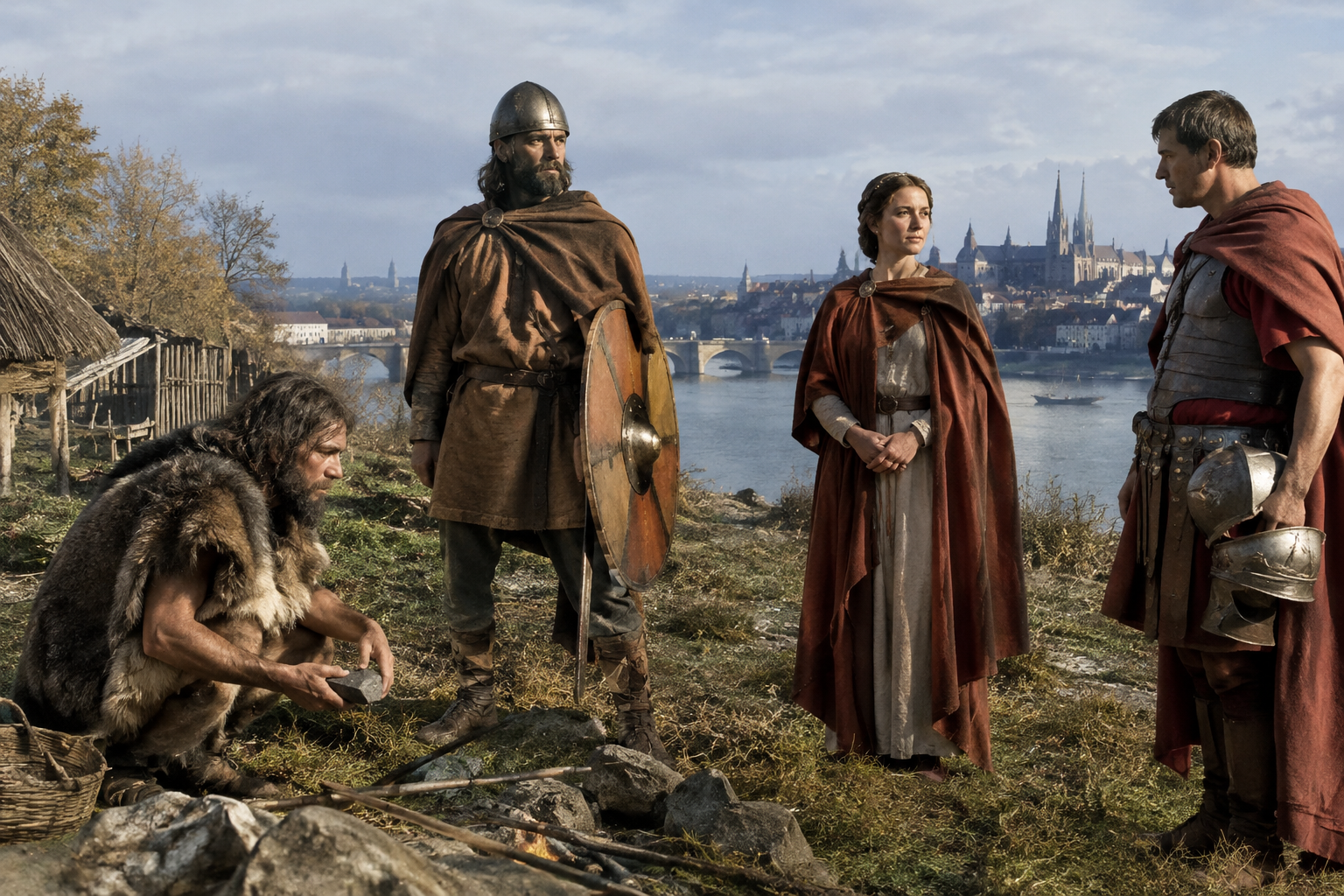
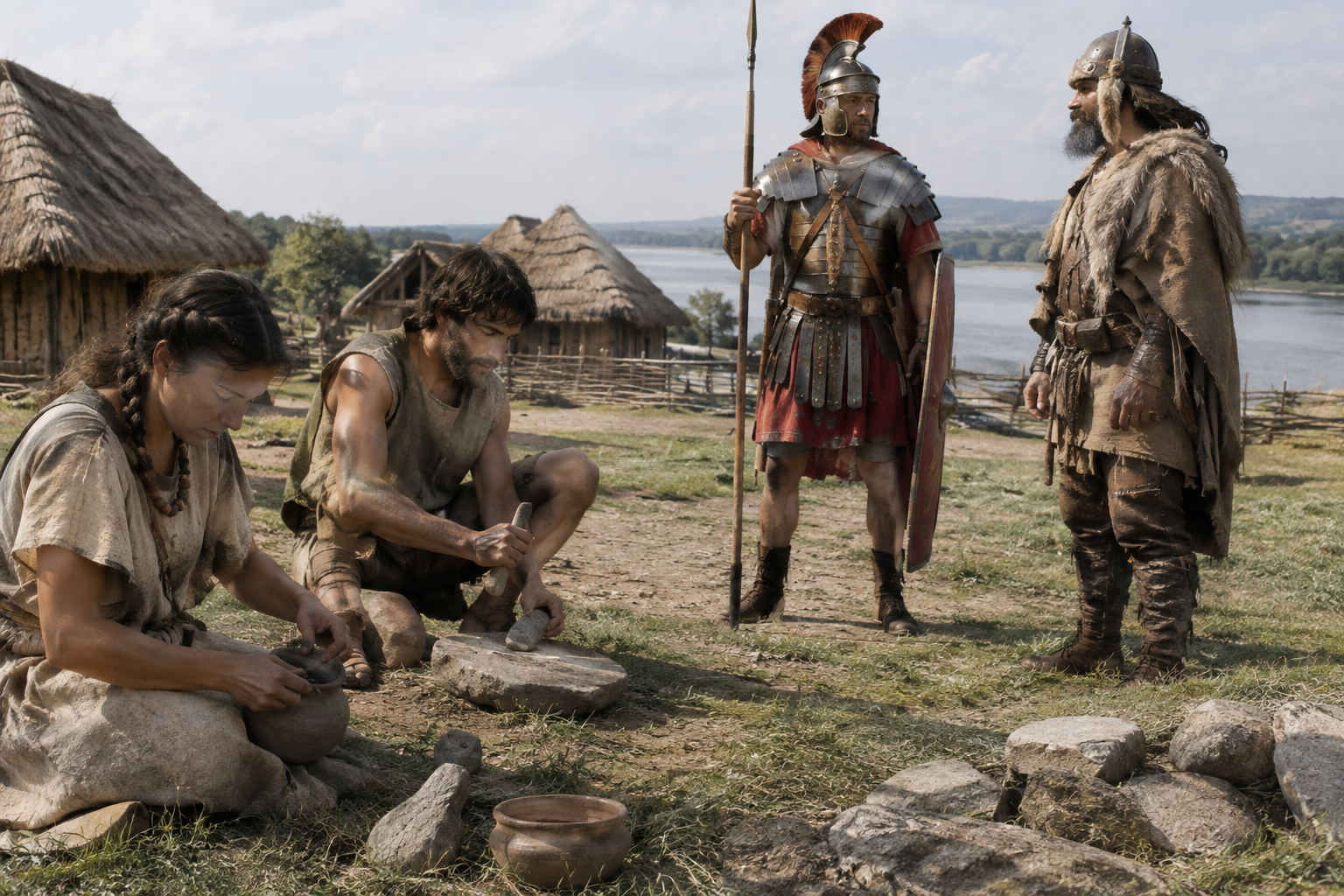
Some of the most telling samples belong to the centuries after the western Roman Empire, when labels such as Visigothic, Anglo-Saxon, Danii, and Thuringii begin to appear in the record. Here we have I12032 from Sarria de Ter, Pla de l'Horta, near Girona in Spain, dated to about AD 488 and classified as Visigothic early medieval; CGG107403 from Harlev on Sjalland in Denmark, dated to about AD 375 and associated with the Danii; OBM008 from Obermoellern in Germany, around AD 500 and associated with the Thuringii; and S11583 from the early Anglo-Saxon cemetery at West Heslerton in Yorkshire, around AD 550.
This is exactly the kind of evidence that warns against simplistic ethnic reading. A Y-chromosome line can persist while languages change, armies move, kingdoms collapse, and new burial customs arrive. An ancient DNA study of early medieval England, for example, has shown how migration and local continuity were both part of the making of the early English gene pool, rather than a complete replacement of one population by another: https://www.researchgate.net/publication/363736520_The_Anglo-Saxon_migration_and_the_formation_of_the_early_English_gene_pool.
That makes S11583 especially useful in this article. He anchors R1b1a1b1a in a recognizably early Anglo-Saxon context, yet the same branch also appears in Spain under Visigothic horizons and in central Europe among populations linked with post-Roman Germanic polities. The branch is not telling us who was "really" Gothic or Saxon. It is showing us that direct male lines could cross these historical categories with ease.
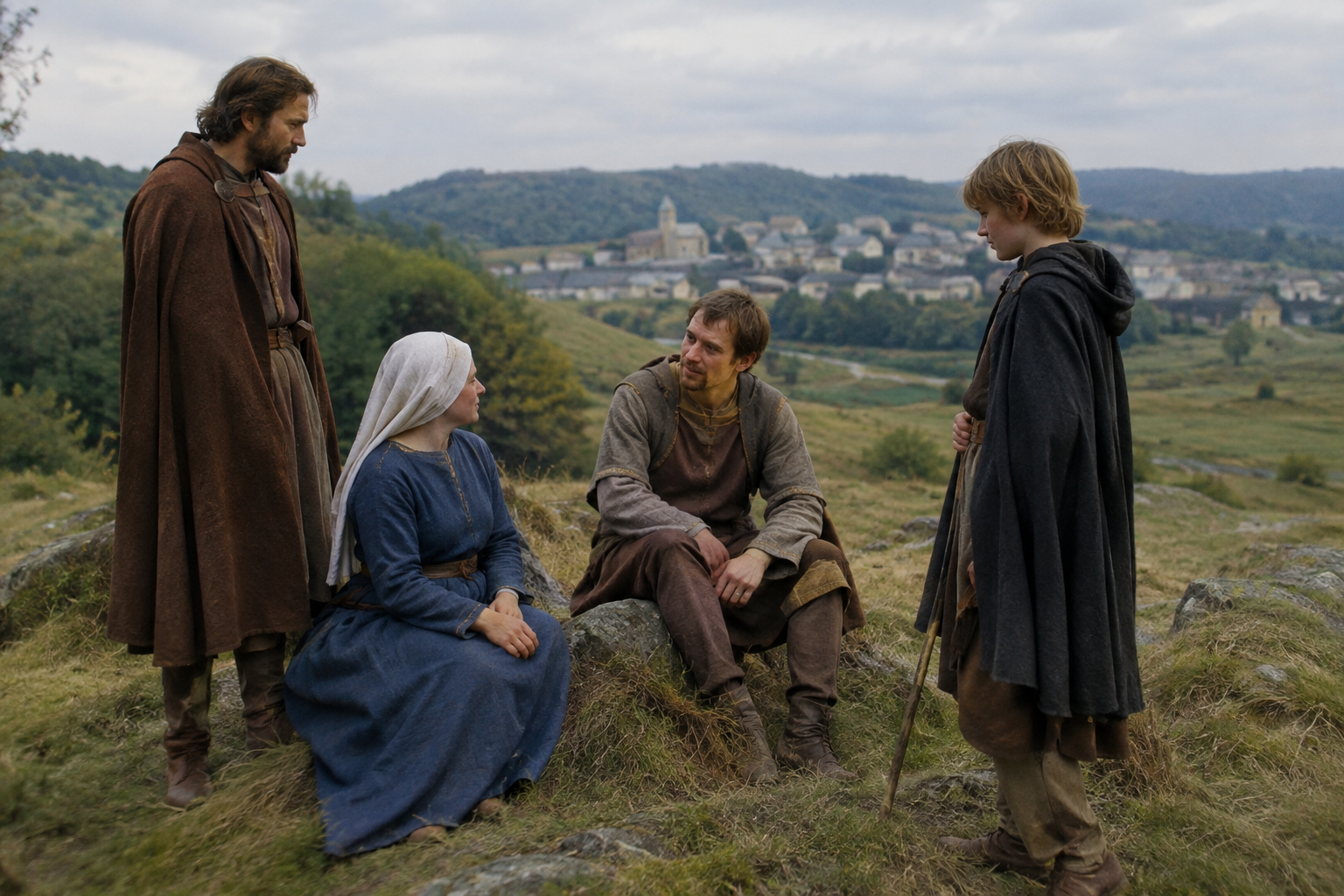
By the Middle Ages, the pattern has become almost stubbornly durable. Sample ATP_PSN_509 comes from the Augustinian Friars in medieval England and is dated to about AD 1226. SWG011 appears at post-Viking Age Hedeby in southern Jutland around AD 1105. ETR003 comes from medieval Siena around AD 1073, and LAHPS74 from Visegrad in Hungary around AD 1050.
Then there is PCA0651, dated to AD 1298 and identified as a male of the Piast Masovian dynasty. This is the only sample in the list with an explicitly dynastic label, and it deserves care. One dynastic male associated with R1b1a1b1a does not mean the entire Piast house can be reduced to a single neat genetic slogan. But it does show that this paternal branch was present in a medieval ruling lineage in Poland, just as it was also present among clergy, urban populations, and other regional elites elsewhere.
The medieval evidence is useful precisely because it is socially mixed. A friar in England, a dynastic male in Masovia, a burial in Siena, a man in Visegrad, and a post-Viking individual at Hedeby are not all playing the same historical role. Yet the recurrence of the branch across these settings suggests continuity through institutions as different as monastery, market town, royal court, and frontier trading center.
If your paternal line falls under R1b1a1b1a, this set of ancient matches points toward a branch with a long documented presence in western, central, and parts of southern Europe from the Bronze Age onward. The most distinctive feature is not one exclusive homeland or one glamorous dynasty, but persistence across very different historical worlds: Bronze Age farmers and warriors, Iron Age Mediterranean populations, post-Roman communities, and medieval religious and ruling milieus. That is a very European kind of story in the archaeological sense: local, mobile, layered, and never quite as tidy as family legend would like.
Comments