Haplogroup R1a1a1

– 5 min read


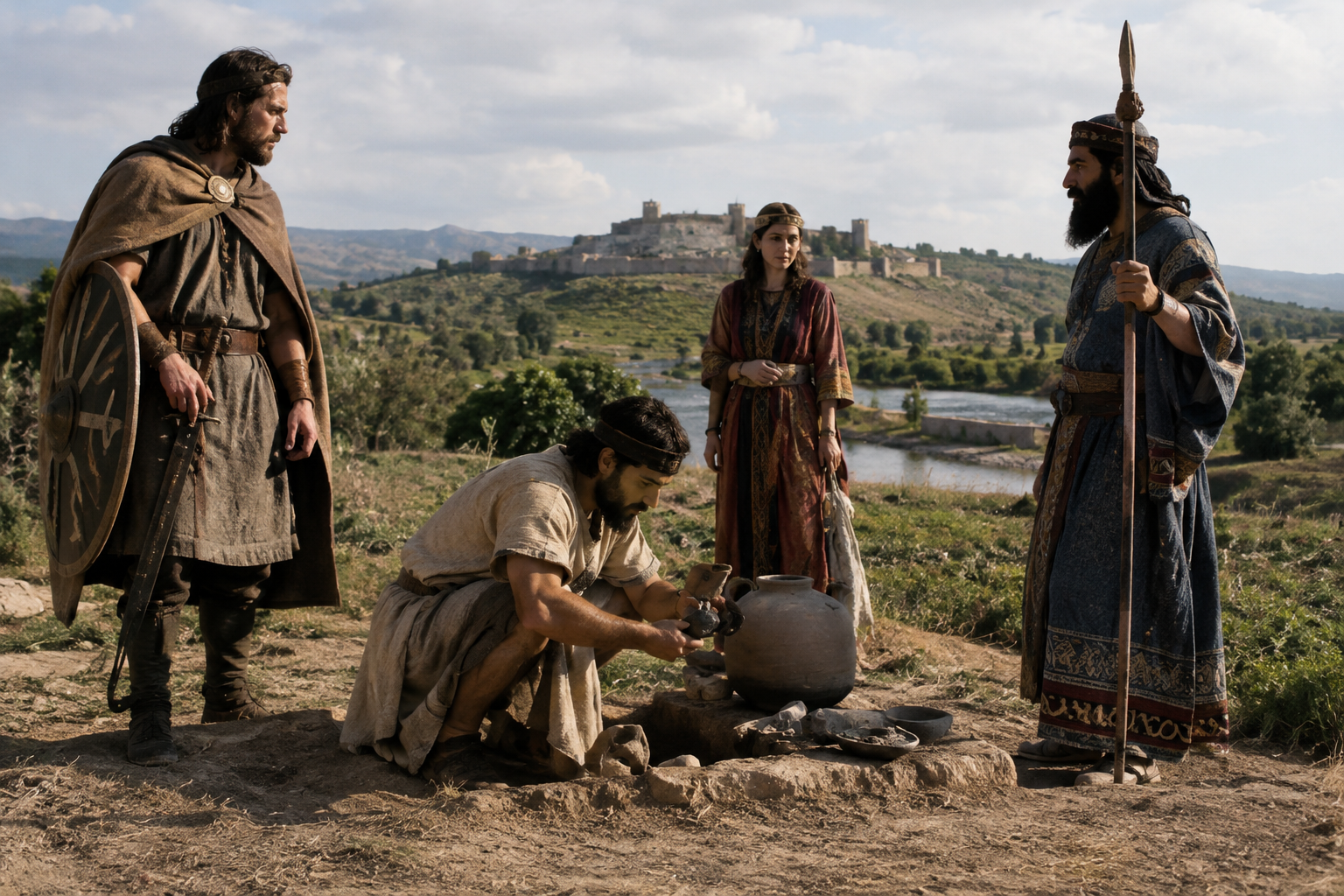
At Leubingen in Thuringia, two men from the Unetice world of the Early Bronze Age, sample IDs LEU008 and LEU033, are both associated here with Y-DNA haplogroup R1a1a1. They lived around 1950 BC in a region that archaeologists know as one of the key centers of early metalworking and social change in Central Europe. That matters because Leubingen is not some vague "ancient Europe" backdrop: it sits in the thick of a society where elites, long-distance exchange, and new burial traditions were already transforming the landscape.
R1a1a1 is a paternal lineage, meaning it tracks one direct male line only, not a person's whole ancestry. Even so, when that line appears repeatedly in contexts as different as Corded Ware burials, Bronze Age Central Europe, Iron Age steppe groups, Viking Age Scandinavia, medieval Slavic settlements, and later historic cemeteries, it offers a striking way to follow how one branch of male descent could move through very different societies without belonging to any single ethnicity, kingdom, or language forever.
Some of the clearest early appearances in this set come from the Corded Ware world. At Esperstedt in Germany, sample I0104 and the duplicate-form listing I0104x, dated around 2370 BC, belong to the archaeological horizon that has become central to discussions of steppe-related ancestry in Europe. Other associated finds in this broader belt include RISE446 from Bergrheinfeld in Germany, I7280 from Brandysek in Czechia, PNL002 from Plotiště nad Labem, RDV001 from Radovesice, STD001 from Stadice, and the Battle Axe-associated Gyvakarai1 in Lithuania.
These are not all one family, nor even one neat migration episode. But together they show that R1a1a1 was present across the Corded Ware and related northern European sphere during the later 3rd millennium BC. That fits the larger picture presented in ancient DNA research on this horizon, where male-line patterns often appear narrower and more structured than overall ancestry. A foundational study of early Eurasian population history remains relevant here: https://www.nature.com/articles/nature25738.
It is worth being careful with the language. Saying that R1a1a1 appears in Corded Ware graves does not mean every Corded Ware man carried it, nor that every later R1a1a1 line must descend from those exact individuals. What it does show is that this paternal branch was already established in the archaeological world from which many later European and steppe populations emerged.
The Early and Middle Bronze Age samples are especially revealing because they show continuity of presence after the Corded Ware horizon had fragmented into new regional cultures. Besides LEU008 and LEU033 from Leubingen, there are associated individuals from Prague and Bohemia such as I11158, I7203, CAH005, BUT003, VLI016, and I14193. There are also later Bronze Age cases from Poland and neighboring regions, including poz555, poz583, and pos1039.
This is exactly the sort of evidence that makes archaeogenetics interesting rather than merely decorative. We are not looking at one dramatic founder standing on a hilltop; we are looking at a paternal line recurring across generations of Central European communities that were changing their pottery, burial customs, exchange networks, and political scale. Research on Bronze Age and later Central European populations has increasingly emphasized that cultural change could occur with both continuity and mobility in play at once.
In practical terms, R1a1a1 here looks less like a passing visitor and more like one of the lineages woven into the social fabric of Bronze Age Central Europe. That does not make it uniquely "Unetice" or uniquely "Czech." It simply means this paternal branch was part of the human reality behind those archaeological cultures.
Late Bronze Age Central Europe
If Central Europe shows one side of R1a1a1, the Eurasian steppe shows another. Here the lineage appears in a quite different historical setting: mobile pastoral societies, warrior elites, and the complex confederations that classical authors later bundled under names like Scythian or Sarmatian. Among the samples listed here are SHI008 from the elite Saka context at Shilikty in East Kazakhstan, dated around 750 BC; ESZ004 from Eleke Sazy, around 550 BC; and additional steppe-associated individuals such as DA130, CLK001, AIG002, and KBU003.
This is important because it prevents a lazy reading of the haplogroup as merely "European" in some modern national sense. By the Iron Age, lineages associated with R1a1a1 were present far into the steppe zone, in communities whose lifeways, political organization, and material culture differed sharply from those of Bronze Age farmers in Bohemia or Thuringia. Ancient DNA work on Scythian-era populations has repeatedly shown that these groups were genetically varied, often mixing local and wider steppe ancestries rather than forming one biologically uniform people. For that broader context, see https://www.nature.com/articles/s41586-018-0094-2.
One can almost hear the exasperation of an archaeologist faced with old racial maps: no, a Y-line is not a tribe. Still, the repeated appearance of R1a1a1 in steppe contexts does tell us that this branch participated in the eastward and northeastward histories of Eurasia as well as the west-central European ones.
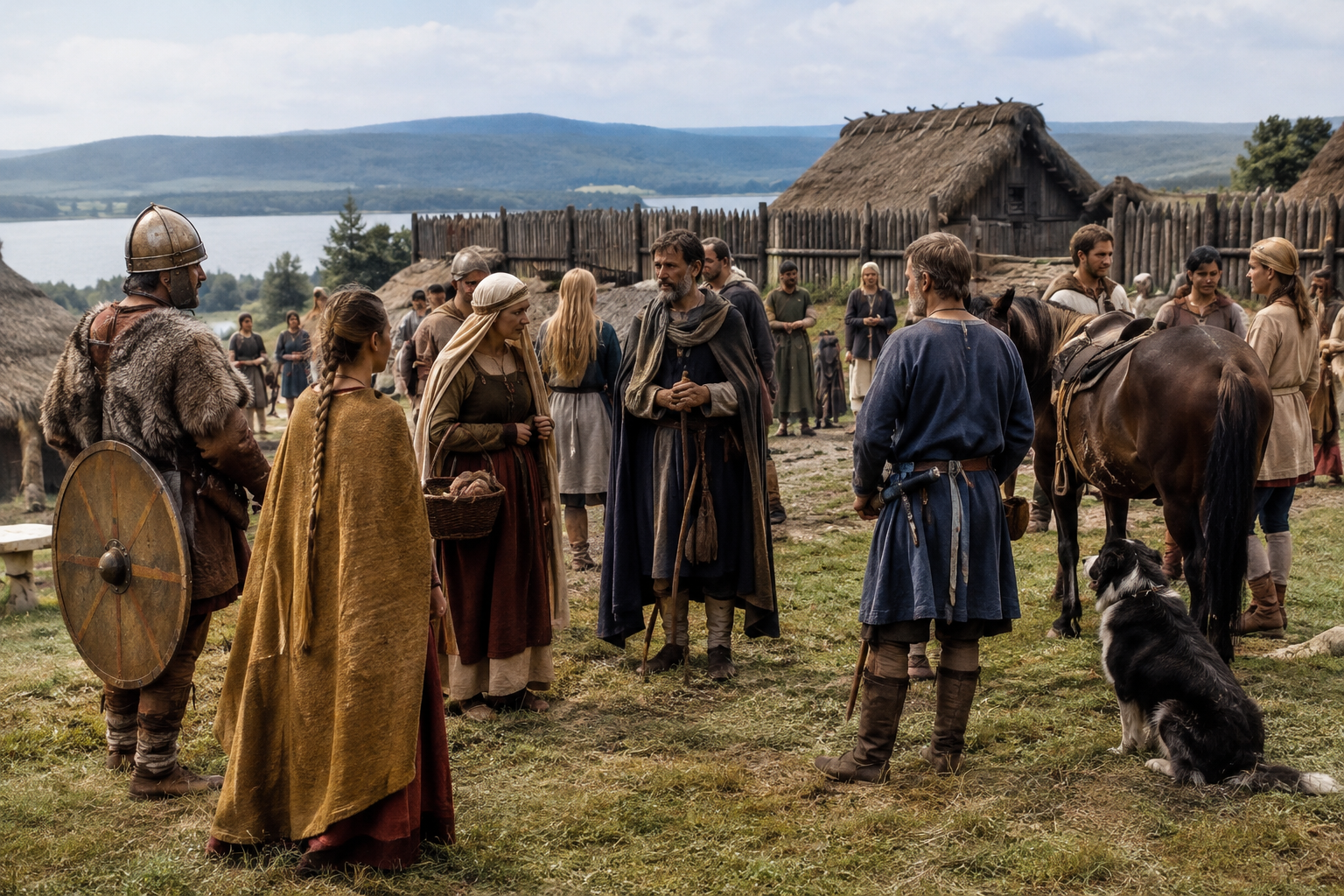
The later first millennium AD gives the haplogroup another change of costume. Sample I20270 comes from early Visigothic Spain at Pla de l'Horta, Sarrià de Ter, around AD 475. In Hungary, GYS005 belongs to a late antique Pannonian context around AD 425. Farther north and west, I20673 appears in a Jutish or Anglo-Saxon setting in Yorkshire around AD 550, while SRS002 and SRS003 come from medieval Schortens in Lower Saxony around AD 800. Viking Age Scandinavia is represented here too, with VK292 from Denmark and VK471 from Gotland.
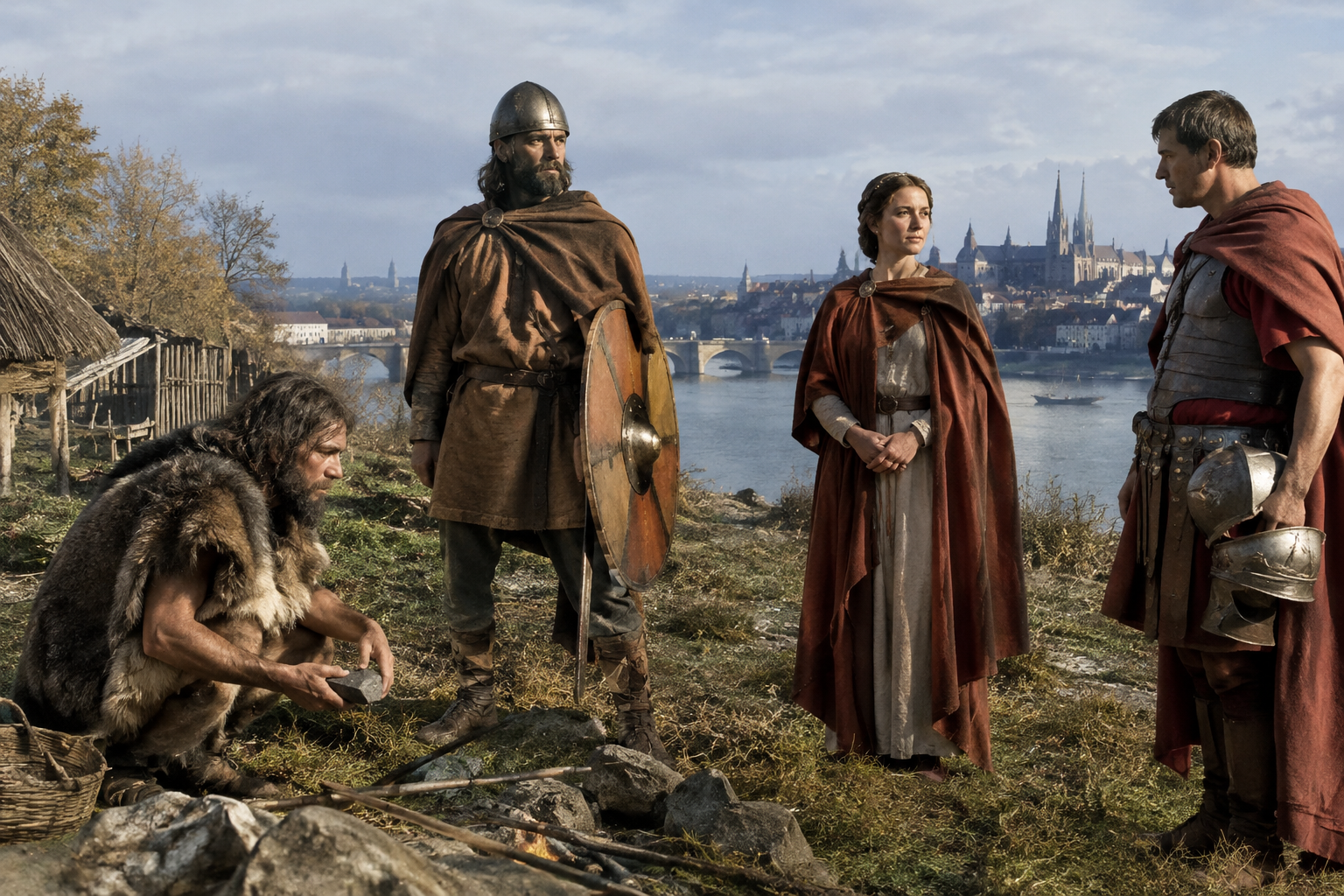
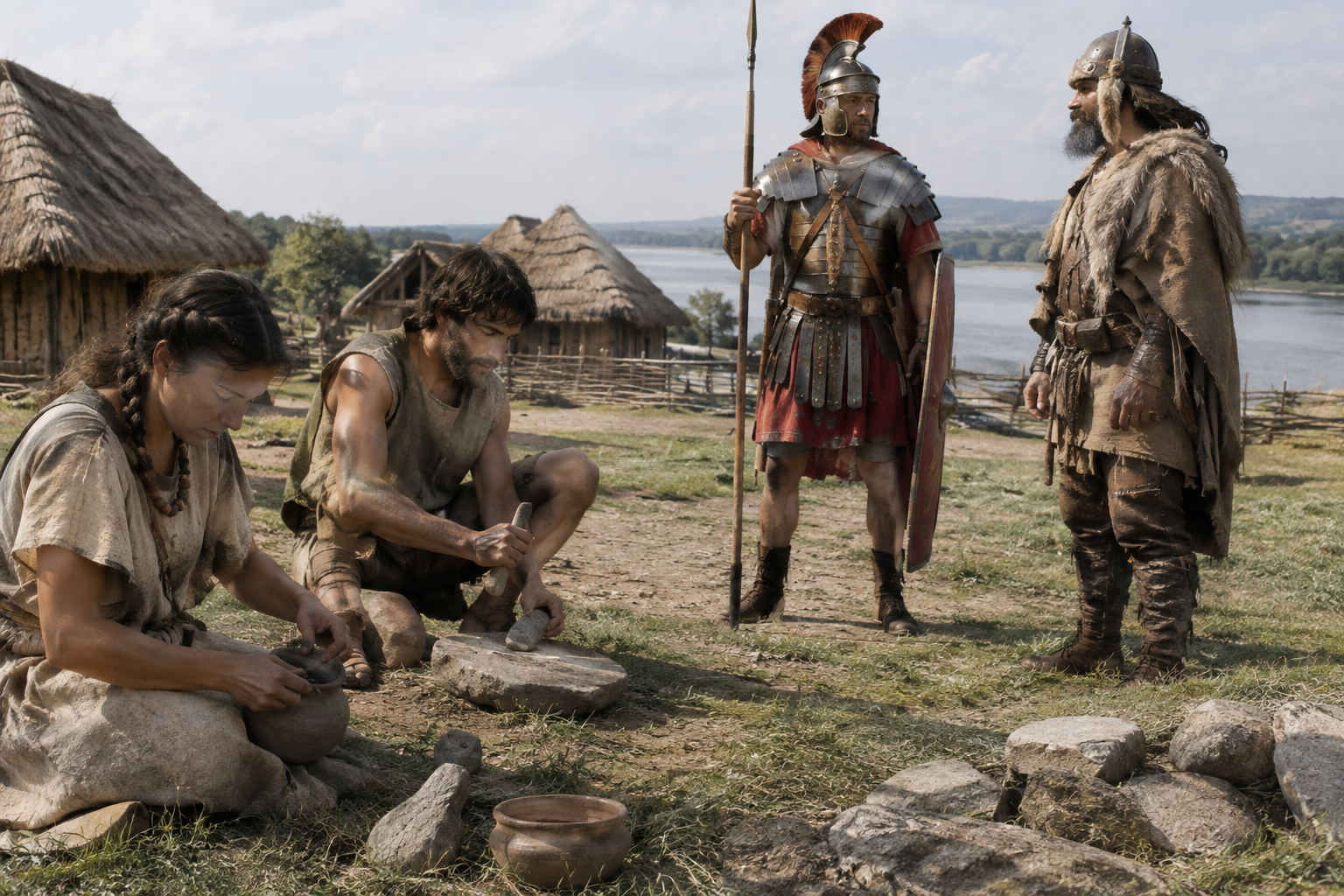
That spread is historically plausible without needing to become fanciful. The late Roman and early medieval centuries were full of movement: federates, migrants, traders, settlers, and communities re-forming themselves after imperial structures weakened or changed. A paternal lineage like R1a1a1 could pass through these worlds not because it belonged to Goths, Jutes, Slavs, or Vikings in some eternal essence, but because men carrying it became part of all those populations at different times.
The medieval western Slavic settlement at Niederwünsch in Sachsen-Anhalt is especially useful here. Samples NDW014, NDW102, NDW067, and NDW072, all around AD 1100, show that the lineage also appears in the frontier world where German eastward expansion and established Slavic communities met and mixed. That is history at ground level: not peoples as blocks on a map, but villages, households, and local continuities inside a shifting political landscape.
Goths as a Multi-Ethnic Community
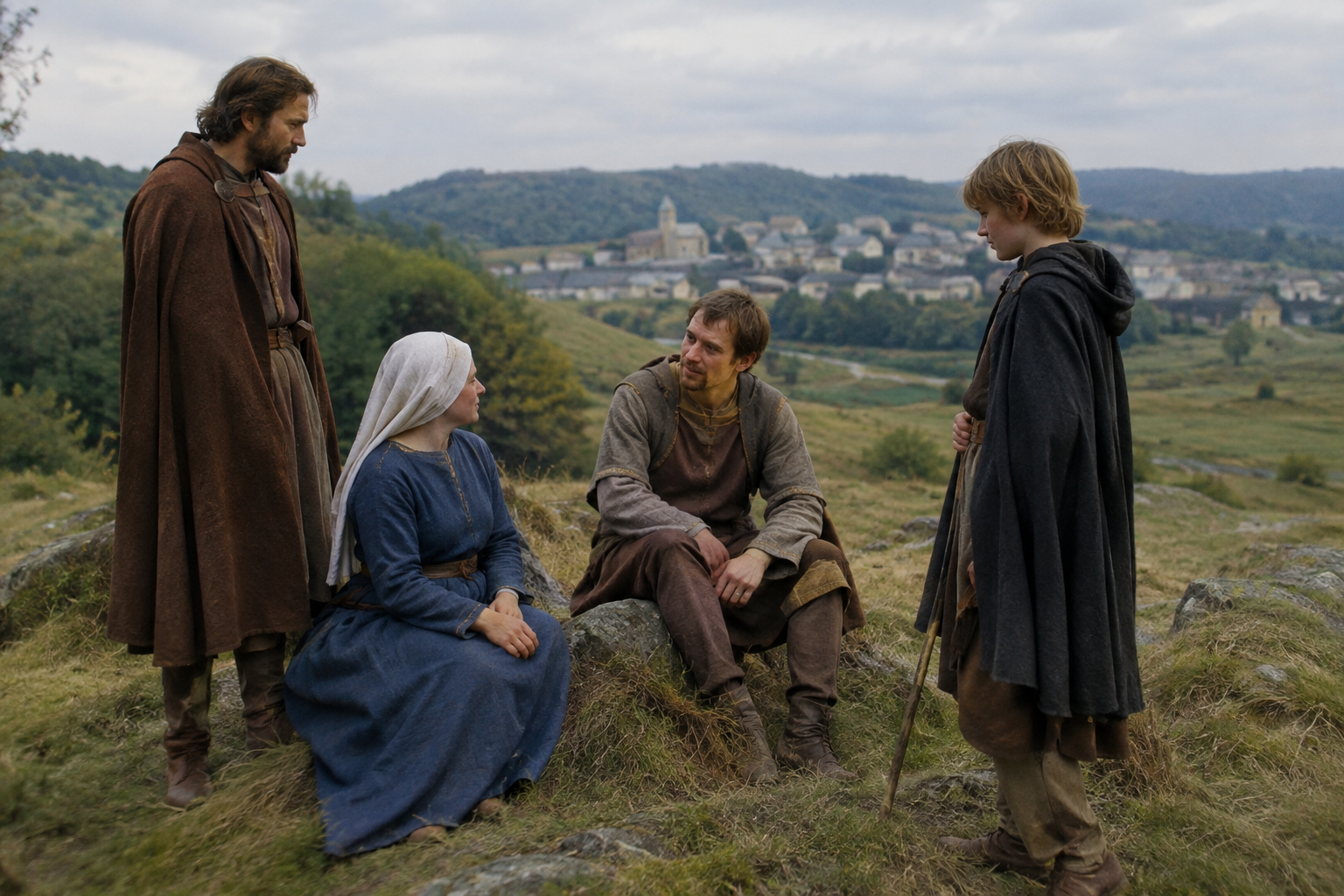
By the medieval and early modern periods, R1a1a1 shows up in contexts that feel closer to family history as many readers imagine it: churchyards, chapel cemeteries, dynastic centers, and colonial settlements. There is PCA0254 from the Piast-period setting at Poznań Śródka, around AD 1100; ATP_PSN_723 from All Saints in medieval England; ATP_PSN_881 from the Providence Calvinist Baptist Chapel in England; and I15314 from St. Mary's City in 17th-century Maryland. The Maryland material is a particularly vivid reminder that Old World paternal lines did not stop with medieval Europe but entered Atlantic colonial history too.
Other late samples broaden the picture still further: 0LS03 from medieval Estonia, ILS01 from late medieval Livonia, PKN014 from Finland, and even DUU002 from a late medieval Mongol context. Not all of these belong to one simple historical thread. But together they show a paternal branch that had become deeply dispersed across northern Eurasia and beyond.
If you are interested in how one of those colonial-era contexts has been studied in more detail, St. Mary's City is explored in this related piece.
The most distinctive thing about R1a1a1 in this set is not a single kingdom or ethnic label. It is the combination of depth and range: early presence in Corded Ware-related contexts, firm visibility in Bronze Age Central Europe, strong appearances in Iron Age steppe groups, and continued survival through medieval and early modern societies from Scandinavia to Poland, England, and colonial America. For someone researching this paternal line today, that is the useful lesson. Your direct male line may connect most strongly to one branch of the enormous R1a family, but the ancient evidence shows that such a lineage could belong, at different moments, to very different archaeological and historical worlds.
Comments