Haplogroup I2a1b1a1b1

– 6 min read


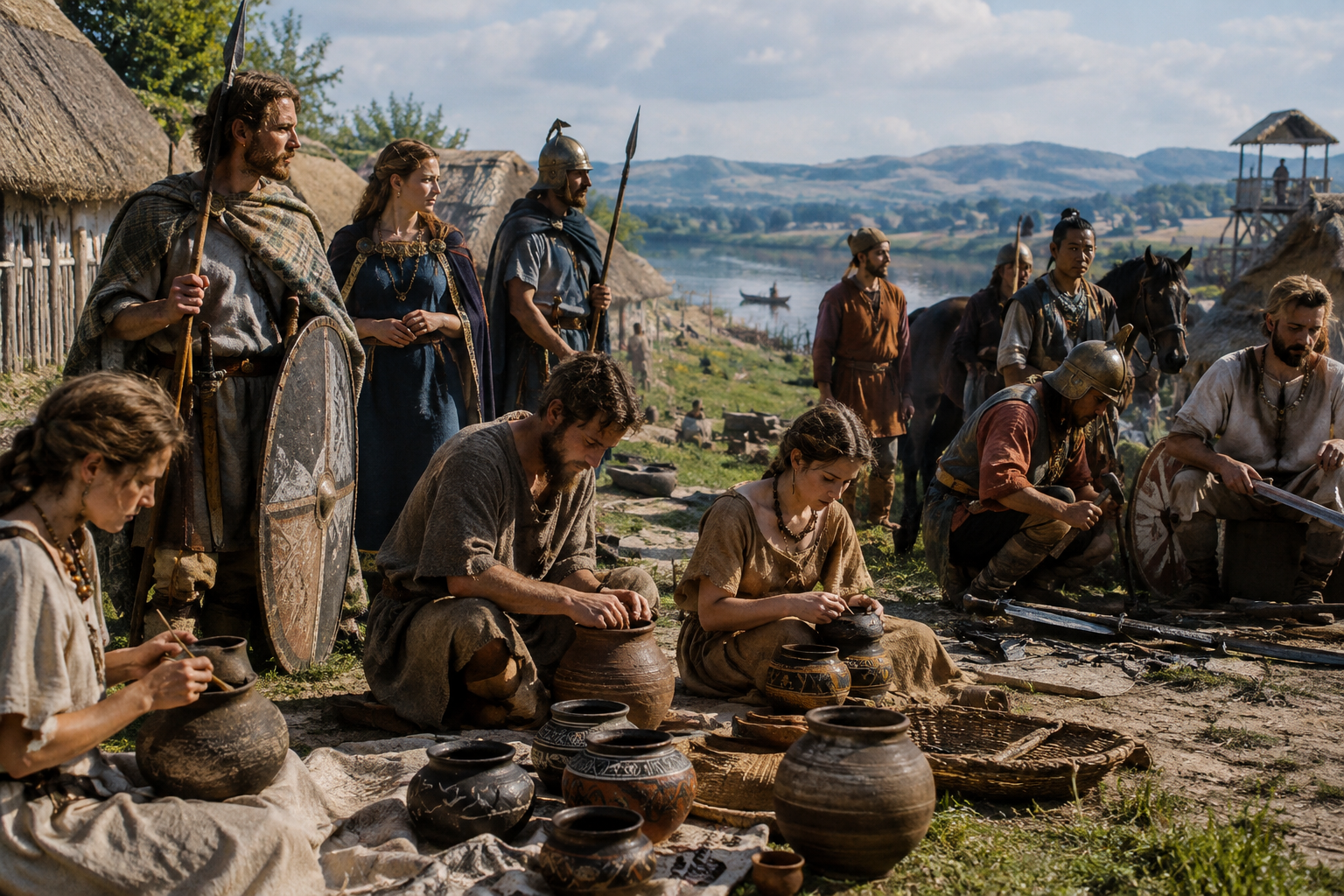
Some Y-DNA haplogroups announce themselves in a single dramatic setting: a royal tomb, a famous battlefield, a well-known dynasty. Haplogroup I2a1b1a1b1 is more interestingly awkward than that. It appears in a chain of ancient finds stretching across Bronze Age Hungary, north into Central Europe, west into Celtic Italy, and, rather startlingly, as far as Samdzong in Nepal in the first millennium AD. That is precisely what makes it historically useful. It is not a badge of one people, one kingdom, or one language. It is a paternal line that turns up in very different worlds.
That is also a good moment to remember what a Y-DNA haplogroup can and cannot tell us. A Y-haplogroup traces one direct paternal line only: father to father to father across time. It does not describe a person's whole ancestry, identity, or ethnicity. Still, when ancient DNA places the same paternal branch in multiple archaeological settings, it lets us ask sharper historical questions about mobility, local continuity, and the long lives of male lineages that written sources never recorded.
I2a1b1a1b1 belongs within haplogroup I, one of the major old European Y-chromosome lineages. Broadly speaking, branches of I are deeply tied to European prehistory, though any very specific subclade must be handled carefully. We should not simply pour the entire history of haplogroup I, or even broader I2, into this narrower branch. What the evidence supplied here does support is that lineages classified as I2a1b1a1b1 were present in parts of Europe by the Bronze Age and remained visible in later Iron Age contexts.
The strongest pattern in these samples begins in the Carpathian Basin and neighboring parts of Central Europe. That matters because this region was never some quiet backwater. It was a crossroads where communities, technologies, burial customs, and probably languages met and mixed repeatedly. If you wanted a place where an old paternal lineage might endure while also being carried into new cultural settings, Bronze Age Hungary and its surrounding zones would be a very good candidate.
The densest cluster of evidence in this dataset comes from Bronze Age Hungary. In the Balaton region, several individuals from Kisapostag Encrusted Pottery contexts carry this paternal line: S1, S4, S6, S11, and S45, all dated to 1980 BC. Nearby and slightly earlier is S17 from Somogyvar-Vinkovci in the Balaton region, dated to 2290 BC. Then there are three more from Transdanubian Hungary, S15, S16, and S19, each dated to 1800 BC.
That concentration is the first big clue. When one paternal lineage appears repeatedly across related Bronze Age contexts in the same general region, it suggests more than a one-off traveler. It hints at local male-line continuity within communities of western Hungary and Transdanubia. Not proof of one single dynasty, not proof that every male there belonged to the same branch, but clear evidence that this lineage had a meaningful foothold in that landscape.
And what a landscape it was. The Balaton region sat in a corridor linking the Balkans, the Danube routes, Alpine approaches, and the wider plains of the Carpathian Basin. Archaeologists know this was a period of active exchange and cultural change. So the repeated appearance of I2a1b1a1b1 there fits a plausible historical picture: an established paternal line embedded in Bronze Age communities that were anything but isolated.
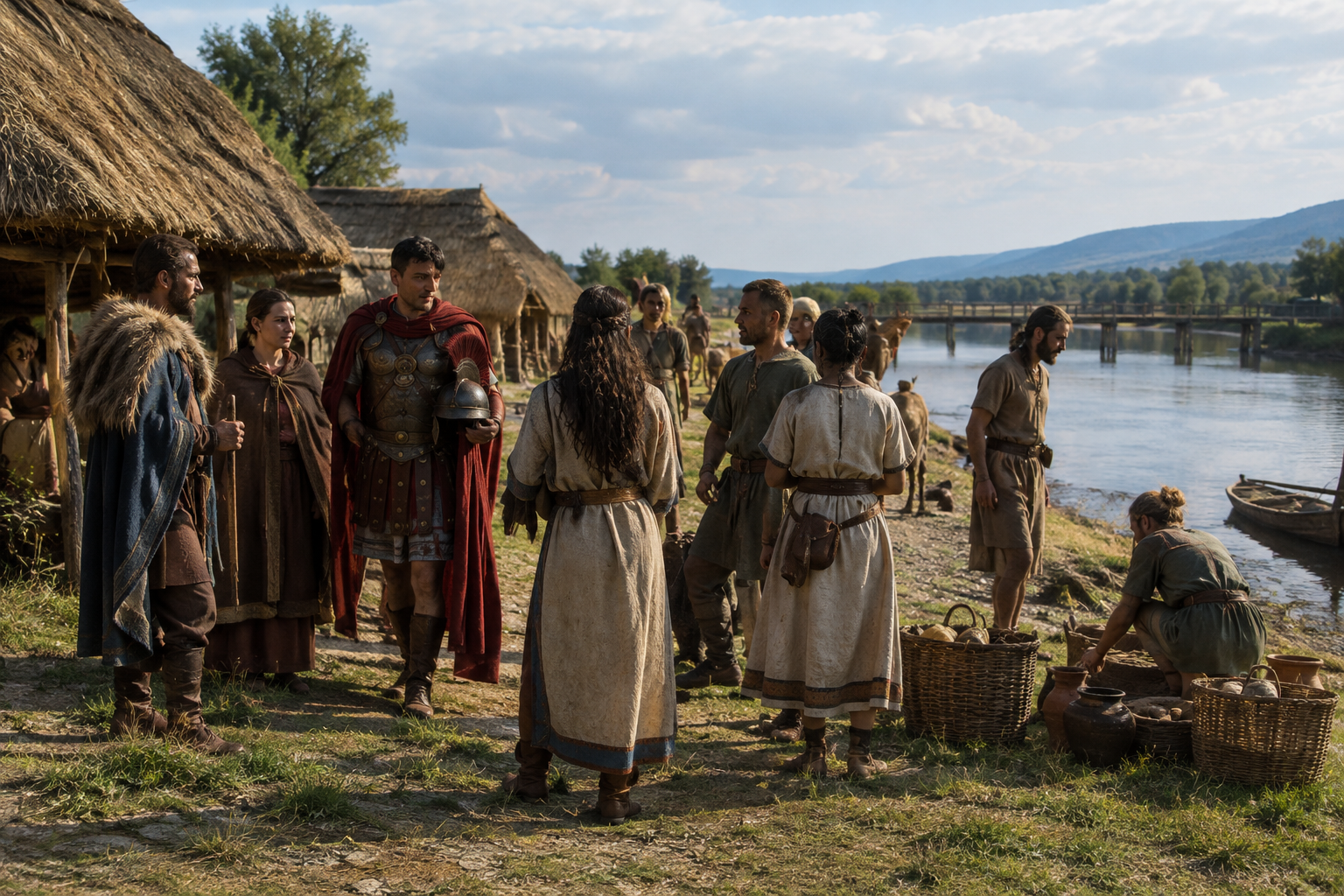
From Hungary the trail broadens. In northern Europe we find WEZ74 from the Tollense Valley Battlefield, Mecklenburg-Vorpommern, dated to 1250 BC. Tollense is one of the most extraordinary Bronze Age conflict sites in Europe, a reminder that long-distance movement and coalition warfare were already realities. A lineage found there need not mark a single ethnic bloc; rather, it shows that men carrying this branch could be caught up in the turbulent networks of Late Bronze Age Europe.
Other Central European examples reinforce that spread: poz690 from Late Bronze Age Pommerania Gustorzyn dated to 1500 BC, poz717 and poz719 from Bronze Age Silesia Pielgrzymowice Grave 669 dated to 1375 BC, and I16099 from Bronze Age Knoviz Konobrze Bohemia dated to 1250 BC. Taken together, these do not show a neat arrow on a map so much as a belt of paternal continuity and movement across Central Europe.
Explore Late Bronze Age Central Europe
By the Iron Age, the lineage turns up in settings that will feel more familiar to readers of ancient history. One especially revealing sample is I16549 from Celtic Hallstatt Stradonice Czech Bohemia, dated to 675 BC. Stradonice belongs to that wider Central European Celtic world that later classical writers would only partly understand and often oversimplify. Here the value of ancient DNA is that it gives us an actual paternal trace in that milieu, not a Roman stereotype about "Celts."
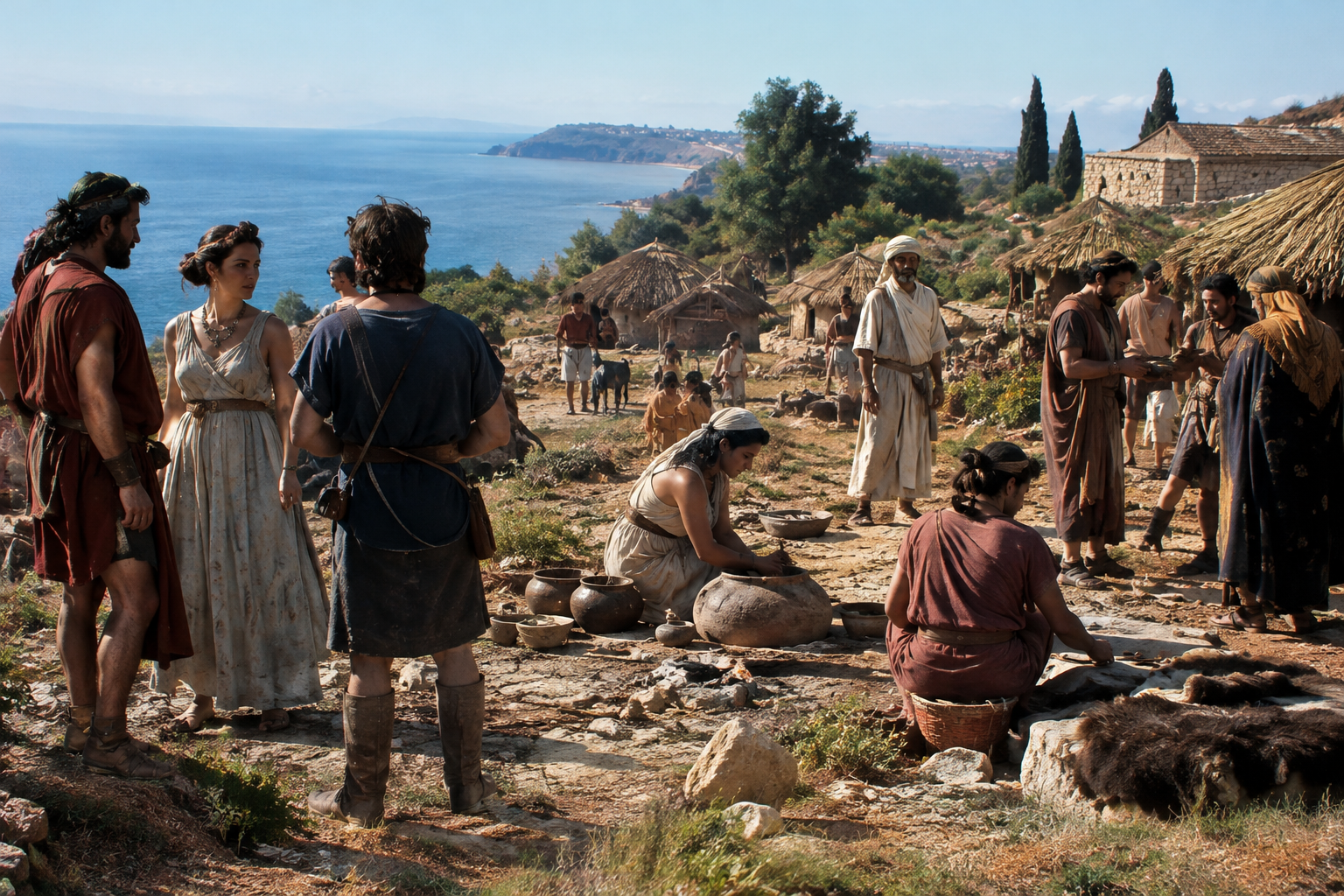
The Italian evidence is equally striking. Two individuals, 3206s and 3206, come from the Gallic Cenomani Tribe Italy Verona Seminario Vescovile, dated to 300 BC. This is exactly the kind of case that makes archaeology, history, and genetics speak to each other. The Cenomani in northern Italy were part of the Celtic-speaking world south of the Alps, and these samples show that lineages seen earlier in Central Europe also appear in that transalpine setting. That does not prove a single direct migration line from any one Bronze Age Hungarian village to Verona, but it does fit a broader pattern of connectivity between Central Europe and the Po Valley in later prehistory and the Iron Age.
If you want a wider look at this Italian side of the story, MyTrueAncestry readers may enjoy a companion piece on related ancient populations in the peninsula.
Discover Ancient Italy's Genetic History
Then the dataset takes an unexpected turn. Two later individuals appear in Samdzong Nepal: S8, listed as Iron Age Samdzong Nepal Year:550 AD, and S10, listed as Samdzong Licchavi Year:500 AD. One should be cautious here. A lineage showing up in Nepal does not mean the haplogroup was "Nepalese" in any simple sense, nor does it let us draw an easy, straight migration route from Bronze Age Europe to the Himalayas. But it does show that this paternal branch, or a closely related placement within the same classification framework, was not confined to one small European pocket.
Historically, that should make us think of the immense networks that linked Inner Asia, the steppe world, mountain corridors, and South Asia across many centuries. Ancient Y-lineages can travel a very long way without leaving us a tidy written itinerary.
No associated noble families or castles were supplied in the input for this article, so it would be irresponsible to invent them. That absence is actually a useful reminder of method. Haplogroups often tempt people into jumping straight from a Bronze Age grave to a medieval coat of arms. Real history is rarely so obliging.
What we can say is that lineages like I2a1b1a1b1 show how paternal ancestry can persist across the same broad regions later occupied by historic lordships, bishoprics, tribal confederations, and kingdoms. The ancient men from Transdanubia, Bohemia, Silesia, Pomerania, and Verona lived in landscapes that would later fill with castles, chartered towns, dynastic politics, and noble genealogies. Genetics gives us the deeper preface to those later records, not a shortcut past them.
For readers interested in how medieval and early royal lineages are approached when documentary and genetic evidence do meet more directly, there are useful parallels elsewhere in the MyTrueAncestry community.
Read About Hungary's Arpad Dynasty DNA
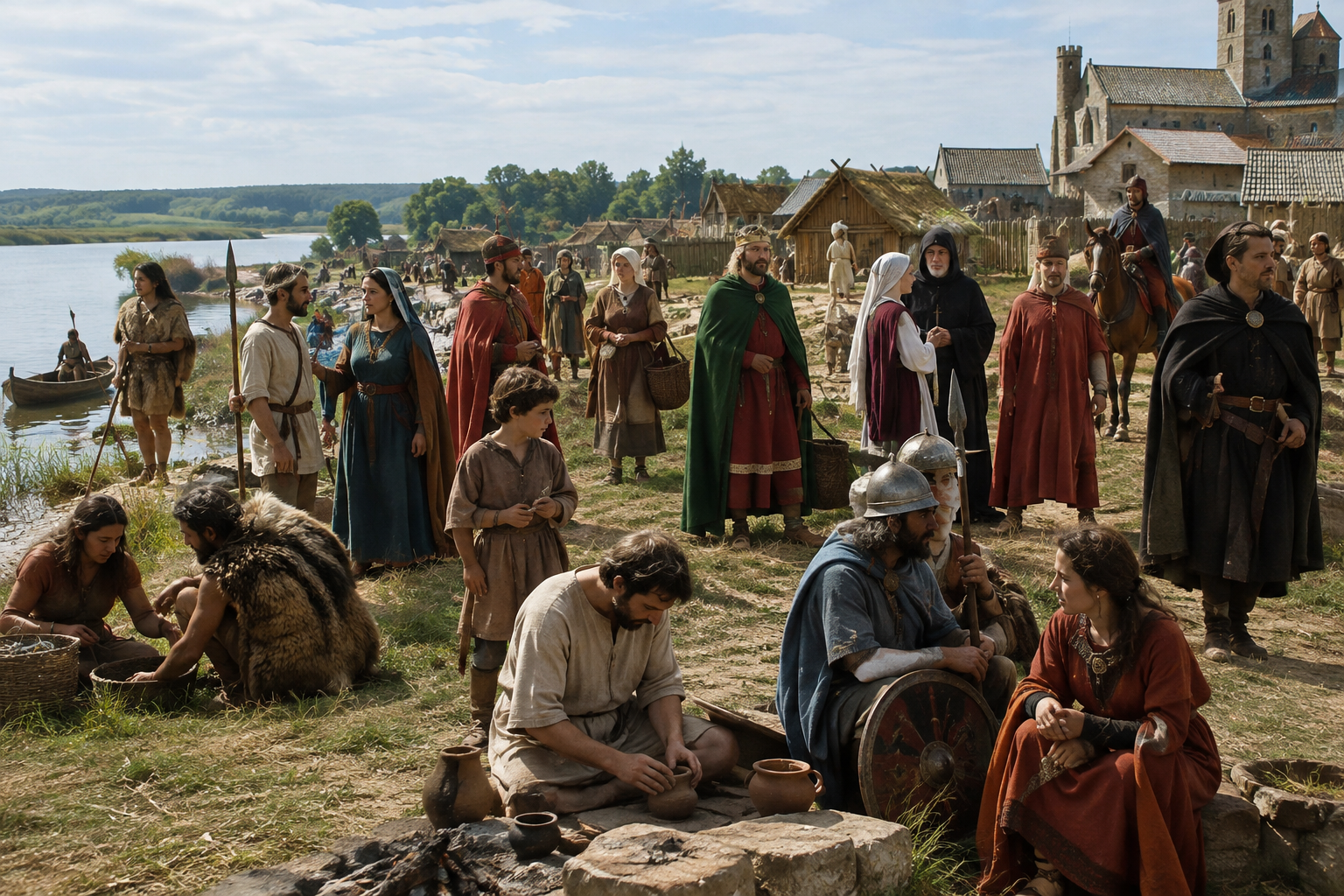
The real fascination of I2a1b1a1b1 lies in its pattern. In this dataset, it is not tied to one dramatic founder or one famous royal surname. Instead, it appears as a durable paternal thread in Bronze Age Hungary, then across the wider Central European zone, then among Iron Age Celtic-associated contexts in Bohemia and northern Italy, and finally in a much farther eastern context at Samdzong. That is a serious historical range.
So what does it reveal? First, paternal lineages can survive major cultural change. Pottery styles shift, burial customs shift, languages shift, political borders shift, but some male lines continue. Second, ancient DNA is especially good at showing that archaeological cultures were not sealed boxes. The men buried in these sites belonged to communities connected by marriage, movement, conflict, and exchange. Third, similarity in Y-DNA is evidence of shared paternal ancestry at some point, not proof of recent kinship, not proof of noble descent, and not proof of ethnic identity.
For a broader introduction to how such evidence is changing historical research, one especially relevant community article is worth exploring.
Learn How Archaeogenetics Reconstructs History
If your own Y-DNA falls near lineages like I2a1b1a1b1, MyTrueAncestry can help place that paternal branch in a much larger human story, from Bronze Age cemeteries to Iron Age tribal worlds and beyond. Uploading your DNA may reveal similarities to ancient individuals and historical populations discussed here, while also reminding us of an important truth: a genetic match can open a window onto the past without proving direct descent from any one ancient person or later noble line.
Comments