Haplogroup R1b1a1

– 6 min read


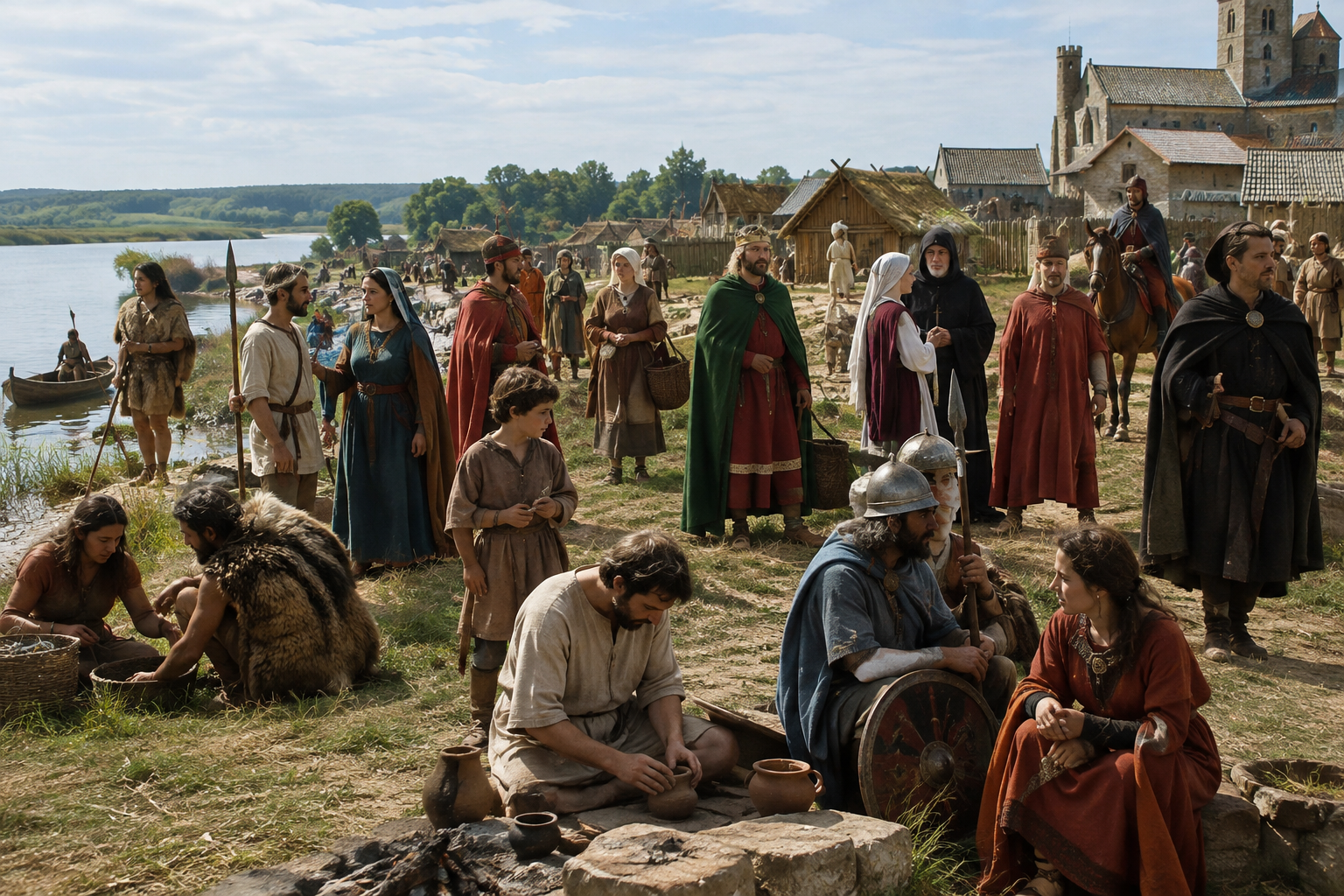
There is something gloriously awkward about broad Y-DNA labels. They look neat on a chart, but history is not neat. Haplogroup R1b1a1 sits inside one of the major paternal lineages of western Eurasia, and that makes it historically important, but also easy to oversimplify. The temptation is to turn it into a badge for one people, one kingdom, one migration. Ancient DNA keeps spoiling that tidy story.
In plain terms, a Y-DNA haplogroup traces one direct paternal line: father to son to son across many generations. It does not describe a person's whole ancestry, culture, language, or identity. Still, as ancient burials have been tested across Europe and beyond, broad lineages like R1b1a1 have become useful signposts for following long-term male-line history: hunter-gatherers, farmers, Bronze Age societies, Iron Age communities, and medieval elites all appear in its wider orbit. What matters most is not a fantasy of one unbroken tribe, but the way this paternal branch turns up in very different worlds.
R1b1a1 belongs to the wider R1b family, a major branch of the Y-chromosome tree that became especially prominent in many parts of Europe over time. But one of the first things worth saying is that a broad label like R1b1a1 covers a lot of historical ground. Its downstream branches emerged in different places and periods, and their stories are not identical. That is why ancient DNA is so valuable: it stops us from lazily projecting the later fame of western European R1b onto every earlier or broader branch.
The supplied ancient individuals show just how wide that horizon can be. We meet this lineage in Mesolithic and Neolithic contexts in the eastern Baltic and forest zones, later in Bronze Age and Iron Age central and southeastern Europe, and then again in medieval Britain, Iberia, and Poland. That does not prove a single continuous family history across all those regions. What it does suggest is that paternal branches within this wider grouping were mobile, durable, and repeatedly absorbed into very different populations.
For readers interested in the bigger archaeological backdrop to these early population changes, the MyTrueAncestry article on the Neolithic transition is an excellent companion.
Explore the Neolithic Expansion
Some of the most striking early evidence comes from the eastern Baltic. At Zvejnieki in Latvia, sample I4628, dated to 4850 BC, and sample I4436x, dated to 4159 BC, place this broad paternal lineage in a region famous for its long sequence of hunter-gatherer and early farming interactions. Zvejnieki is not just a dot on the map; it is one of those sites that reminds us prehistoric Europe was densely peopled, regionally varied, and already full of local histories before later Bronze Age expansions transformed the continent.
Another early point on the map is I8438 from Neolithic Russia Ivanovo Sakhtysh, dated to 5350 BC. Forest-zone Russia is not always where casual readers expect to find a lineage later associated so strongly with Europe's west. But that is exactly the value of ancient DNA. It reveals that broad paternal branches often had earlier and wider distributions than later historical stereotypes suggest.
By the Bronze Age, the picture becomes even more geographically expansive. BOY001 from Early Bronze Age Bulgaria Boyanovo, dated to 2770 BC, and OTTM_154 from a North Alpine Middle Bronze Age Outlier, dated to 1756 BC, show this paternal background appearing in societies shaped by exchange, mobility, and social change. Southeastern Europe and the Alpine world were not backwaters; they were connective zones where ideas, objects, and people moved in complicated ways.
If you want to follow one of these eastern forest-zone contexts in more detail, the Sakhtysh article is especially relevant.
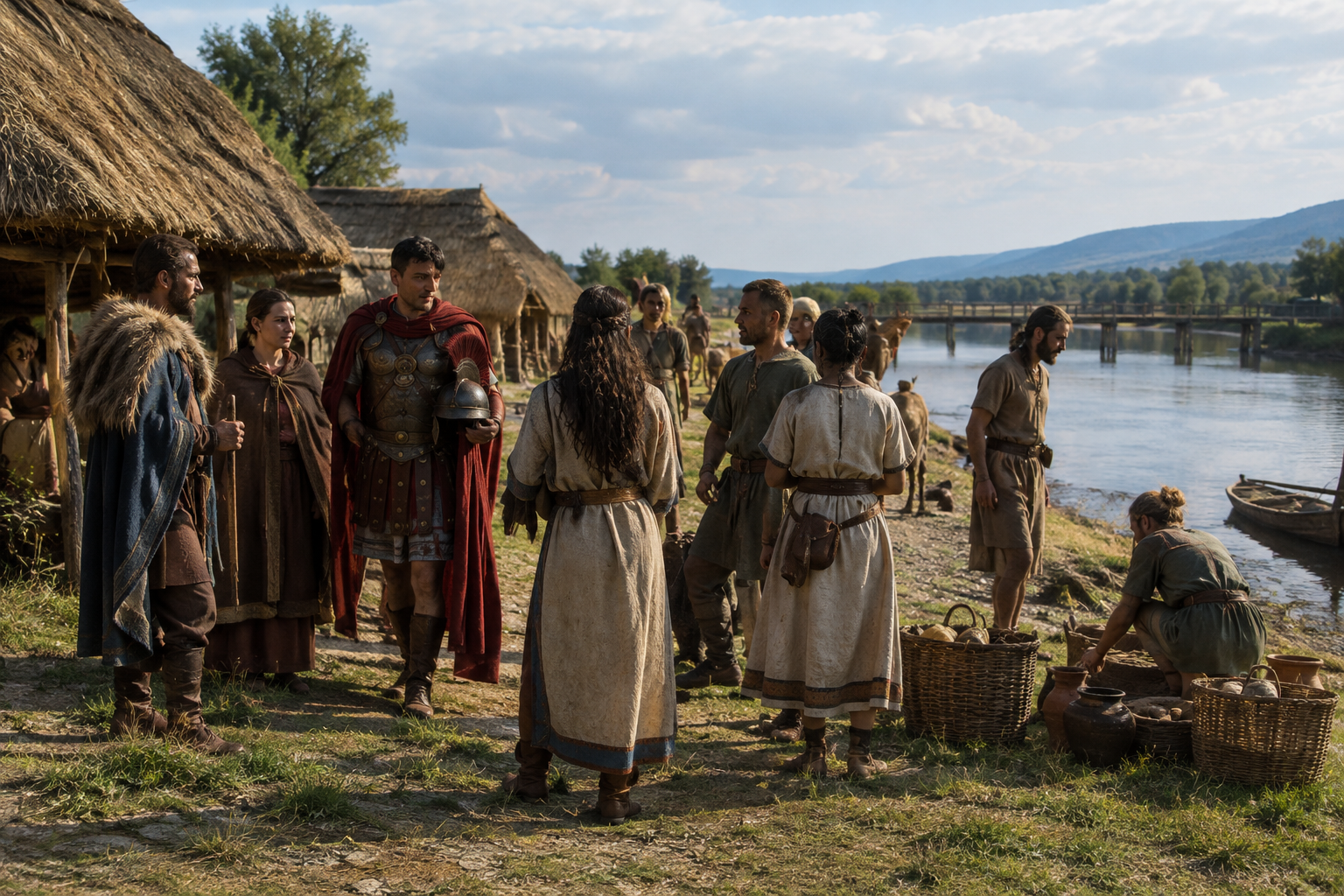
By the Iron Age, R1b1a1-related paternal lines appear in places that feel much more familiar from written history. In Britain, I12610 from Iron Age Potterne Wiltshire England, dated to 500 BC, and DUX013 from Pre-Roman Era Cambridgeshire Duxford, dated to 180 BC, sit in landscapes later wrapped into Roman and then medieval political worlds. In central Europe, I16269 from Iron Age Prague Jinonice Central Bohemia, dated to 300 BC, adds another point in a region crucial to later Celtic, Germanic, and Slavic histories, though no single ethnic label should be forced onto the haplogroup itself.
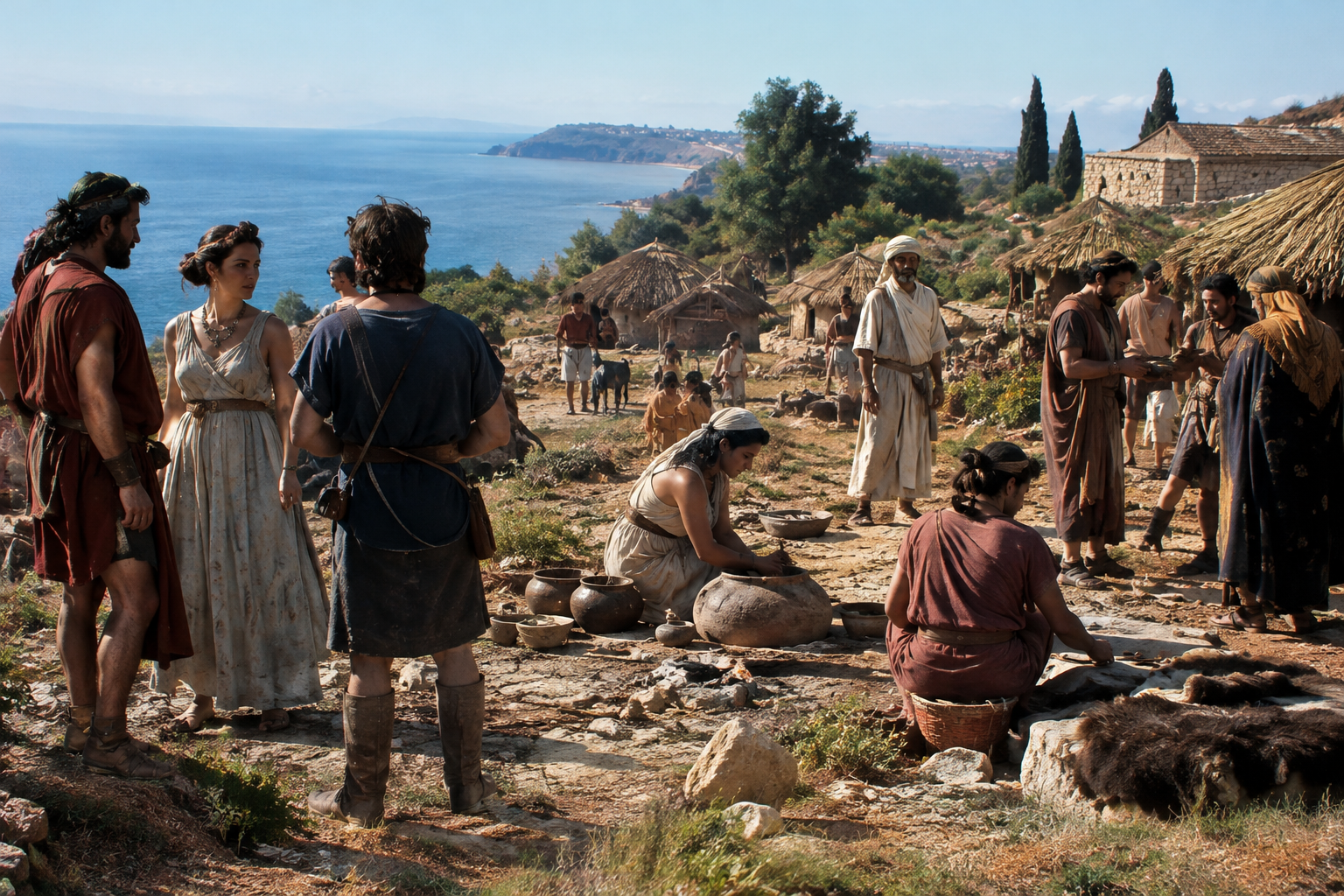
Farther south, I13621 from Iron Age Roquepertuse Bouches-du-Rhone France, dated to 300 BC, places the lineage in Mediterranean Gaul, a world of sanctuaries, trade, and contact with Greek and later Roman spheres. Then there is ALN004 from the Iron Age Alai Nura Burial, dated to 300 AD, reminding us again that this broad paternal umbrella reaches into very different settings from those most people first imagine.
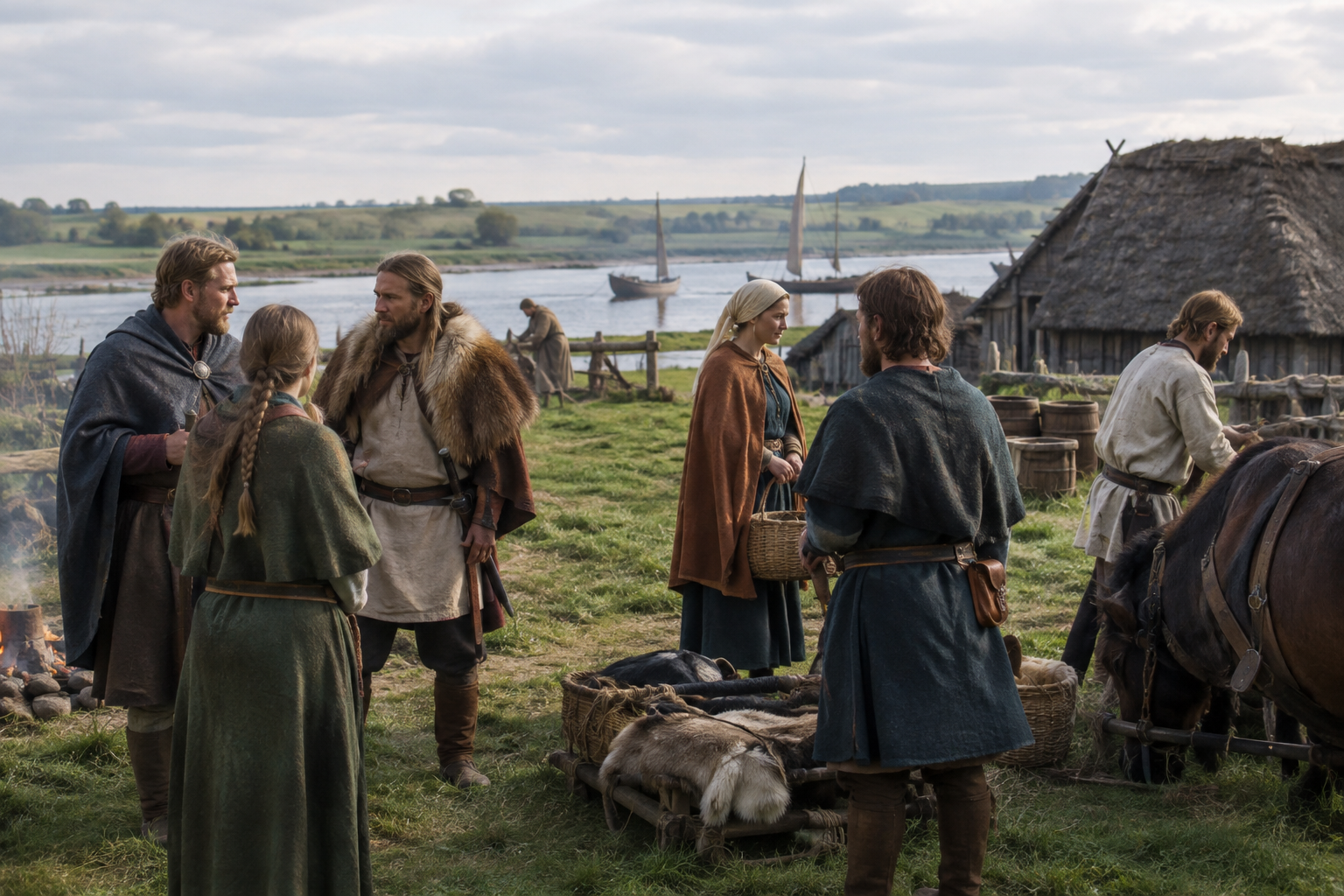
The post-Roman centuries are especially revealing because they expose both movement and continuity. I11582 from Post Roman Era Worth Matravers Dorset England, dated to 600 AD, and I3775 from Post-Roman Era Barcelona, dated to 650 AD, show that after the Roman Empire, male lines within this broad group remained present in both Britain and Iberia. Not the same family, not proof of direct connection, but evidence that paternal continuity could coexist with major cultural change.
Readers drawn to Iberia's complex Roman and post-Roman population history may want to continue with this related piece.
The medieval samples bring the story close to the world of chronicles, churches, and castles. ATP_PSN_129 from Medieval England Cambridge St Johns Hospital, dated to 1250 AD, is a useful reminder that ancient DNA does not belong only to warriors and princes. Hospitals, cemeteries, and town burials give us the paternal history of ordinary and not-so-ordinary medieval lives alike.
In Iberia, I19662 from Early Medieval Spain Guadalajara Gualda El Tesoro Carramantiel, dated to 725 AD, and LP116_7 from Medieval Kingdom of Portugal Santarem Rua dos Barcos, dated to 1150 AD, place the lineage in regions shaped by Visigothic legacies, Islamic rule, Christian expansion, and constant local mixture. Medieval genetic history in Iberia is rarely simple; these samples fit that larger pattern.
Most eye-catching for dynastic history is PCA0649, identified as a Piast Masovian Dynasty Prince, dated to 1200 AD. This is precisely the kind of find that excites genealogically minded readers, but it needs care. A dynastic burial can illuminate the paternal background of one individual and perhaps, if supported by additional evidence, a specific ruling line. It does not mean everyone in a kingdom shared that Y-line, nor does it magically connect all bearers of a broad haplogroup to medieval royalty.
Still, the Piast case is fascinating because it shows how ancient DNA and written dynastic history can meet on the same ground. If that intersection interests you, this related article is the natural next stop.
Discover the Piast Dynasty DNA
In this case, the supplied section for associated noble families and castles is effectively empty, and that is worth being honest about. Better a gap in the record than invented grandeur. We can still say something important: noble houses and their castles matter enormously for understanding how paternal lines were remembered, displayed, and legitimized in medieval and early modern Europe. A family seat, whether fortress, manor, or dynastic residence, preserved claims about ancestry long before genetics entered the conversation.
What genetics adds is different. A Y-chromosome can sometimes test whether a documented paternal line is biologically consistent across burials or branches of a dynasty. But even then, the result must be handled with caution. Noble families often contain adoption, illegitimacy, collateral branches, and political reinvention. A castle may preserve family memory; it does not prove a haplogroup.
So with R1b1a1, the sensible approach is not to pin the lineage to an unspecified noble surname, but to place it in the wider historical world that produced noble houses at all: a Europe of local continuity, migration, conquest, marriage alliances, and regional power centers built over older population layers.
The real interest of R1b1a1 is not that it belongs to one legendary people. It is that it keeps appearing across very different archaeological and historical settings: Mesolithic Latvia, Neolithic Russia, Bronze Age Bulgaria, Iron Age Britain and Bohemia, post-Roman Barcelona, medieval Portugal, and a Piast prince in Poland. That is a big, untidy, deeply human story.
For MyTrueAncestry users, this is exactly where the excitement lies. A Y-DNA haplogroup can point toward one direct paternal thread, while ancient DNA comparisons reveal the much broader historical worlds your ancestors may have inhabited. A match to an ancient individual or population does not prove direct descent, and it certainly does not make anyone a member of a medieval dynasty. But it can place your DNA beside real people from the archaeological record, which is often far more interesting than family myth.
Upload your DNA to MyTrueAncestry and see whether your results connect you with ancient individuals like I4628, I8438, BOY001, or PCA0649, and with the wider populations that shaped Europe across thousands of years.

Comments