Haplogroup I1a2

– 6 min read


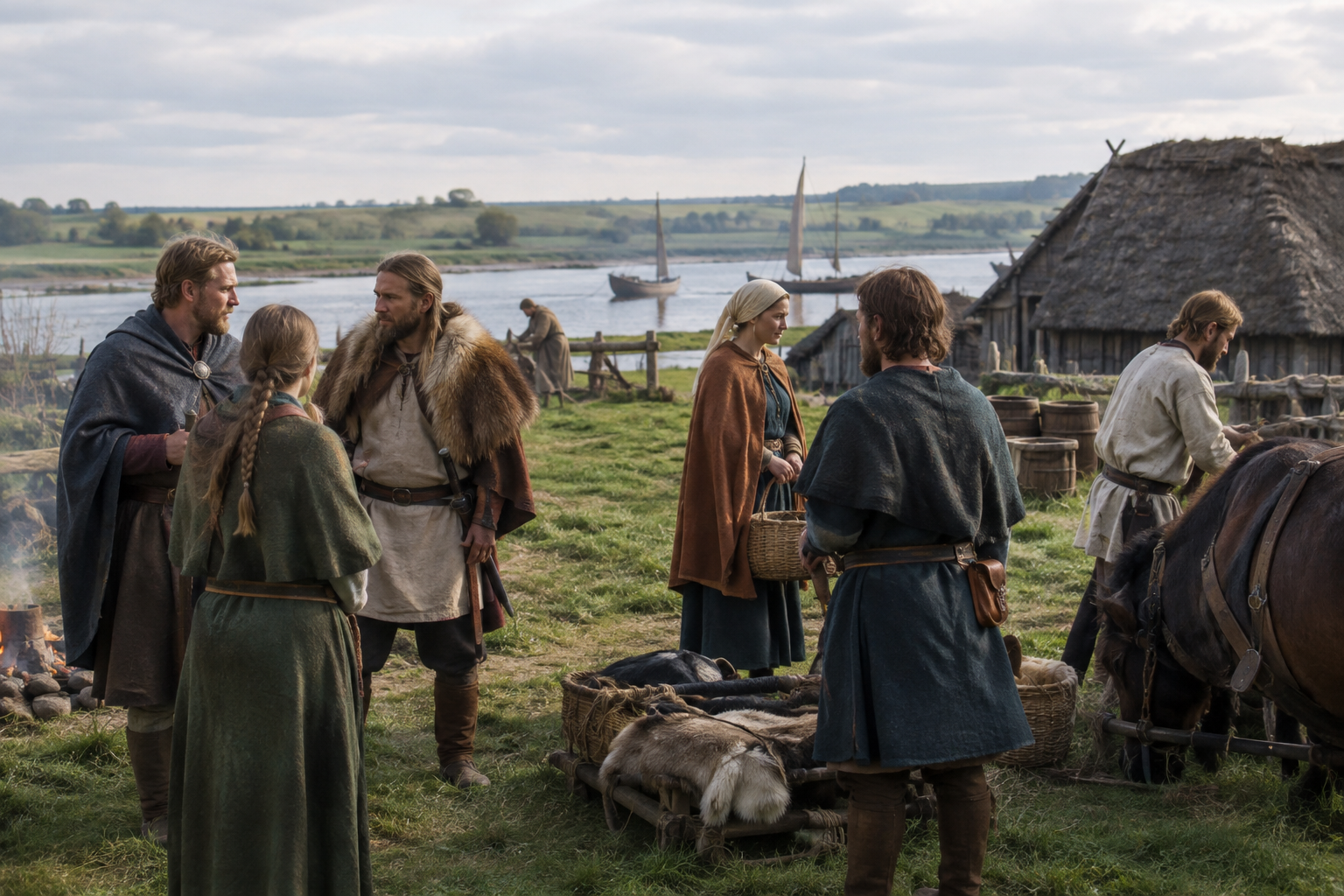
Some Y-DNA haplogroups announce themselves with a bang across vast stretches of Eurasia. Others are more revealing in a different way: they appear, again and again, in precisely the places where historians have long argued about movement, settlement, and identity. I1a2 belongs to that second category. It sits within the wider I1 paternal lineage, a branch most often associated with northern Europe, and it becomes especially interesting when ancient DNA starts placing it in Bronze Age Denmark, among later Scandinavian and continental Germanic contexts, and then in early medieval England.
That matters because Y-DNA traces one very particular line of descent: the direct paternal line, from father to son to son. It does not describe a person's whole ancestry, culture, language, or identity. But when used carefully, it can help us follow one thread through a much bigger historical fabric. In the case of I1a2, the thread seems to run through the North Sea world: southern Scandinavia, northern Germany, the migration-period frontier, and Anglo-Saxon England.
I1a2 is a subclade within haplogroup I1, one of the best-known paternal lineages in northern Europe. For a narrower branch such as I1a2, caution is essential: we should not simply assign to it the entire history of all I1 men across all periods. Still, the ancient individuals supplied here place this lineage in a strikingly coherent historical zone.
The earliest sample in this set comes from Nordic Bronze Age Denmark Vordingborg Year:1814 BC ID:CGG105333. That is already a remarkable clue. It places the lineage, or at least a lineage associated with this branching tradition, in southern Scandinavia deep in prehistory. From there, later finds suggest continuity or repeated presence around the Danish islands, the southern Baltic, and the North Sea coast rather than some sudden appearance out of nowhere in the early Middle Ages.
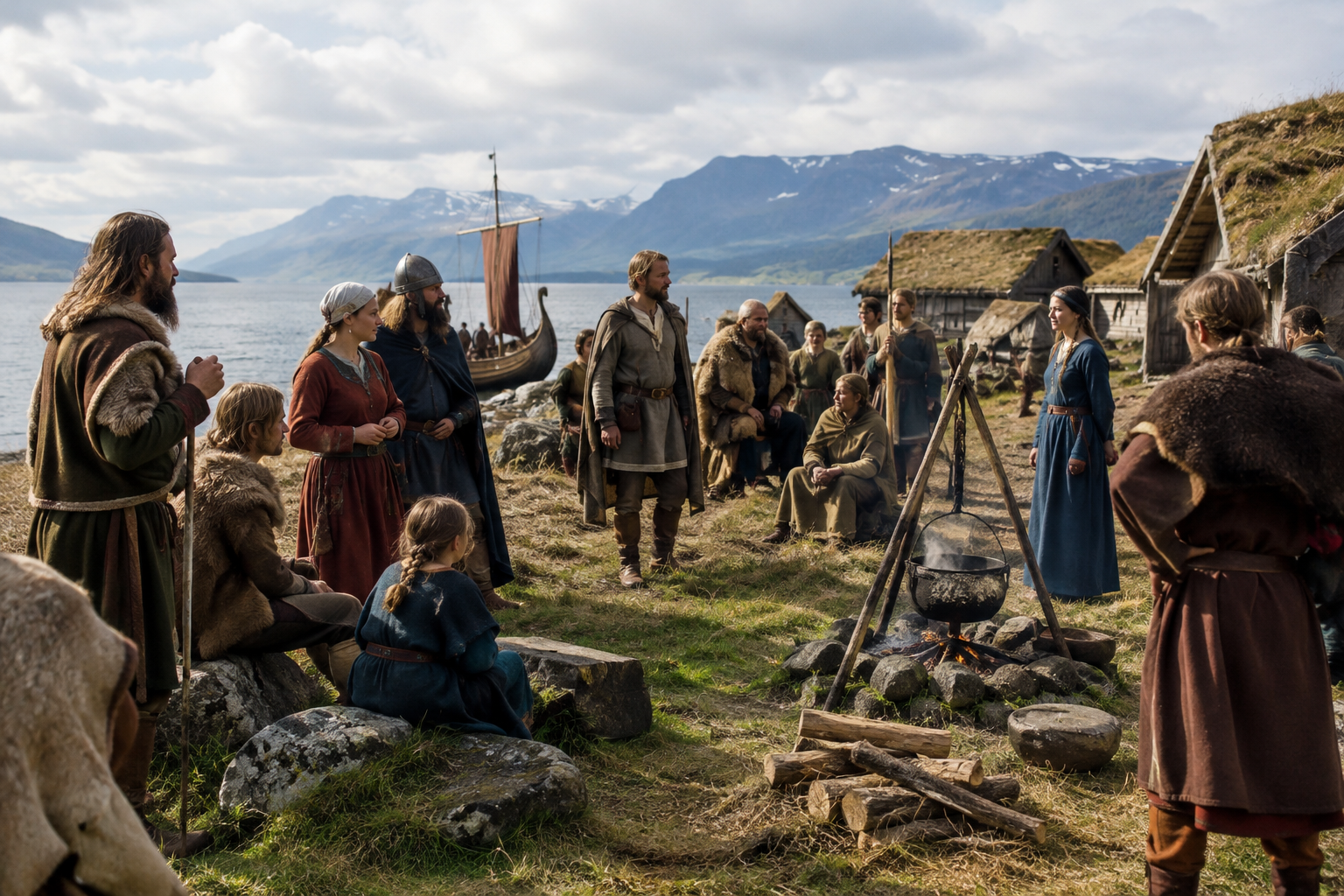
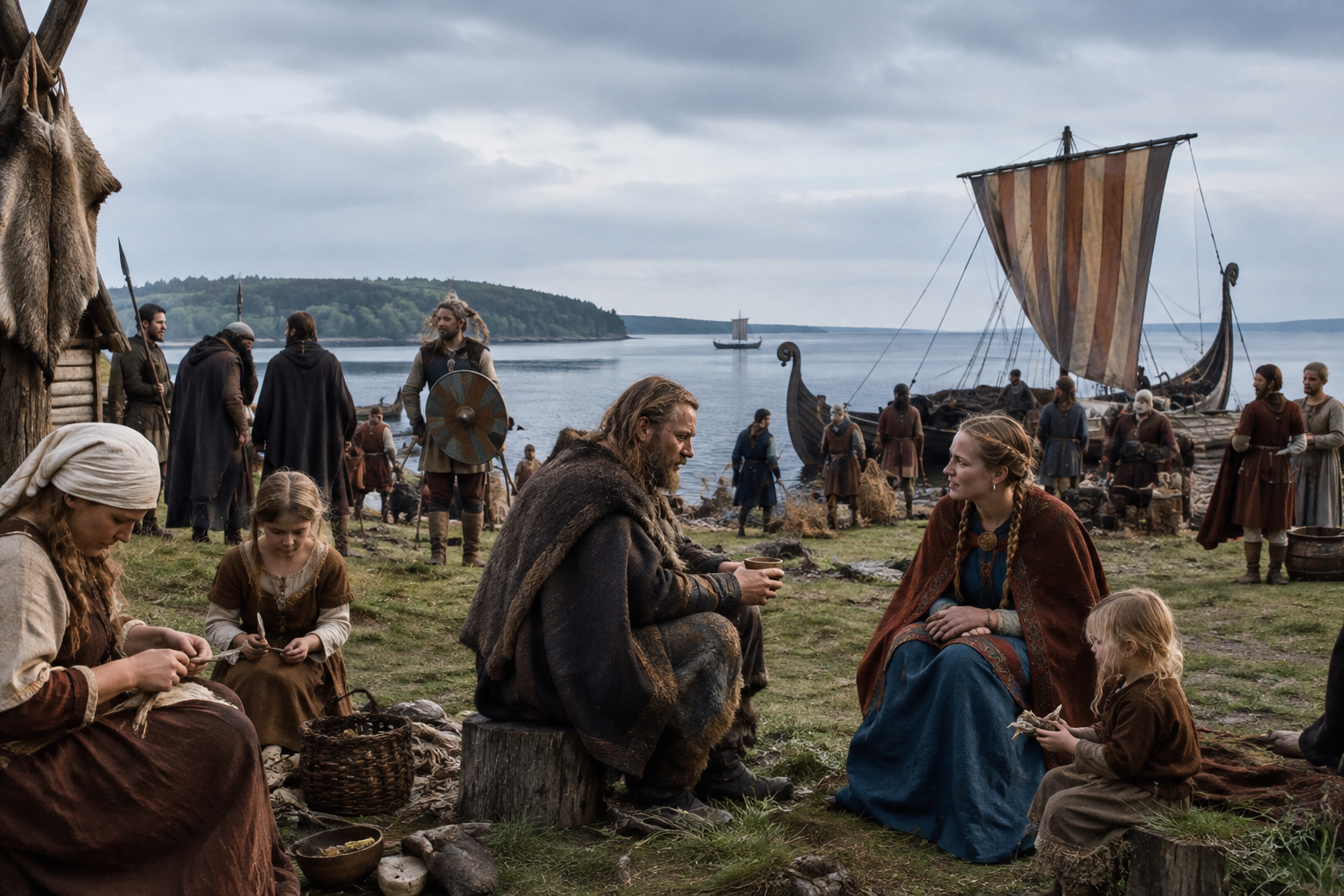
By the Roman and migration periods, southern Scandinavia and northern Germany were not isolated edges of Europe. They were busy corridors of exchange, raiding, alliance, and movement. That is the wider setting in which an I1a2 story makes sense: not as a neat ethnic label, but as part of the paternal landscape of communities later described as Danii, Thuringii, Saxons, Angles, and related Germanic-speaking groups.
The sample trail is unusually vivid. After the Bronze Age Danish individual CGG105333, we meet CGG107400, listed as Danii Tribe Denmark Sjaelland Southwest Vemmelev Hemmeshoj Year:275 AD. That is important not because it proves a straight family line from the Bronze Age, but because it places the haplogroup again in Denmark, now in a historically more recognizable world. The setting is southern Scandinavia at a time when the Roman Empire was still standing and northern elites were already deeply entangled in larger continental networks.
There is another suggestive piece from the southern Baltic zone: HVN010, described as Celto-Longobard Haeven Mecklenburg-Vorpommern Year:250 AD. This does not mean I1a2 was uniquely "Longobard" or "Celtic." What it does show is that paternal lines of this kind circulated in the culturally mixed frontier world between Scandinavia and the continental mainland.
By around 500 AD, the picture sharpens further with two samples associated with the Thuringii: OBM012 from Obermoellern Year:500 AD and DRH013 from Deersheim Saxony-Anhalt Year:500 AD. These finds matter because they place the haplogroup not only in Denmark or coastal regions, but also within inland post-Roman Germanic settings. In other words, this paternal line was part of the wider mosaic of northern and central Europe during the age of collapsing Roman frontiers and emerging early medieval kingdoms.
Then comes England, and here the evidence is especially rich. At West Heslerton in North Yorkshire, the site yields I11588 from Saxon England North Yorkshire West Heslerton Vale of Pickering Year:500 AD, as well as I20679, I20645, and I20650 from the Early Anglo Saxon Cemetery West Heslerton Yorkshire Year:550 AD. West Heslerton has become one of the clearest windows into early Anglo-Saxon settlement in northern England. These burials do not prove that all settlers came from one source, but they do show that paternal lines linked to the North Sea world were firmly present there.
Other English examples broaden that impression: BUK038 from Early Anglo Saxon Period Buckland Dover England Year:400 AD, HAD003, HAD015, and HAD016 from Hatherdene Close Cambridgeshire England Year:500 AD, OAI009 from Anglo Saxon Oakington England Year:470 AD, and LAK009 and LAK002 from Early Medieval Suffolk England Lakenheath Year:650 AD. Put together, these are not isolated curiosities. They sketch a broad zone of early medieval presence in eastern and northern England, exactly where historians would expect strong continental and Scandinavian links.
Read About Anglo-Saxon Migration DNA
The latest ancient sample here is also one of the most revealing: SWG008, from Post Viking Age Hedeby Schleswig Rathausmarkt Southern Jutland Year:1140 AD. Hedeby was no backwater. It was one of the great emporia of the Viking and post-Viking world, sitting at the hinge between the North Sea and the Baltic. Finding this lineage there in the 12th century suggests long-term persistence in exactly the region where Scandinavian, Danish, Saxon, and wider northern European histories overlapped.
That is one of the quiet strengths of I1a2. It seems to appear not in one dramatic imperial episode, but across a durable historical landscape: Bronze Age Denmark, migration-period Denmark and Germany, Anglo-Saxon England, and medieval southern Jutland. Ancient DNA cannot tell us that these men knew themselves as one people, nor that they belonged to one unbroken dynasty. But it can show that a paternal branch was present through major shifts in burial custom, political authority, and language.
Readers interested in that broader frontier world may also enjoy the MyTrueAncestry discussion of how post-Roman populations mixed and changed on the continent.
No associated noble families and castles were supplied in the input for this article, and that absence is worth stating plainly rather than papering over. Too often, discussions of Y-DNA leap from an ancient burial straight to a medieval surname or a castle on a hill. That is not how good history works.
What we can say is more modest, and more interesting for that very reason. The same broad North Sea and southern Scandinavian regions where I1a2 appears in ancient remains later produced many of the noble houses, territorial lordships, and fortified centers that dominate medieval records. Castles, manors, and dynastic genealogies preserve the memory of landholding families; ancient DNA preserves something quite different, the biological traces of earlier populations who often left no written names at all.
Those two archives - stone and bone, if you like - do not automatically line up. A noble family associated with a region where I1a2 appeared in earlier centuries is not therefore proven to descend from those ancient men. Yet the geographical overlap still matters. It reminds us that medieval elites emerged in landscapes already shaped by centuries of settlement, migration, and local continuity.
For a different angle on how MyTrueAncestry approaches historical houses and lineages, readers may enjoy one of the community's family features.
The fascination of I1a2 lies in its consistency. This is a paternal lineage that turns up in a chain of contexts running from Bronze Age Denmark to migration-era Denmark and Germany, then into the cemeteries of early Anglo-Saxon England, and later into the post-Viking town world of Hedeby. It offers a particularly good example of how ancient DNA can illuminate historical processes that written sources only partly explain.
It also demonstrates the limits of the evidence. Shared Y-DNA does not make two men close relatives in any genealogical sense; it simply means they belong somewhere on the same paternal branch. Nor does a haplogroup equal ethnicity. The men buried at West Heslerton, Oakington, Lakenheath, Deersheim, or Hedeby lived in different centuries and social worlds. Their haplogroup is one clue among many, not a complete identity card.
Still, for anyone with I1a2 in their own results, this is a lineage with a deeply northern story. Its ancient record points toward the Scandinavian and North Sea sphere, toward the age of migration and settlement, and toward the making of early medieval England. That is quite a historical backdrop for a single paternal line.
If you want to explore the wider Scandinavian context still further, the Viking Age material in the community is a natural next step.
MyTrueAncestry lets you compare your DNA with ancient individuals from archaeological sites across Europe and beyond. If your paternal line belongs to I1a2, or if your autosomal DNA shows links to Anglo-Saxon, Scandinavian, or migration-period populations, those matches can add an intriguing layer to your family history. They do not prove direct descent from any one ancient individual or noble house, but they can place your ancestry within the real populations that shaped the medieval and ancient world.
Upload your DNA and see whether your results connect you to ancient samples like I11588, CGG107400, or SWG008, and to the larger story of the North Sea past.

Comments