Haplogroup R1a1a1b1a3

– 6 min read


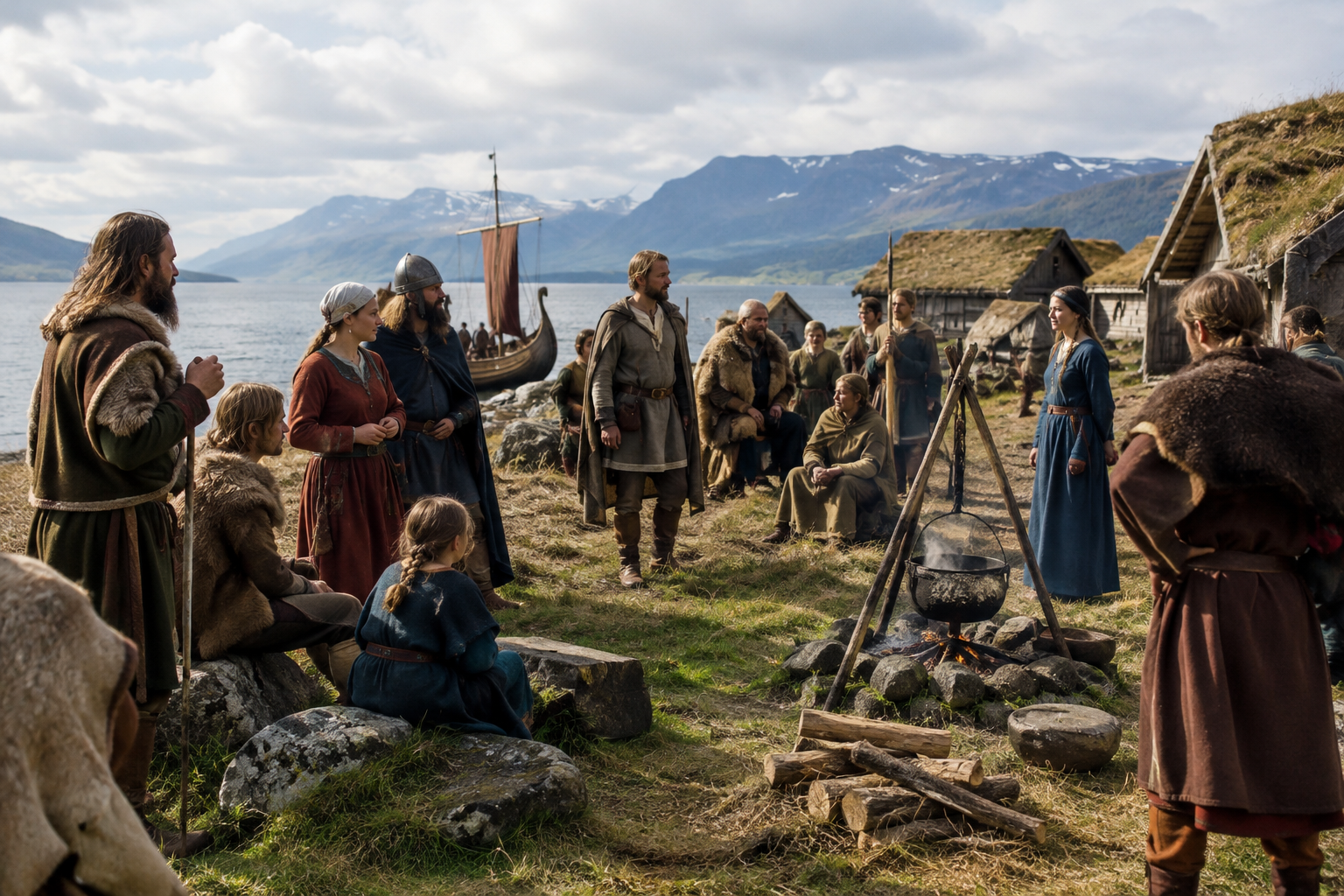
Some Y-DNA branches announce themselves with a bang across vast imperial histories. Others are more interesting precisely because they appear in glimpses: a burial in Bronze Age Norway, a Viking Age grave in Sweden, a Longobard-period individual in Pannonia, and then a cluster of medieval men in Scandinavia. Haplogroup R1a1a1b1a3 belongs to that second category. It is a narrow paternal branch, and that narrowness is what makes it useful. Instead of telling us everything about the huge and complicated world of R1a, it lets us focus on one smaller thread moving through real places, real cemeteries, and real historical landscapes.
As always with Y-DNA, a caution comes first. A Y-chromosome haplogroup traces only one direct paternal line: father to father to father. It does not represent a person's total ancestry, culture, language, or identity. Still, that one line can be remarkably revealing. In the case of R1a1a1b1a3, the ancient evidence supplied here points especially toward a northern European and Scandinavian story, with one striking appearance in the migration-period world of the Carpathian Basin. It is a reminder that paternal lineages can persist for millennia, while the societies around them change from Neolithic communities to Bronze Age farmers, Viking townsmen, and medieval churchyard burials.
R1a1a1b1a3 is a downstream branch within the larger Y-DNA haplogroup R1a, one of the best-known paternal lineages in Eurasian archaeogenetics. Broadly speaking, R1a has often been discussed in connection with later prehistoric movements across parts of Eurasia, especially after the rise of steppe-related ancestry in the Bronze Age. But that broad history should not simply be pasted onto every tiny descendant branch. A narrow clade such as R1a1a1b1a3 may have had a much more regional history, and the ancient samples here suggest that one important theater for that history was Scandinavia.
The supplied evidence begins surprisingly early. The sample ber1, from Bergsgraven Oestergotland Sweden, dated to 2570 BC, places this paternal line in southern Scandinavia in the later Neolithic. That is an arresting starting point. It suggests that by the third millennium BC, this branch, or a very close paternal relative, had already entered the Scandinavian world. From there, the record grows denser in Norway during the second millennium BC, hinting not at a fleeting arrival but at continued presence.
For readers interested in the deeper Scandinavian background behind these early paternal lines, the Battle Axe horizon and its wider context are essential reading.
Explore Scandinavias Battle Axe DNA
The Bronze Age evidence is unusually rich for this branch. At Sund, Norway, several individuals carry the lineage across a span of centuries: CGG105608 from Pre Nordic Bronze Age Norway Sund dated 1881 BC, CGG105623 from Early Bronze Age Norway Sund dated 1845 BC, CGG105628 from Early Bronze Age Norway Sund dated 1780 BC, CGG105604 from Nordic Bronze Age Norway Sund dated 1706 BC, and CGG105612 from Late Neolithic Norway Sund dated 1738 BC. Added to these is CGG105916 from Nordic Early Bronze Age Fauskland dated 1986 BC.
That concentration matters. One sample can always be a curiosity. Several samples from related times and neighboring landscapes begin to look like continuity. We should be careful: continuity of a paternal branch is not the same thing as continuity of a whole population. Yet these burials strongly suggest that R1a1a1b1a3 was part of the male-line landscape of western and northern Scandinavia over a long stretch of prehistory. It was not merely passing through.
This is where ancient DNA becomes so valuable. Archaeology alone can tell us about burial customs, settlement, metalwork, trade, and diet. Genetics adds another question: did some paternal lines remain locally established as cultural fashions shifted? In the case of Sund and Fauskland, the answer appears to be yes, or at least yes often enough to leave a visible trace.
Readers who want a wider view of how burials and genomes illuminate these centuries in the north may enjoy this broader Bronze Age perspective.
Discover Bronze Age DNA Worlds
The later samples show that the story does not stop in prehistory. In northern Norway, CGG107021 from Adogit Pre-Viking Northern Norway Nesna Tomeide dated 425 AD carries the branch into late antiquity. Then come the Viking Age individuals: CGG107011 from Viking Age Northern Norway Engholmen dated 725 AD, VK394 from Viking Age Hedmark Norway dated 850 AD, and nuf030 from Viking Age Sigtuna Sweden dated 935 AD.
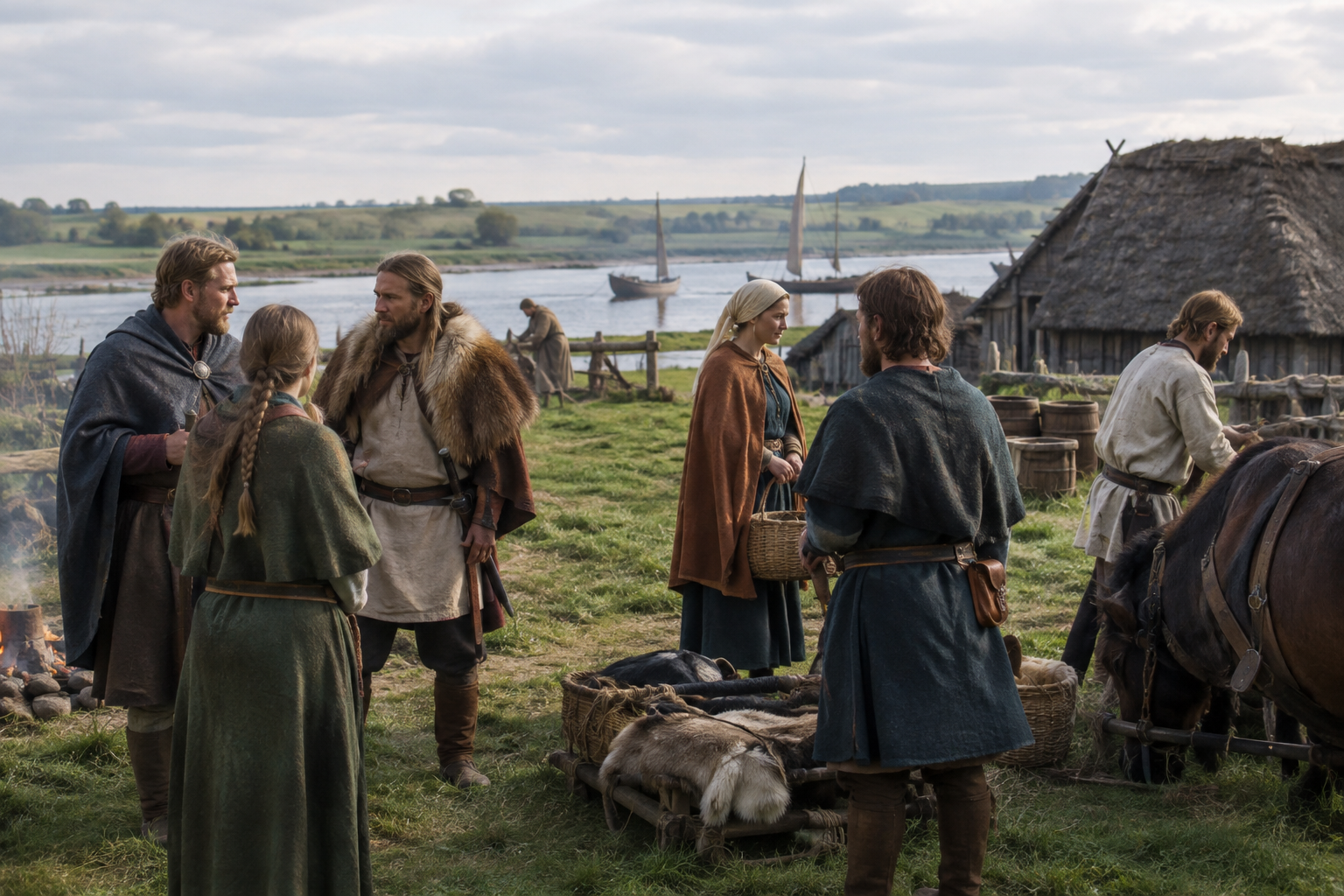
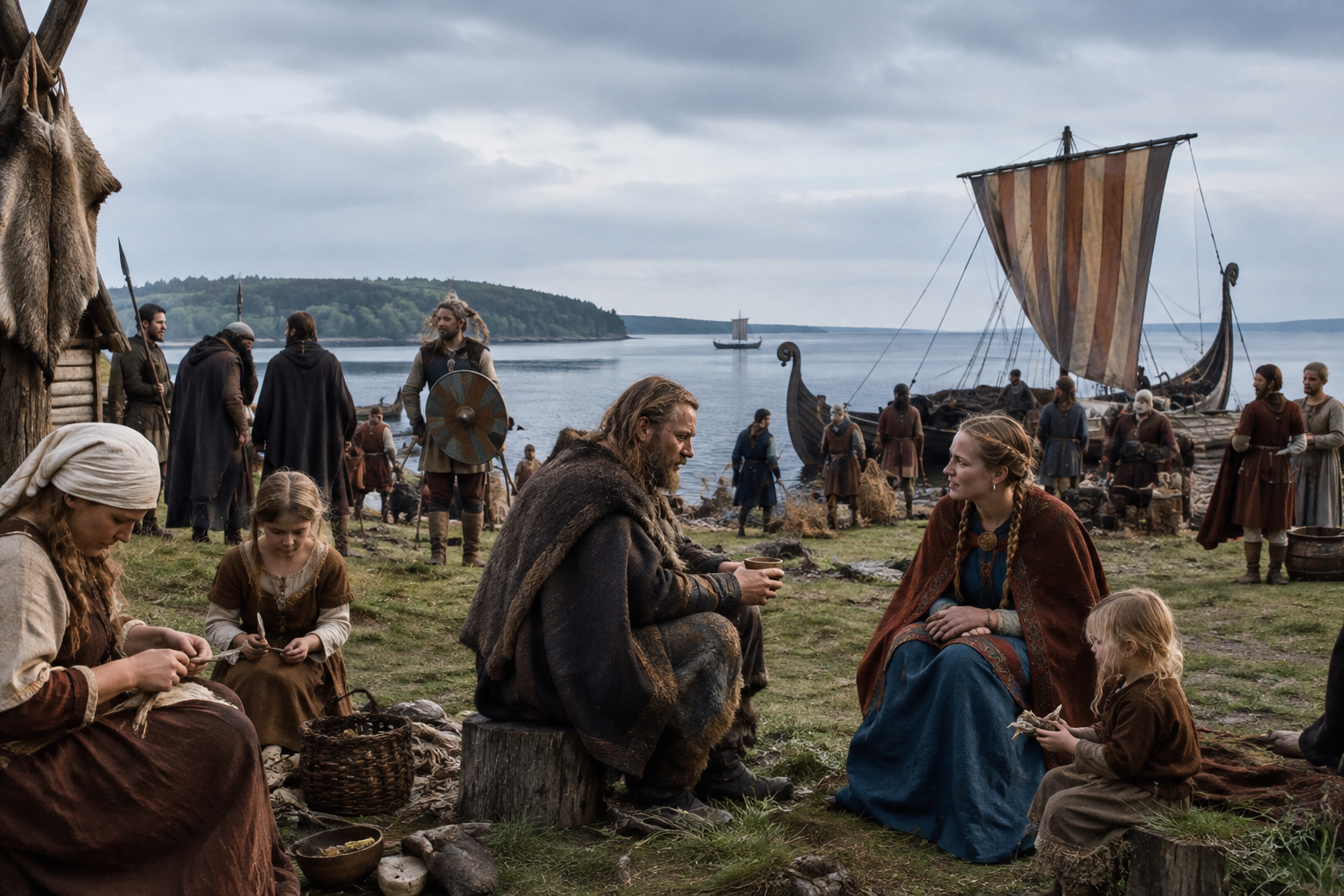
These are not all from one valley or even one kingdom. They span northern Norway, inland eastern Norway, and one of early medieval Sweden's most important urban centers. Sigtuna in particular is a fine reminder that Viking Age Scandinavia was not just ships and raiding. It was also towns, royal ambitions, church foundations, trade, minting, and migration in several directions at once. A paternal branch found there had entered a world of movement linking the Baltic, the North Sea, and the river routes farther east.
Then the lineage appears again, and repeatedly, in medieval Sweden at Vasterhus: mbv181, mbv281, mbv252, mbv123, and mbv180, all dated 1313 AD. A cluster like this makes one think not of heroic wanderers but of ordinary demographic reality: men living, dying, and being buried within a settled medieval community. That may be the most revealing stage of all. After thousands of years of upheaval, trade, conversion, and kingdom-building, this paternal line was still there.
For more on the Scandinavian medieval burial record, this article on Swedish kinship and graves is an excellent companion.
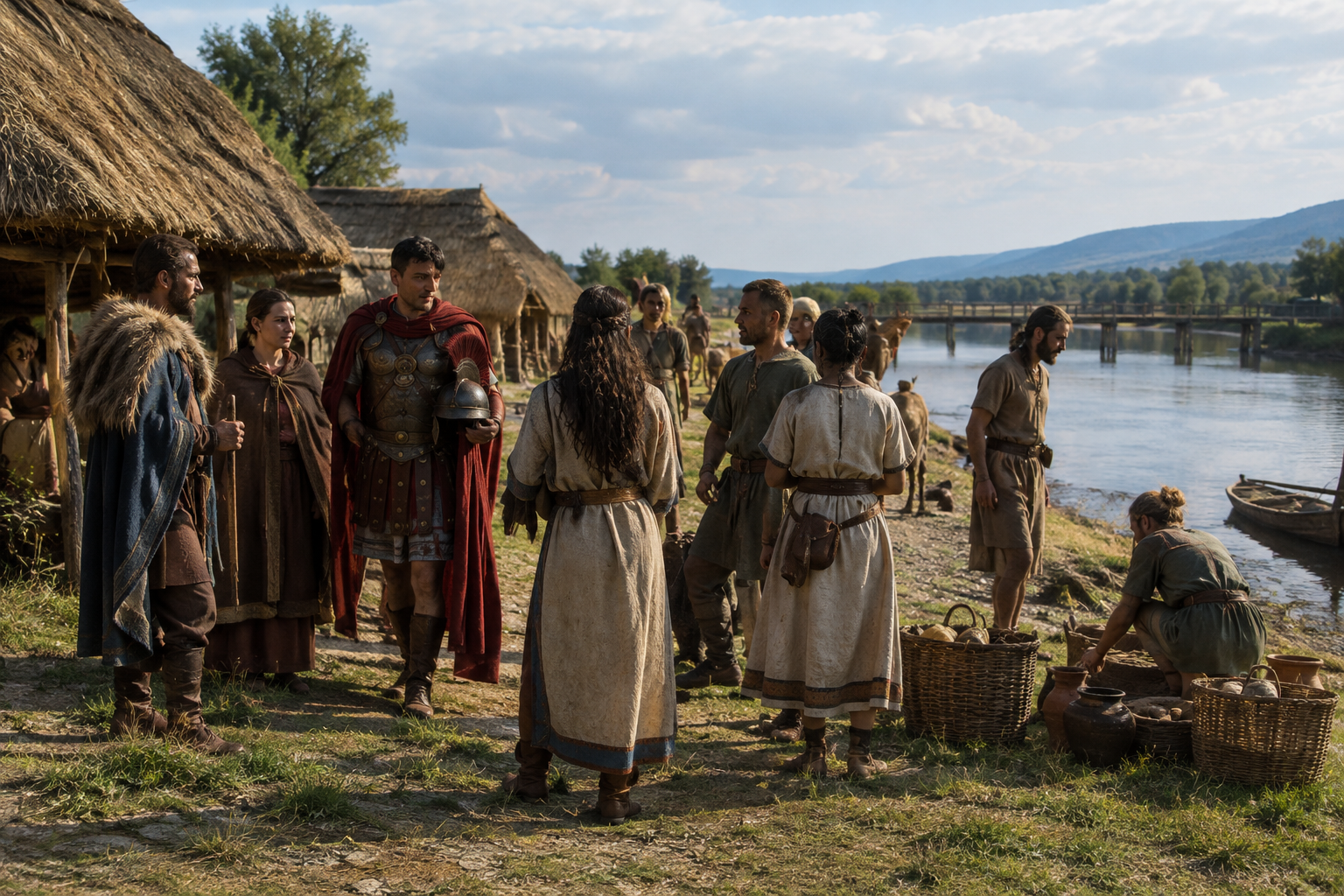
One sample breaks the northern pattern in the most interesting way. SZL057, from Longobard Period Pannonia Savaria Szeleste Barbaricum Hungary, dated 525 AD, places the same paternal branch in the migration-period Carpathian Basin. That does not prove a simple route from Scandinavia to Hungary, still less direct descent from any earlier northern individual. But it does place this lineage within the mobile world of post-Roman Europe, where military retinues, federate groups, traders, and families could move great distances.
The Longobard setting is especially evocative because it sits between Roman frontier collapse and the making of new early medieval polities. Pannonia was not a fringe backwater; it was a contact zone. A lineage seen in Bronze Age and later Scandinavian samples appearing here raises precisely the kind of question ancient DNA is so good at sharpening: how far did some northern paternal lines travel in the Migration Period, and under what social conditions?
If that crossroads fascinates you, this related study of post-Roman Hungary offers a broader regional frame.
Explore Post-Roman Hungary DNA
The supplied noble family field is empty here, and that absence is worth stating plainly. There are no specific dynasties, clans, or castles attached in the input for this article, so no responsible writer should conjure them out of thin air. That may sound disappointingly restrained, but in fact it is exactly the discipline that makes archaeogenetics useful rather than romantic fiction.
What we can say is that the medieval settings represented by places like Sigtuna and Vasterhus are the same broad historical landscapes in which later Scandinavian noble houses, church institutions, royal administrations, and fortified seats developed. If a branch such as R1a1a1b1a3 persisted in Scandinavian populations across so many centuries, then it formed part of the paternal background from which later medieval societies emerged. But background is not proof. Sharing a broad or even fairly narrow haplogroup with medieval or modern families does not demonstrate descent from a named house, let alone from every man who bore its surname or title.
That distinction matters particularly in regions where castles, churches, and pedigrees encourage overconfidence. Written genealogy begins late, is often selective, and follows social status. Ancient DNA works differently. It can reveal lineages in people who never entered chronicles at all.
The strongest lesson of R1a1a1b1a3 is not that one haplogroup "belongs" to one people. It is that a paternal branch can remain visible across enormous historical change. Here we see it from ber1 in 2570 BC Sweden, through multiple Norwegian Bronze Age burials, into late antique northern Norway, the Viking Age, medieval Sweden, and also in SZL057 in sixth-century Pannonia. That is a remarkable span.
It also shows why ancient DNA must be read alongside archaeology and history. The graves tell us where and when. The haplogroup tells us that one paternal line reappears. The historical interpretation lies in joining those pieces carefully, without pretending that every recurrence means close kinship or direct descent. Sometimes what we can see is persistence. Sometimes movement. Often both.
If your own Y-DNA points toward a branch like R1a1a1b1a3, MyTrueAncestry can help place that one paternal line into a far bigger human story: prehistoric settlement, Bronze Age continuity, Viking mobility, and medieval communities. It will not prove you descend from a particular ancient man or a noble family. But it may show you that your paternal line belongs to one of these long, stubbornly enduring histories.
Upload your DNA to MyTrueAncestry and explore whether your results show links to ancient individuals, archaeological cultures, and historical populations connected to this lineage.

Comments