Haplogroup J2b

– 6 min read


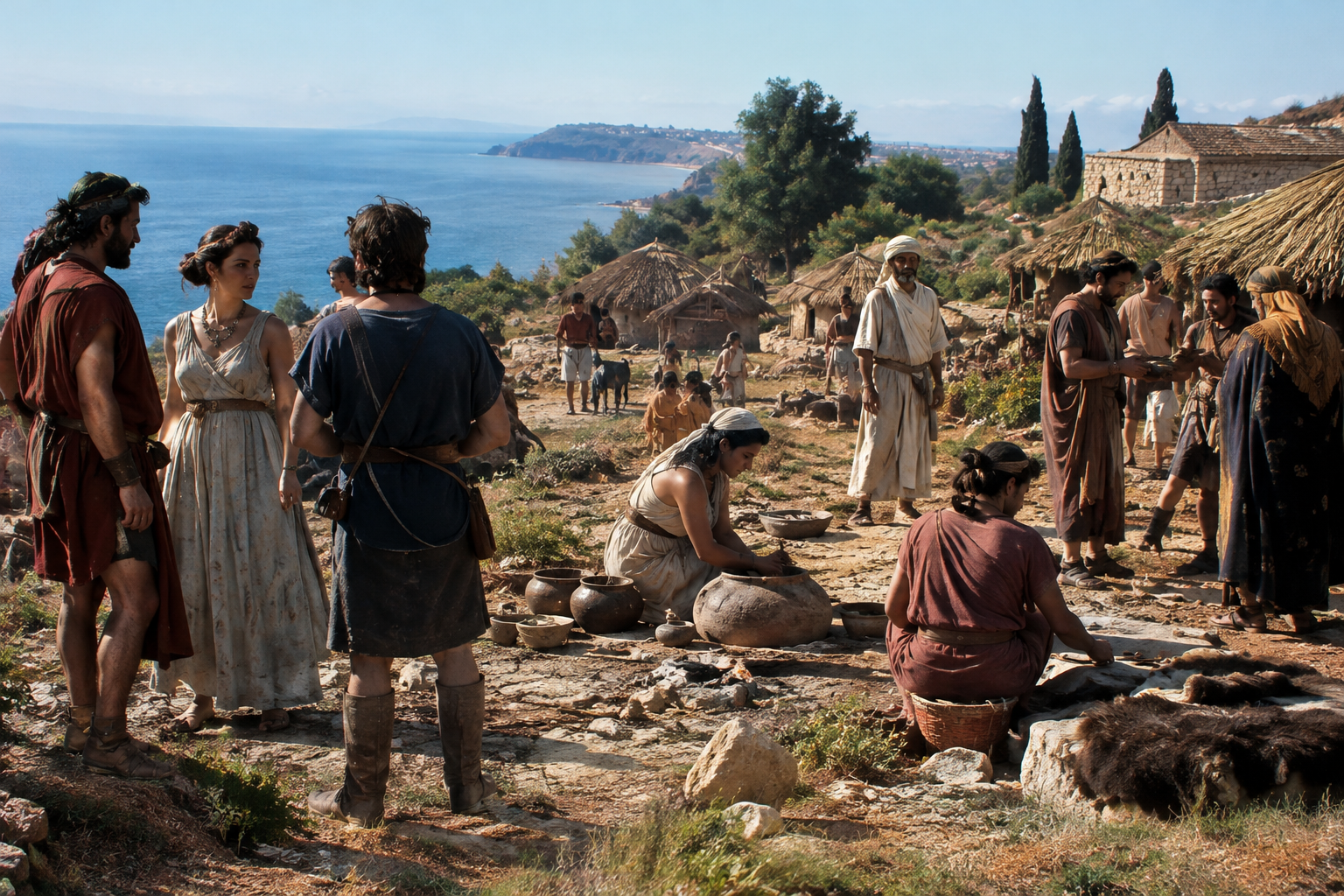
There is something particularly arresting about haplogroup J2b because it keeps turning up in places where old routes crossed: the Caucasus, Iran, Anatolia, the Levant, the Adriatic, the Roman Balkans, medieval Italy, Yemen, and even late medieval Germany. Not one empire, not one people, not one language. Instead, J2b appears in the sort of historical landscapes where traders, herders, farmers, soldiers, and settlers repeatedly met one another.
That is exactly why it matters. Y-DNA haplogroups trace one direct paternal line only, from father to son across many generations. They do not represent a person's whole ancestry. But they can still be remarkably useful, because they allow us to follow one thread of human history through archaeological sites and historical regions. In the case of J2b, that thread seems tied to the broader world stretching from the Near East and Caucasus into the Mediterranean and southeastern Europe, with later appearances in communities shaped by trade, migration, and empire.
J2b belongs to the wider Y-chromosome haplogroup J, a major paternal lineage long associated in broad terms with western Asia and the eastern Mediterranean. Within that larger family, J2 and its branches have often been discussed in connection with early farming expansions, Bronze Age mobility, and later Mediterranean exchange. For J2b specifically, ancient DNA is helping to replace old sweeping assumptions with something more interesting and more complicated: a lineage present across several connected regions over a very long period of time.
The safest way to put it is this. J2b has a documented ancient presence in parts of the Near East, the Caucasus, Anatolia, and Europe. Some of its spread may reflect movements linked to early agricultural societies; some may reflect later Bronze Age and Iron Age interaction zones; some certainly reflects the extraordinary mobility of the Roman and medieval worlds. What we should avoid is pretending there was a single grand migration that explains everything.
For readers interested in the deeper archaeological backdrop to these paternal lines, MyTrueAncestry's broader overview of farming expansions is a useful companion piece.
The earliest signposts in this story are strikingly old. Sample AH2 from Neolithic Iran, dated to 8000 BC, places a J2b paternal line deep in one of the great early centers of village life and food production. That does not mean all later J2b men descend directly from this one individual, of course. But it does show that the lineage was already present in the early farming world of southwestern Asia.
Another very early sample, NEO281 from Kotias Klde Cave in ancient Georgia, dated to 7780 BC, reminds us that the South Caucasus also belongs in this picture. J2b in such an early Caucasus context is especially intriguing because the region later became one of the great corridors between steppe, plateau, and Mediterranean worlds. If you are looking for a place where lineages could persist while also being carried into new settings, the Caucasus is an obvious candidate.
By the Bronze Age, J2b appears further west and south. TIT021 from Titris Hoyuk in Anatolia, dated to 2240 BC, and I7182 and I6923 from Yehud in the southern Levant, both dated to 2250 BC, show the lineage in two regions central to Bronze Age exchange networks. These were worlds of fortified settlements, caravan routes, local dynasts, and long-distance commerce. Here J2b is not some marginal curiosity; it sits squarely inside the connected Bronze Age Near East.
Readers drawn to this Near Eastern side of the story may also enjoy MyTrueAncestry's discussion of population change in Bronze and Iron Age Mesopotamia.
Discover Bronze Age Mesopotamia
Then the story becomes unmistakably Mediterranean. NEO806 from Grotta Delle Mura in Italy, dated to 1063 BC, places J2b in Bronze Age Italy. By the Iron Age, the evidence becomes even more vivid with three Piceni samples from Novilara on the Adriatic coast: PN91, PN57, and PN101, all dated to 650 BC.
The Piceni are a fine reminder that ancient Italy was never a simple ethnic chessboard. Along the Adriatic coast, communities were exposed to movement from the Balkans, the wider Italian peninsula, and maritime routes across the sea. J2b in the Piceni does not prove a single origin story for that people. What it does show is that this paternal lineage was part of the human reality of Iron Age Italy, in a coastal zone famous for contact and exchange.
That makes J2b especially interesting for anyone studying pre-Roman and Roman Italy. It appears not as an isolated eastern intrusion, but as part of the mixed and mobile population history of the peninsula. A useful comparison here is MyTrueAncestry's work on ancient Italy and related regional populations.
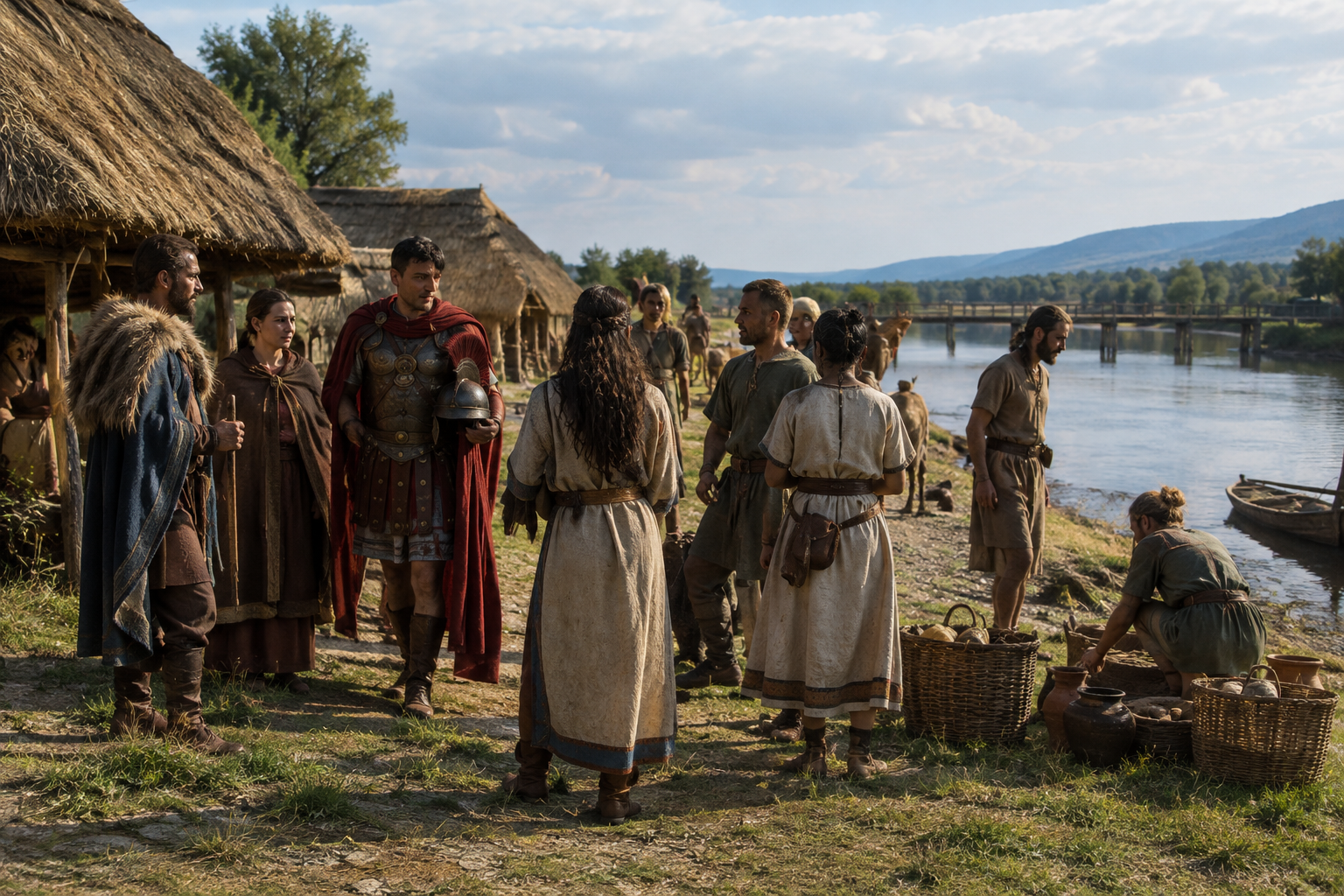
The Roman period shows just how far such lineages could travel without losing their regional roots. Samples BBC018 and BBC015 from Imperial Roman Croatia, Karlovac, Pannonia Savia, dated to 275 AD, place J2b in a frontier province of the empire. Pannonia was full of soldiers, officials, merchants, and families from different backgrounds. A J2b lineage there might reflect local Balkan continuity, eastern Mediterranean movement, military service, or several of these together. That ambiguity is not a weakness. It is, in fact, a very Roman sort of answer.
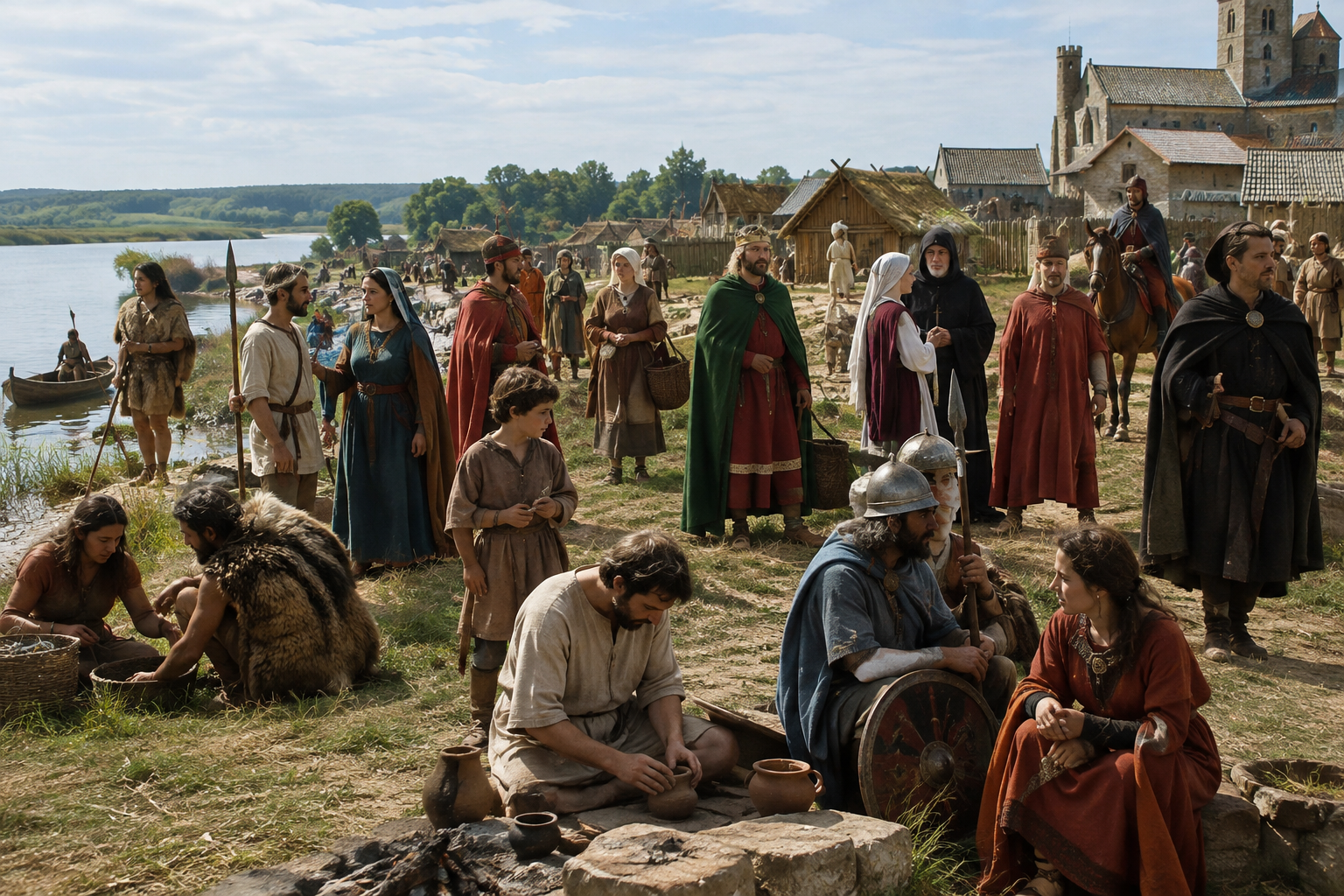
By the early medieval period, VEN010 from Venosa, Italy, dated to 600 AD, shows J2b still present in southern Italy, another region where Greeks, Romans, Lombards, Jews, and eastern Mediterranean influences all left their mark. Later still, I14846 from the late medieval Ashkenazi cemetery at Erfurt in Germany, dated to 1350 AD, places the lineage within a Jewish community of central Europe. Again, not one story but many: continuity, movement, diaspora, and urban settlement.
And then there are the three medieval Yemen samples from Soqotra, Momi Zaflah - I20696, I21117, and I21118 - dated to 900 AD. Soqotra sits at the edge of the Arabian Sea trade world, connected to Arabia, East Africa, and the Indian Ocean. J2b there makes excellent historical sense. It is precisely the sort of lineage one might expect to encounter in populations shaped by long-distance seafaring and exchange, though any exact route into the island remains a matter for evidence, not fantasy.
For a parallel case in the Balkans, where paternal continuity and change can be tracked over long spans, see MyTrueAncestry's article on Croatia.
In this case, the supplied noble family and castle field is empty, which is actually a useful reminder of method. It would be easy - too easy - to bolt a famous dynasty onto a haplogroup and spin a grand story about lords, banners, and ancestral halls. But without actual family and castle data, that would be invention dressed up as history.
Still, J2b certainly belongs to regions where later noble houses rose: the Italian peninsula, the Balkans, the Caucasus, the Levant, and Arabia. In those places, castles and fortified seats later marked political power on landscapes that had already been inhabited for thousands of years by men carrying many different paternal lines, including lineages within J2b. Genetics and medieval history can illuminate one another, but they are not interchangeable. A castle preserves memory of lordship and territory; a haplogroup records one far older paternal thread. Sometimes those stories may overlap geographically. That is not the same as proving a genealogical link.
J2b is historically interesting precisely because it refuses to sit neatly inside modern categories. Its ancient DNA trail runs from Neolithic Iran and the Caucasus to Bronze Age Anatolia and the Levant, from Bronze and Iron Age Italy to Roman Croatia, from early medieval southern Italy to medieval Yemen and late medieval Germany. That is not the history of one tribe marching from A to B. It is the history of connected worlds.
For anyone with J2b today, the lesson is both exciting and cautionary. Your paternal line may connect, in a very broad sense, to some of these same deep historical zones. But sharing a haplogroup with AH2, NEO281, PN91, BBC018, or I14846 does not make any of them your named genealogical ancestor, still less a passport into a particular ethnicity or noble pedigree. What it offers is something better: a historically grounded glimpse into the long survival and movement of one paternal lineage across some of the most important crossroads of the ancient world.
If you want to see whether your own DNA shows similarities to ancient individuals like these, MyTrueAncestry can help place your results beside real archaeological discoveries. Those matches do not prove direct descent or membership in any historic dynasty, but they can open a fascinating window onto the worlds your ancestors once inhabited.
Comments