Haplogroup J2b2a1a1a1b2

– 6 min read


Some Y-DNA haplogroups announce themselves with royal swagger. Others turn up more quietly, in hill forts, caves, trading ports, and provincial Roman cemeteries, and end up telling the more interesting story. Haplogroup J2b2a1a1a1b2 belongs to that second category. It sits within the wider J2 branch of the Y-chromosome tree, a paternal lineage often discussed in connection with the ancient Mediterranean and the Balkans, but this very specific subclade needs more caution and more precision than any broad-brush map can provide.
What makes it fascinating is not a grand single-origin legend, but the pattern of where related ancient evidence appears: Bronze Age and Iron Age Croatia, Gallo-Celtic Switzerland, a Punic-Hellenic context in Tunisia, and the Roman world at Sisak. That spread hints at a lineage moving through some of the busiest corridors of ancient Europe and the Mediterranean. As ever with Y-DNA, though, it is worth saying clearly: this traces one direct paternal line only. It is not a summary of a person's whole ancestry, culture, language, or identity.
J2b2a1a1a1b2 is a very narrow branch far downstream on the Y-chromosome tree. That matters. It means we should not lazily pour the entire history of haplogroup J, or even all of J2, into this one subclade as if nothing changed along the way. Broadly speaking, J2 lineages are important in studies of southeastern Europe and the eastern and central Mediterranean, and some J2b branches have drawn attention in the Balkans. But for a subclade this specific, the safest route is to begin from the ancient individuals actually supplied here and build outward carefully.
The strongest pattern in this dataset is Balkan. Several ancient individuals linked to this haplogroup or its immediate genetic context come from Croatia across a long span of time, from the Bronze Age into the Roman period. That does not prove a single uninterrupted father-to-son chain across all those centuries, but it does suggest that related paternal lines were present in this region repeatedly and perhaps persistently.
See How Ancient DNA Rewrites History
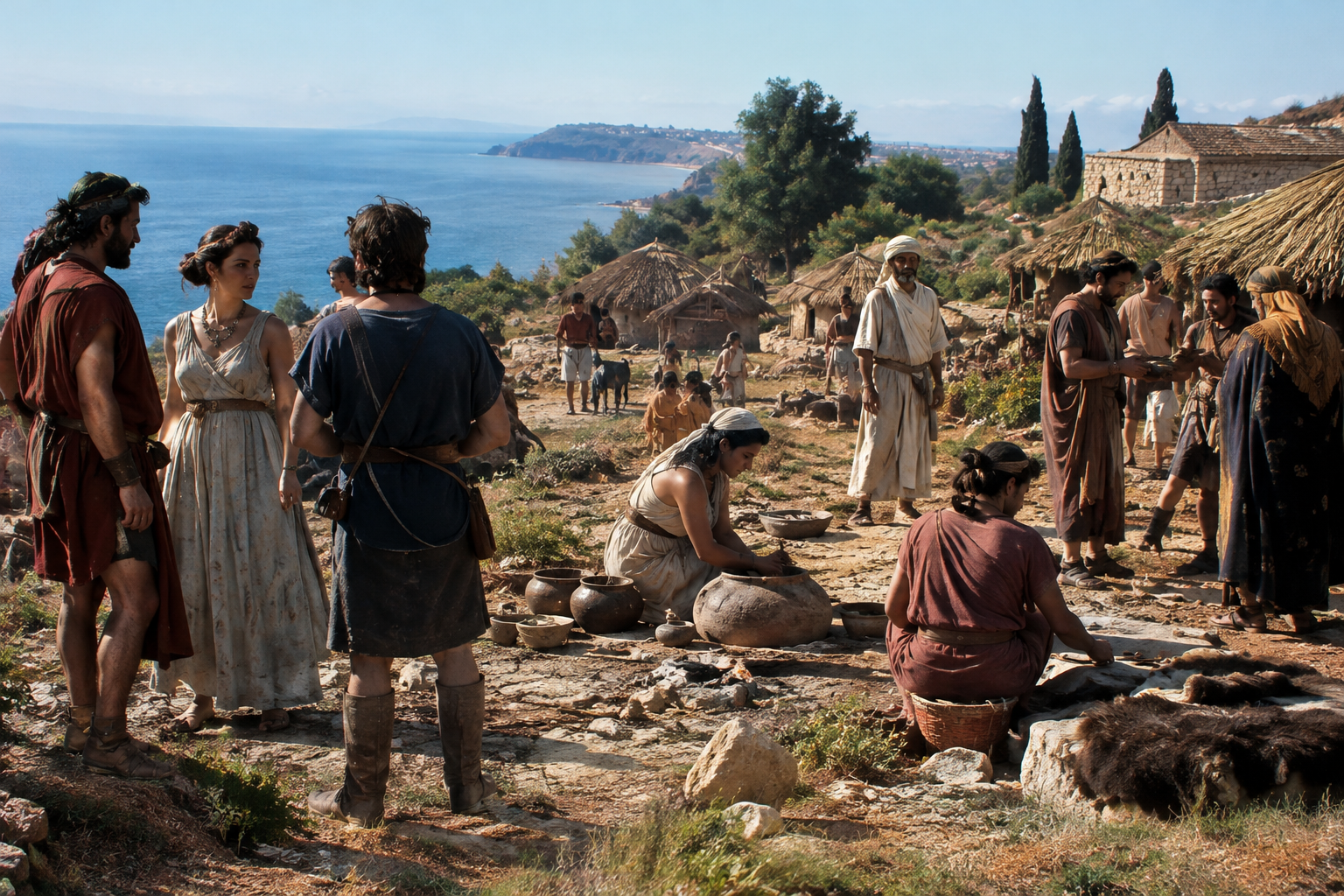
The earliest anchors here come from Bronze Age Croatia. Sample I18746, from the Pre-Illyrian Bronze Age Croatia Cetina Valley, dated to 1800 BC, places this paternal story deep in the eastern Adriatic hinterland. The Cetina region has long been important to archaeologists because it stood at a crossroads between inland Balkan communities and the Adriatic coast. A lineage appearing there is immediately part of a world of movement, exchange, and local development rather than isolation.
Another important early sample is I5073 from Proto-Illyrian Bronze Age Croatia Koprivno, dated to 1637 BC. Koprivno lies within the broader Dalmatian zone that later classical writers would associate with Illyrian groups. We should not simply label a Bronze Age man "Illyrian" centuries before those historical ethnonyms crystallized, but the geography matters. The paternal line was present in the same broad region that would later produce Iron Age communities often grouped under that name.
These early Croatian finds make one point very plainly: whatever the deeper prehistory of this subclade may be, the Balkans are not some late afterthought in its story. They are central to the evidence we actually have.
By the Iron Age, the picture becomes even richer. At Smiljan in Croatia we have a sequence of individuals: I23911 dated to 840 BC, I23995 dated to 740 BC, I24638 dated to 690 BC, and later I24639 from Illyrian Smiljan Croatia dated to 530 BC. This is exactly the sort of pattern archaeogenetics loves: not a one-off curiosity, but repeated appearances in one region over time.
Then there is I26742 from Illyrian Jazinka Cave Croatia, dated to 700 BC, and I24882 from the Pannonian Hill Fort mala Metaljka Croatia, dated to 490 BC. Add the pair I18830 and I18831 from Illyrian Croatia Velim-Kosa, both dated to 250 BC, and we begin to see not a stray paternal line but a lineage well embedded in the eastern Adriatic and adjacent Pannonian world.
That does not mean every Iron Age community in the western Balkans carried this haplogroup, nor that shared Y-DNA equals a shared ethnicity. But it does support the idea that related paternal lines were part of the human landscape of Iron Age Croatia across many centuries.
The story becomes especially interesting when the same broader paternal signature appears outside Croatia. Two individuals, 3432 and 3433, come from Gallo-Celtic Switzerland Pont de Cornaux-Les-Sauges, both dated to 200 BC. That matters because it places this line, or a very close branch, in a Late Iron Age Celtic context far to the northwest of the Adriatic. This is not evidence that the haplogroup was "Celtic" in any simple sense. It is evidence that paternal lines associated with it had reached, or were already part of, communities in Celtic Switzerland.
For readers interested in that Swiss context, the mobility and burial world of Late Iron Age Switzerland has become much clearer thanks to archaeogenetics and bioarchaeology.
Discover Celtic Switzerland DNA
There is also I24032 from Hellenic-Carthago Kerkouane Tunisia Pantelleria, dated to 426 BC. Even the label tells you how entangled the ancient Mediterranean could be: Hellenic, Carthaginian, Tunisian, Pantellerian. This is a maritime world of sailors, merchants, settlers, and mixed communities. A paternal line turning up here should not surprise us. It reminds us that lineages do not respect the tidy boundaries of modern maps or textbook civilisations.
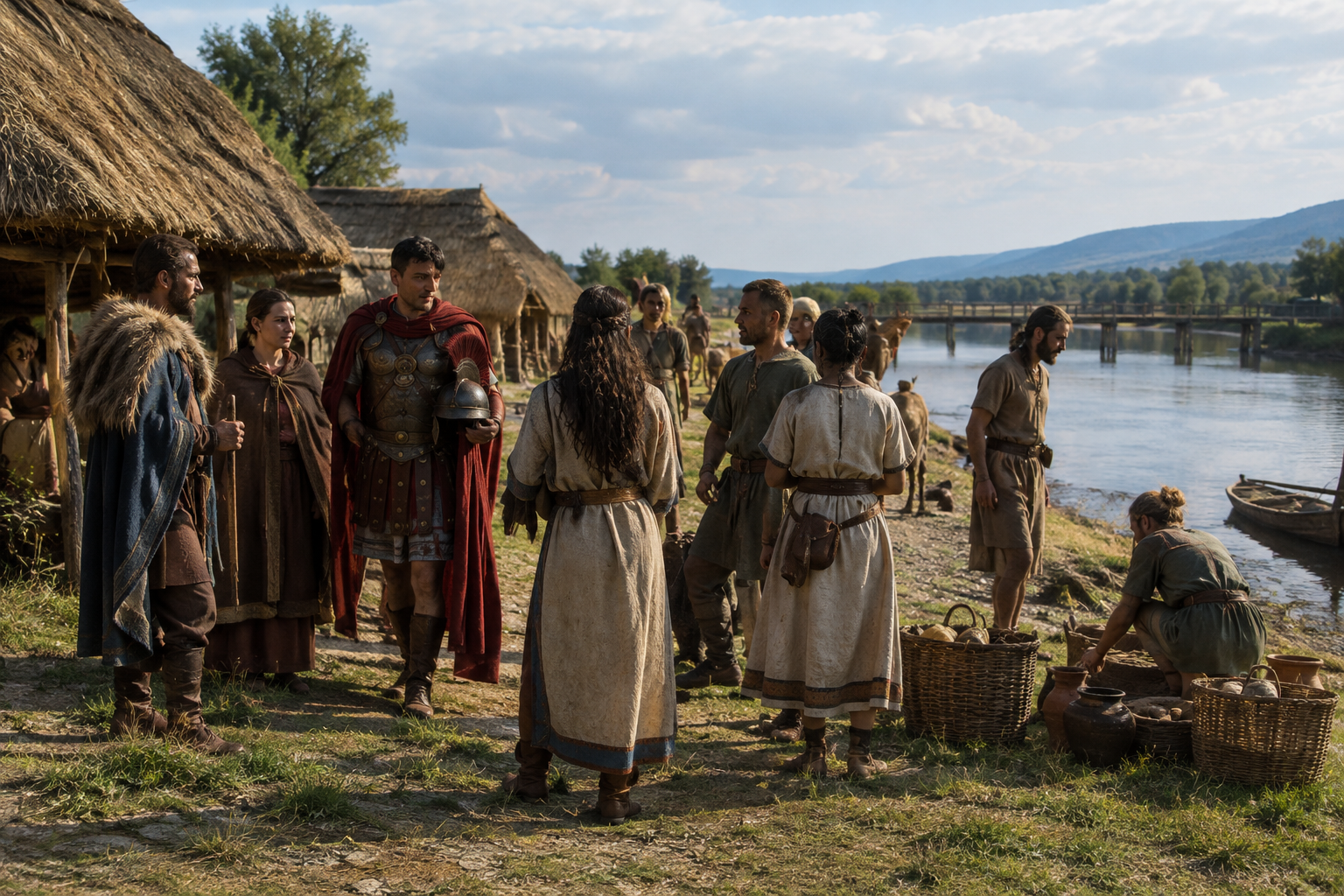
And then we reach the Roman Empire. At Sisak Pogorelec in Croatia, three Imperial Roman period individuals - R2040a, R2040c, and R2040 - are dated to 245 AD. Sisak, ancient Siscia, was no obscure village. It was a Roman town connected to military routes, river traffic, administration, and trade. The appearance of this paternal lineage there may reflect local continuity, mobility within the empire, or both. Roman rule did not wipe clean older populations; very often it layered new connections over older regional foundations.
That is one of the great lessons of ancient DNA from the Roman world: empire moved people, but it also absorbed and reorganised communities already in place.
What can we responsibly say after all this? First, the supplied evidence points strongly toward a long association of related paternal lines with the Balkans, especially Croatia and its neighboring cultural zones. Second, the line was not confined there. By the Iron Age and Classical period, comparable paternal ancestry appears in Celtic Switzerland and in a Punic-Hellenic North African island-linked setting. Third, the Roman evidence shows that such lineages remained part of the human mix into late antiquity.
This is exactly where genetics is most useful when paired with archaeology and history. Written sources can tell us about Illyrians, Celts, Romans, and Carthaginians as named peoples. Y-DNA tells us something different: that paternal lines could persist, travel, and be absorbed into very different cultural worlds. A man in an Illyrian hill zone, a man in Gallo-Celtic Switzerland, and a man in Roman Siscia might share part of a paternal story without sharing language, politics, or identity.
In this case, the supplied field for associated noble families and castles is effectively empty, which is a useful reminder in itself. Not every haplogroup article should end by pinning ancient DNA to a medieval dynasty or a romantic castle silhouette. Sometimes the evidence is strongest in prehistory and antiquity, and honesty requires us to stop there.
That does not make the story poorer. Quite the opposite. It means the historical weight falls where the evidence is best: in burial grounds, caves, hill forts, and Roman provincial settlements. If later noble associations are explored elsewhere in the MyTrueAncestry community, they should be treated as separate historical questions, not as automatic genealogical consequences of sharing a haplogroup label.
For a wider example of how later populations in the western Balkans can be discussed through genetics without collapsing history into myth, readers may find the Albanian case especially interesting.
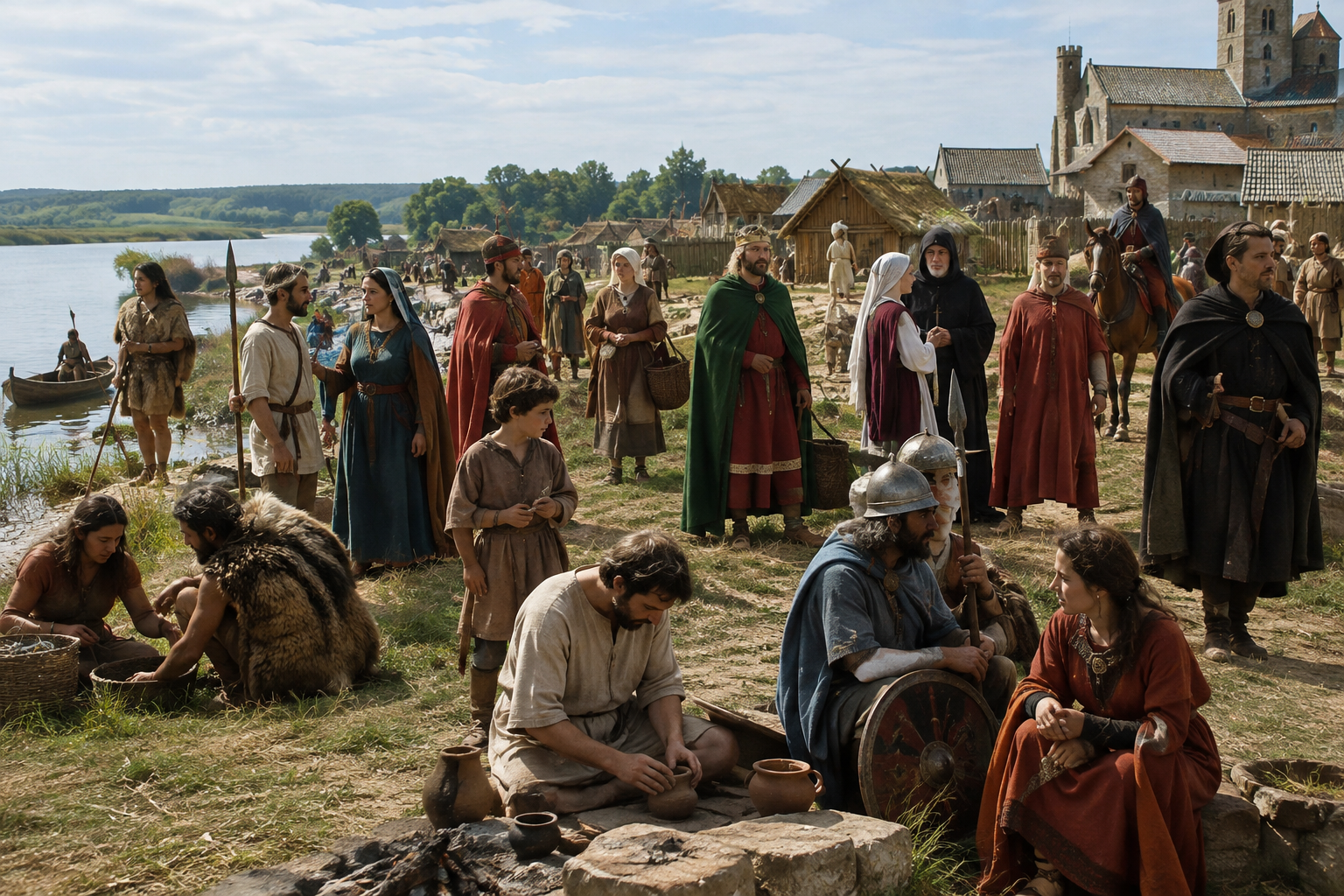
J2b2a1a1a1b2 is a good example of why narrow Y-DNA branches matter. A broad parent haplogroup may have a huge geographic range and a long, complicated past, but a specific subclade becomes historically useful when ancient individuals place it in real landscapes. Here, those landscapes are especially concentrated in Bronze Age and Iron Age Croatia, then widened through Swiss Celtic and central Mediterranean evidence, and carried onward into the Roman provincial world.
That is not proof of direct descent from any one ancient sample. It is something subtler and, in many ways, more illuminating: evidence that one paternal lineage belonged to the living population history of the Balkans and adjacent regions for a very long time. Ancient DNA gives us a view beneath the headlines of kings and empires. It lets us see continuity, movement, and survival at the level of actual men buried in specific places.
If your own paternal line falls within J2b2a1a1a1b2, MyTrueAncestry can help place it beside ancient individuals like I18746, I5073, I23911, 3432, or R2040 and the worlds they inhabited. Those matches do not prove you descend directly from a named ancient person, or from any noble house. But they can offer a vivid, evidence-based glimpse into the deep history of your paternal ancestry.

Comments