Haplogroup G2a2a1a2a1

– 5 min read


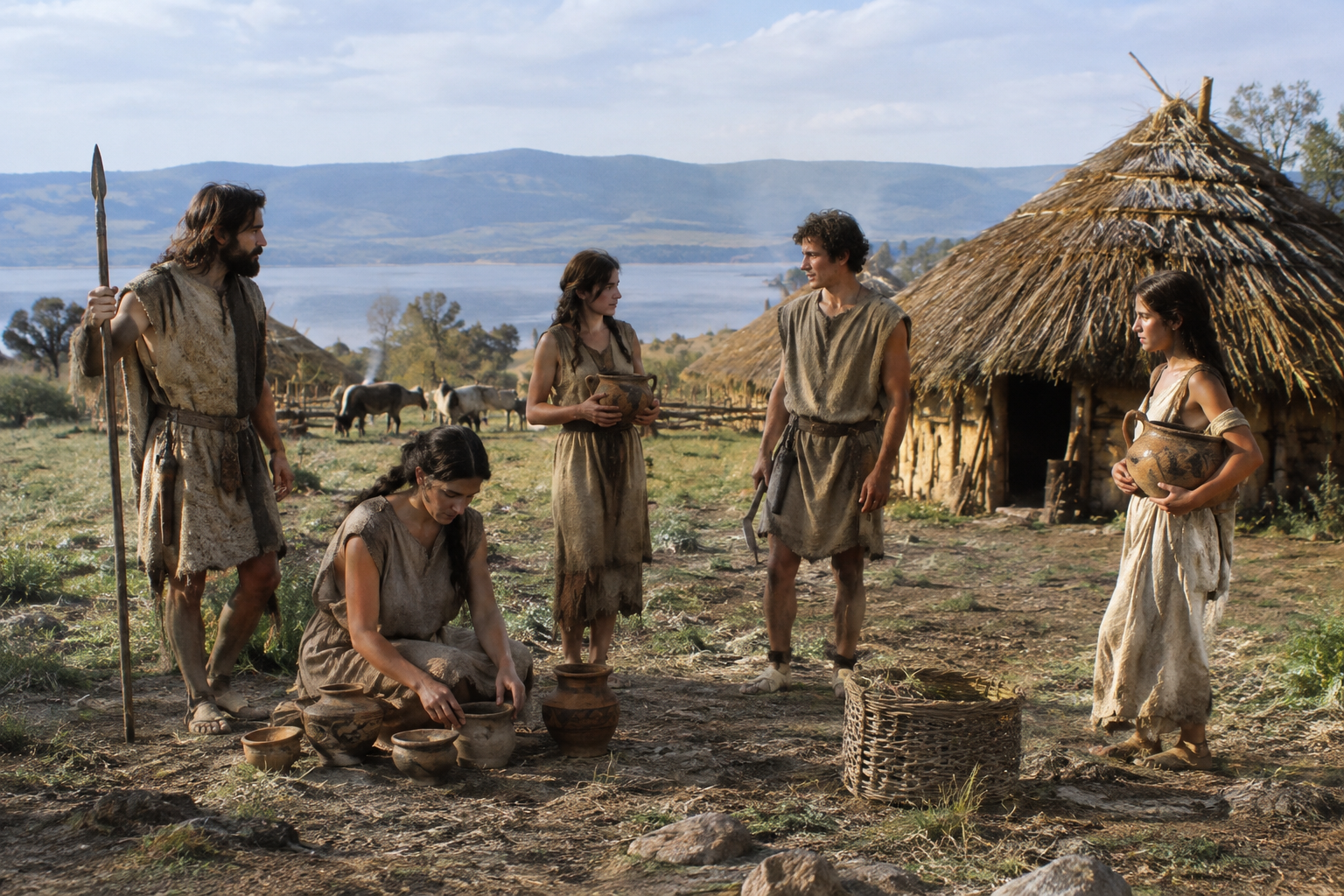
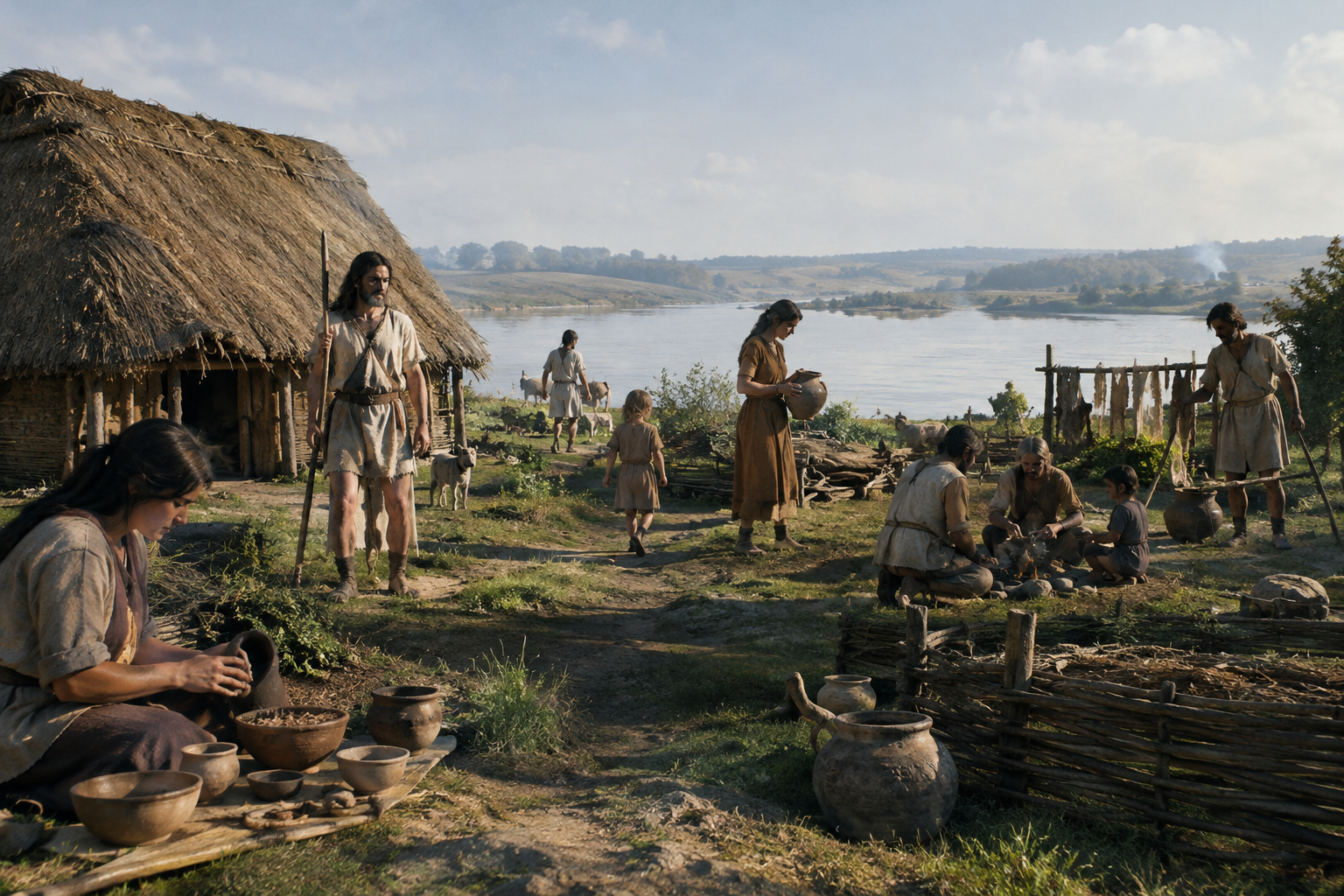
At Oberbipp in Switzerland, two men from the Late Neolithic, both dated to around 3190 BC and identified as MX182 and MX183, carry the same paternal signal used for this article: G2a2a1a2a1. That is immediately interesting because Oberbipp sits in the world of Europe's first established farming communities, where archaeologists are not looking at mythic founders or named kings, but at ordinary people whose burials help map how early agricultural societies were peopled.
For anyone researching this haplogroup today, the crucial point is that Y-DNA tracks one direct paternal line only: father to son to son. It does not describe a person's whole ancestry. Even so, when the same branch appears in Neolithic Switzerland, Copper Age Sardinia, and much later in an Iron Age burial near the northwestern Black Sea, it gives us a compact but revealing glimpse of how one old paternal lineage could persist through very different societies.
Within ancient European DNA, broader haplogroup G2a is strongly associated with many early farming populations. That does not mean every man in G2a belonged to the same later branch, nor that every later appearance tells the same historical story. In this case, the narrower designation G2a2a1a2a1 points to one specific twig inside that larger family tree, and the small number of ancient finds matters precisely because it is so specific.
What stands out here is continuity across deep time rather than sheer frequency. The known ancient examples supplied for this branch are few, but they cluster in archaeologically meaningful settings: two Late Neolithic men at Oberbipp, two Early Copper Age men at Sennori in Sardinia, and one much later individual from Early Iron Age Ukraine, UKR005, from Kartal in the Odesa region and described in a Thracian Hallstatt context.
A useful broader background to these Swiss Neolithic finds comes from research on ancient genomes from the Alps and surrounding regions, which helped show how diverse, persistent, and locally grounded farming populations could be in later prehistory. That wider context fits the presence of G2a-derived paternal lines in places like Oberbipp without requiring any dramatic single-migration tale.
The Oberbipp pair, MX182 and MX183, are the earliest samples in this set. Their date, around 3190 BC, places them in a Europe where farming had already spread widely, but local communities were still developing their own burial customs, social structures, and patterns of kinship. The fact that two men at the same site are associated with G2a2a1a2a1 suggests more than a one-off presence of the lineage there, though it still cannot by itself prove a close family relationship.
This is the sort of evidence archaeologists rather like: modest, stubborn, and specific. Two burials from one Swiss site do not rewrite European prehistory, but they do anchor this paternal branch in a settled Neolithic setting north of the Alps. In practical terms, they place the lineage firmly among populations descended from the farming expansions that had transformed Europe over the preceding millennia.
Oberbipp also reminds us that ancient Y-DNA is not only about spectacular mobility. Sometimes the real historical point is local persistence. A branch such as G2a2a1a2a1 may have been carried for generations within communities that were more concerned with land, livestock, and household continuity than with the long-distance movements that dominate popular imagination.
The Sardinian samples SEC001 and SEC002, dated here to around 2200 BC and described as Early Copper Age Sennori, carry the story into a different world. Sardinia is often archaeologically revealing because islands can preserve lineages and ancestry patterns that later become diluted elsewhere. If this branch appears twice at Sennori, that is significant not because it proves isolation in some romantic sense, but because it places G2a2a1a2a1 within the long-lived demographic history of western Mediterranean farming communities.
Sardinia has repeatedly attracted attention in ancient DNA because many prehistoric and later island populations retained strong ancestry from early European farmers. That makes the appearance of a G2a-derived paternal line here entirely plausible, and historically quite useful. It suggests that this branch was not confined to the continental interior, but also formed part of the human landscape of Mediterranean island communities.
A preprint examining ancient Italian island populations offers a relevant frame for thinking about such finds in Sardinia: research on the paleogenomics of ancient Italian islands explored how island populations preserved and reshaped older ancestry layers across time. Even without overclaiming for any one burial, Sennori fits that broader picture well.
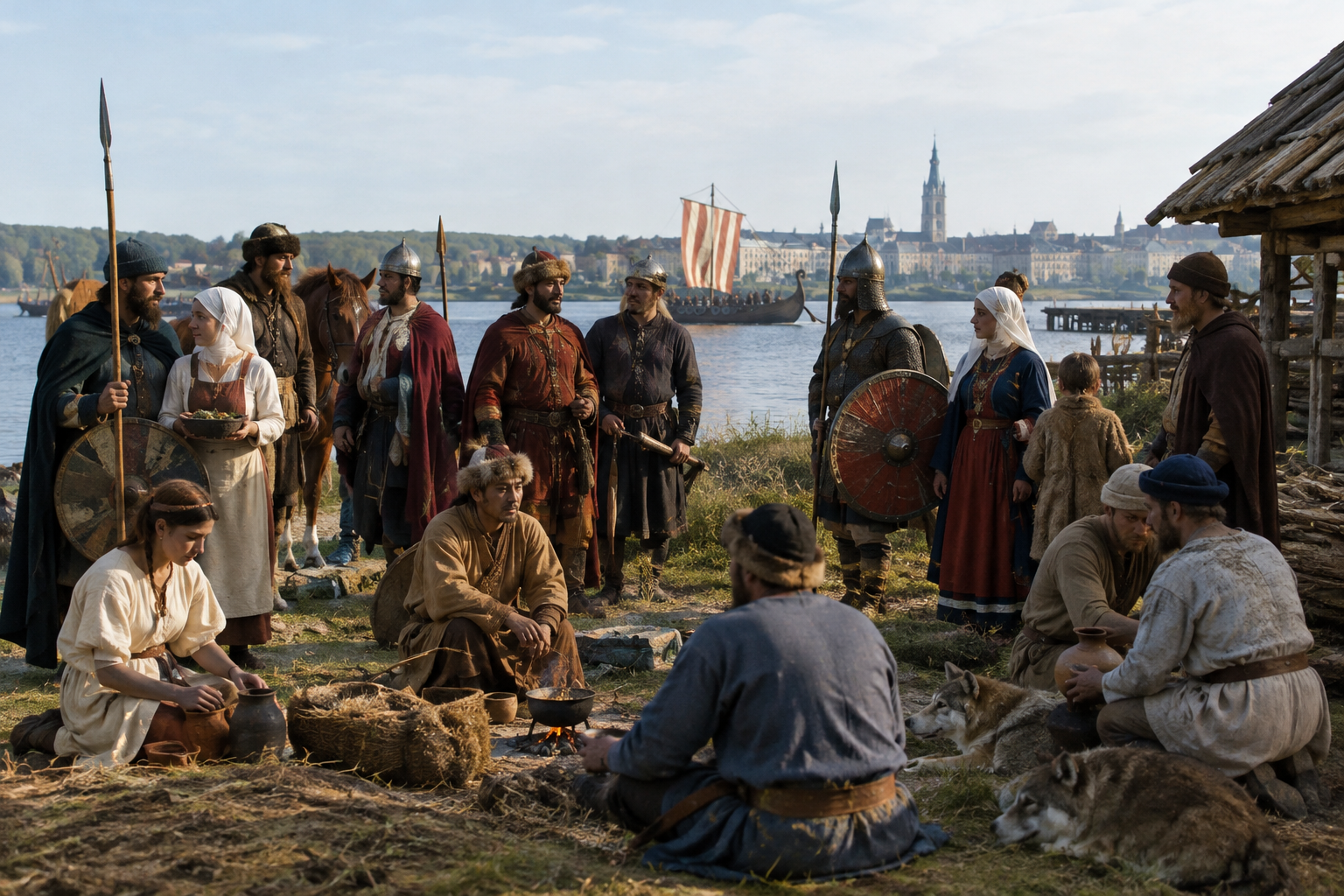
The latest sample in this group is also the most striking historically. UKR005 comes from Kartal in the Odesa region of Ukraine, dated here to around 800 BC and described as Early Iron Age, in a Thracian Hallstatt setting. That is a long way in time and space from both Neolithic Switzerland and Copper Age Sardinia.
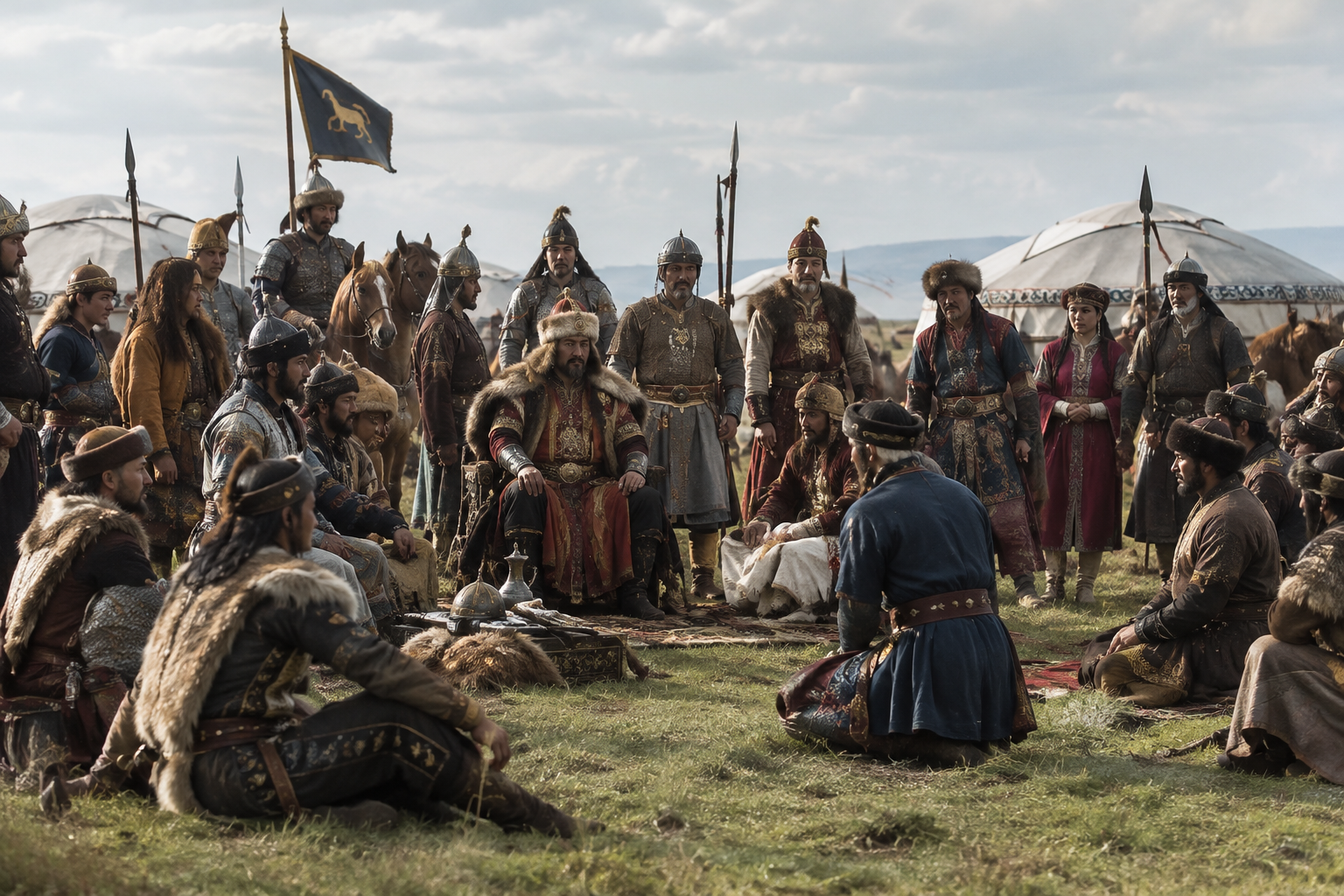
Now, one must be careful. The appearance of G2a2a1a2a1 in Iron Age Ukraine does not mean a simple straight-line migration from Oberbipp or Sennori, and certainly not that this individual was descended from those particular men. But it does show that the branch, or at least a directly connected paternal line, survived into the dynamic societies of the north Pontic region, where steppe, Balkan, and central European influences met.
The Kartal burial matters because the Early Iron Age Black Sea hinterland was anything but static. This was a zone of interaction: trade, mobility, shifting cultural affiliations, and contact between communities often labeled by archaeologists with broad regional terms rather than neat ethnic names. A study focused on mobility in Ukraine across long periods provides a sensible regional backdrop for such a find: research on the North Pontic crossroads emphasizes just how connected this landscape could be.
So UKR005 is valuable not because he stands for all Thracians, Hallstatt peoples, or Black Sea communities, but because he shows that this paternal branch did not vanish with the first farmers. It could still be present in a later Iron Age world shaped by movement and cultural mixing.
Five ancient individuals are not a vast database, but they are enough to sketch a character for G2a2a1a2a1. First, it appears in contexts tied to Europe's farming legacy. Second, it shows up in both continental and island settings. Third, it persists into the Iron Age in a region far removed from the early Alpine and Mediterranean examples.
That combination makes this a lineage of endurance rather than imperial expansion. Many readers are used to Y-DNA stories dominated by Bronze Age turnovers and large-scale steppe dispersals. Here the evidence points to something quieter: one paternal branch of the early-farmer world lasting across millennia, sometimes in settled village societies, sometimes in more mobile and mixed frontier zones.
There is also a nice historical caution built into this pattern. The same Y-DNA branch can pass through very different languages, identities, and political worlds. A man with G2a2a1a2a1 in Neolithic Switzerland and a man with the same paternal branch in Iron Age Ukraine did not necessarily share anything culturally visible to themselves beyond a very remote male-line ancestor.
If your paternal line belongs to G2a2a1a2a1, the ancient evidence presently highlighted here places that branch in a recognizably old European setting: Late Neolithic farmers in Switzerland, Copper Age men in Sardinia, and a later survivor in Early Iron Age Ukraine. That is not a certificate of descent from any one excavated individual, still less from a named tribe or dynasty. But it does suggest that this branch belongs to the long, complicated afterlife of Europe's first agricultural populations, with a reach extending from the Alps to the Mediterranean and onward to the Black Sea borderlands.
Comments