Haplogroup E1b
– 5 min read


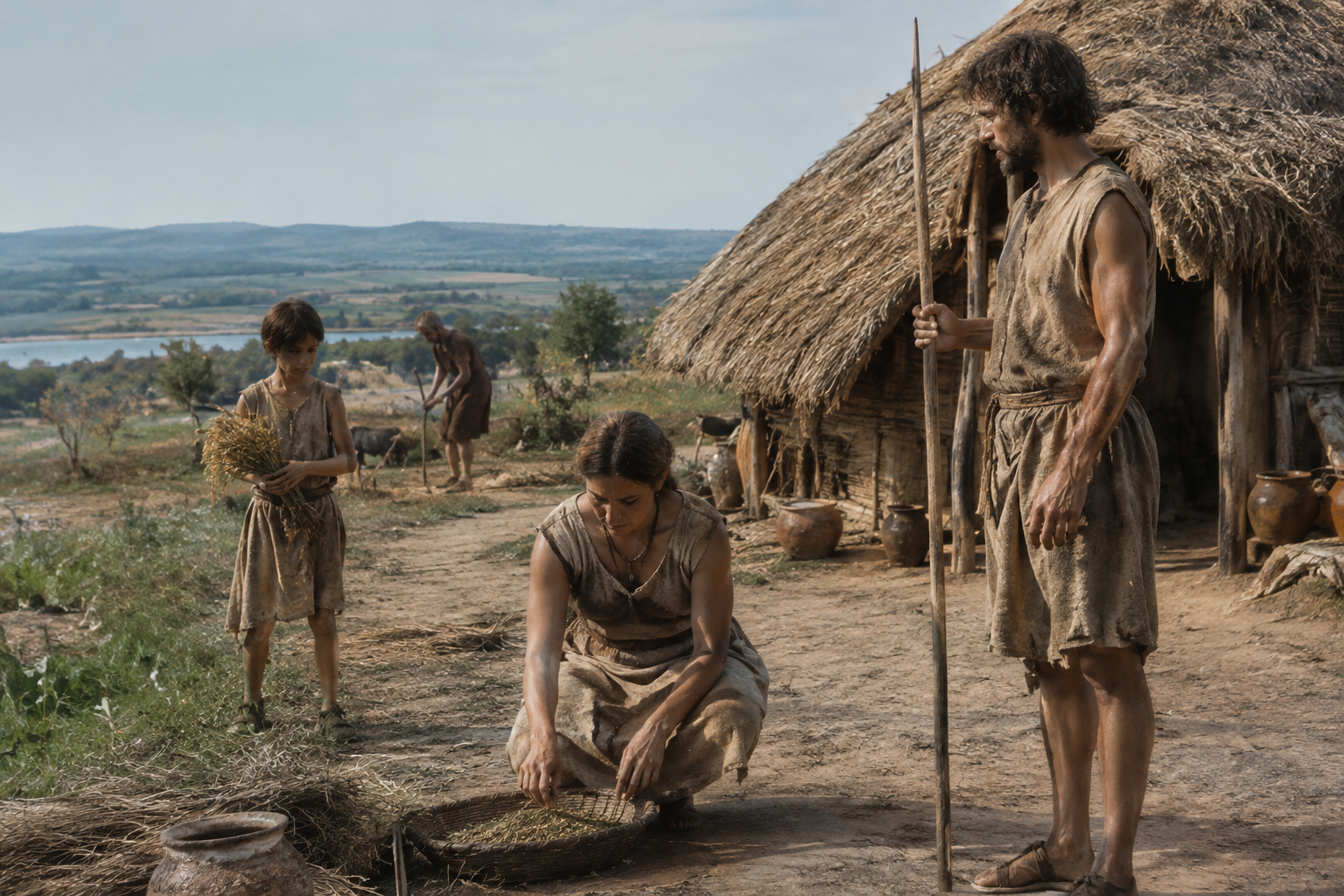
At Gambas in Bronze Age Romania, one ancient man known as GAS004 offers a useful reminder that paternal lineages do not sit tidily inside the borders of later nations or the neat labels of schoolbook history. Dated to around 1631 BC and associated with the Wietenberg culture, he is reported in connection with the broad Y-DNA haplogroup E1b, a paternal branch with a long and complicated history across Africa, the Mediterranean, and parts of Europe.
That is what makes this sample interesting. Not because a single burial can explain an entire people, and certainly not because one Y chromosome tells us everything about a man's ancestry, but because E1b appearing in a Middle Bronze Age context in Transylvania helps us think more carefully about movement, marriage, and community formation in the Carpathian world. Ancient DNA has made it much harder to imagine prehistoric Europe as a set of sealed containers.
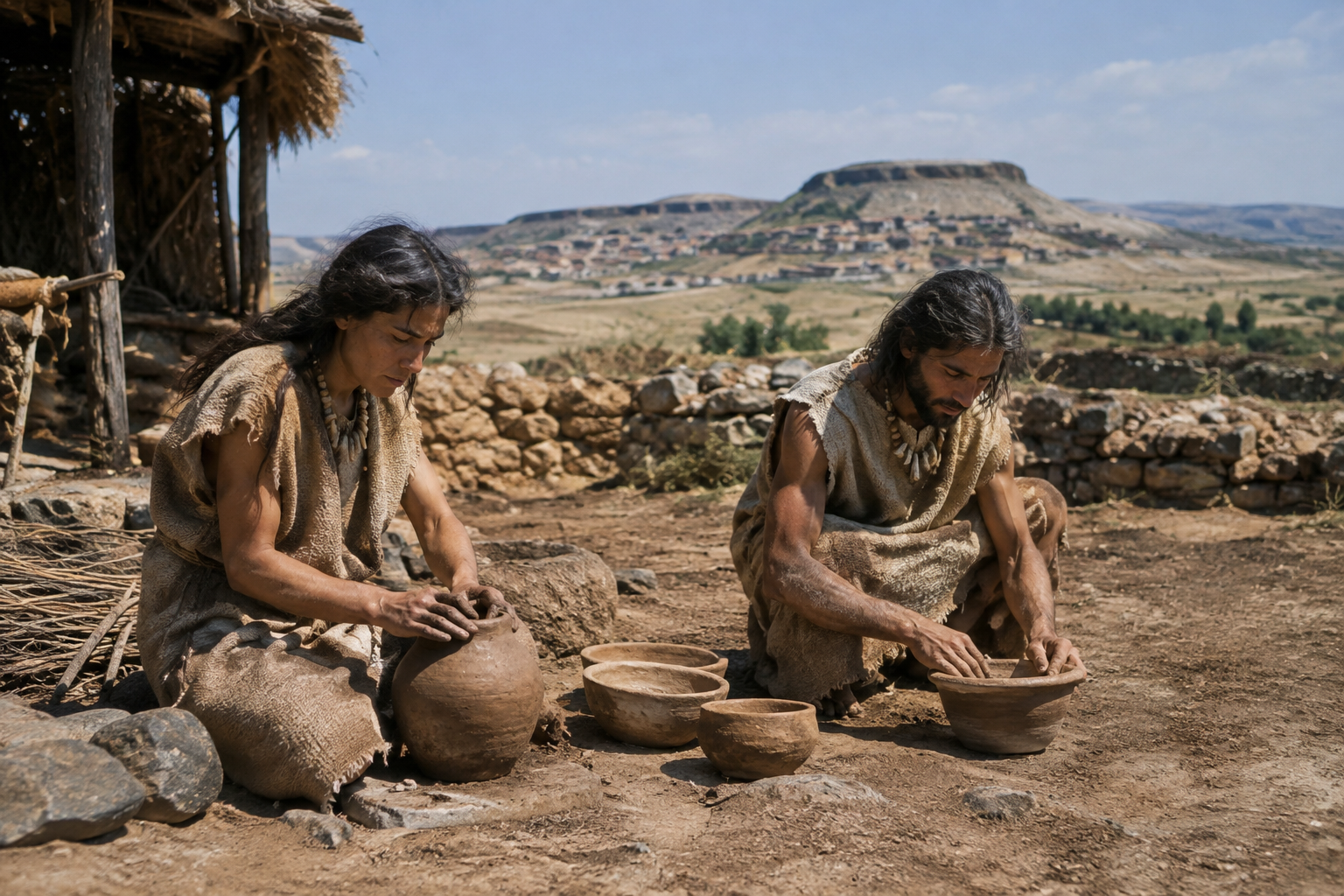
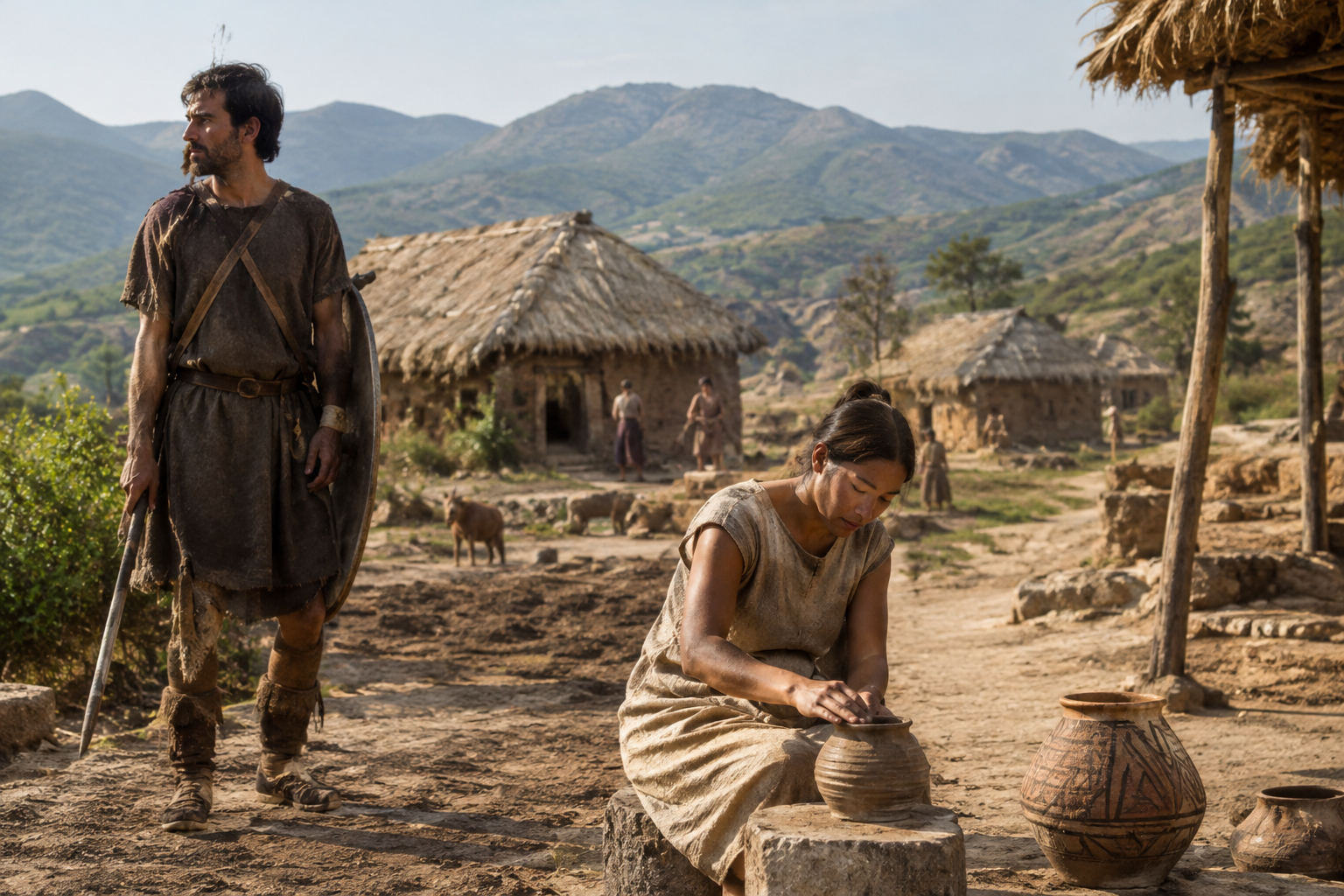
The Wietenberg culture flourished in what is now central Romania during the Bronze Age, especially in Transylvania. Archaeologists have long seen it as part of a lively regional landscape tied into exchange networks reaching across the Carpathian Basin and beyond. Metalwork, settlement patterns, and burial customs all suggest communities that were locally rooted but hardly isolated.
Into that setting comes GAS004 from Gambas. The value of this individual lies not in grand claims about dynasty or conquest, but in his placement within a real archaeological culture at a real place and date. If his reported paternal lineage belongs within E1b, then the sample adds one more piece to a growing picture in which Bronze Age southeastern Europe contained a wider range of male lines than older, simpler migration stories allowed.
A major ancient DNA study on European population history, published in Nature, has helped sharpen exactly these sorts of questions: not just where ancestry components shifted, but how local populations absorbed newcomers and preserved older lines across long stretches of time. Even when a sample is only assigned to a broad branch such as E1b rather than a more precise downstream subclade, it still matters archaeologically when it turns up in a securely dated context.
Late Bronze Age Central Europe
It is worth being precise here. E1b is a broad paternal designation, not a single recent family signature. In genetic genealogy, Y-DNA tracks one direct paternal line only: father to son to son across generations. That makes it powerful for following a narrow thread through time, but it does not define a person's whole ancestry, language, culture, or identity.
With a label as broad as E1b, caution is especially important. Different branches within the wider E1b family have been found in very different places and periods. Some are strongly associated with northeastern Africa, some with North Africa, some with the eastern Mediterranean, and some with long-established European populations. Without a securely reported terminal subclade for GAS004, it would be irresponsible to turn him into proof of one specific migration route.
Still, the broad assignment is historically meaningful. It places a line connected to the wider E haplogroup family inside the Bronze Age Carpathian sphere, reminding us that male ancestry in prehistoric Europe was not reducible to one or two dominant stories. The old temptation was to imagine every ancient male as a marker of a single sweeping expansion. The evidence is messier, and therefore more interesting.
Romania in the second millennium BC was not peripheral. It sat in a zone where the Balkans, the Carpathian Basin, and the steppe-facing east all touched one another. People moved through these corridors for many reasons: exchange, pastoral mobility, marriage alliances, local resettlement, and the slow reshaping of communities over generations.
That matters for understanding an E1b-associated man in Wietenberg territory. His paternal line may represent older southeastern European continuity, movement from neighboring Balkan regions, or ancestry introduced through much earlier episodes that had already become part of the local population by the Bronze Age. Those possibilities are historically quite different, and a broad haplogroup label alone cannot choose between them.
What the archaeology can say is that Wietenberg communities participated in a world of contacts. So when a paternal lineage like E1b appears there, it fits a broader pattern visible across ancient DNA research: Bronze Age societies often combined local persistence with varied external ties. The result is not chaos, but a more human picture of how populations actually formed.
There is a tendency, in both popular history and amateur genealogy, to dismiss broad haplogroup calls as too vague to matter. That is a mistake. Ancient DNA works cumulatively. One securely dated individual at one site may not settle a grand debate, but he helps map the range of lineages present in a given region and period.
GAS004 is especially useful because he comes from a Bronze Age setting in a region where later population history became very layered indeed. The Carpathian and lower Danube worlds saw repeated demographic changes in the Iron Age, Roman period, and early medieval centuries. A Bronze Age E1b-associated male helps anchor the fact that such lineages were in the broader region long before many later historical populations emerged.
This is one reason ancient DNA from southeastern Europe has become so important. It disrupts simplistic claims that any present-day lineage must have arrived with one famous people alone, whether Romans, Slavs, steppe nomads, or medieval dynasties. Some lines were already there in earlier forms or had entered the region in much older episodes of movement and mixture.
For readers with E1b in their own results, the Romanian Bronze Age evidence is best approached with disciplined curiosity. It does not mean that every modern E1b line in Europe descends from Wietenberg culture men, nor that Bronze Age Transylvania was somehow defined by this haplogroup. It does suggest that branches of the wider E1b family were part of the paternal landscape of southeastern Europe in prehistory.
That finding sits comfortably beside other ancient DNA work showing that the Balkans and neighboring regions often preserve very deep layers of ancestry while also absorbing newcomers. In that sense, E1b is a good example of how paternal history resists nationalist storytelling. A lineage can be old in one region, mobile across another, and later folded into many different languages and identities.
The same caution applies to any attempt to map genetics directly onto archaeological cultures. Wietenberg is a cultural label built from material remains; E1b is a paternal genetic marker; neither is a shorthand for an ethnic essence. The interesting question is how such strands met in real communities, and Gambas gives us one small but solid glimpse of that process.
The most responsible lesson from E1b at Gambas is not a dramatic origin myth, but a historically richer possibility: your direct paternal line may belong to a branch that participated in the long, entangled making of southeastern Europe and the wider Mediterranean world. The Bronze Age sample GAS004 shows that this broad lineage was present in the Carpathian region more than 3,500 years ago, inside a real archaeological community rather than a legend.
For family historians, that is valuable precisely because it is modest and well grounded. It places E1b within the ancient human reality of contact, continuity, and mixture.
Comments