Haplogroup Q1b1a1a1i

– 5 min read


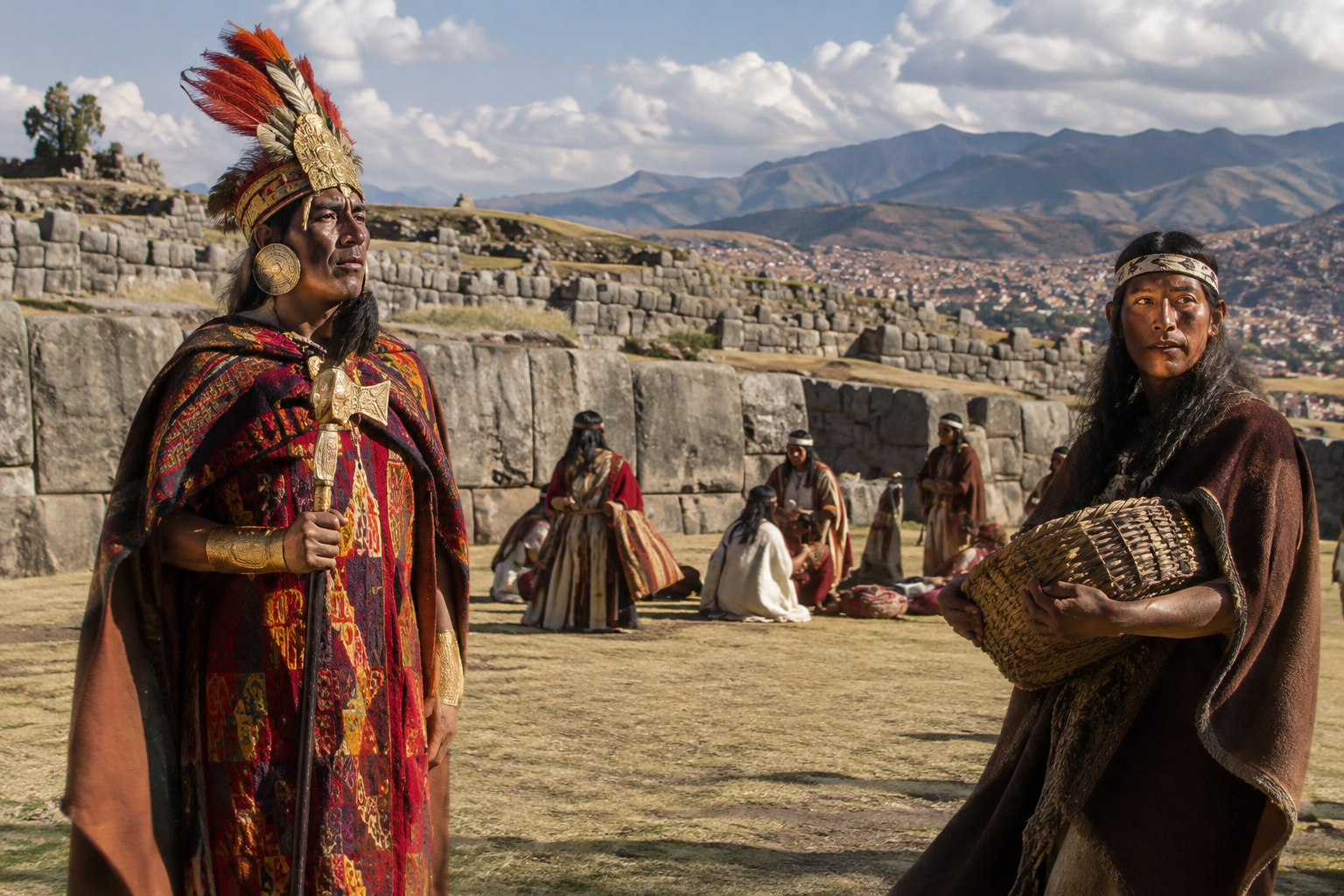
At Sacsahuaman above Cusco, the great Inca fortress-city that still dominates the hills over the imperial capital, one ancient male individual dated to around AD 1500 has been reported with the Y-DNA haplogroup Q1b1a1a1i. He is identified as SHN-355. That is a striking setting in which to meet this paternal line: not on the fringes of Andean history, but in the political heartland of the late Inca world, at the moment just before Spanish conquest transformed everything.
There is a second ancient clue as well, farther south in Chile: sample I2537, dated to around AD 1305 and classified simply as Late Period Chile. Taken together, these two finds do not map out the whole history of Q1b1a1a1i, and they certainly do not define the ancestry of all Andean or southern South American peoples. But they do place this paternal branch firmly inside the pre-Columbian world of western South America, in two different regions and two different archaeological settings.
SHN-355 matters because Sacsahuaman is not just any site. It belongs to the monumental landscape of Cusco, centre of the Tawantinsuyu, the Inca state that in the 15th and early 16th centuries ruled an enormous stretch of the Andes. To find a branch associated here with Q1b1a1a1i is to see this Y-chromosome line in a place closely tied to imperial administration, ritual, labour mobilisation, and elite display.
That does not mean SHN-355 was himself an emperor, noble, or dynastic founder. Ancient DNA almost never lets us jump so neatly from a Y-DNA label to a social title. What it does show is simpler and more useful: this paternal line was present in the Cusco region during the late Inca period. In other words, Q1b1a1a1i was part of the living male-line diversity of the Andean world at the very centre of Inca power.
A genetic study of ancient Andean and neighbouring populations published in Science Advances has helped widen this picture by showing how much population history in the region depended on local continuity mixed with movement, resettlement, and shifting political geographies. That is exactly the kind of setting in which a paternal lineage like Q1b1a1a1i becomes historically interesting: not as a badge of ethnicity, but as one thread in a very human story of communities, states, and movement across difficult terrain.
Y-DNA follows one narrow line of descent: father to son, and then father to son again across generations. That makes it unusually good for tracing deep paternal continuity, but it is only one tiny slice of a person's ancestry. A man carrying Q1b1a1a1i in late pre-Columbian Peru would also have inherited the overwhelming majority of his ancestry from countless other forebears whose names and lineages are invisible to the Y chromosome.
That distinction matters especially for haplogroup Q. In broad terms, haplogroup Q is one of the major paternal lineages associated with the peopling of the Americas, but the article's branch is not "all of Q". Q1b1a1a1i is a much narrower subclade, and the evidence here concerns this specific branch as reported for particular ancient individuals. We should not lazily pour the entire history of Native American paternal diversity into one late Andean label.
What the evidence does suggest is that this branch survived into historically late pre-Columbian populations in the Andes and adjacent southern regions. That survival matters because the centuries before European invasion were not static. The Andes saw state expansion, forced relocations, local persistence, and regional exchange. A paternal lineage present in this period has already passed through a long earlier prehistory, even if these two samples alone do not let us reconstruct every stage of it.
The second sample, I2537, comes from Late Period Chile and is dated to about AD 1305. On the face of it, the information is sparse. Yet sparse evidence can still be revealing when placed carefully. This is not the Cusco highland core, but a different part of western South America, and an earlier date than SHN-355.
That geographical spread is the important point. Q1b1a1a1i is not appearing only once, at one famous Inca-adjacent site, where we might worry about an isolated or unusual case. Instead, the branch appears in another late pre-Columbian context farther south. That broadens the map. It hints that this paternal line belonged to indigenous population histories extending beyond one political centre or one local cemetery.
We should still be careful with labels. "Late Period Chile" is an archaeological time frame, not a single ethnicity, language community, or polity. A Y-chromosome assignment in that context cannot by itself tell us whether the individual belonged to a coastal, valley, or highland population network, nor whether his paternal forebears had moved recently or had been local for many generations. But it does show that Q1b1a1a1i formed part of the paternal landscape of pre-contact Chile as well as Peru.
One reason these late dates are so useful is that they sit just before the greatest demographic rupture in American history. By the 16th century, war, epidemic disease, labour exploitation, and colonial restructuring would alter populations across the Andes and beyond. So an ancient paternal lineage documented around AD 1500 in Cusco and around AD 1305 in Chile gives us a precious glimpse of the male-line landscape before that catastrophe fully unfolded.
For the broader background, the major sweep of Native American population history has been illuminated by large-scale ancient DNA work, including research published in Cell. Studies of that kind matter here not because they name these exact two men in detail, but because they establish the wider frame: the Americas were peopled through deep prehistoric movements, followed by regional diversification over many millennia. A late Andean or Chilean Y-lineage such as Q1b1a1a1i belongs inside that long indigenous history, not as an isolated curiosity but as one surviving branch of it.
The political map at the time of SHN-355 was especially dynamic. Inca rule had drawn distant populations into a shared imperial system, yet it did not erase older local ancestries. Ancient DNA from the Andes repeatedly shows that imperial worlds were made from real communities with long roots. A paternal lineage can therefore turn up in an imperial centre without having begun there.
Ancient DNA articles often tempt us into thinking that one glamorous site tells the whole story. Here, the better approach is comparative. SHN-355 anchors Q1b1a1a1i in the late Inca-era Cusco region. I2537 shows the same branch, or an association with it, farther south in Late Period Chile. Together they suggest regional depth rather than a one-off occurrence.
That is modest evidence, but solidly useful evidence. It points to a paternal branch that was part of indigenous western South American populations before European rule. It also reminds us that lineages do not belong only to capitals and empires. They move through villages, valleys, highlands, and kin groups long before they surface in famous archaeological sites.
Deep diversity in the Americas
For someone exploring haplogroup Q1b1a1a1i today, the most responsible takeaway is not a fantasy of instant tribal or royal identification. It is something more historically valuable: this paternal line is attested in the pre-Columbian Andes and in Late Period Chile, including one individual from Sacsahuaman in the shadow of Cusco itself. That places the lineage within the documented indigenous male-line history of western South America at the eve of conquest, where archaeology and genetics briefly allow us to see it in the flesh of real ancient people.






Comments