Ancient DNA Uncovers Pre-Inca Coastal Migration and a Kin-Based Family Ossuary in Chincha, Peru
– 12 min read


Ancient Coastal Networks of Peru: Migration, Kinship, and Identity in the Chincha Valley
The ancient Pacific shore of Peru served as a vast coastal highway, facilitating movement and exchange centuries before the rise of the Inca Empire. Through revolutionary ancient DNA analysis, archaeologists have traced remarkable patterns of human migration spanning hundreds of kilometers along this coast, revealing a steady stream of people moving from Peru's far north down to the Chincha Valley, located some 700 kilometers away in what is now southern Peru. This migration represents one of the most extensively documented cases of pre-Columbian long-distance population movement along the Pacific littoral.
Genome-wide data extracted from twenty-one individuals buried throughout the Chincha Valley demonstrates that many carried identical genetic signatures to populations from the far northern coast. These northerners were not occasional visitors or temporary traders, but permanent settlers who established lasting communities. The earliest individuals bearing this distinctive northern ancestry in Chincha lived during the thirteenth century AD, well before the Inca Empire extended its influence to the region in the fifteenth century, fundamentally challenging previous assumptions about the timing and nature of coastal population movements.
Early migrants in the Chincha Valley exhibit what researchers term "unadmixed" ancestry from the north coast, meaning their DNA profiles closely matched northern populations without yet blending with other coastal groups. Over subsequent generations, their descendants began intermarrying with people from diverse coastal regions, particularly those from the south and around the central coast near present-day Lima. This process created a complex genetic landscape where nearly everyone retained some northern ancestry, but in varying combinations that reflected the dynamic nature of coastal social networks.
The Chincha Valley served as the heartland of a powerful coastal kingdom, the Chincha polity, which flourished between the thirteenth and fifteenth centuries AD. This sophisticated kingdom controlled extensive agricultural lands, productive fishing grounds, and crucial trade routes that connected diverse ecological zones. Sixteenth-century Spanish chroniclers documented a complex world of specialized groups: tens of thousands of fishers, farmers, artisans, and merchants, all organized into distinct sectors and integrated through elaborate networks of trade and tribute.
Chincha merchants operated sophisticated maritime trading systems, sailing the Pacific in balsa rafts and leading llama caravans along the coast and into the highlands. They exchanged copper, guano, fine textiles, and luxury items including gold, silver, and emeralds. This bustling commercial world provides the most likely context for the long-distance population movements detected in DNA analysis: traders, their extended families, and possibly colonists or refugees, traveling the coast and establishing new communities far from their original homes.
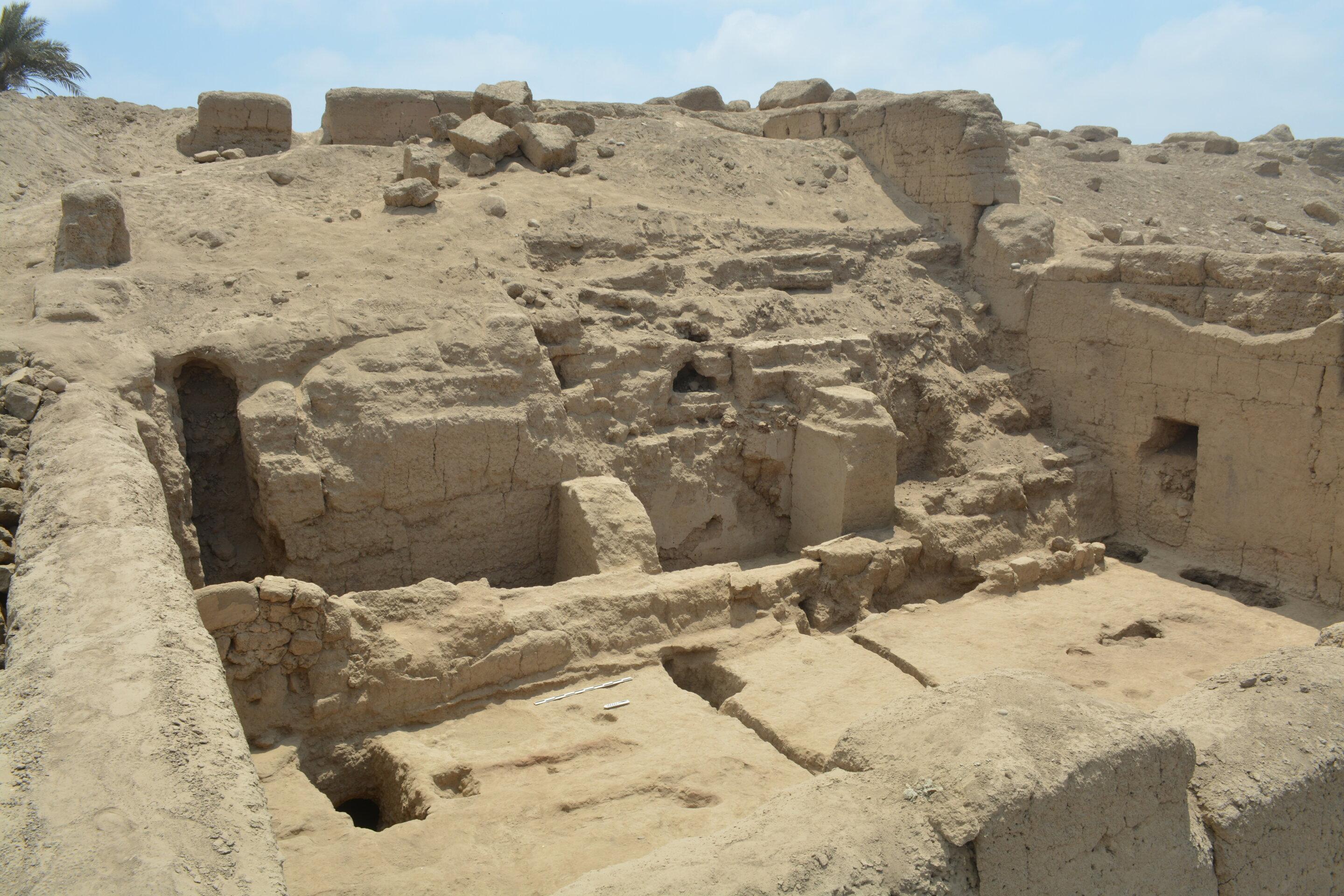
Las Huacas, one of the major archaeological sites in the study, occupies approximately 100 hectares in the center of the Chincha Valley's fertile alluvial plain. As the second-largest site in the valley, it was constructed as a complex of earthen mounds and ceremonial structures. Excavations in a single room, designated Room A2 of Complex N1, revealed an intricate maze of mortuary features that provide unprecedented insights into ancient burial practices and social organization.
The most striking discoveries from Las Huacas demonstrate continuity with practices documented throughout the valley. Genetic analysis of individuals buried at Las Huacas confirms that many carried northern coastal ancestry. Most significantly, several individuals in the large communal ossuary appear to represent members of the same extended family, spanning at least two generations and all sharing this distinctive northern genetic background.
The study focuses intensively on a single communal ossuary at Las Huacas, designated Feature 17, where a closely related family group was interred over multiple generations. Ancient DNA from four individuals enabled researchers to reconstruct a detailed family tree spanning grandparents, parents, uncles, and cousins. These individuals display close genetic relationships and evidence of marriages within the extended family line, a pattern known as consanguineous endogamy.
DNA analysis suggests that parents were often cousins of varying degrees, a marriage pattern that would maintain property, status, and ritual responsibilities within a single descent group. The burials in this family ossuary occurred between approximately AD 1330 and 1440, with all dated individuals showing northern coastal ancestry, directly linking the group to migrants from 700 kilometers away. Remarkably, several skulls display deliberate cranial modification produced in infancy through head-binding practices, creating broad, flattened shapes characteristic of north coast traditions.
Higher up in the valley, in the transitional zone between coastal plain and highlands, archaeologists have documented over 500 graves grouped into 44 mortuary sites. These graves fall into two primary categories: simple subterranean cist graves and more elaborate stone-built mausolea called chullpas. Many individuals in these middle-valley tombs received dramatic post-mortem treatments similar to those observed at Las Huacas.
DNA from these burials reveals a fascinating chronological sequence. The earliest individuals, buried in simple cists around AD 1290, possess "pure" north-coast ancestry, genetically resembling northerners who had migrated south but not yet intermarried locally. In subsequent decades, people buried in chullpas show increasingly mixed ancestry combining northern lineages with central and southern coastal populations, yet even the most genetically mixed individuals retain some northern component, suggesting that original migrants and their descendants remained a visible, enduring element in the valley's genetic composition.
One of the study's most significant contributions involves precise chronological modeling that accounts for marine diets and the complex radiocarbon signatures produced by ocean-derived foods. By developing sophisticated calibration methods, researchers successfully narrowed down the lifespans of specific individuals with unprecedented accuracy.
The earliest people with north-coast ancestry in Chincha appear during the thirteenth century AD, with most of these early northerners living and dying before the Inca Empire ever reached the valley around the early 1400s. This chronological precision demonstrates that coastal migration networks operated independently of Inca imperial policies, suggesting that long-distance movement along Peru's coast represented a fundamental aspect of pre-Columbian social organization rather than a response to imperial expansion.
The study connects genetic evidence to several possible historical forces driving this remarkable migration pattern. Environmental factors, including powerful El Niño events that could devastate northern coastal fisheries and agriculture, may have pushed people southward. Simultaneously, the expansion of the Chimú state on the north coast created new political pressures and opportunities that encouraged population movement.
Over time, migrants from the north established marriage relationships with families from the southern and central coasts, building extensive alliance networks that spanned much of Peru's shoreline. Spanish colonial records describe coastal marriage systems in which elite families from different valleys exchanged spouses to consolidate status and facilitate trade, often deliberately excluding highland lineages. The genetic patterns documented in the Chincha Valley demonstrate that such coastal alliance-building has deep roots extending back to pre-Inca centuries.
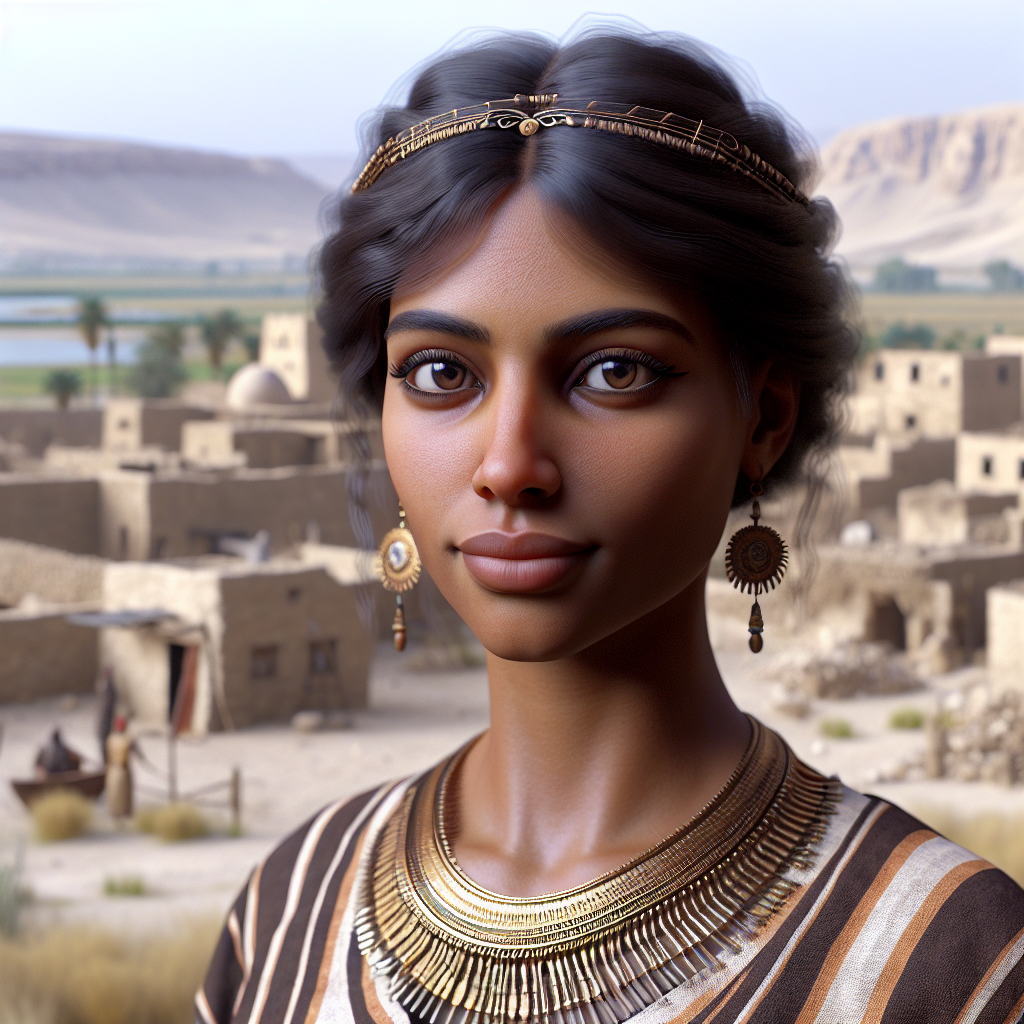
Several specific individuals emerge from the analysis as representative figures in this story of coastal movement and community formation. An elderly woman from the Las Huacas ossuary, born around AD 1280, likely belonged to the first generation of northern-descended families firmly established in the Chincha Valley. Her children and grandchildren, buried with her in the same ossuary, maintained close marriage ties within the lineage and continued northern-style cranial modification and burial customs.
Two adult men, buried in separate stone-lined graves approximately 4 kilometers apart, both lived around AD 1290 and possessed pure north-coast ancestry, suggesting they or their immediate ancestors had migrated south and were among the earliest wave of settlers in the middle valley. One man from Las Huacas and another from a middle-valley tomb proved to be second-degree relatives, perhaps uncle and nephew or half-siblings, demonstrating that family bonds connected different burial landscapes within Chincha itself.
Although the study focuses primarily on DNA analysis, it consistently links genetic signatures to the material world of the dead. Individuals with northern ancestry frequently received post-mortem treatment with red mineral pigments, particularly hematite and cinnabar. Many showed cranial modifications that permanently marked their heads with distinctive northern coastal styles. Multiple individuals were buried in shared tombs alongside relatives, creating communal spaces that reinforced family identity across generations.
These material features transform the abstract concept of "migration" into lived reality. People did not simply arrive and disappear; they built lasting communities, established families, cared for their dead, and impressed their cultural identity onto the landscape of the Chincha Valley through their burial practices, body modification traditions, and kinship systems.
One of the study's most significant technical achievements involves developing new methods for precise dating along Peru's Pacific coast, where traditional radiocarbon techniques face unique challenges. The researchers addressed the complex problem of dating coastal populations with marine-heavy diets by combining Bayesian radiocarbon modeling with detailed reconstructions of individual ancient diets, producing a new local marine offset for the Chincha region.
Many individuals in the study lived by the sea or in close proximity to marine resources, with their bones and teeth showing heavy reliance on seafood, sea lions, and seabirds from the guano islands off the coast. This dietary pattern creates significant challenges for radiocarbon dating because marine organisms often appear "older" in radiocarbon terms than they actually are, due to carbon derived from deep, upwelled waters carrying ancient carbon signatures.
On Peru's coast, this problem is particularly acute due to the Humboldt Current and powerful upwelling systems, combined with periodic El Niño events that make the local marine carbon reservoir extremely variable. Traditional solutions involving twentieth-century shell samples produce inconsistent results, with shells from early 1900s collections at sites like Paracas and Salaverry yielding wildly different offsets even within individual specimens.
Rather than applying generalized dietary assumptions, the study analyzed carbon and nitrogen isotopes from dentine and bone collagen of specific individuals. These chemical signatures enabled researchers to estimate how much of each person's protein derived from terrestrial plants and animals versus marine sources, including fish, sea mammals, and seabirds.
Using Bayesian mixing models that treat diet as probability distributions rather than simple linear relationships, each person received a unique dietary profile reflecting their individual consumption patterns. A tooth formed during adolescence records teenage dietary habits, while continuously remodeled bone reflects end-of-life consumption patterns, allowing researchers to track dietary changes throughout individual lifespans.
The study constructed individualized radiocarbon calibration curves for each ancient person, combining their specific dietary signatures with atmospheric and marine calibration data. For the four related individuals in the Las Huacas family ossuary, genetic relationships provided additional chronological constraints, with typical generational intervals helping to establish realistic age gaps between parents and children.
This approach placed key figures not just within broad chronological ranges, but on specific generational timelines. The unsampled grandmother is modeled as being born around the 1280s, roughly contemporary with the earliest cist burials in the middle valley, while her descendants' deaths cluster between the 1330s and 1440s, precisely bracketing the period when Las Huacas flourished as a major mortuary center.
Most innovatively, the researchers allowed the marine radiocarbon offset to "float" within their Bayesian model rather than imposing modern shell-based values. The model incorporated multiple constraints including genetic relationships, generational intervals, stratigraphic sequences, and dietary reconstructions, searching for the marine offset that best reconciled all available evidence.
For the Chincha Valley between approximately AD 1300 and 1500, the model converged on a strongly negative offset of approximately -314 ± 52 years, meaning marine carbon appeared over three centuries older than atmospheric carbon. This value closely matches earlier Bayesian estimates for other periods on Peru's coast, confirming that modern shell-based offsets poorly represent ancient marine carbon behavior.
The Chincha Valley between the 1200s and 1400s AD presents a remarkable case study in mortuary complexity, revealing sophisticated burial traditions that maintained continuity across centuries of political change. Through detailed analysis of burial practices, the study illuminates how ancient communities expressed identity, maintained kinship relationships, and negotiated social boundaries through their treatment of the dead.
The middle Chincha Valley contains an extraordinary concentration of mortuary sites, with over 500 documented graves distributed across 44 separate locations. These burial places fall into two primary architectural categories that reflect changing social practices over time. Early burials typically occur in simple subterranean cist graves, where individuals were placed in extended positions within stone-lined underground chambers.
Later burials are associated with elaborate stone-built mausolea called chullpas, designed as permanent structures that could be reopened and revisited by descendants. These chullpas represent a significant investment in mortuary architecture and suggest the emergence of more complex ancestor veneration practices. The transition from cists to chullpas parallels the genetic shift from unadmixed northern migrants to their increasingly mixed-ancestry descendants.
Perhaps the most visually striking aspect of Chincha burial practices involves the extensive post-mortem modification of human remains. Thirteen genetically analyzed individuals received applications of red mineral pigments, typically hematite or cinnabar, applied directly to cleaned bone surfaces after soft tissue decomposition. This practice represents a deliberate "remaking" of ancestors, reinscribing them into the social world through color symbolism.
Many individuals also display evidence of vertebrae-on-posts, where spinal bones were removed from bodies and threaded onto reed sticks to create composite artifacts. These constructions suggest ongoing relationships with the dead long after initial burial, indicating that mortuary practices extended far beyond the moment of interment. Communities regularly returned to tombs, opened burial chambers, and physically rearranged ancestral remains into new, socially meaningful configurations.
Numerous individuals from both Las Huacas and middle valley sites exhibit tabular cranial modification, produced through deliberate head-shaping during infancy. This practice involved binding infant skulls between boards or tight wrappings for extended periods, creating permanent alterations that remained visible throughout life. The modified cranial forms documented in Chincha closely resemble styles practiced on Peru's north coast, providing additional evidence for cultural continuity alongside genetic ancestry.
Cranial modification appears consistently across the entire study period, from the earliest thirteenth-century burials through fifteenth-century contexts, and occurs in all burial types including cists, chullpas, and communal ossuaries. This persistence suggests that head-shaping served as a fundamental identity marker that transcended local political changes and maintained connections to distant coastal communities.
The communal ossuary at Las Huacas provides unprecedented insight into ancient Andean kinship organization through its preservation of a multi-generational family group. DNA analysis reveals actual biological relationships among individuals buried together, including grandparents, parents, uncles, and cousins whose remains were deliberately combined in a single mortuary feature.
Genetic evidence indicates that this family practiced consanguineous endogamy, with marriages frequently occurring between cousins of various degrees. This marriage pattern would have concentrated wealth, property, and ritual responsibilities within a restricted descent group, creating a corporate kinship unit comparable to historically documented Andean ayllus or parcialidades.
The ossuary remained in active use for over a century, from approximately AD 1330 to 1440, with family members continuing to be interred alongside their ancestors. This long-term use demonstrates the stability of kinship-based social organization and the importance of maintaining physical connections between the living and the dead through shared burial spaces.
The Chincha Valley's position within broader coastal interaction networks becomes clearly visible through the genetic and archaeological evidence, revealing sophisticated systems of trade, marriage, and political alliance that operated across hundreds of kilometers of Peru's Pacific shoreline. These networks predated and ultimately shaped the region's integration into expanding imperial systems.
The genetic evidence demonstrates that extensive coastal connections existed well before Inca imperial expansion reached the Chincha Valley. Early migrants with pure northern ancestry arrived during the thirteenth century, establishing communities and gradually intermarrying with populations carrying central and southern coastal genetic signatures. This process created complex ancestry patterns that reflect active marriage networks spanning much of Peru's coast.
Archaeological evidence supports these genetic patterns through the distribution of material culture. North and central coast ceramic styles appear in Chincha burial contexts, often associated with individuals bearing corresponding genetic signatures. Trade goods including Spondylus shell, metals, and specialized textiles document economic relationships that paralleled genetic connections, suggesting integrated systems of exchange encompassing both people and materials.
Several historical forces likely contributed to the large-scale population movements documented in the Chincha Valley. Powerful El Niño events could devastate northern coastal fisheries and agricultural systems, encouraging southward migration toward more stable resource zones. Simultaneously, the expansion of the Chimú state created new political pressures and opportunities that may have motivated both voluntary and involuntary population movements.
The Chincha Valley offered attractive destinations for northern migrants, with rich marine resources, fertile agricultural lands, access to guano deposits for fertilizer, and strategic position along coastal trade routes. Colonial-period accounts describe Chincha as controlling specialized economic sectors including fishing, farming, and long-distance commerce, suggesting that immigrant communities may have been incorporated into existing economic specializations.
When Inca forces reached the Chincha Valley during the early fifteenth century, they encountered well-established coastal networks rather than isolated local communities. Historical sources suggest that the Chincha Kingdom negotiated a privileged relationship with the Inca Empire, maintaining considerable autonomy in exchange for maritime expertise and access to coastal trade goods.
The genetic evidence supports this model of negotiated integration rather than forced resettlement. Most individuals with clear northern ancestry lived and died before Inca arrival, indicating that coastal migration networks operated independently of imperial policies. Later Inca administration appears to have formalized and exploited existing coastal connections rather than creating entirely new population movements.
The persistence of distinctive burial practices, cranial modification traditions, and kinship organization throughout the period of Inca rule suggests that coastal communities maintained significant cultural autonomy even after political incorporation. This pattern reflects the complex strategies through which imperial systems integrated diverse local populations while accommodating existing social structures and cultural practices.
Through its comprehensive integration of genetic, archaeological, and historical evidence, this study reveals the ancient Pacific coast of Peru as a dynamic zone of interaction, migration, and cultural exchange that fundamentally shaped the development of pre-Columbian Andean civilization. The sophisticated networks documented in the Chincha Valley demonstrate that long-distance connections, complex kinship systems, and elaborate mortuary traditions created enduring social landscapes that persisted across centuries of political transformation, ultimately providing the foundation for imperial integration while maintaining distinctive coastal identities and practices.Original source article Original source article: https://phys.org/news/2026-05-ancient-dna-reveals-web-marriage.html




Comments