Haplogroup N1a1a1a1a2a1c1a1

– 4 min read


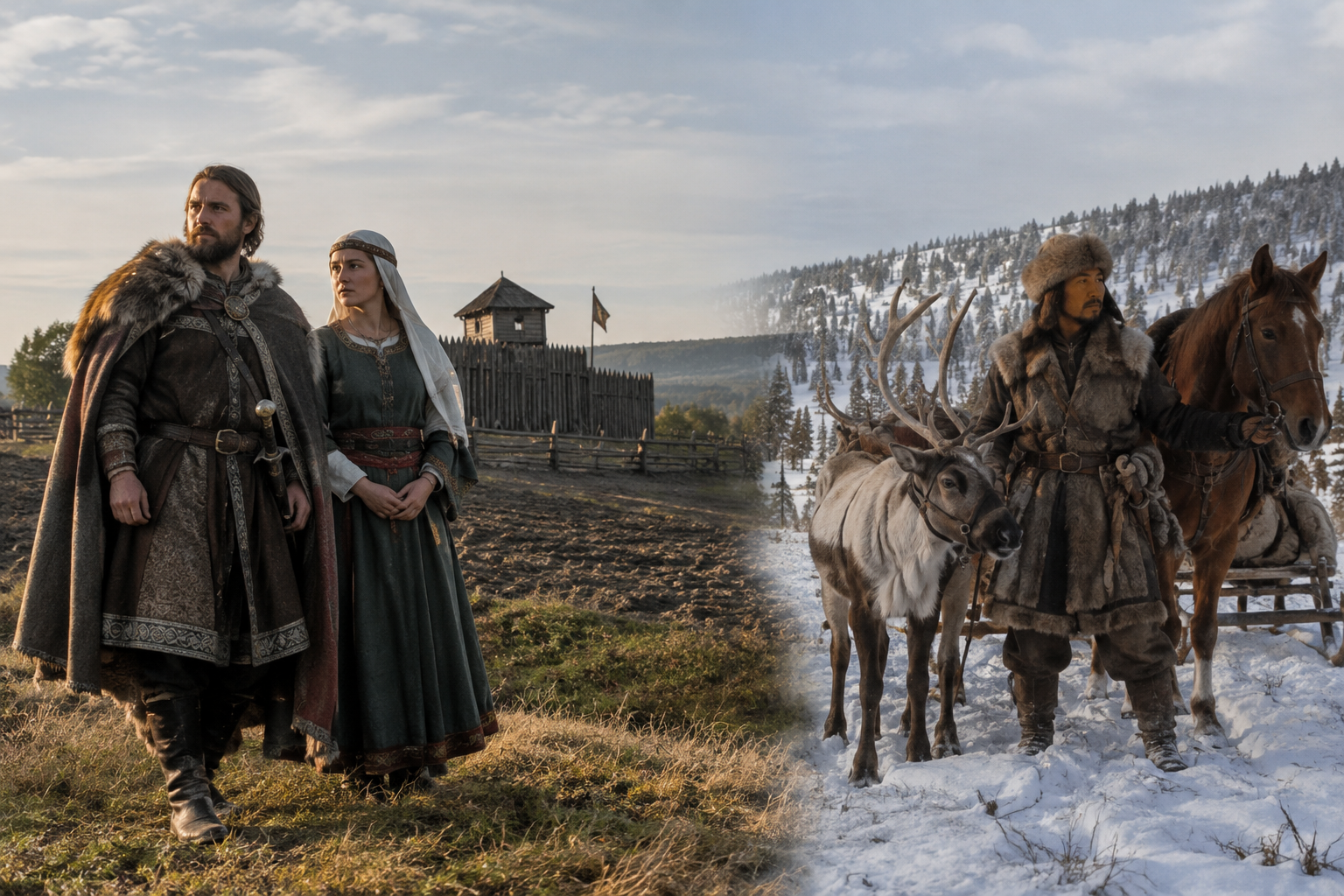
At Bodajk-Proletarfoldek in medieval Hungary, one excavated man dated to around AD 950, sample AHPS196W, carries the very specific Y-DNA line N1a1a1a1a2a1c1a1. That may look like an intimidating string of letters and numbers, but in archaeological terms it is useful precisely because it is so narrow. Instead of speaking vaguely about broad population movements, it lets us follow one direct paternal thread into the world of the early medieval Carpathian Basin.
The second clue comes from farther east: sample MS20 from Uyelgi in the Trans-Ural region of Russia, dated to around AD 800. Put the two together and the interest becomes obvious. We are not looking at a lineage scattered randomly across time and space, but at one that appears in two historically important settings linked to the movement of peoples between the Trans-Urals and Hungary in the centuries around the Hungarian Conquest.
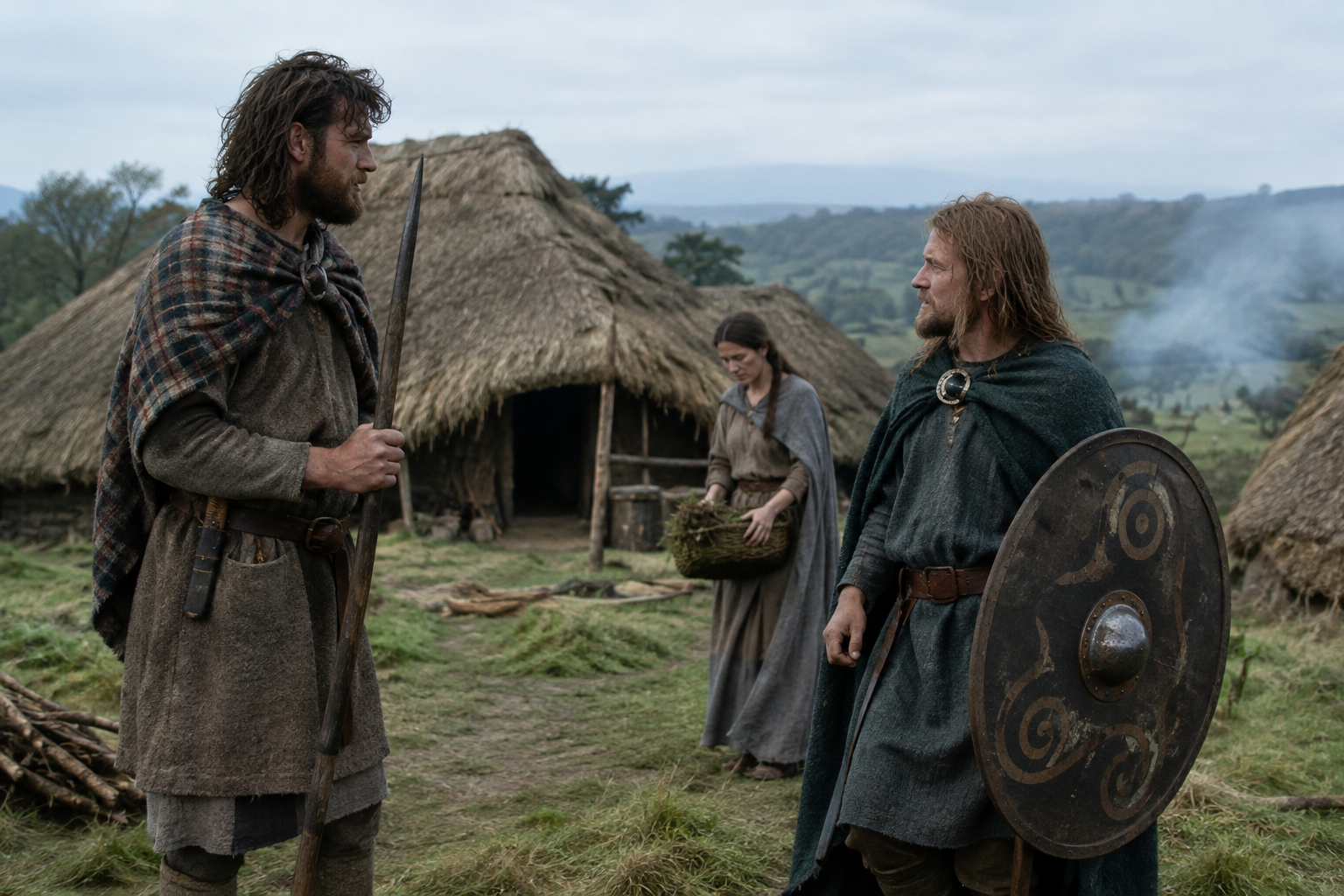
Bodajk-Proletarfoldek sits in a region that, by the 10th century, belonged to a changing borderland. Carolingian influence, local post-Avar populations, and incoming Magyar groups all formed part of the human landscape. A man such as AHPS196W belongs to that crowded and complicated historical moment, when political control in the Carpathian Basin was being remade but older local traditions had hardly vanished overnight.
The haplogroup matters here because Y-DNA tracks one paternal line only. It does not tell us a person's whole ancestry, language, or identity. But when a narrow branch like N1a1a1a1a2a1c1a1 appears in an early medieval Hungarian context, it becomes a useful marker for the eastern connections that ancient DNA studies have been detecting in some conquest-period and adjacent populations.
A recent ancient DNA study of medieval Hungary's elite and related groups has helped sharpen this broader picture, showing that some 10th-century and early medieval individuals in the region retained clear links to steppe and Trans-Ural worlds rather than fitting a simple local-only model of origin or identity; see this research on medieval Hungary and conquest-period ancestry.
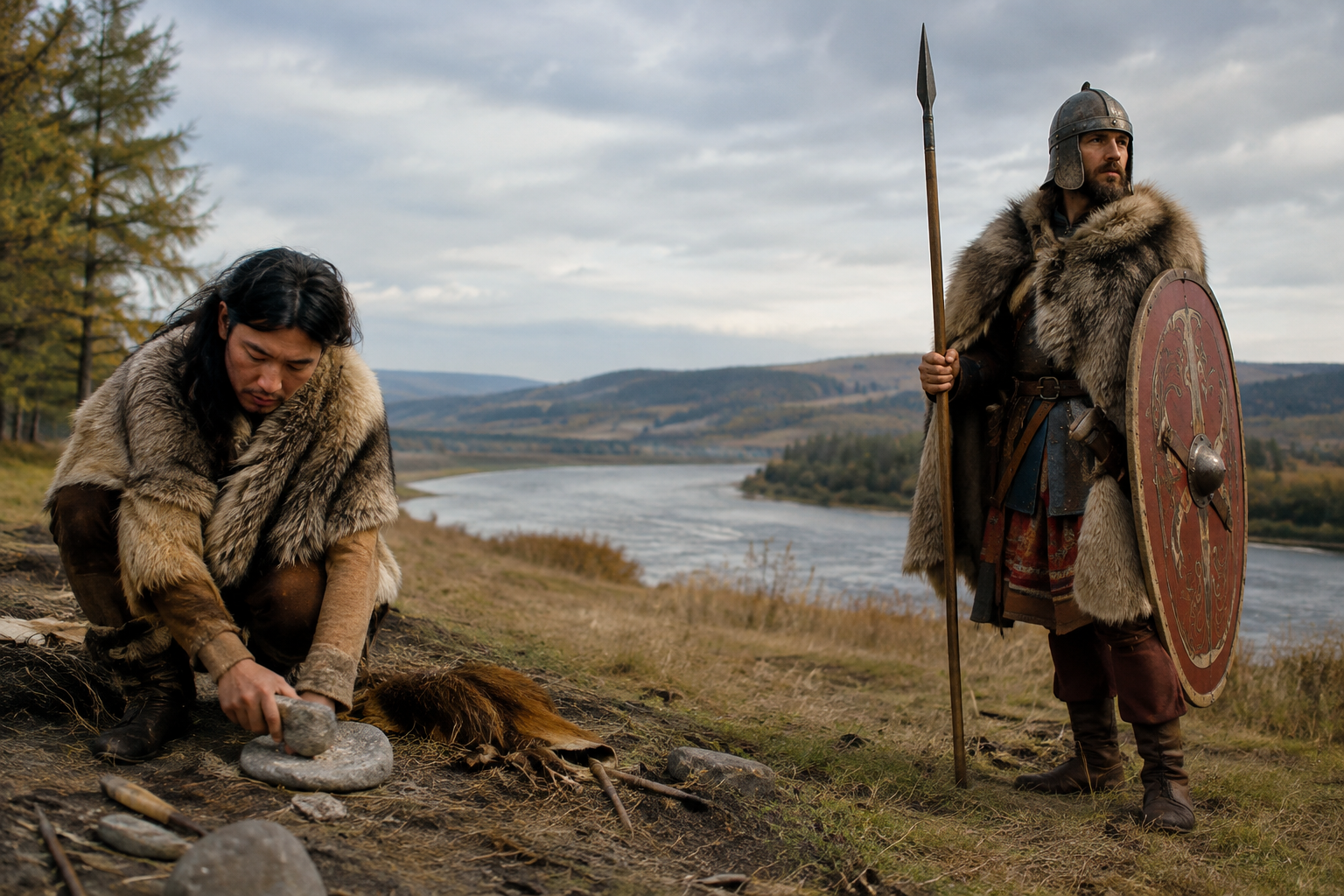
If Bodajk gives us the western appearance of this lineage, Uyelgi gives us the eastern one. Sample MS20, dated to around AD 800 in the Chelyabinsk region, comes from the Trans-Ural zone often discussed in connection with early Ugric-speaking and steppe-facing populations. Archaeologically, this is exactly the sort of region that matters when historians and geneticists ask where some of the paternal lines later found in the Carpathian Basin may have been circulating before the conquest era.
One must be careful here. A shared haplogroup between Uyelgi and Bodajk does not prove that one man was the ancestor of the other, nor that every bearer of the lineage moved along one neat migration route. But it does place this paternal branch inside a historically plausible corridor stretching from the forest-steppe and Ural fringe toward eastern Europe and, eventually, Hungary.
That is why Uyelgi is so valuable. It stops the Hungarian evidence from floating free as an isolated curiosity. Instead, it anchors N1a1a1a1a2a1c1a1 in a wider northern Eurasian setting, one connected with mobile communities, frontier contacts, and the long build-up to the 9th- and 10th-century transformations of central Europe.
The wider haplogroup N is famous across northern Eurasia, especially among many Uralic- and Siberian-associated populations, but that broad fact is only the starting point. The article's branch, N1a1a1a1a2a1c1a1, is much narrower. It should not simply inherit every claim ever made about haplogroup N as a whole.
What we can say responsibly is more modest and more interesting. In the evidence here, this branch appears in an early medieval Trans-Ural context and in a 10th-century Hungarian one. That pattern fits the larger archaeological and genetic argument that at least part of the paternal ancestry present among some early medieval groups in Hungary had roots well to the east, in zones tied to the Urals and adjacent steppe networks.
This is also a helpful reminder that conquest-period Hungary was not genetically uniform. Some paternal lines in the region look local to the Carpathian Basin or broader Europe, while others, such as this one, point more strongly toward eastern connections. Ancient cemeteries are not national origin stories written in bone; they are records of mixed communities formed by movement, alliance, and adaptation.
The historical importance of this pairing, MS20 and AHPS196W, lies in timing as much as geography. Around AD 800, the Trans-Ural world was part of a vast contact zone touching forest peoples, steppe polities, and trading routes running across Eurasia. By around AD 950, the Carpathian Basin had become the new political center of the Hungarian principality. The appearance of the same narrow paternal branch in both regions fits a story of connection across that interval.
That does not mean a mass movement of all men carrying this lineage, still less a single tribe defined by one Y-chromosome. But it does suggest that some paternal lines associated with eastern homelands survived the move into central Europe and remained visible in the generations after settlement. This is exactly the kind of fine-grained evidence ancient DNA is now bringing to medieval history: not myths confirmed wholesale, but specific biological threads woven through known historical change.
For someone who belongs to N1a1a1a1a2a1c1a1 today, these two ancient samples offer a sharply focused historical signal. Not a guarantee of descent from a famous dynasty, and not a complete portrait of family history, but a real indication that this paternal branch was present in the eastern world tied to the Trans-Urals by AD 800 and in medieval Hungary by around AD 950.
That is the distinctive value of this haplogroup in the current evidence: it sits at the meeting point of archaeology, migration history, and the formation of early medieval Hungary. In other words, it is not just an old line. It is a line that appears exactly where historians have long suspected important eastern connections were being carried west.

Comments