Clan Wallace
– 3 min read


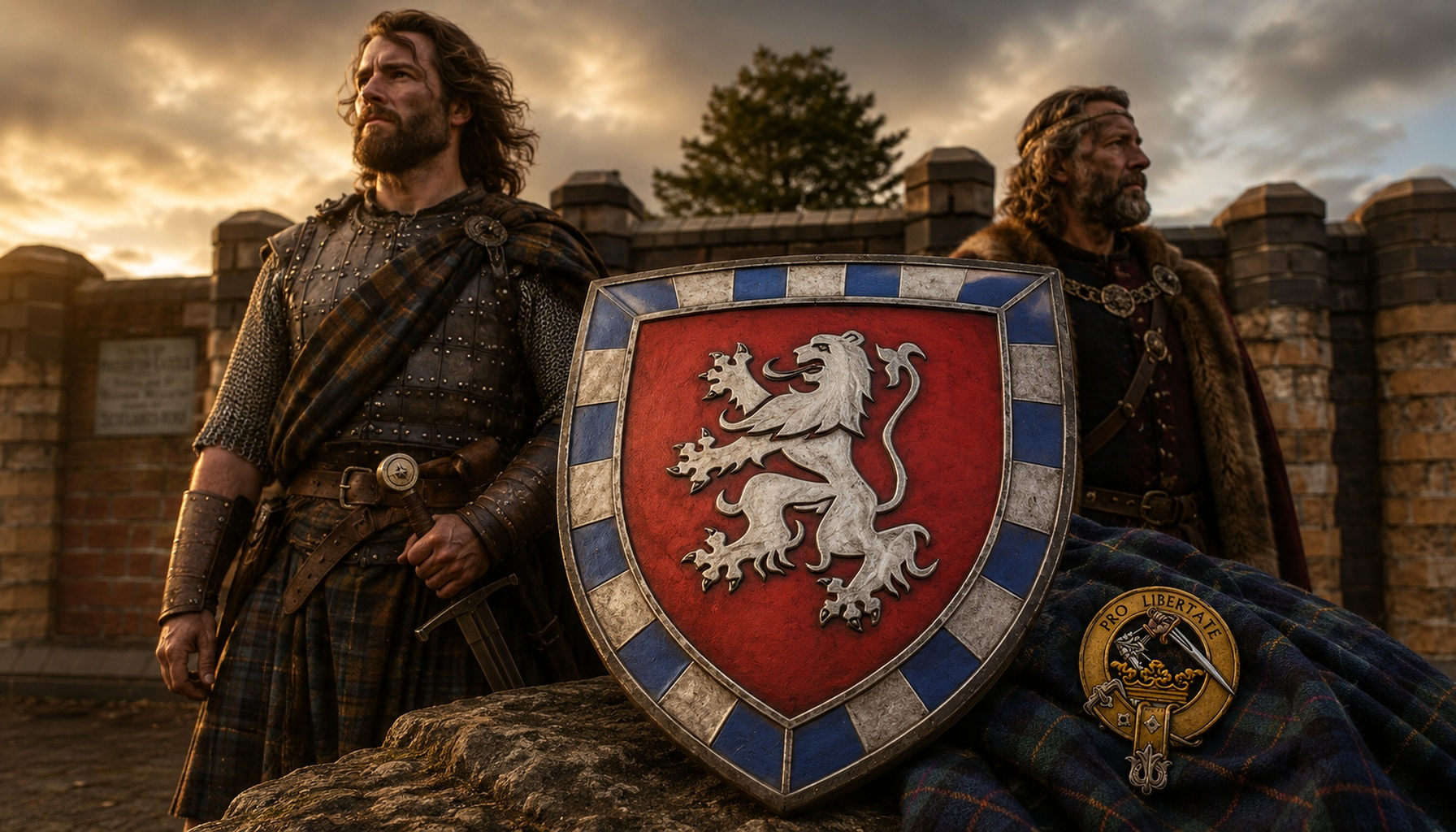
Clan Wallace was one of the great patriotic families of Scotland: a name rooted in the west of the country, especially Renfrewshire and Ayrshire, and forever tied to the memory of resistance in the Wars of Scottish Independence. The surname itself is usually understood to mean "Welsh" or "foreigner" in the old Brittonic sense, pointing to origins among Brittonic-speaking peoples who became established in medieval southwestern Scotland. In genetic tagging terms, the primary family haplogroup linked here is R1b1a1b1a1a1c1a1, part of the wider western European R1b world that appears again and again across Iron Age, Roman, early medieval, and later European contexts.
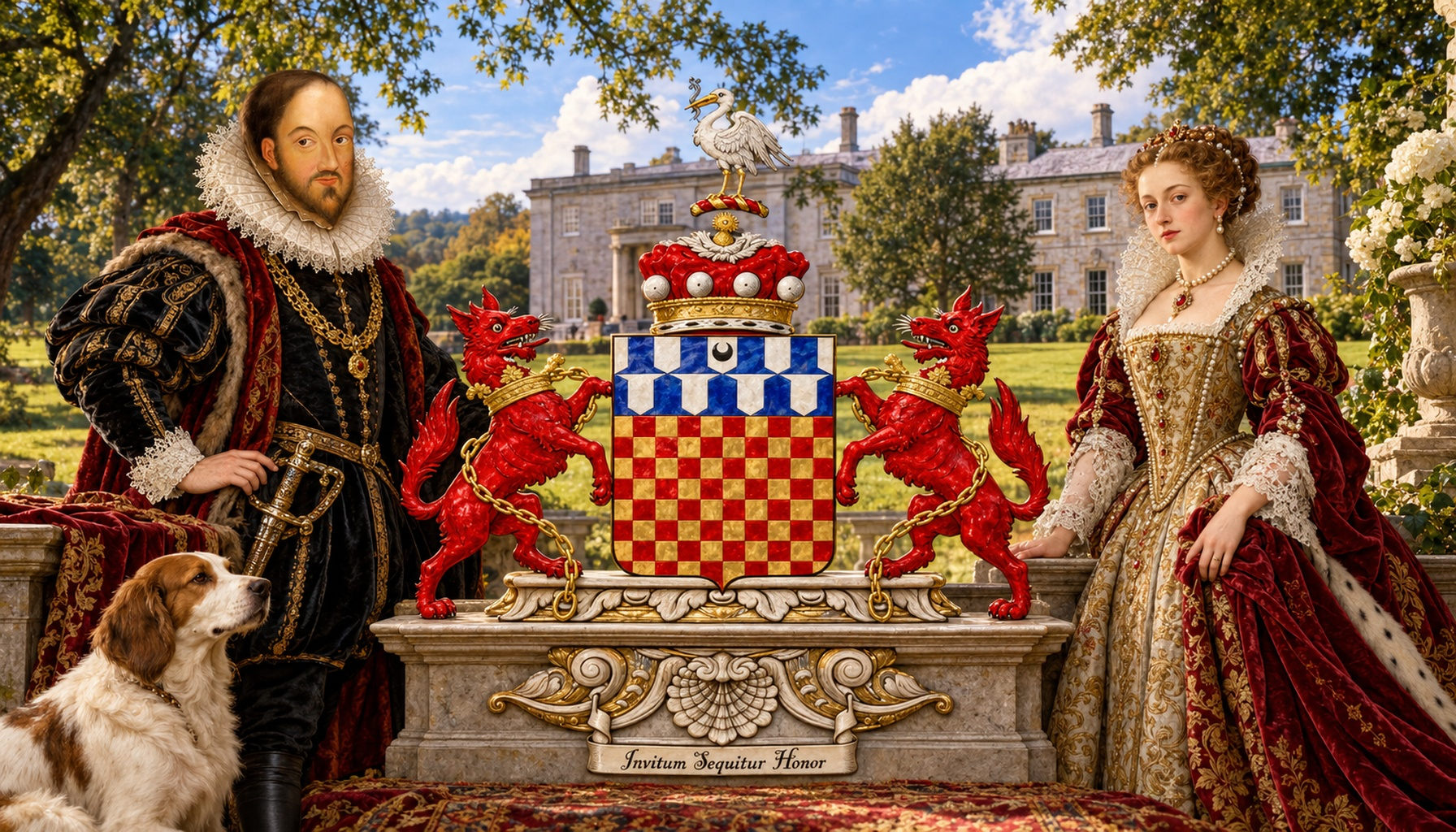
The Wallace story is bigger than one famous hero, though William Wallace naturally towers above the rest. Historically, the family belongs to that very Scottish pattern in which regional lordship, military reputation, surname continuity, heraldry, and national memory all reinforce one another. The Wallaces held land, served in war, and preserved identity through their name and local roots over generations. William Wallace made the surname iconic, but the enduring power of Clan Wallace lies in how it came to symbolize courage, regional loyalty, and Scottish patriotism itself. This is one of those families where lineage, legend, and historical record have long lived side by side.
A key location anchor for Wallace heritage is Craigie Castle in South Ayrshire, near Kilmarnock, in a landscape deeply associated with the family's historical footprint. The castle stands on the site of an earlier fortification and developed over centuries, with medieval and later additions that reflect its long life as a noble residence rather than a single-moment monument. It passed through important Scottish hands over time, and its surviving structure still gives a real sense of how these fortified residences worked: part defence, part status, part local administrative center. In the Wallace context, Craigie Castle matters because it places the family firmly in the west-central Scottish world from which their identity emerged, a world of landed influence, shifting royal politics, and regional power. It is not just a romantic ruin in the abstract; it is the sort of place that helps explain how a surname became a force in local and then national history. The castle survives and can still be visited from the outside, with the site remaining a tangible stop for anyone exploring Wallace country.
From a DNA-history point of view, the haplogroup tag R1b1a1b1a1a1c1a1 links Clan Wallace to a much broader northwestern and central European story. This does not mean direct descent from any specific excavated person, but it does place the lineage in a network of related ancient and medieval samples spread across time and geography. Among those linked examples are Lombard Warrior Elite Collegno Northern Italy samples COL_069, COL_069b, and COL_069x; Hungarian knightly era individuals Elek Bathory from Pericei PER01 and Ferenc Bathory PER03-1; Medieval Jutland Denmark Vor Frue Kirkegard Aalborg CGG100493; several medieval Belgian Sint-Truiden samples ST0052, ST1232, ST0632, and ST3006; Belgic Suessiones and Gallic era Bucy-le-Long individuals CGG022456, CGG022463, CGG022431, CGG022425, CGG022438, and CGG022419; Batavi samples from Valkenburg Marktveld CGG107745 and CGG107754; Medieval Poland Piast Dynasty sample PCA0193; Early Anglo-Saxon West Heslerton Yorkshire individuals I20644, I20671, and I20677; Saxon Coast Lower Saxony Dunum DUN010; Buckland Dover early Anglo-Saxon samples BUK059 and BUK027; Longobard Haeven HVN005; Norman Invasion era Lincoln Castle S3044; Etruscan Roman Republic Tarquinii R10339; Roman Klosterneuburg Fortress R10659; Late Bronze Age Teplice I13788; Germanic Iron Age Teplice Radosevice I15950; Iron Age Briton Cambridgeshire I11149; Middle Bronze Age Westwoud-Binnenwijzend I11972; Early Iron Age Vlaardingen-Krabbeplas I17019; Late Iron Age Frisian boy I12907; elite Germanic warrior AED106; post-medieval plague victim ELW003; Bell Beaker De Tuithoorn I4070; and Medieval Villa Magna R58. Taken together, these related matches suggest the deep historical backdrop of the Wallace paternal line sits within the old movement of peoples around the North Sea, the Low Countries, Britain, Gaul, and the Germanic and post-Roman worlds that shaped medieval Scotland.
If you carry Wallace ancestry, or simply want to see how your DNA may connect with the wider story of Scotland and ancient Europe, upload your DNA to MyTrueAncestry and explore the matches for yourself. It is a lively way to place family tradition beside archaeology, history, and deep ancestry.
Comments