Clan Primrose
– 3 min read


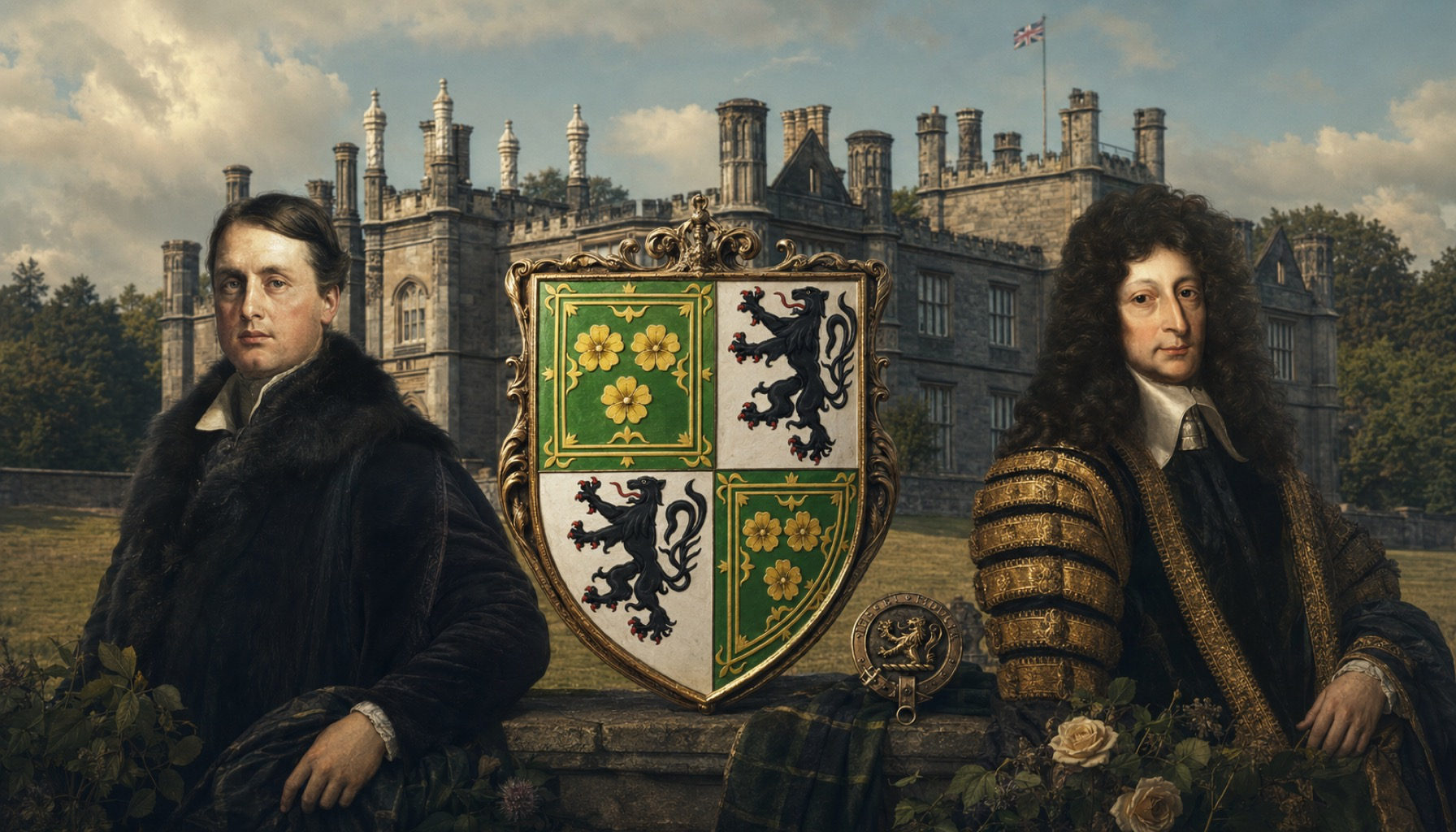
Clan Primrose was a Scottish noble and landed family of the Lowlands, remembered less as a tartan-heavy Highland war clan and more as one of those durable service families who built their importance through land, office, marriage, heraldry, and public duty. Their story belongs above all to the eastern Lowlands, especially the Lothians, where estate identity and political usefulness mattered enormously. The primary haplogroup associated here is I1a1b1g3, a paternal line with deep roots in the wider North Sea and northern European world.
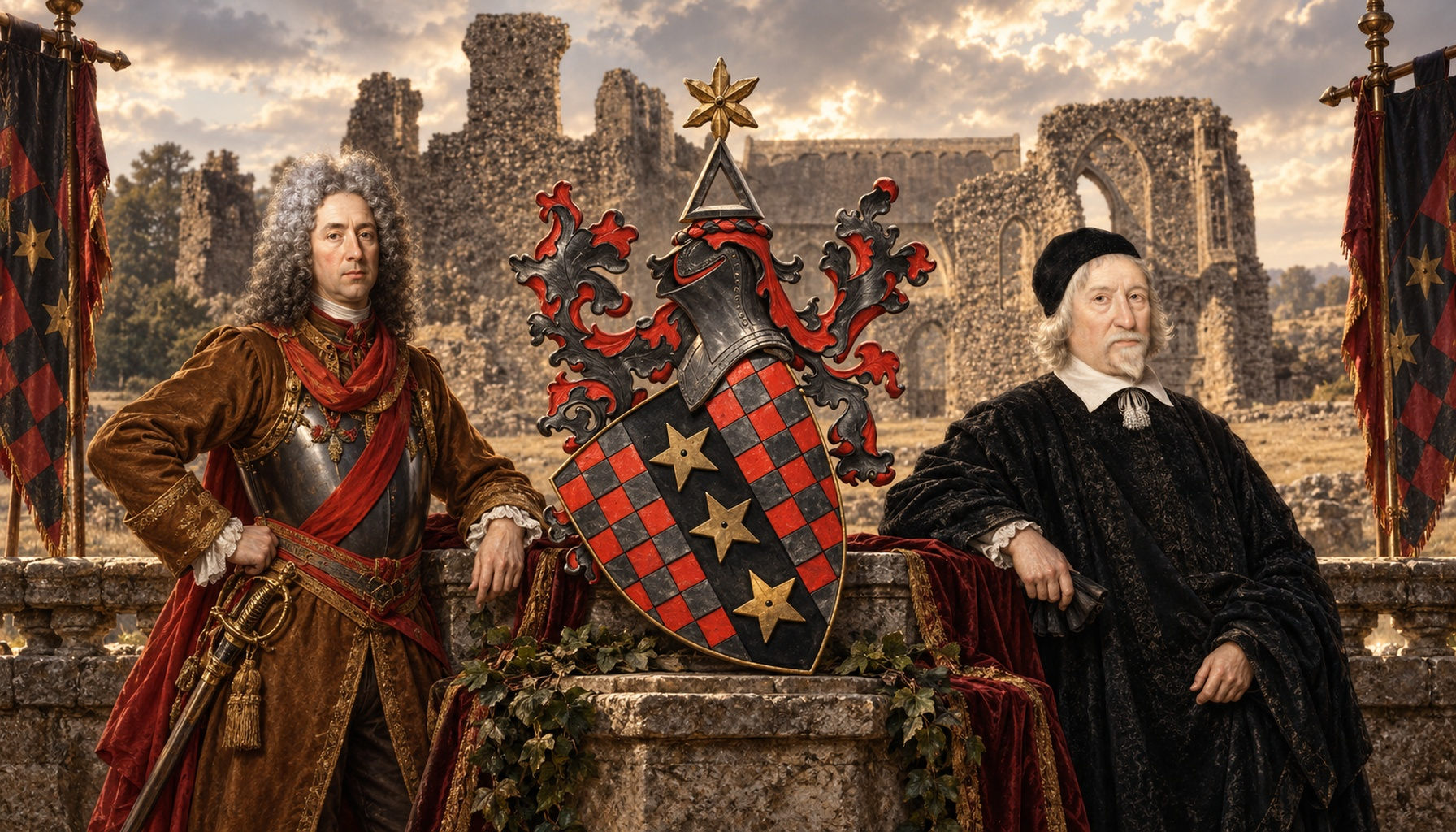
The surname appears in late medieval and early modern Scotland, with figures such as Henry Primrose (1490) marking the family in the historical record. From there the Primroses rose by a very Scottish route: not simply through battlefield fame, but through holding land, cultivating advantageous alliances, serving crown and state, and maintaining a recognizable heraldic identity across generations. In that sense the Primroses fit a broader Lowland noble pattern seen across Scottish history, where continuity of estate and usefulness in public life could matter just as much as old clan legend. Titled branches later added prestige, but the core of the family identity remained rooted in place, inheritance, and service.
The great location anchor for the Primrose family is Dalmeny House, near South Queensferry in West Lothian, overlooking the Firth of Forth. This is not some battered medieval peel tower clinging on by ivy and memory, but a full-throated statement of aristocratic confidence: a distinguished Gothic Revival house built in the early 19th century for the Earls of Rosebery, a major Primrose line. Designed by William Wilkins, Dalmeny is often noted as one of the earliest and finest examples of Tudor Gothic architecture in Scotland. Inside, it is known for its important collections, including portraits and furnishings linked to the family and to British political life. The setting matters too. Dalmeny ties the Primroses to one of the most historically charged stretches of Lowland Scotland, close to Edinburgh, the Forth crossings, and the old arteries of power, trade, and government. It remains a living reminder that families like the Primroses expressed status not only through titles and coats of arms, but through houses that were political theatre in stone. Dalmeny House is also open to visitors at times, so it can still be visited, which makes it an unusually vivid way to encounter Primrose history on the ground.
Explore the Royal House of Stewart
From an ancient DNA perspective, the Primrose-linked haplogroup I1a1b1g3 belongs to a paternal network that appears across a striking range of northern and early medieval European contexts. Related or linked samples include Migration Period Hungary Rakoczifalva RKF183, Longobard Period Pannonia Savaria Szeleste Barbaricum Hungary SZL026, Merovingian Bavaria at Altheim Alh_236 and Alh_141, Medieval Jutland Denmark CGG100498, Kingdom of Dumnonia Cornwall I16383, Kingdom of Mercia Buckinghamshire I16509, Early Medieval Croatia VEM057, Danii Tribe Denmark CGG107443, Iron Age Netherlands CGG107762, Neolithic Sweden CGG105926, Dark Ages Italy To_Lav_T2US16, Post-Roman Pannonia Bal_111, Bal_111m, and Bal_111x, Viking Age Sweden als007, VK404, and VK352, the Stora Kronan shipwreck kro016, Saxon Lower Saxony DUN005, Carolingian Drantum DRU011, Viking Age Funen VK315, and Vendel Age Saaremaa Salme I VK507. These are not proof of direct descent from any one buried individual, of course. What they do suggest is that the wider paternal world connected to I1a1b1g3 runs through the same North Sea, Scandinavian, Germanic, post-Roman, and early medieval landscapes that helped shape the ancestry of many later Lowland families.
If you carry the Primrose surname, have Primrose lines in your family tree, or simply suspect Lowland Scottish noble ancestry, uploading your DNA can help you explore whether you match Clan Primrose or any of these related ancient DNA samples. It is a fascinating way to connect paper genealogy, Scottish history, and the deeper human past in one place.
Comments