Clan OKeeffe
– 3 min read


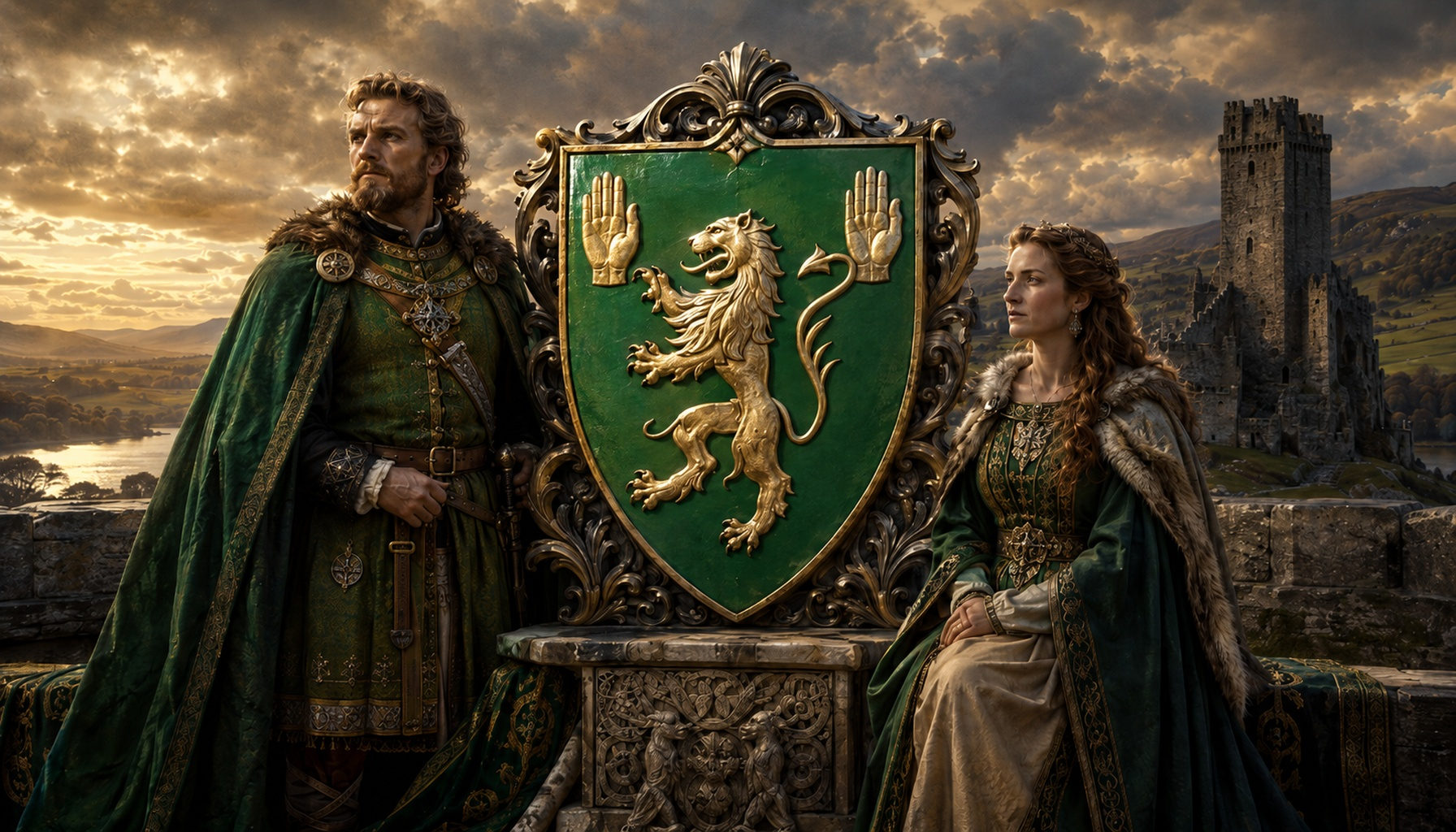
Clan OKeeffe was a Gaelic Irish family of Munster, rooted above all in the Duhallow region on the Cork and Kerry border, and remembered as part of the old noble order of southern Ireland. The surname belongs to the O Caoimh tradition, later anglicized as OKeeffe, and it sits firmly in that recognisably Gaelic world of chieftainship, kinship, landholding, fosterage, and local authority. In genetic tagging for family-history purposes, the primary family haplogroup linked here is R1b1a1b1a1a2c1a3a2a1a2c, a branch within the wider paternal line often associated with Atlantic and Celtic-speaking western Europe.
Historically, the OKeeffes represent a classic Munster clan story: descent claims preserved through genealogy, power expressed through territory and alliances, and identity surviving the repeated shocks of invasion, conquest, anglicization, and migration. Their importance was not simply that they held land, but that they embodied a Gaelic political culture in which family memory mattered enormously. Even when lordship narrowed and old structures broke apart, the surname endured. That is often the truest sign of a clan's success in Irish history: not uninterrupted power, but uninterrupted remembrance. A notable ancestral figure in the wider Eoganacht and Munster royal world connected to this tradition is Cathal mac Finguine, who died in 742, one of the best-known kings of early medieval Munster.
Read more about Clan MacCarthy
A key location anchor for OKeeffe heritage is Dromagh Castle in north Cork, near the old Duhallow heartland. The surviving site is now a ruin, but it remains deeply evocative because it ties the family name to the landscape in a very literal way. The castle is usually described as a tower house, with the remains of its rectangular structure still visible, and it stands close to a stream in country that makes immediate sense for a Gaelic lordship: sheltered, defensible, and bound into local routes rather than grand imperial roads. Like so many Irish strongholds, it was not merely a residence in the modern sense. It was a statement of authority, a place where hospitality, protection, and power were performed. The record of the site also reflects the turbulence of later Irish history, as castles such as Dromagh passed through conflict, decline, and partial destruction. The ruins can still be seen today, so in that reasonable sense it remains visitable, though visitors should expect a historic ruin in the landscape rather than a fully furnished monument.
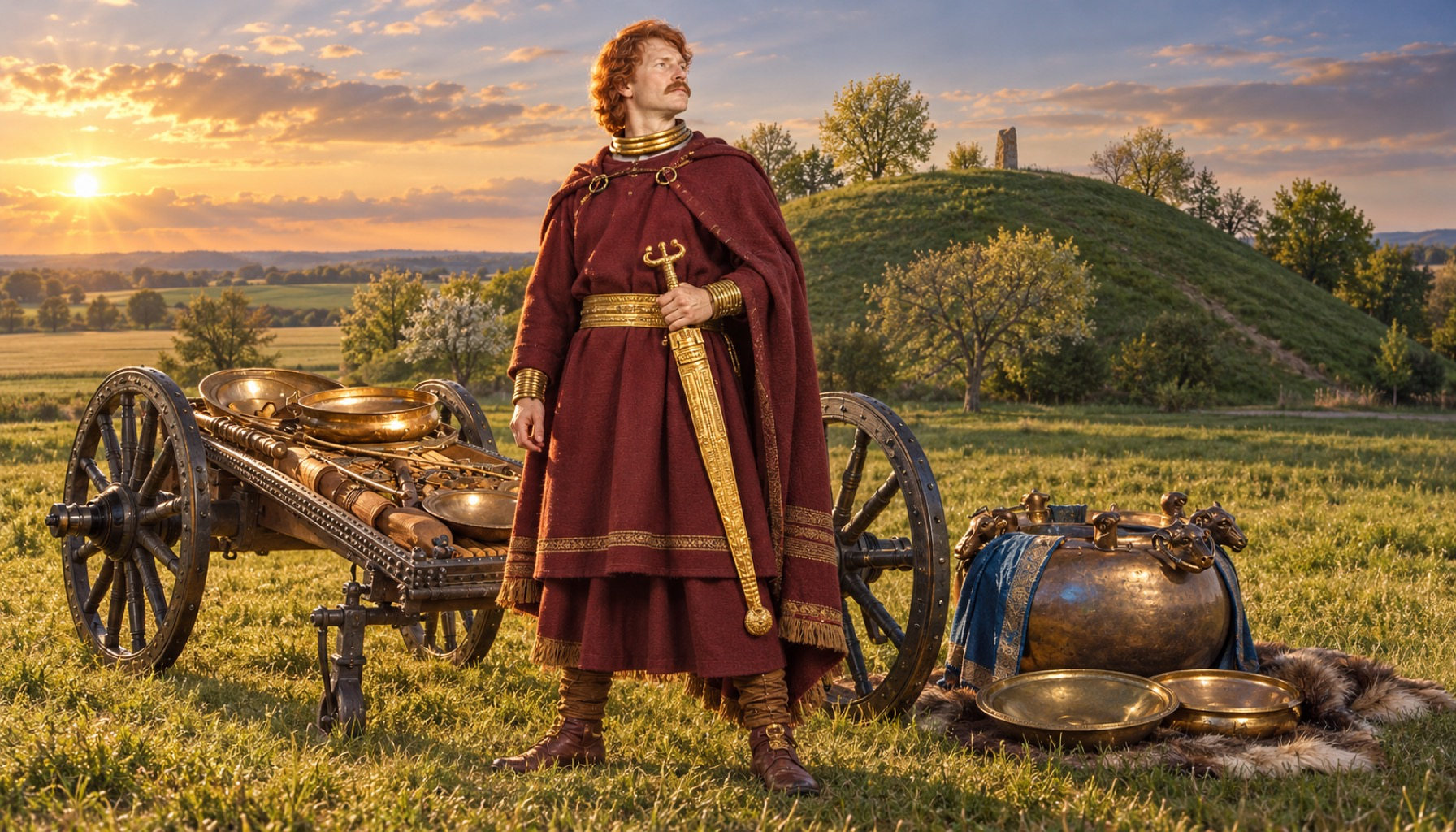
From an ancient-DNA perspective, the haplogroup tag R1b1a1b1a1a2c1a3a2a1a2c links Clan OKeeffe to a much wider web of related male-line samples across time and place rather than to any single proven forefather. Among the related or linked examples are multiple Celtic Durotriges individuals from Duropolis at Winterborne Kingston in England, including WBK12, WBK20, WBK29, WBK41, WBK05, WBK30, WBK43, WBK06, WBK08, WBK18 and WBK191, alongside other western and central European examples such as Iron Age Worlebury Somerset I11991, Iron Age Battlesbury Bowl I21309, Bell Beaker Wiltshire Upavon I4950, Bronze Age Amesbury Down I2417, Bronze Age Trumpington Meadows I3256, Boatbridge Quarry South Lanarkshire I5473, Early Bronze Age Thames I5377, Scotland Late Bronze Age I2859, and Ireland Copper Age Rathlin2B. Further linked samples appear from Roman, post-Roman, and medieval settings, including Zadar in Croatia I26776, Worth Matravers Dorset I11580, Conimbriga Portugal R10488, Klosterneuburg Lower Austria R10656, Alt-Inden IND013, Sint-Truiden ST2025 and ST1308, and Parancot in France CGG023699. None of this proves direct descent from any named ancient individual, and it should not be presented that way. What it does show is that the OKeeffe paternal signature belongs to a long-lived European lineage with deep roots in the Atlantic zone, the Celtic-speaking world, and the later historical landscapes from which Gaelic Ireland emerged.
If you carry the OKeeffe surname, have Munster ancestry, or simply want to see how your own results compare with this family story and its related ancient DNA samples, you can upload your DNA to MyTrueAncestry and explore the connections for yourself.
Comments