Clan Mag Samhradhain
– 2 min read


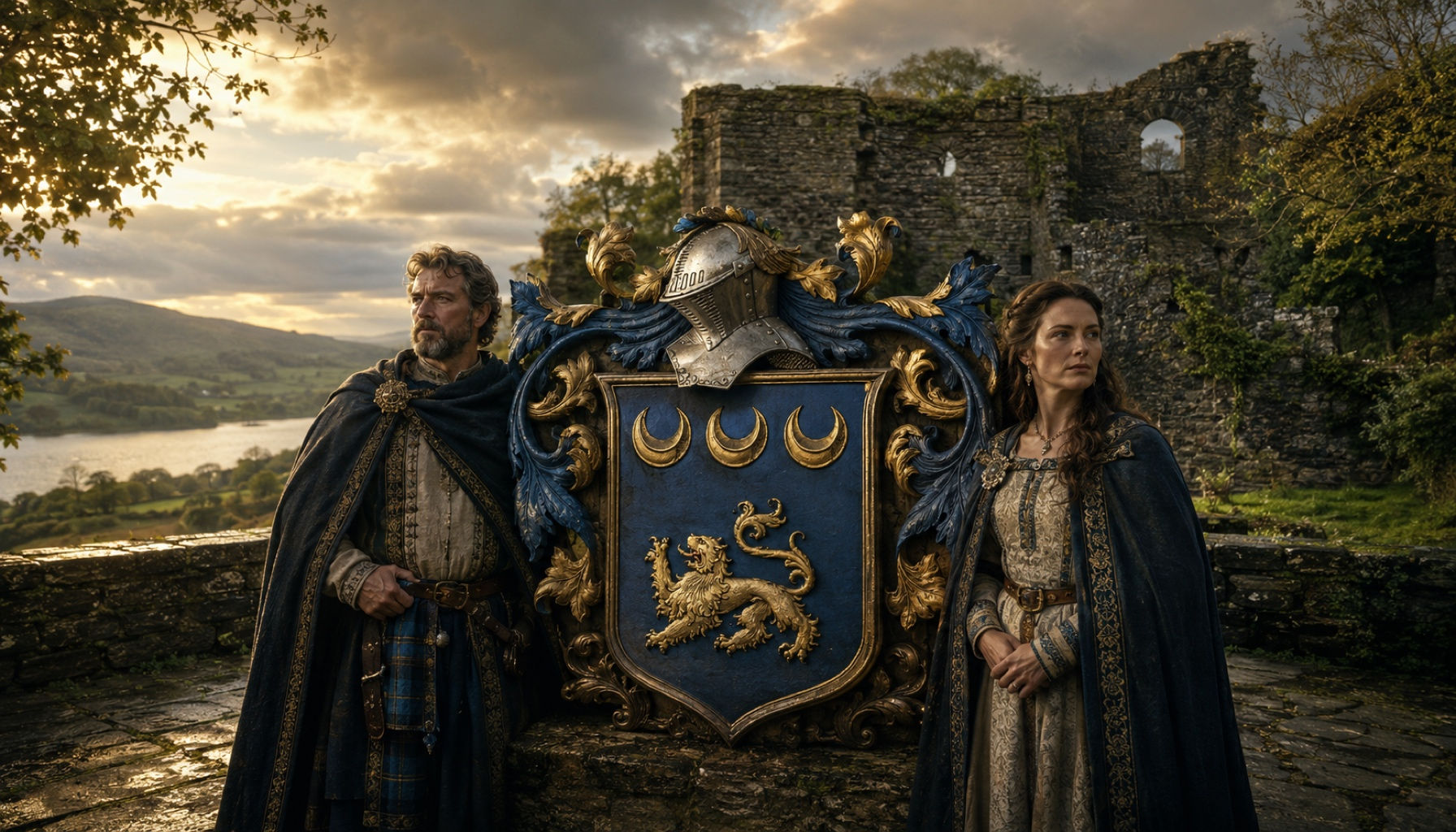
Clann Mag Samhradhain were a Gaelic Irish lordly family of Breifne, rooted in the borderlands of what is now chiefly County Cavan, with deep ties to the older political world of north Connacht and the inland lordships of medieval Ireland. Their name belongs to that distinctly Irish system of rule in which power was not abstract or bureaucratic, but personal, ancestral, and local: land, cattle, clientship, fighting men, marriage alliances, church patronage, and above all kin. The primary haplogroup linked here is R1b1a1b1a1a2c1a1a1a1a1a1a3a, a paternal line associated with a number of medieval Irish samples, and a useful genetic tag for exploring broader population connections around the Gaelic world.
The Mag Samhradhain story is not simply about a surname. It is about a dynasty that stood within the political fabric of Breifne, alongside the great interlocking families whose fortunes rose and fell through feud, negotiation, tribute, and shifting overlordship. In that world, genealogy was not a hobby but a political instrument, poetry was a keeper of status, and memory itself was a form of inheritance. One named early figure is Muireadhach mac Samhradhain, recorded in the years 1115-1148, a reminder that this clan emerges from the documentary shadows in the high medieval period, when local kingship and regional lordship still structured much of Irish life. Like many Gaelic families, Clann Mag Samhradhain endured conquest and anglicization, yet retained a powerful identity in historical memory.
The family's location anchor lies in the Mag Samhradhain heartland of Tullyhaw in west County Cavan, part of the old kingdom of Breifne, a landscape of drumlins, lakes, passes, and defended places that made perfect sense in Gaelic territorial politics. This was not empty countryside but a lived-in lordship, where authority was measured by who controlled routes, pasture, tribute, and allegiance. The district is closely associated with the clan's later strongholds and with the memory of their rule in the region. That landscape can still be visited today: the old territories of Tullyhaw and the surrounding Cavan-Leitrim borderlands remain full of visible traces of medieval settlement, ringforts, church sites, castles, and lake country that evoke the world in which the Mag Samhradhain operated. To visit the area is to see why local geography mattered so much in Irish history; these were not remote margins, but strategic homelands.
From an ancient DNA perspective, the haplogroup R1b1a1b1a1a2c1a1a1a1a1a1a3a is linked to a substantial cluster of medieval Irish samples, offering a broader genetic backdrop rather than proof of direct descent from any named dynasty. Related or linked examples include numerous individuals from Ballyhanna, County Donegal, such as Sk197an, Sk197y, Sk197q, Sk197am, Sk197s, Sk197ab, Sk197u, Sk197t, Sk197r, Sk197ad, Sk197x, Sk197n, Sk197aa, Sk197z, Sk197ak, Sk197w, Sk197ai, Sk197m, Sk197ah, Sk197ag, Sk197v, Sk197ac, Sk197al, Sk197af, Sk197ae, Sk197o, Sk197aj, HAN197x, Sk197a through Sk197p, and HAN197, as well as linked medieval individuals from Kilteasheen in Roscommon including KIL041, KIL044, KIL033, KIL037, KIL009, and KIL014. These samples do not mean that the Mag Samhradhain are genetically identified in a simple one-to-one way. What they do provide is something more interesting: a picture of the wider medieval Irish genetic landscape in which clans like the Mag Samhradhain lived, married, fought, worshipped, and passed on paternal lines over generations.
If Clann Mag Samhradhain is part of your story, the next step is to place that story in both history and genetics. Upload your DNA to MyTrueAncestry and see whether you match this family network or any of the related medieval Irish ancient DNA samples linked to haplogroup R1b1a1b1a1a2c1a1a1a1a1a1a3a. It is a fascinating way to connect surname history, archaeology, and the deeper human past.
Comments