Clan MacLennan
– 2 min read


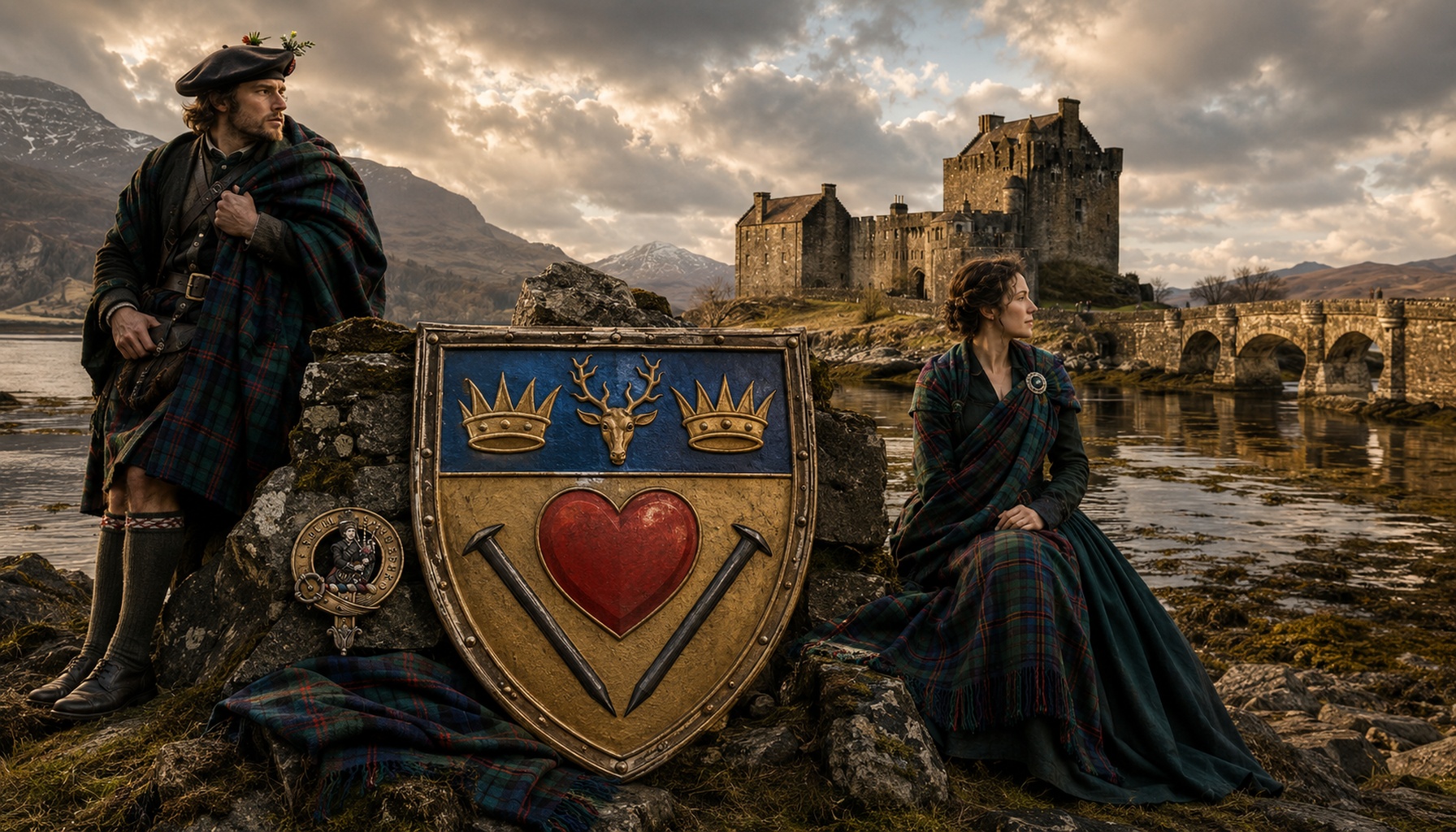
Clan MacLennan was a Highland Scottish kindred rooted in Kintail in Ross-shire, shaped by Gaelic kinship, local loyalties, military service, and a deep attachment to place. In historical terms, the MacLennans fit the classic northern Highland surname-clan pattern: a family identity carried through descent, oral tradition, warrior reputation, and continuity across centuries of upheaval. Their primary linked haplogroup here is R1b1a1b1a1a2c1a1a1a1a1a1a2a2, a lineage tag that sits comfortably within the wider genetic landscape often associated with Gaelic-speaking Atlantic populations.
The story of the MacLennans is not simply one of tartan-page romance, but of endurance in a demanding region where land, lordship, and kinship were tightly bound together. Their name is associated above all with the western Highlands around Kintail, where service to greater regional powers and the defense of territory helped define clan standing. A named early figure, Gille Fhinnein in 1450, gives us a precious historical foothold: not a mythic founder floating in the mist, but a man appearing within the hard-edged realities of late medieval Highland life. Like many clans of the north, the MacLennans preserved their identity not because history was kind to them, but because family memory was stubborn, adaptable, and remarkably resilient.
Read more about Clan Mackenzie
A powerful location anchor for MacLennan heritage is Eilean Donan, one of the most famous castles in Scotland, set on a small tidal island where Loch Duich, Loch Long, and Loch Alsh meet. It occupies a strategic and dramatic position in the western Highlands, exactly the sort of place where clan geography becomes clan memory. The site has medieval origins, probably going back to the 13th century, and over time it became bound up with the lordship struggles of the region, especially those involving the Mackenzies and Macraes of Kintail. Though much rebuilt in the early 20th century after earlier destruction, Eilean Donan still conveys the political geography of the old Highlands with extraordinary force: sea-loch access, defended stone, narrow approaches, and the sense that family, war, and territory were inseparable. Yes, it can still be visited today, and for anyone interested in MacLennan country it remains a vivid gateway into the historical landscape that shaped the clan.
On the ancient DNA side, the MacLennan-linked haplogroup R1b1a1b1a1a2c1a1a1a1a1a1a2a2 appears in a cluster of related medieval samples from Ireland, especially Ballyhanna, County Donegal, including individuals such as Sk197an, Sk197y, Sk197q, Sk197am, Sk197s, Sk197ab, Sk197u, Sk197t, Sk197r, Sk197ad, Sk197x, Sk197n, Sk197aa, Sk197z, Sk197ak, Sk197w, Sk197ai, Sk197m, Sk197ah, Sk197ag, Sk197v, Sk197ac, Sk197al, Sk197af, Sk197ae, Sk197o, Sk197aj, HAN197x, Sk197a, Sk197b, Sk197c, Sk197d, Sk197e, Sk197f, Sk197g, Sk197h, Sk197i, Sk197j, Sk197k, Sk197l, Sk197p, and HAN197, alongside related Irish medieval samples from Kilteasheen in Roscommon such as KIL041, KIL044, and KIL014. That does not prove direct descent from any one excavated person, and it would be wrong to pretend otherwise. What it does suggest is a broader genetic backdrop shared across parts of Gaelic medieval Ireland and the western seaways, a useful reminder that Highland clan history lived within a much wider world of movement, kinship, language, and maritime connection.
If you carry MacLennan heritage, or simply suspect a connection to the Gaelic Highlands, uploading your DNA can add an intriguing extra layer to the paper trail and the stories handed down in families. You may find links to Clan MacLennan, to related Highland groups, or to ancient DNA samples associated with the same wider paternal lineage R1b1a1b1a1a2c1a1a1a1a1a1a2a2. Family history is rarely a straight line, but that is precisely what makes it interesting.
Comments