Clan MacIver

– 3 min read


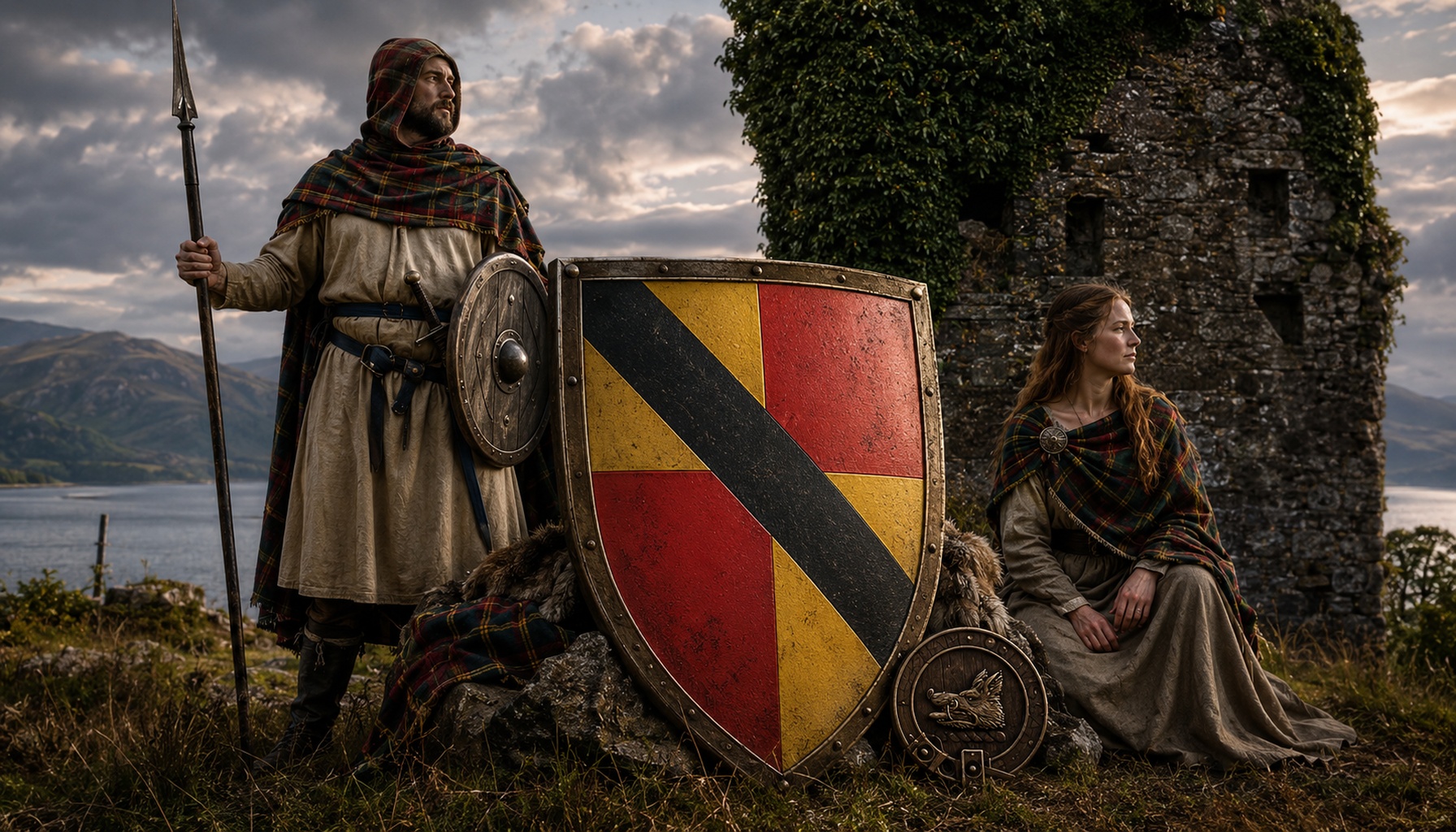
Clan MacIver was a west Highland family of Argyll, shaped by the sea as much as by the land, and remembered through a surname that carries both Gaelic and Norse echoes. In that sense they belong to one of the oldest patterns in Scottish history: families formed along the Atlantic seaboard where boats, bays, islands, lordship, and kin mattered just as much as castles and charters. Their primary associated haplogroup here is R1b1a1b1a1a2c1a2a2d, a lineage linked with a broad arc of ancient and historic populations across Britain, Ireland, and parts of Atlantic and western Europe.
The MacIvers emerged from a world in which identity was rarely neat. Argyll was not simply "Scottish" in the later national sense. It was a Gaelic-speaking maritime zone tied to Ireland, the Hebrides, the Clyde coast, and the Norse world beyond. Names, loyalties, and local power could overlap in wonderfully untidy ways. That is exactly what makes the MacIvers so interesting. Their heritage reflects Gaelic kinship, Norse influence, regional service, landholding, and seafaring connections, all preserved through continuity of surname memory. A named figure such as Iver MacIver of Lergachonzie in 1564 gives us a glimpse of the family in the historical record: not as a legend floating free of evidence, but as people rooted in place, obligation, and community.
If one wants a proper anchor for MacIver country, Inveraray Castle is a fitting place to start. Set on Loch Fyne at Inveraray in Argyll, it stands in the historic heartland of the Campbells, the great power of the region with whom many smaller west Highland families were connected by service, tenancy, alliance, and local politics. The present castle was built in the 18th century for the Duke of Argyll, replacing an earlier fortified site, and it is one of the most recognisable stately houses in Scotland, with its mix of baroque, palladian, and castellated features. But what matters here is not just architecture. Inveraray represents the long political gravity of Argyll itself: a place where Highland authority, coastal movement, clan networks, and estate power all met. For a family such as the MacIvers, whose story belongs to the western maritime-clan pattern, this landscape is not backdrop but substance. And yes, Inveraray Castle can still be visited today, which makes it a rare pleasure in Scottish history: a place where the scenery, the paperwork, and the family memory all still speak to one another.
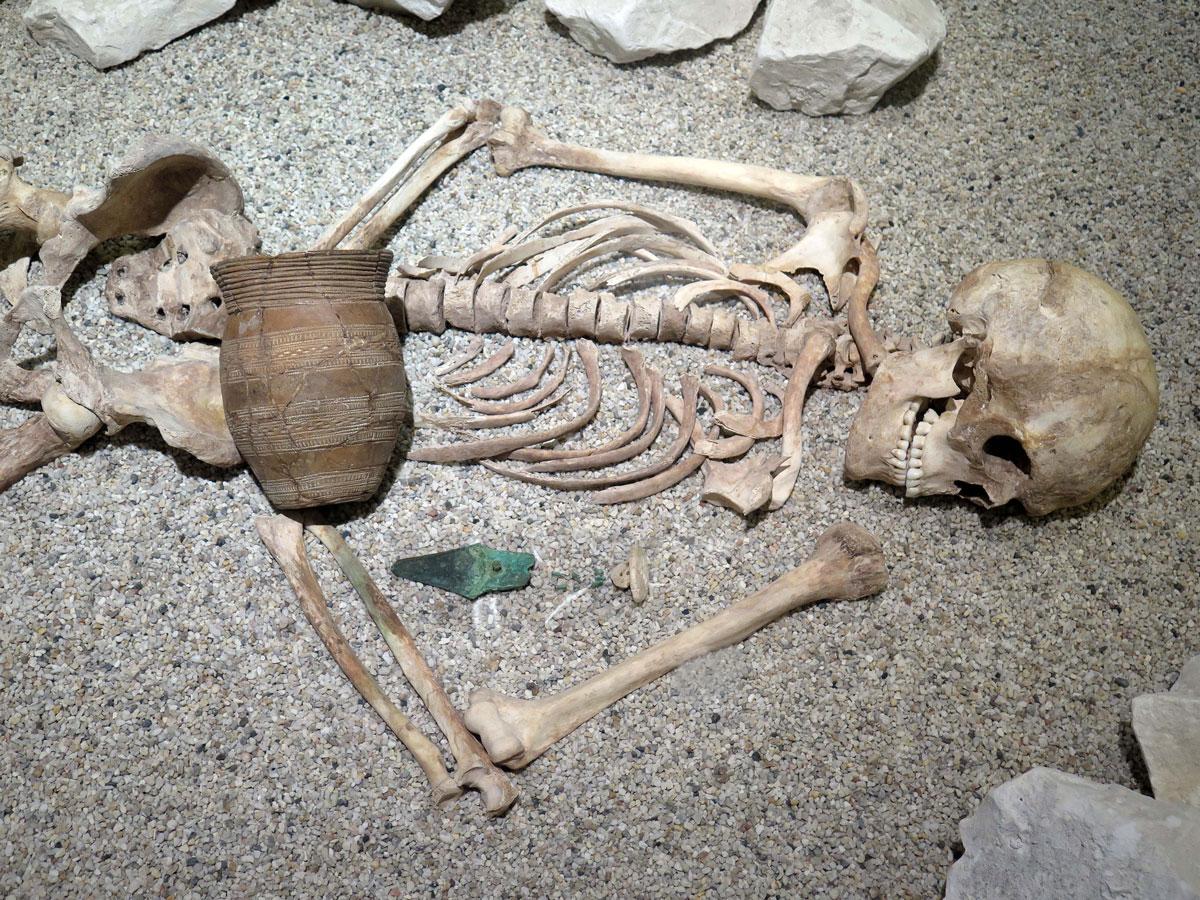
The haplogroup R1b1a1b1a1a2c1a2a2d linked with MacIver heritage belongs to a much older story than any one clan, and that is where ancient DNA becomes so useful. Related or linked samples carrying this branch or nearby connections appear across a striking range of times and places: Celtic Durotriges individuals from Duropolis at Winterborne Kingston in England such as WBK12, WBK20, WBK29, WBK41, WBK05, WBK30, WBK43, WBK06, WBK08, WBK18, and WBK191; Imperial Roman Era Zadar Croatia I26776; Bronze Age Orkney Westray Links of Noltland KD061; Bronze Age Calabria GMO015; Early Medieval Belgium ST2025 and Medieval Belgium ST1308; Gallic France CGG023699; Post Roman Dorset I11580; Merovingian Germany IND013; Late Roman Austria R10656; Late Roman Portugal R10488; Celtic Briton East Kent I13730; Iron Age Somerset I11991; Iron Age Orkney I2982; Iron Age Battlesbury Bowl I21309; Bronze Age Trumpington Meadows I3256; Bronze Age Amesbury Down I2417; Bell Beaker Upavon I4950; Medieval Sandoy Church in the Faroe Islands VK27; Bronze Age Bedfordshire I7576 and I7577; Bronze Age Boatbridge Quarry South Lanarkshire I5473; Hinxton Iron Age HI2; Early Bronze Age Thames I5377; and Copper Age Ireland Rathlin2B. These are not claims of direct descent from any specific ancient individual. Rather, they show that the broader paternal lineage associated with MacIver sits inside a deep and mobile western European story, stretching from Bronze Age Britain and Ireland through Iron Age Celtic communities and into Roman and medieval worlds.
Read more about Clan MacKinnon
That, in the end, is the fascination of Clan MacIver: a Highland family whose story is not fixed in a single origin myth, but woven out of Argyll, the western sea, Gaelic-Norse blending, and the stubborn continuity of kin identity across centuries. If you have MacIver roots, or west Highland ancestry more broadly, you can upload your DNA to MyTrueAncestry and see whether you match the family story or any of these related ancient DNA samples.
Comments