Clan Kirkpatrick
– 3 min read


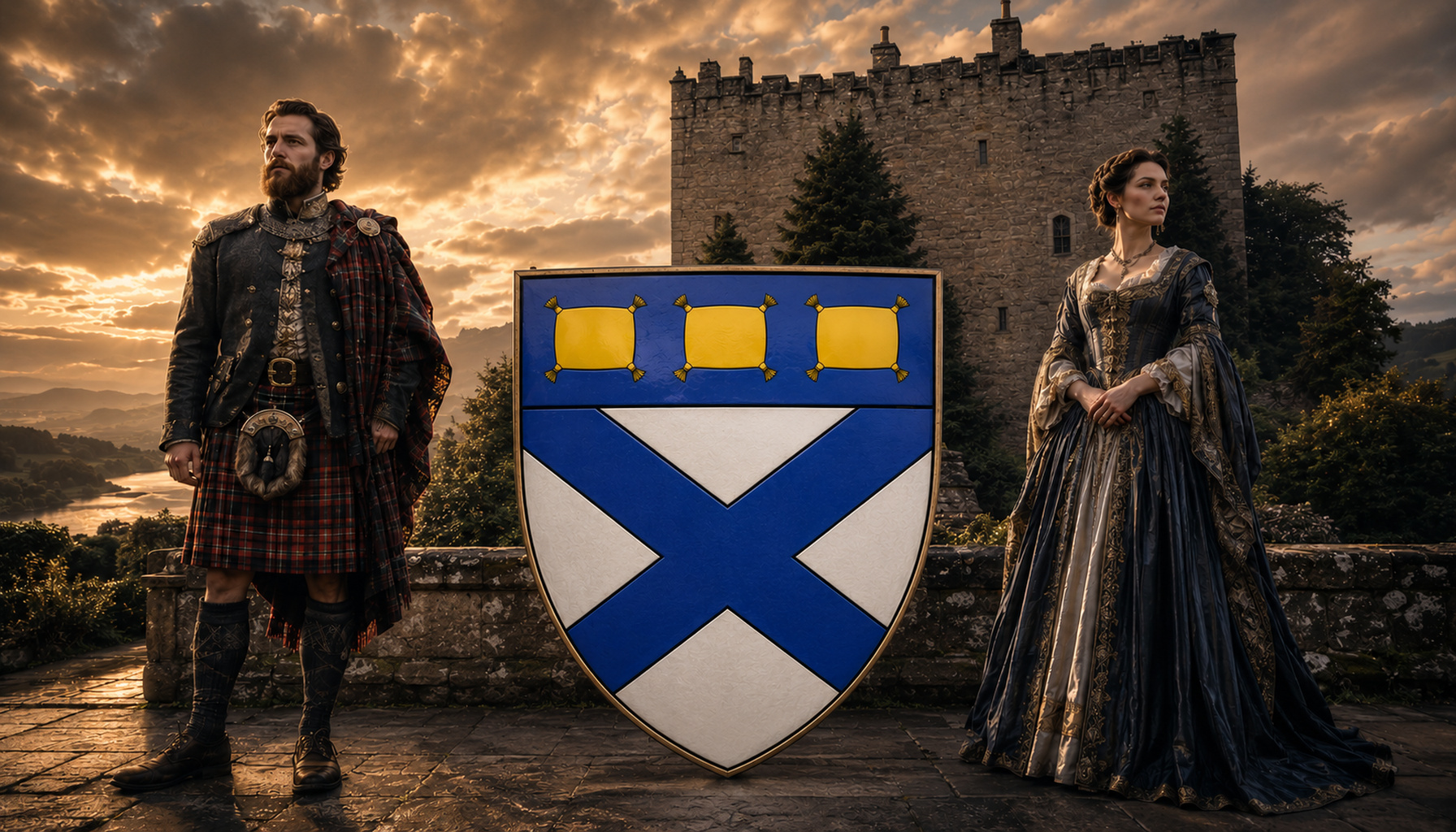
Clan Kirkpatrick was one of the notable Border families of south-west Scotland, rooted above all in Dumfriesshire and especially in the district of Closeburn. The surname is territorial and old, derived from a place-name meaning the church of Patrick, which suggests an early religious foundation long before the family rose into the sharper light of medieval politics. In genetic tagging terms, the primary family haplogroup associated here is E1b1b1a1b1a14a, a lineage that opens an intriguing wider story stretching well beyond the Scottish Borders.
The Kirkpatricks belong to that vivid world of March loyalties, castle lordship, raid and counter-raid, and allegiance that could shape the fate of kingdoms. Their most famous figure is Sir Roger Kirkpatrick, traditionally remembered for the dramatic scene at Greyfriars Kirk in Dumfries in 1306, when Robert the Bruce struck John Comyn. According to the famous story, Kirkpatrick stepped in with the words "I mak siccar" - "I make sure" - and finished the matter. Whether polished by later retelling or not, the tale became inseparable from the family identity. It fixed the Kirkpatricks in national memory as fierce Bruce supporters at one of the decisive turning points in the Wars of Scottish Independence. Later generations continued as Border landholders, moving through the hard, practical world of southern Scottish feuds, service, and survival.
The family's great local anchor is Closeburn Castle, near Thornhill in Dumfries and Galloway, a place that gives the Kirkpatrick story real stone and landscape rather than mere legend. The castle is a striking Scottish tower house with origins in the later medieval period, built around an earlier core and long associated with the Kirkpatricks of Closeburn. Architecturally it belongs to that recognisable Border tradition of defensible residence: tall, compact, and practical, made for a world where security mattered as much as display. Over time it was altered and extended, but it still preserves the essential feel of a lairdly stronghold watching over its lands. Just as importantly, it ties the family not simply to one dramatic act in Bruce's reign, but to a continuing territorial presence in Nithsdale and the wider Borders. Closeburn Castle is generally described as a surviving historic building and can still be seen from the outside; as with many privately owned castles, access may be limited, so a visit is best approached with a little advance checking rather than romantic assumption.
For readers interested in deeper ancestry, the E1b1b1a1b1a14a tag linked with Clan Kirkpatrick does not mean that every Kirkpatrick descends from one simple medieval founder, nor that ancient samples can be claimed as direct ancestors. What it does offer is a wider map of related paternal lineages appearing across a surprisingly broad historical world. Linked ancient DNA examples include Medieval Sicily Teatro di Segesta (SGBN10); Migration Period Hungary Rakoczifalva (RKF026, RKF027); Late Imperial and Imperial Roman Serbia samples from Timacum Kuline Ravna Village and Timacum Slog Necropolis (I15553, I15554, I15544); Roman and Late Roman individuals from Viminacium in Serbia (I15504, I15507, I15513, I15518, I15490, I15525); Imperial Roman Trogir Dragulin Croatia (I26702); Dark Ages Italy South Tyrol Malles Burgusio Santo Stefano (2425); Post-Roman and Late Antique Pannonian samples from Hungary (MFC014, GYS044, GYS008); Merovingian Bavaria Altheim (Alh_154); Piast-era Poland (PCA0400, PCA0255); Gothic and Migration Period contexts from Gdansk and Saxony-Anhalt (PCA0495, BRC014x); Early Medieval Croatia Velim-Velistak (VEM022); Ostrogoth-Gepid and Avar-Slav linked burials from Hungary and Slovakia (CGG021897, CGG018923); Bosporan Kingdom Crimea samples (CGG021473, CGG021475); Carolingian Hungary Zalavar Varsziget (AHS56); Iron Age Croatia Kriz Brdovecki Sava Valley (I5724); Post-Roman Germany Alt-Inden (IND009); Saxon palace Eastry, Kent (EAS006); Viking Age Denmark Bogovej Langeland (VK362); Iberian Cordoba Caliphate (I7498); Late Medieval Cancelleria Basilica (R1219); Late Avar Hungary Szekkutas-Kapolnadulo (SzKper239); and Hungarian Conqueror Outlier (K2per6). In plain English, this is a lineage with appearances in Roman frontiers, post-Roman military zones, medieval courts, and migration-era communities - a reminder that the genetic background behind later Scottish surnames can have a far older and more travelled history than the surname itself.
Explore Medieval Sicily's multi-faith genetic history
If you have Kirkpatrick roots, Border ancestry, or simply a taste for the moment when history turns on a knife stroke in a church, this is exactly the sort of family story worth testing against both records and DNA. Upload your DNA to MyTrueAncestry to see whether you match Clan Kirkpatrick, the E1b1b1a1b1a14a family signature, or any of the related ancient DNA samples that help place your ancestry in a much bigger historical landscape.
Comments