Clan Irwin
– 3 min read


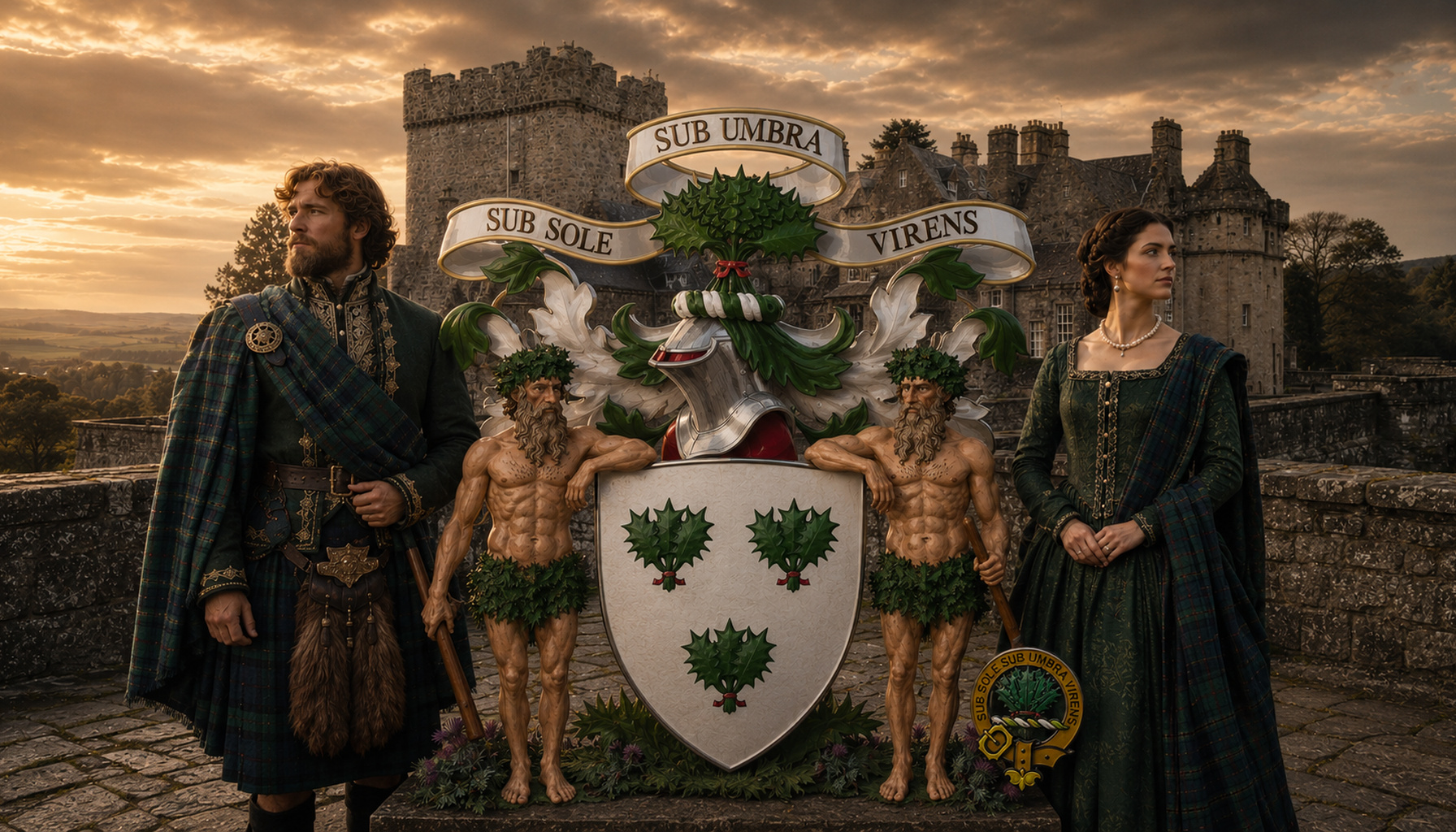
Clan Irwin, more often spelled Irvine in Scotland, was a historic Scottish clan rooted first in the south-west and Border world of Dumfriesshire and Bonshaw, and later powerfully established in the north-east at Drum Castle in Aberdeenshire. In family tradition and recorded history alike, the Irvines belong to that very Scottish story of riding men, landholding lairds, royal service, and survival through centuries of warfare, alliance, and political change. For DNA readers, the primary family haplogroup tag linked here is R1b1a1b1a1a2c1a1e1, a branch within the great R1b lineage so common in western Europe and especially resonant in Britain and Ireland.
The name itself is usually taken from place, and that matters in Scotland, because families were often shaped by the lands they held before they were shaped by later heraldry and clan romance. The Irvines appear in several regional strands, with older associations in the Border country where service, raiding, defence, and loyalty to the crown were facts of life rather than decorative legend. Over time, one branch rose especially high: the Irvines of Drum, whose possession of Drum Castle near Aberdeen made them one of the notable landed families of Aberdeenshire. Their history runs through medieval crown service, military duty, the tensions of Covenanting and royalism in the seventeenth century, and the everyday burdens of estate management that made a laird as much a local governor as a gentleman.
Read more about Clan Johnstone
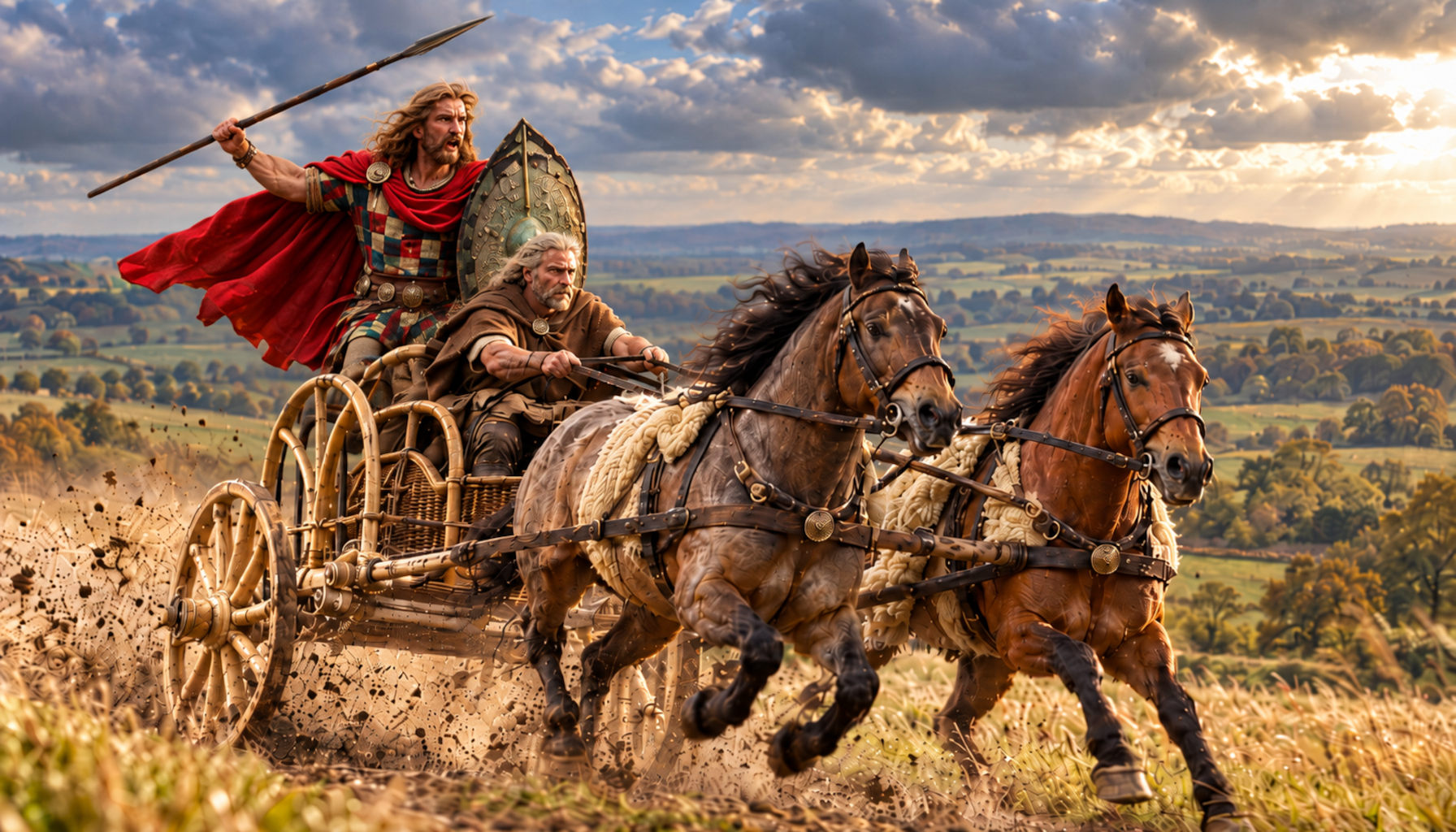
Among the named figures most often remembered are William de Irwyn, the royal secretary and chamberlain of King Robert the Bruce, who is traditionally credited with receiving Drum from the king; Alexander Irvine of Drum, remembered in the age of Harlaw; and later lairds of Drum who steered the family through the violent cross-currents of the seventeenth century. That is the thing about a clan like Irwin: it sits at the meeting point of two Scottish worlds. In one, the family looks south and west toward the Borders, saddle, spear, and feuding frontier. In the other, it looks north and east toward chartered land, stone towers, county influence, and the noble society of Aberdeenshire. Both identities are real, and together they explain why the clan feels both martial and deeply rooted.
Drum Castle is the great location anchor of the Irvine story, and it is not merely a family house but a long historical landscape in stone. Situated near Aberdeen, the castle developed over many centuries, with its oldest tower often dated to the thirteenth century and later additions reflecting changing tastes, fortunes, and needs. What begins as a strong medieval tower becomes, over time, a layered residence shaped by defence, prestige, domestic comfort, and landscape design. Its long association with the Irvines of Drum lasted for centuries, making it one of the most enduring clan seats in Scotland. The building and grounds preserve that pleasingly untidy truth of real history: no ancient family seat is ever from just one period. It accumulates medieval masonry, later wings, gardens, memories, and political scars. Today Drum Castle is well known as a heritage site and can still be visited, which makes it one of the best places to feel the Irvine past not as a list of names but as architecture, setting, and continuity.
From a DNA perspective, the haplogroup tag R1b1a1b1a1a2c1a1e1 links Clan Irwin to a wider web of ancient male-line samples across Britain and Europe rather than proving direct descent from any one individual. Related or linked examples include Roman Era England Knobbs Farm Somersham KNF006; a substantial cluster from Celtic Durotriges burials at Duropolis, Winterborne Kingston in England, including WBK12, WBK20, WBK29, WBK41, WBK05, WBK30, WBK43, WBK06, WBK08, WBK18, and WBK191; Bronze Age Orkney at Westray Links of Noltland KD061; Bronze Age Boatbridge Quarry, South Lanarkshire, Scotland I5473; Iron Age and Celtic Briton samples from Yarnton I21182, Worlebury I11991, Battlesbury Bowl I21309, and Hinxton HI2; Bell Beaker and Bronze Age finds from Upavon I4950, Amesbury Down I2417, Trumpington Meadows I3256, Bedfordshire I7576 and I7577, Thames I5377, and Canada Farm Dorset I5379; and the Copper Age Irish sample Rathlin2B. Beyond Britain, linked samples also appear in Roman and post-Roman contexts such as Zadar I26776 in Croatia, Savaria SZL013 in Hungary, Sint-Truiden ST2025 and ST1308 in Belgium, Alt-Inden IND013 in Germany, Klosterneuburg R10656 in Austria, Conimbriga R10488 in Portugal, Worth Matravers I11580 in Dorset, and even Viking Age Iceland STT-A2. The broad picture is one of a deeply rooted western European paternal lineage, present in Britain from later prehistory onward and entirely at home in the sort of population background from which Scottish clans eventually emerged.
If you carry the Irwin or Irvine name, or simply suspect a connection to Border Scotland, Aberdeenshire lairds, or the wider R1b1a1b1a1a2c1a1e1 story, this is exactly where family history becomes more interesting than a printed tree. Upload your DNA to MyTrueAncestry and see whether you match the family profile or any of the related ancient DNA samples linked to this lineage.
Comments