Clan Hodnett

– 2 min read


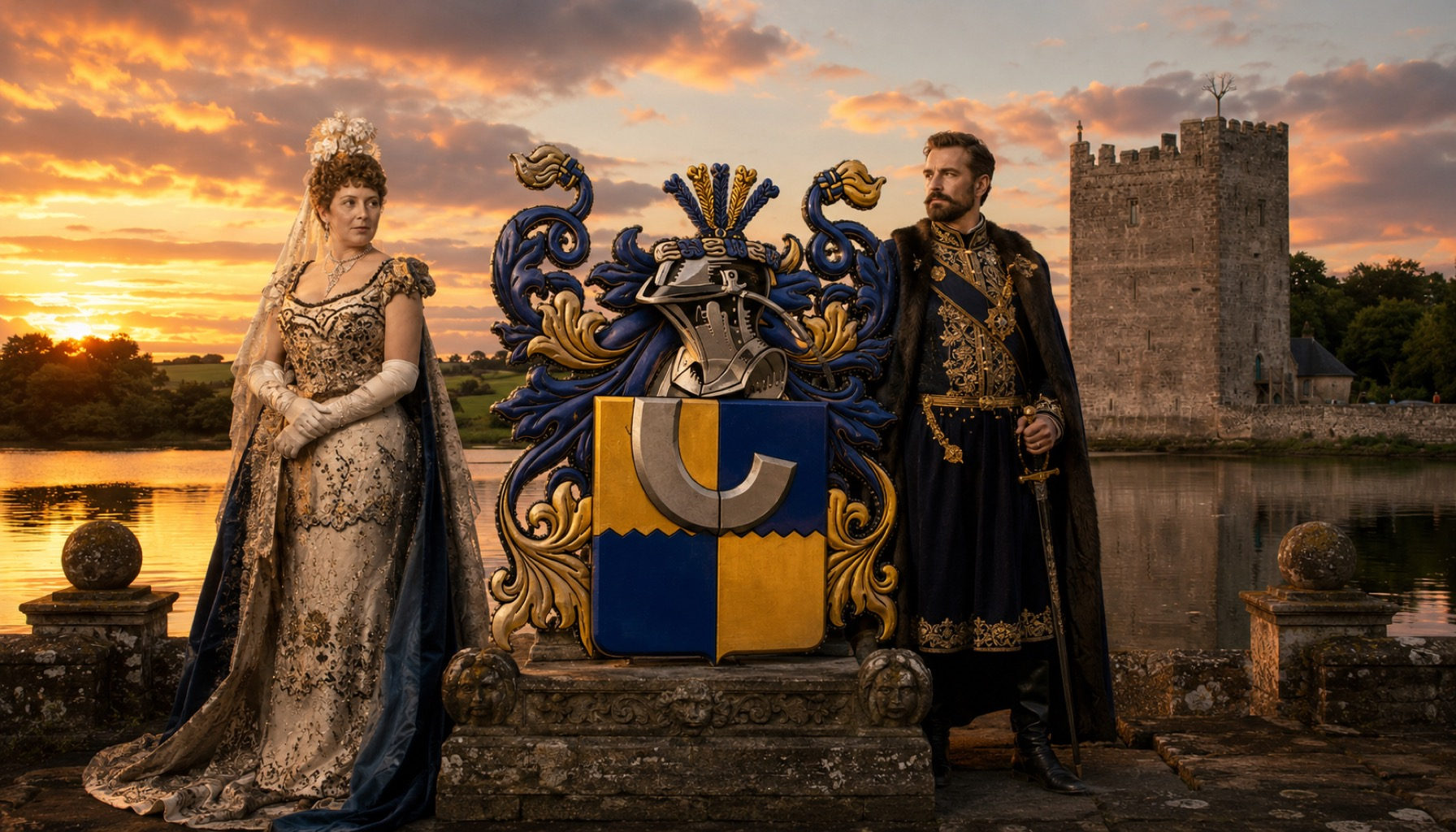
Clan Hodnett belongs to that very recognisable Anglo-Norman and Irish story: a family shaped by medieval settlement, landholding, military obligation, and long service in local society. The name is associated with the movement of Norman families into Britain and then into Ireland, where continental newcomers did not remain merely outsiders for long. They became estate holders, officers, neighbours, marriage partners, and local figures of authority, while still preserving the sort of heraldic and ancestral memory that mattered deeply in the medieval world. In haplogroup terms, the primary family line here is linked with R1b1a1b1a1a2c1a5b1a1a4a, a branch within the great R1b network so widespread in western Europe.
The Hodnetts are best understood not as a family frozen in one dramatic conquest moment, but as participants in a much longer process. Norman identity in Ireland was built field by field, charter by charter, and generation by generation. Names shifted in spelling, alliances changed, crowns rose and fell, yet some families endured because they were useful, adaptable, and rooted. That is the historical pattern the Hodnetts fit rather well: settlement tied to place, public duty tied to status, and surname continuity tied to memory. A named figure such as William de Hodenet, recorded in 1272, reminds us that by the later 13th century the family was already visible in documentary history, part of that busy medieval world of tenure, obligation, and regional standing.
A particularly evocative location anchor for Hodnett heritage is Belvelly Castle in County Cork, on Great Island near Cobh, commanding the narrow approach by Belvelly Bridge. This is exactly the sort of site that helps make medieval family history real. Belvelly Castle is a tower house, with later additions, strategically placed to oversee movement between the island and the mainland. The site is associated with the Anglo-Norman presence in Munster and later came into the orbit of families active in the region, including the Hodnetts. In architectural terms it belongs to that hardy Irish castle tradition of defensible residence rather than fairy-tale palace: thick walls, vertical emphasis, and a practical eye on security, status, and control of local routes. It has also had a long afterlife, passing through different hands and periods of alteration, which is often the fate of such buildings in Ireland. Belvelly Castle still stands and can be viewed today, so it remains a genuine place of contact with the landscape in which this family story unfolded.
From a DNA perspective, the Hodnett-associated haplogroup R1b1a1b1a1a2c1a5b1a1a4a can be placed within a wider web of ancient and early medieval lineages found across Britain, Ireland, and the North Atlantic world. Related or linked samples include Early Anglo-Saxon Cemetery West Heslerton, Yorkshire (I11586), Anglo-Saxon Oakington, England (OAI012), Celtic Briton individuals from Carsington Pasture Cave, Derbyshire (I12778 and I12775), Lechlade-on-Thames, Gloucestershire (I12783), Bradley Fen, Cambridgeshire (I11156), and Iron Age Greystones Farm, Gloucestershire (I12785). To that we can add Ireland Copper Age Rathlin1B and even the Danish-Gaelic Viking context of Iceland sample SSG-A2. None of these should be treated as direct ancestors of the Hodnett family without specific proof, but they are useful linked markers for the deeper population history behind the surname: a western European paternal landscape in which Brittonic, Irish, Anglo-Saxon, and Norse-Gaelic strands all form part of the historical backdrop.
If the Hodnett story speaks to you, that may be because families like this sit exactly where history becomes personal: in castles, records, surnames, and the long memory of place. Upload your DNA to MyTrueAncestry to see whether you match Clan Hodnett, the haplogroup R1b1a1b1a1a2c1a5b1a1a4a, or related ancient DNA samples from Britain and Ireland.
Comments