Clan Fullarton
– 3 min read


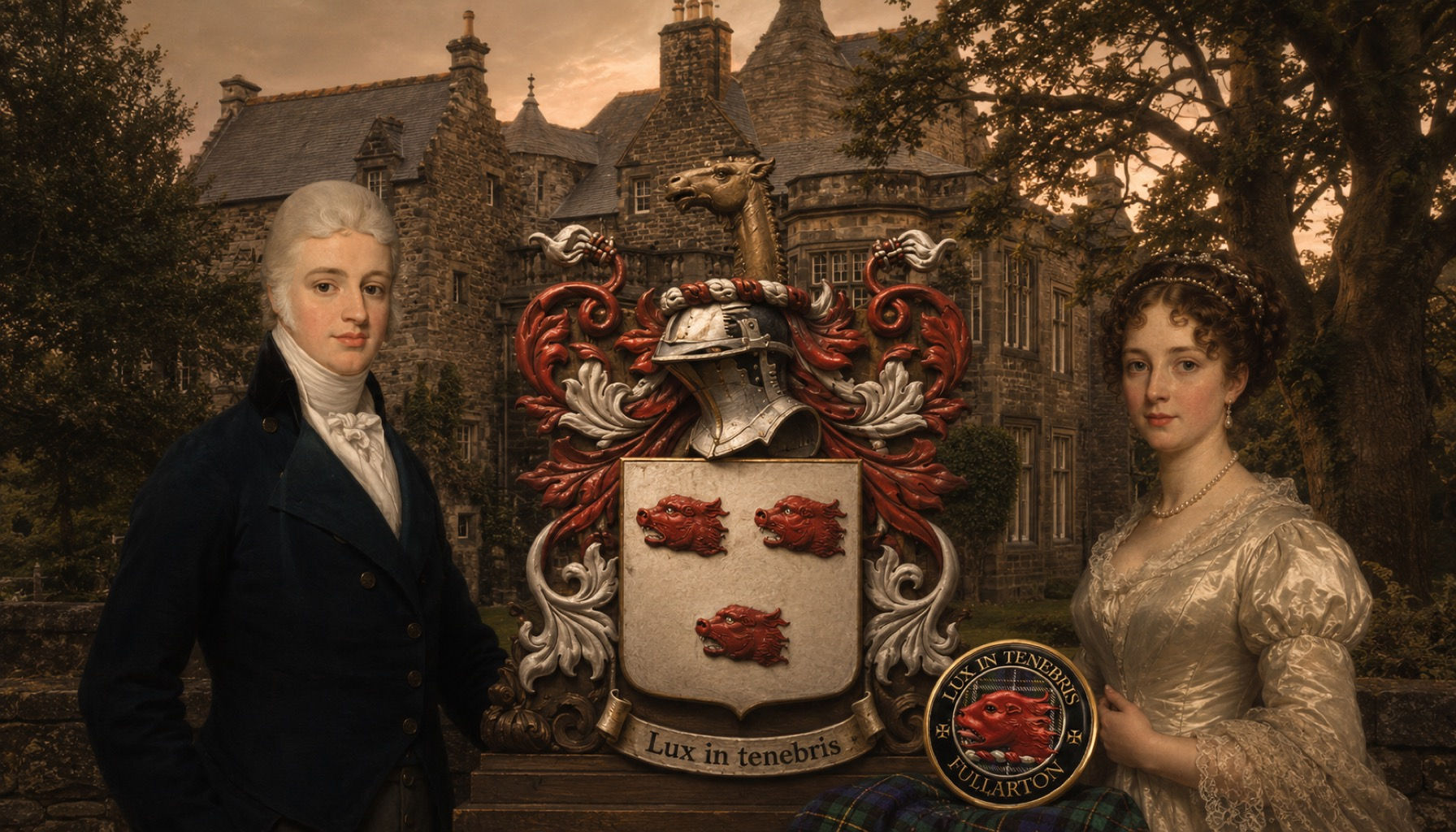
Clan Fullarton was a Scottish landed family of Ayrshire in the west of Scotland, rooted in Lowland society and strongly associated with estate identity, local authority, and service. Their story is not quite the romantic Highland clan tale of tartan hills and marching pipes. It is, in a sense, more revealing of how much of Scotland actually worked: families tied to land, to charters, to obligations, to neighborhood standing, and to the long memory of a surname attached to a place. The haplogroup most closely linked here is R1b1a1b1a1a2c1a1a1a1a1a1a, a branch within the wider Atlantic-facing R1b world often seen across Britain and Ireland.
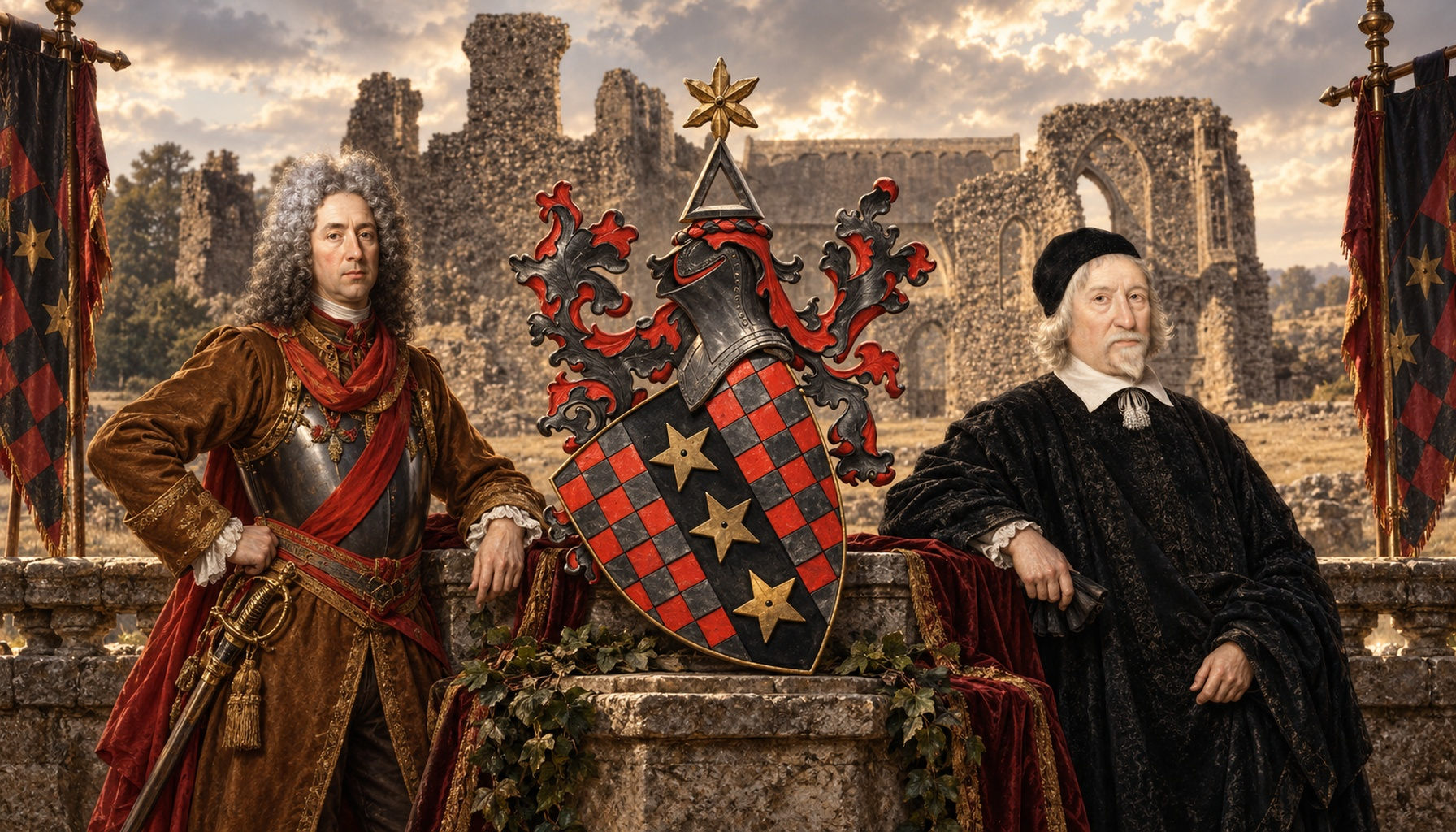
The name itself points to place. Fullarton, earlier seen in forms such as Fowlertoun and Foullertoune, appears to have grown from a territorial designation in Ayrshire, with the family taking identity from the lands they held. In medieval Scotland that mattered enormously. A family became known not simply by blood in the abstract, but by where it stood in the web of lordship, tenancy, witness, and public duty. Early named figures such as Alanus de Fowlertoun in 1280 and Galfridus de Foullertoune in 1327 show the family already present in the documentary world of medieval southwestern Scotland, where Latinized names and place-based surnames mark a society of charters, feudal ties, and local rank. Fullarton heritage later carried all the familiar marks of the Scottish landed-family pattern: heraldry, estate continuity, military or civic service, and a surname that endured because the family remained anchored to region and reputation.
Read more about Clan Cunningham
The great location anchor for the family is Crosbie Castle and the Fullarton estate in South Ayrshire, near Troon. This is the sort of site that helps explain a family better than any grand claim ever could. Crosbie was not merely a house; it was the center of a territorial world, the place where landholding, status, management, and family continuity came together. The estate passed through rebuilding and change over centuries, and the surviving castle remains speak to that long history of adaptation rather than a single frozen medieval moment. The old tower-house form, later alterations, and the wider estate landscape all reflect the practical lives of a Lowland landed family whose importance rested on stewardship as much as display. The site has undergone conservation and is known as a historic place connected to the Fullartons, and the castle remains can still be visited from the outside as part of the local historic landscape, making it one of those rare family anchors that is not just in parchment but still in stone.
From a DNA perspective, the primary Fullarton-linked haplogroup given here, R1b1a1b1a1a2c1a1a1a1a1a1a, sits in a broader northwestern European story rather than anything narrowly local to one castle or one surname. Related or linked ancient samples with this same deeper paternal signature appear across a remarkably wide historical map: Medieval Jutland in Denmark at Vor Frue Kirkegard, Aalborg (CGG100512), a Thuringii-associated sample from Deersheim in Saxony-Anhalt, Germany (DRH026), Carolingian-era Groningen in the Netherlands (GRO005), Merovingian Alt-Inden in North Rhine-Westphalia (IND007), Anglo-Saxon Sedgeford in Norfolk (SED005), Viking Age Hofstadir in Iceland (VK95), Sandoy Church in the Faroe Islands (VK44), and Ship Street Dublin (VK545). Linked examples also include several medieval Irish samples from Kilteasheen, Roscommon, including KIL009, KIL033, KIL037, and KIL043, as well as older and later cases such as PECH8 from Pech-Maho in France and the Calvert family coffins in Maryland, I2097 and 2099. None of this proves direct descent from any one ancient individual, of course. What it does show is that the Fullarton-associated paternal line belongs to a very well-traveled historical network seen in Britain, Ireland, the North Sea world, Francia, and beyond.
If you carry the Fullarton surname, have Ayrshire roots, or simply suspect your family belongs to this wider Lowland world of estate, service, and heraldic memory, DNA can add another layer to the story. Upload your results to MyTrueAncestry to see whether you match Clan Fullarton or any of the related ancient DNA samples linked to this haplogroup trail across medieval Britain, Ireland, and northern Europe.
Comments