Clan Fergusson
– 3 min read


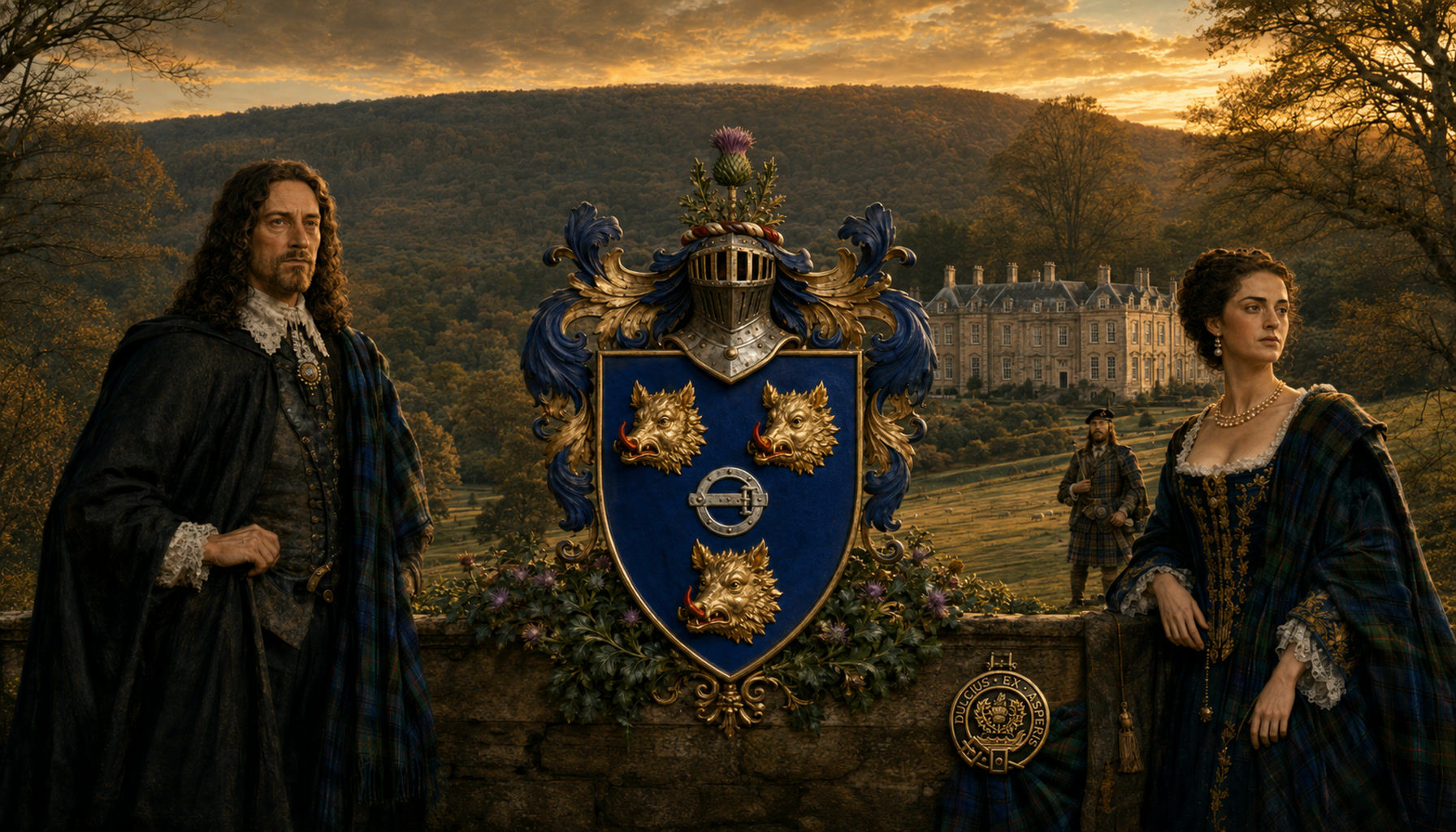
Clan Fergusson was, and remains, one of those thoroughly Scottish families whose story is less about a single dramatic founding moment and more about endurance, branching, and memory. The name comes from the old Gaelic personal name Fergus, so Fergusson quite literally means son of Fergus. That alone places the family deep inside the old Gaelic naming world, where identity was tied to kin, ancestry, and local standing. The clan developed across more than one part of Scotland, with both Highland and Lowland branches, which is a useful reminder that Scottish clans were not always neat, tidy, one-glen affairs. In historical terms, Fergusson heritage is bound up with service, landholding, military duty, heraldic tradition, and the stubborn survival of surname identity across centuries.
Its roots are especially associated with regions such as Argyll and Ayrshire, and with the wider movement of Gaelic names into different Scottish landscapes over the medieval period. Rather than springing from a single castle and one indisputable patriarch, Clan Fergusson reflects the long, layered development of Scotland itself: Gaelic speech, regional loyalties, crown service, shifting estates, and armorial recognition. One early named figure is Fergus Fergusson, recorded in 1314, appearing at precisely the sort of moment when Scotland was being fought over, remembered, and redefined. That date alone places the family in the age of Bannockburn, when names in documents begin to flicker into view and family history moves from tradition into firmer historical light. Primary family haplogroup: I2a1b1a1a1a1a1b5.
Read more about Clan Mackenzie
Kilkerran House is one of the best anchors for Fergusson history because it gives the family story a real, visible setting in the landscape of southwest Scotland. Located near Maybole in South Ayrshire, the house became the seat of the Fergussons of Kilkerran and remains closely associated with the chiefly line. The present mansion was built in the eighteenth century in stages, with work connected to the architect Robert Adam, and it stands in a designed estate that speaks to the rise of landed families in modern Scotland: not just warriors or clan heads, but estate improvers, political figures, and custodians of family prestige. In other words, Kilkerran is a fine example of how a medieval Gaelic-derived family adapted into the world of Enlightenment Scotland without losing its older identity. The house and grounds are still known as a historic estate and can be visited in at least a limited sense through estate events and the surrounding area, so it is not merely a name in a genealogy but a place you can still connect with on the ground.
From a DNA point of view, the primary haplogroup associated here is I2a1b1a1a1a1a1b5, a branch linked to a very deep European past. That does not mean every Fergusson descends directly from any excavated individual, and it is important not to pretend otherwise. What it does mean is that related or linked ancient samples help sketch the broader paternal backdrop against which a Scottish clan like this emerged. Among those linked examples are ATP_PSN_527 from Medieval England Augustinian Friars, I14866 from Celtic Briton Cliffs End Farm in England, I16491 from Neolithic Wales at Orchid Cave in Denbighshire, I16418 from Iron Age East Lothian in Scotland, I2657 from MacAurthur Cave in Oban, Argyll and Bute, I4949 from Bell Beaker Upavon in Wiltshire, car004 from ancient Carrowmore in Ireland, and I2655 from Pabay Mor on the Isle of Lewis. Taken together, these samples form not a family tree for Clan Fergusson, but a wonderfully long archaeological corridor: from Neolithic Britain and Ireland, through Iron Age and early historic Scotland, into the medieval worlds of monasteries, local communities, and named families.
Read more about Clan MacArthur
If you carry the Fergusson name, or suspect Fergusson connections in your Scottish lines, this is exactly where DNA becomes exciting. A clan is never just tartan and heraldry; it is people moving through real history, leaving traces in documents, landscapes, and sometimes in ancient genetic patterns too. Upload your DNA to MyTrueAncestry to see whether you match Clan Fergusson, its haplogroup network I2a1b1a1a1a1a1b5, or related ancient samples from Britain and Ireland.
Comments