Clan Dundas

– 2 min read


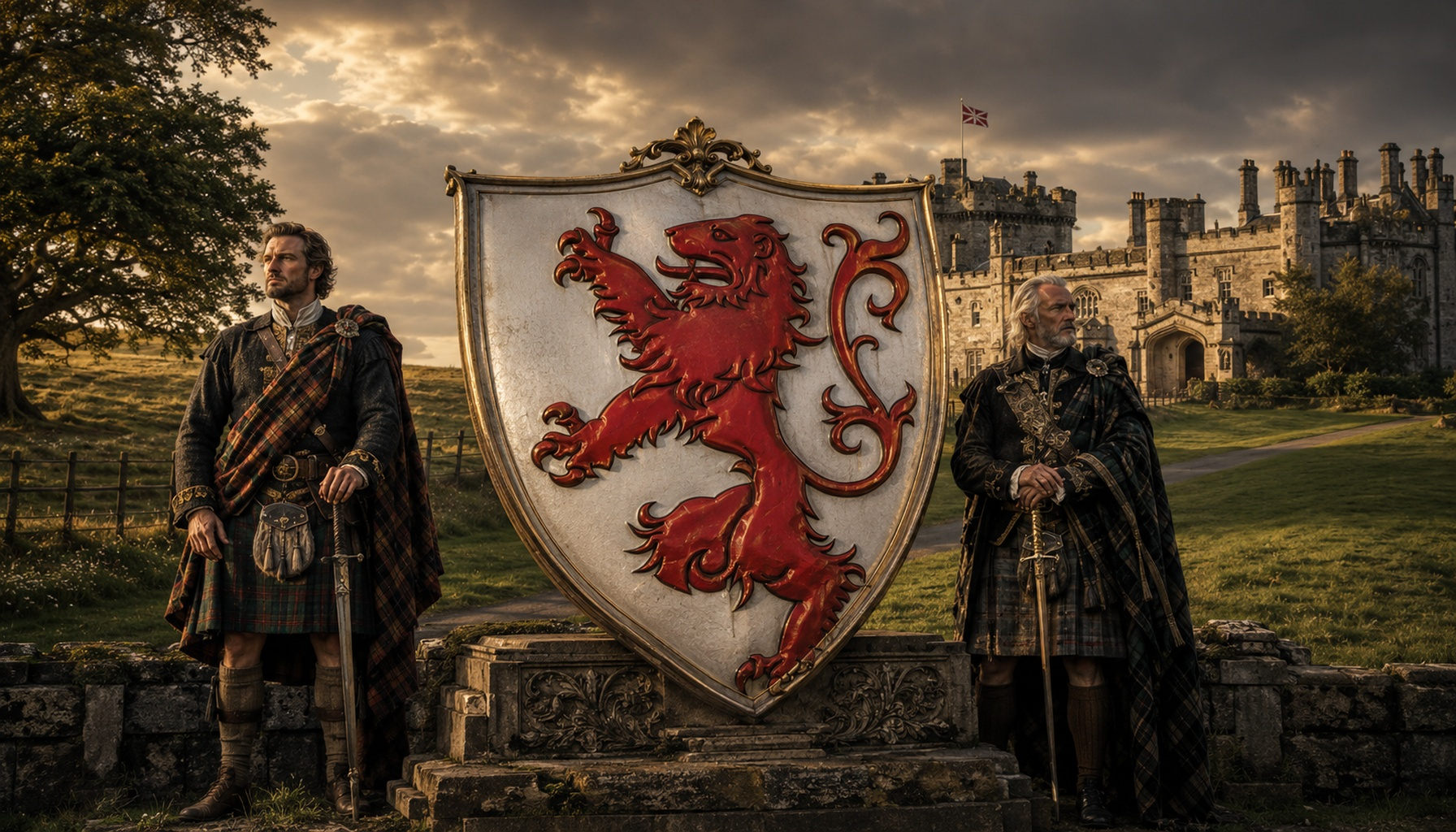
Clan Dundas was a Lowland Scottish noble and landed family rooted in West Lothian, and its story is very much the story of place, service, and reputation. The name comes from the lands of Dundas near South Queensferry, and from that territorial base the family grew into one of those durable Scottish kindreds whose importance rested not on romantic mist and claymores, but on landholding, royal service, legal authority, military or civic duty, and carefully maintained alliances. In haplogroup terms, the primary family association here is R1b1a1b1a1a2c1a1e, a lineage widely linked with parts of Atlantic and western European paternal history.
That matters because the Dundases fit a recognisable Scottish pattern: a family anchored to an estate, marked by heraldic identity, and strengthened over generations by usefulness to the crown and state. This is not the Highland clan model of chiefly followings in glens, but the Lowland landed-service model, every bit as powerful in its own way. The early record includes Serie de Dundas, listed in 1296, placing the family firmly in the documentary world of late 13th-century Scotland, when lordship, homage, and land were the real grammar of power. Over time, the family became associated with public office, political influence, and the long, disciplined preservation of family standing.
Dundas Castle is the great location anchor of the family, and it sits near South Queensferry in West Lothian, not far from Edinburgh, in precisely the sort of landscape where medieval lordship could be seen, touched, and defended. The site includes a substantial 15th-century tower house built by the Dundas family, later joined by a 19th-century castellated mansion designed in a revival style that consciously celebrated ancestral prestige. In other words, the place is a history lesson in stone: medieval defensibility alongside later aristocratic self-presentation. The old tower survives as the historic heart of the estate, and the wider complex shows how families like the Dundases refreshed their image without abandoning their territorial roots. It remains a known heritage destination and event venue, so it can still be visited, which is rather pleasing if you want your family history with battlements attached.
From an ancient-DNA perspective, the haplogroup R1b1a1b1a1a2c1a1e links Clan Dundas to a broad web of related paternal lines found across Britain and western Europe over a very long timespan. Related or linked samples include Iron Age and Celtic-era individuals such as the Durotriges from Winterborne Kingston, East Kent and Oxfordshire Britons, Iron Age West Lothian individuals, Broxmouth in East Lothian, Highland Applecross, and Pict-era Orkney samples from Mine Howe. The same wider lineage also appears in later contexts stretching through Roman, Saxon, early medieval, and medieval Europe, including Hinxton, Eastry, Lakenheath, Sint-Truiden, Las Gobas, Kilteasheen, Hedeby, and beyond. None of this proves direct descent from any named ancient individual, of course. What it does show is that the Dundas haplogroup belongs to a deep and well-attested paternal continuum in the same broad historical zone from which Lowland Scottish families emerged.
If you carry Dundas ancestry, or simply suspect a family link to the Lowland service and landed world of West Lothian, uploading your DNA can help place that story in a much deeper frame. You may find matches to the Dundas family profile, to haplogroup R1b1a1b1a1a2c1a1e, or to related ancient samples from Iron Age Britain, Pict-era Scotland, Roman Europe, and the medieval North Sea world.
Comments