Clan Calder
– 3 min read


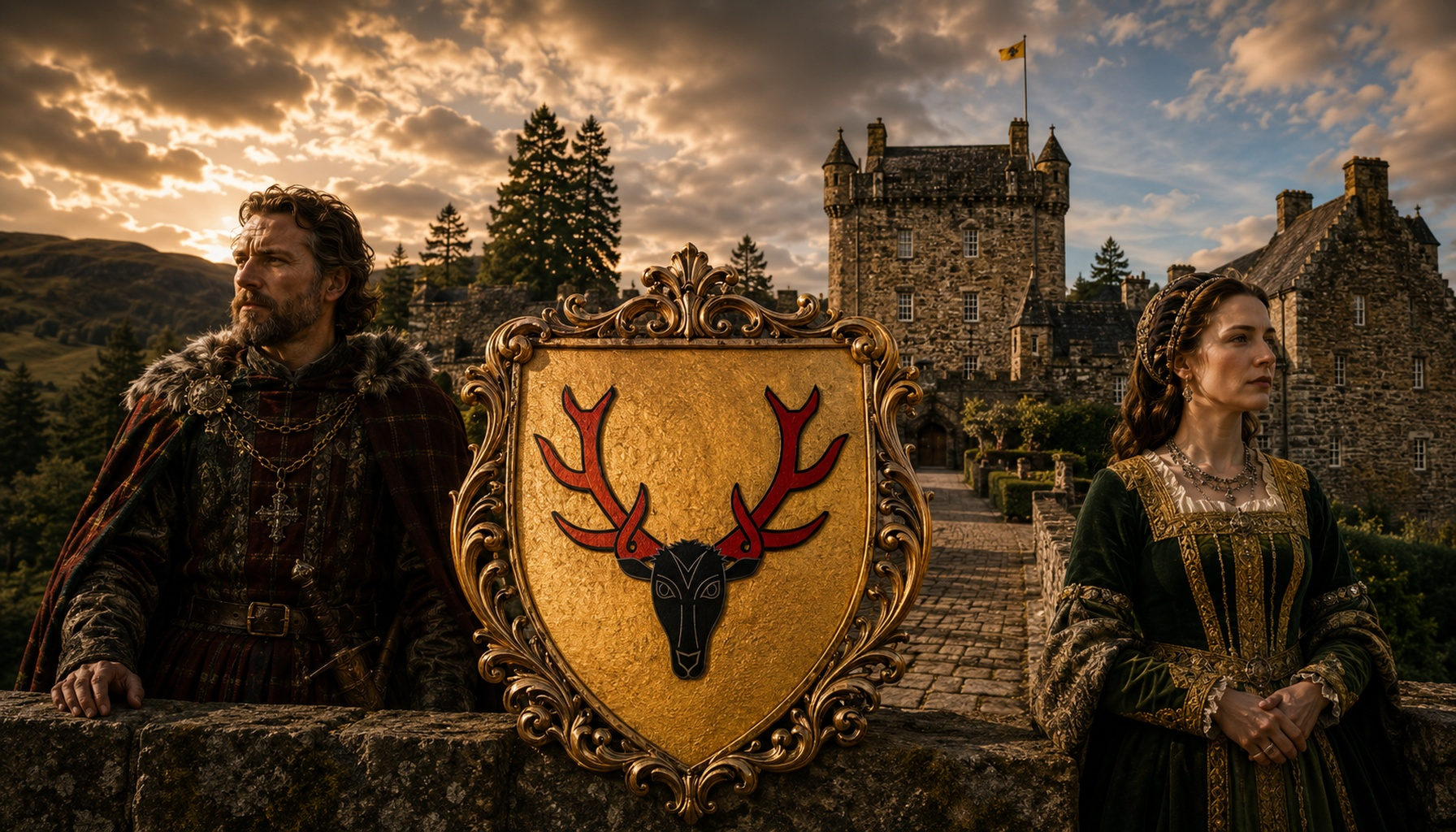
The Calders were a Scottish landed family whose identity grew out of place, estate, and local authority, with their name tied to the historic lands of Calder and later strongly associated with Cawdor in the Highlands. In the usual Scottish way, this was not simply a surname floating free in the air: it was a name rooted in territory, rights, alliances, and heraldic standing. Their motto, Be Mindful, suits them rather well, because the story of Clan Calder is one of memory, continuity, and careful stewardship as much as martial display. In genetic terms, the primary family haplogroup associated here is R1b1a1b1a1a2c1b2a, a branch within the great western European R1b line that appears again and again in ancient remains from Britain and beyond.
The family emerges in record in the 12th century with figures such as Hugo de Cadella, noted in 1178, an early glimpse of the name in its medieval form. That little scrap of evidence matters, because it places the family in the world of charters, church patronage, and landed obligation that shaped medieval Scotland. The Calders were never among the very largest of the Highland confederations, but that is rather the point: Scottish history was built not only by the famous mega-clans, but also by smaller territorial houses whose influence rested on estates, marriage networks, armorial recognition, and the long endurance of a name attached to a place.
Read more about Clan Mackenzie
Cawdor Castle is the great location anchor of the Calder story, standing near Nairn in the Highlands and long bound up with the chiefs of the family, later known as Campbells of Cawdor through inheritance and title. The present castle includes a substantial tower house dating from the late 14th century, with later additions that turned it into the layered, slightly storybook structure visitors know today. It is famously linked in popular imagination to Shakespeare's Macbeth, though the historical Macbeth lived centuries earlier, which is one of those delightful collisions between literature and history that should always come with a raised eyebrow. More solidly, Cawdor was a seat of lordship, estate management, and family memory, surrounded by gardens, woods, and the kind of landscape that made a Scottish noble residence both symbolic and practical. Happily for modern visitors, Cawdor Castle is indeed open to the public seasonally, so it is not merely a name in a genealogy chart but a real place you can still go and see.
From an ancient DNA perspective, the Calder-linked haplogroup R1b1a1b1a1a2c1b2a belongs to a deep and wide northern and western European story rather than to one tidy family line. Related or linked samples appear across a striking range of contexts: Late Bronze Age Moray at Covesea Caves in Scotland (I2859x), Pict-era Orkney at Mine Howe (CGG018915 and CGG018915x), Iron Age Highland Scotland at Applecross (I3566, I3567), Iron Age hillfort life at Broxmouth in East Lothian (I2695, I16504), and many Iron Age and Celtic Briton burials across England, Wales, and Kent, such as Ramsgate (I19909) and Cliffs End Farm (I14358, I14380). The same broader paternal branch also turns up farther afield in Dark Ages and medieval northern Spain at Las Gobas (ldo039, ldo052, ldo242), among the Gallic Cenomani in Verona (3214, 3214s), in Anglo-Saxon England at Hinxton (12880A, 12884A), Buckland Dover (BUK055), Hatherdene Close (HAD018), and Lakenheath (LAK010), as well as in medieval Ireland at Kilteasheen (KIL012, KIL015, KIL025). None of this proves direct descent from any one ancient individual, of course. What it does show is that the Calder haplogroup sits inside a long-lived network of paternal ancestry found among Bronze Age, Iron Age, Pictish, early medieval, and later medieval populations across Britain and nearby parts of Europe.
If you carry the Calder name, have Calder lines in your family tree, or simply suspect a connection to this northern Scottish landed tradition, DNA can add an intriguing extra layer to the paper trail. Upload your DNA to MyTrueAncestry to see whether you match Clan Calder, the primary haplogroup R1b1a1b1a1a2c1b2a, or related ancient DNA samples from Pictish, Iron Age, and medieval Britain and Europe.
Comments