Wetwang Chariot Woman
– 5 min read


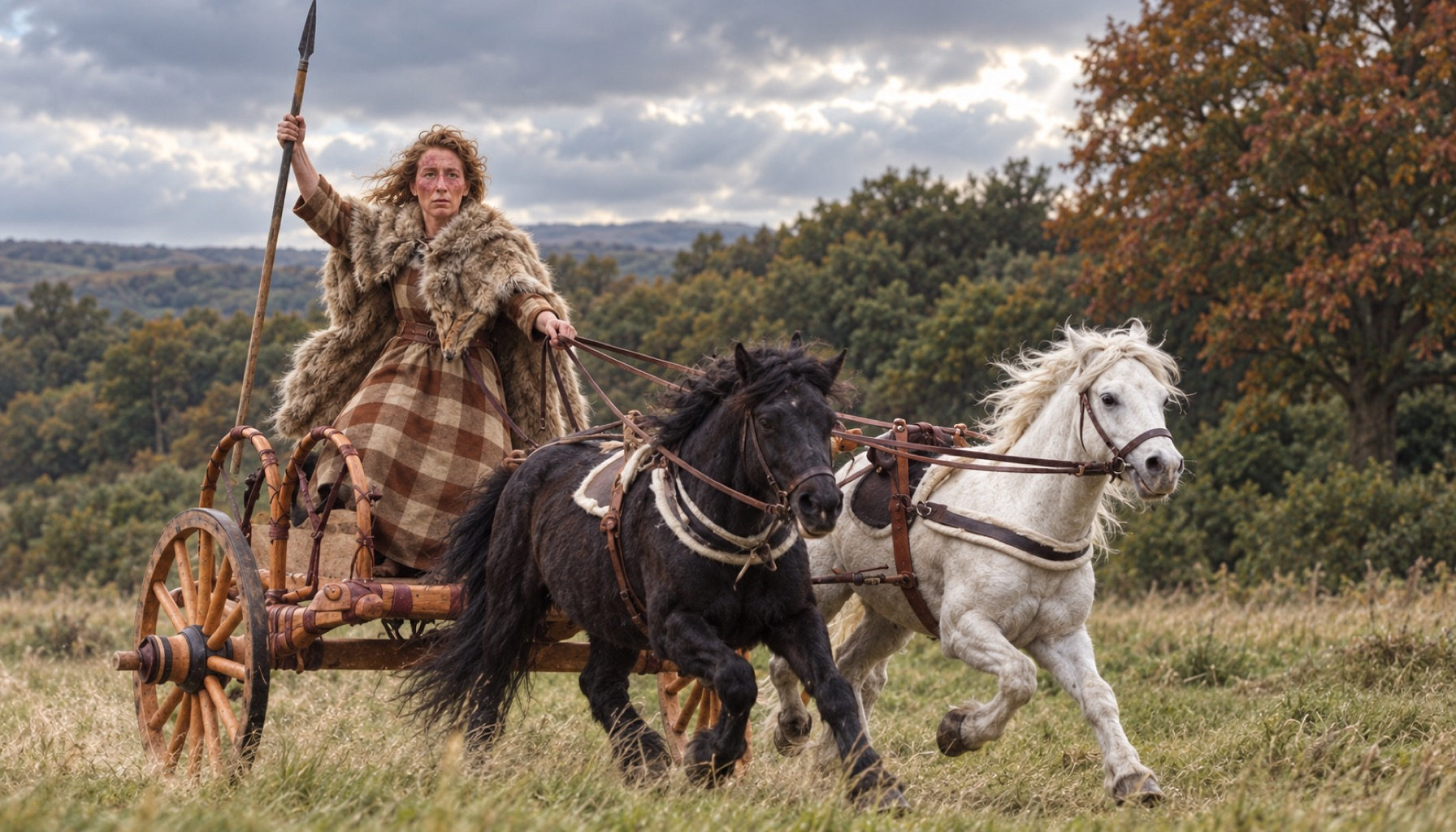
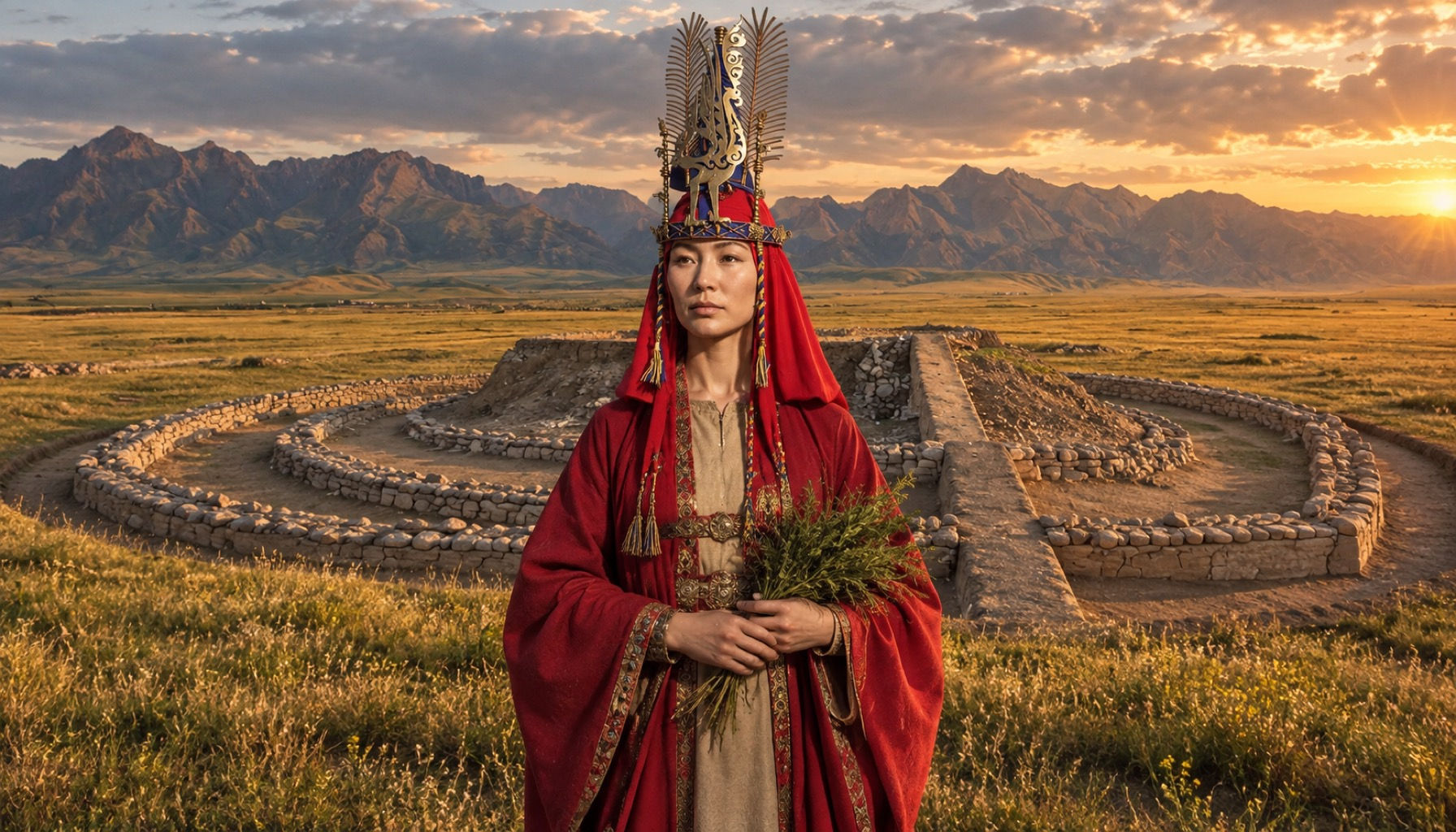
The Wetwang Chariot Woman was an elite Iron Age Briton buried in East Yorkshire around 225 BC, in the world archaeologists call the Arras culture of pre-Roman Britain. She is historically important not because we know her personal name, rank, or family in the way we might for a Roman senator, but because her burial says something unusually clear about status, ceremony, and gender in Iron Age Yorkshire. Here was a woman laid to rest with a chariot, in one of the most striking funerary traditions in ancient Britain.
That matters rather a lot. Chariot burials in Yorkshire have long been associated with prestige, martial display, and aristocratic identity, and for years people were tempted to imagine them as almost automatically male. The Wetwang burial helped break that assumption. It showed that women too could be commemorated in this exceptional way, and so must have occupied positions of considerable importance within their communities. In other words, the grave is not simply about death. It is about how the living advertised power, memory, and social standing.
The wider setting is East Yorkshire in the centuries before the Roman conquest, a landscape of farmsteads, cemeteries, craft production, and carefully staged burial rites. The people later associated with the Parisi of this region were part of a connected Iron Age world that stretched across Britain and into the Continent, though local customs remained distinctive. The Arras culture, with its square barrows and occasional chariot interments, is one of the clearest examples of that regional character. Wetwang Slack and nearby sites have produced some of the most revealing evidence for these communities: not only weapons and vehicles, but human remains that let us ask who these people were biologically as well as archaeologically. Ancient DNA does not restore the Wetwang Chariot Woman’s voice, but it does place her more firmly among the real families and populations of Iron Age Yorkshire.
Iron Age Britain and Matrilineal DNA
The sample associated with this individual is listed as Elite Celtic Parisi Chariot Woman Iron Age England East Yorkshire Wetwang Slack, dated approximately to 225 BC. This is not a securely identified named historical person in the usual sense; rather, it is a probable archaeological identification linking a biological sample to the famous woman buried in the Wetwang Slack chariot grave. That distinction is important. We are dealing with a real excavated individual of great status, but not with someone whose personal identity survives in written sources.
Her remains come from one of Yorkshire’s celebrated chariot burials, where vehicle, body, and grave goods formed part of an elaborate funerary performance. Such graves were never everyday affairs. They required labour, planning, and access to valued objects, all of which mark out the dead as socially prominent. In the Wetwang case, the combination of burial rite and biological sex made the discovery especially significant, because it demonstrated that this prestigious form of burial could include women. As ever in archaeology, the grave tells us how she was presented at death; it cannot by itself tell us the exact office she held, the political authority she wielded, or the details of her life story.
The recent ancient-DNA research context, including the study at https://www.biorxiv.org/content/10.64898/2026.08.03.742615v2, is valuable because it brings the Wetwang burial into a broader dataset of Iron Age Britain and nearby regions. Related linked samples from East Yorkshire include Celtic Parisi individuals from Wetwang Slack such as I36850, I31516, I30987, and I30972, as well as Pocklington individuals I21890 and I21549, plus elite chariot-burial samples I36995 and I36892. These linked burials allow researchers to compare people from the same regional milieu rather than treating the Wetwang Chariot Woman as an isolated curiosity. More distant comparative samples, such as Late Iron Age East Kent England (I19874) or even Bronze Age Cerdanyola Barcelona (I0257), may help frame broader population patterns, though comparison is not the same thing as proving close kinship or migration in any one case.
Compare Celtic Iron Age Burials
The Wetwang Chariot Woman’s mitochondrial DNA haplogroup, which traces her direct maternal line, is reported as H1ax. Her Y-DNA haplogroup is not available, which is entirely normal here because Y-DNA follows the direct paternal line and can only be assigned for genetic males. Since this burial is that of a woman, no Y-DNA haplogroup is applicable for her own paternal-line marker in the usual sense.
What does mtDNA H1ax mean in practice? Mitochondrial haplogroups are lineages passed from mother to child, and so they let us track one narrow strand of ancestry through time. Haplogroup H and its many branches are well known in ancient and modern western Eurasia, but that should not be turned into a crude ethnic label. H1ax does not “prove” that the Wetwang Chariot Woman was Celtic in some simple biological sense, nor does it define her status, language, or identity. It tells us about one maternal lineage among many ancestors she possessed.
There is a particularly relevant H1ax-linked comparison here: Elite Celtic Parisi Chariot Woman Iron Age England East Yorkshire Wetwang Slack (I36978). That matters because it ties the Wetwang Chariot Woman’s maternal lineage to the same specific archaeological and regional setting, not just to a huge and vague map of Eurasia. Even so, shared mtDNA haplogroups indicate membership in a broader maternal lineage, not necessarily a close family relationship. Two people with H1ax may share a maternal ancestor far back in time, well beyond the reach of conventional genealogy.
In the broader context of the Wetwang and Pocklington material, ancient DNA is most interesting when it is combined with archaeology. The chariot, the grave rite, the local burial tradition, and the genetic data together give us a fuller picture than any one line of evidence alone. DNA can help explore biological connections among communities in Iron Age Yorkshire and between Yorkshire and other regions. It cannot tell us whether this woman drove the chariot herself, led warriors, exercised ritual authority, or belonged to a named dynasty. Those are historical questions that need caution as well as imagination.
Ancient DNA and Celtic Origins
The Wetwang Chariot Woman sits at a useful meeting-point of history, burial custom, and genetics. Her grave already forced a rethink of who could receive one of Yorkshire’s most prestigious funerary treatments. Her DNA adds another layer, anchoring that argument in the biology of a real person rather than an abstract “female burial type.” It reminds us that Iron Age elites were not just symbols in museum cases but members of living communities, shaped by kinship, inheritance, and local tradition. Yet the limits are just as important as the insights: her mtDNA lineage is informative, but it is only one thread in a much larger ancestral tapestry.
If this world of Iron Age Britain, ancient lineages, and archaeological discovery fascinates you, MyTrueAncestry lets you compare your DNA with ancient populations and archaeological samples from the past. You can explore whether your genetic profile shows connections to the kinds of ancient communities discussed here, including Iron Age populations of Britain, while keeping a clear distinction between broad genetic affinity and proven descent from any one individual.

Comments