The Saint John Family

– 3 min read


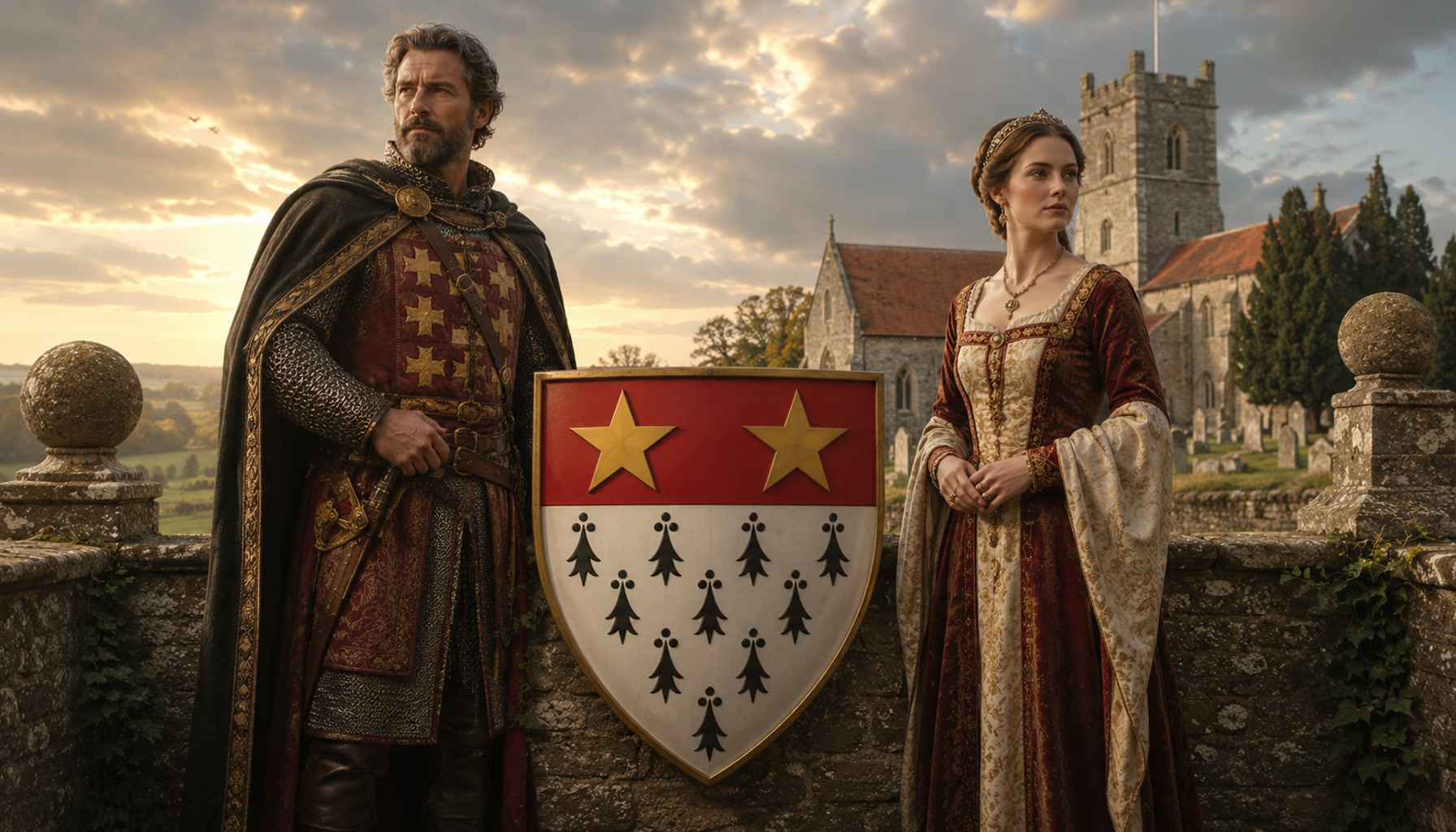
The Saint John family was one of those durable Anglo-Norman noble houses that managed to do what so many families hoped to do and so few quite achieved: arrive with the reshaping of medieval England, secure land, cultivate influence, and remain woven into the fabric of English aristocratic life for centuries. Their name, with its distinctly continental and devotional form, reflects the world that produced them: the cross-Channel nobility of the Norman and post-Conquest age, when identity, lordship, and lineage were tied to both place and service. In later centuries the Saint Johns became associated especially with estates in Hampshire and Bedfordshire, and with the layered business of noble survival - inheritance, marriage strategy, military duty, court connection, and local authority. Primary family haplogroup: R1b1a1b1a1a2a.
Historically, the Saint Johns stand for continuity rather than flash. They appear in the records not as a one-generation phenomenon but as a family sustained by offices, tenurial rights, heraldic identity, and alliances with other important houses. They moved in that world of sheriffs, barons, retainers, wardships, and royal favour that really powered medieval governance on the ground. The family name also appears in Welsh contexts, and one notable figure linked with that wider story is a Saint John recorded as Lord of Uchel-olau in 1436, a reminder that noble power was often not neatly English or Welsh but stretched across marcher and regional networks. In short, this was a house of land and connection: Anglo-Norman in origin, thoroughly English in political embedding, and part of the long afterlife of conquest society.
One of the most evocative location anchors for the wider Saint John story is Wenvoe Castle in Glamorgan, South Wales. The site has medieval roots and was long associated with local lordship, though what visitors see today is largely the result of later rebuilding and remodelling rather than a fully intact medieval fortress standing untouched through the ages. Like so many castles of the Welsh borderlands and lordships, Wenvoe is really a layered monument: part defensive statement, part residence, part badge of status. It sits in a landscape shaped by Norman expansion into South Wales, where castles were not merely military installations but instruments for holding land, projecting authority, and advertising family rank. In later centuries the estate developed into a substantial country house setting, and that itself tells a familiar aristocratic story - the old martial stronghold becoming the refined landed seat. The grounds and site remain known today, and Wenvoe Castle can still be visited in a limited sense through its present use and surrounding estate setting, even if it is no longer a medieval ruin open in the simple walk-up fashion of a state monument.
Read more about the Glamorgan Family
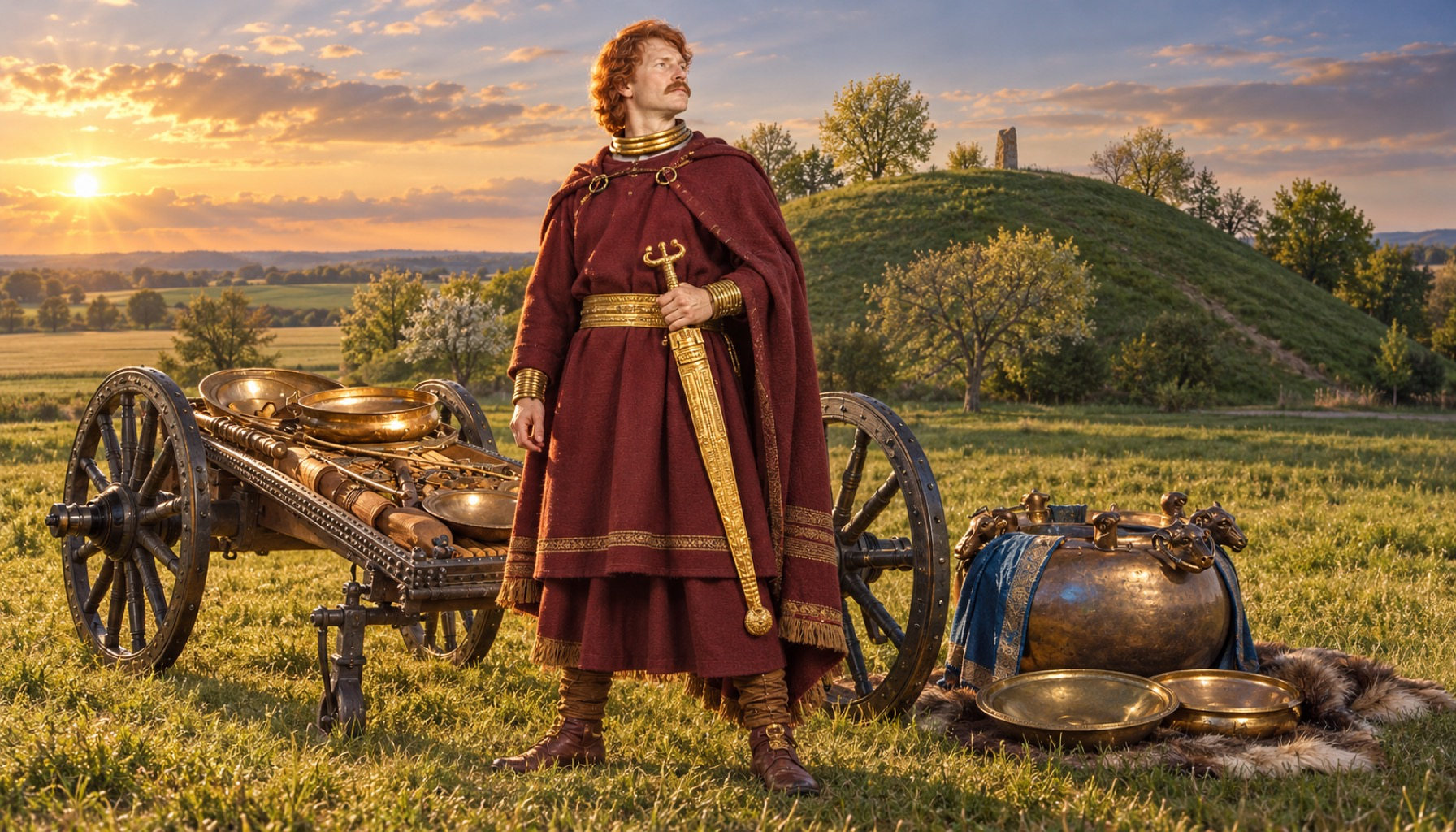
From a genetic-history angle, the Saint John family is here tagged with haplogroup R1b1a1b1a1a2a, a lineage with a very wide and rather fascinating footprint across western and central Europe. That does not prove direct descent from any excavated individual, and it is important not to pretend otherwise. But it does place the family within a broader paternal landscape that turns up in a striking range of ancient and medieval contexts. Related or linked R1b1a1b1a1a2a samples include Medieval Northern Spain Las Gobas individuals such as ldo066, ldo037, ldo046, ldo048, ldo040 and Dark Ages ldo062; elite Celtic burials from Germany including Magdalenenberg MBG013, Asperg-Grafenbuehl APG001 and APG003, and Hochdorf HOC001; Romano-British and later English examples such as Eddington NWC009, Fenstanton FEN008, Arbury ARB003, Duxford DUX003, Cambridge St Johns Hospital ATP_PSN_36, ATP_PSN_177 and ATP_PSN_203, Cherry Hinton ATP_PSN_944 and ATP_PSN_950, and Clopton ATP_PSN_1217; as well as Iron Age and post-Roman British samples from the Durotriges cemeteries at Duropolis, Rosemarkie in Pictish Scotland, and Worth Matravers in Dorset. Taken together, these linked finds suggest a lineage moving through Bell Beaker, Bronze Age, Celtic, Roman, early medieval, and high medieval worlds - exactly the sort of deep European background one might expect behind an Anglo-Norman noble family that ultimately rooted itself in England and Wales.
If you are exploring the Saint John family, the interesting question is not simply whether a surname appears in a pedigree, but how family history, noble geography, and deep ancestry may intersect. Uploading your DNA to MyTrueAncestry can help you see whether you match the Saint John family group or any of the related ancient DNA samples linked to haplogroup R1b1a1b1a1a2a, from Celtic elites and Romano-British burials to medieval individuals from England and Iberia.



Comments