The Royal House of Wittelsbach
– 2 min read


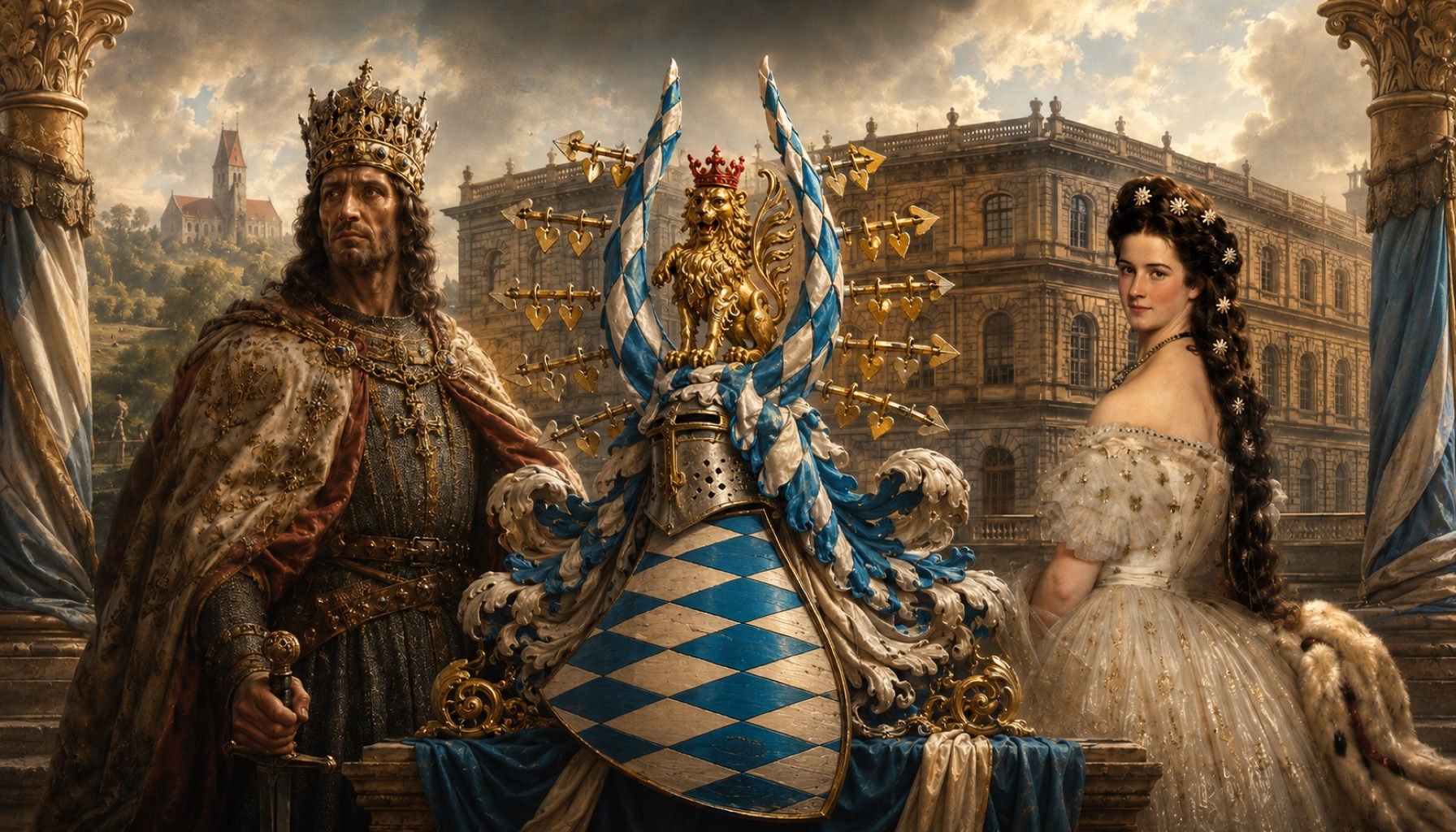
The House of Wittelsbach was one of Europe's great ruling dynasties, a family of dukes, electors, kings and, at moments, emperors, whose story is bound up above all with Bavaria and the Palatinate. Their primary family haplogroup is linked here as I2a1b2a2b2b, a paternal line with a long European past. Historically, the Wittelsbachs became one of those houses that seem to appear everywhere once you start looking: in the politics of the Holy Roman Empire, in the confessional struggles of Catholic and Protestant Europe, and in the long making of Bavarian identity itself.
The family's early roots lie in the region of Scheyern in Upper Bavaria, in the world of the 11th-century German nobility, where castles, counties and loyalties were constantly being negotiated through inheritance, marriage and service. Otto I, Count of Scheyern, recorded around 1020, stands among the early named figures in this story. From these beginnings the family rose steadily, taking its better-known name from Wittelsbach Castle and then building a dynastic machine that survived partition, feud, reform and war. What makes the Wittelsbachs so fascinating is not simply their longevity, but the way they embody the classic European princely pattern: land turned into legitimacy, marriage turned into power, religion turned into politics, and court culture turned into memory.
Explore the Royal House of Wettin
If one place sums up Wittelsbach rule in stone, stucco and sheer dynastic self-confidence, it is the Munich Residenz. This vast palace complex in central Munich developed over centuries as the seat and residence of the Wittelsbach rulers of Bavaria, growing from a medieval castle into one of Europe's great urban palaces. Successive generations enlarged it in Renaissance, Baroque, Rococo and Neoclassical styles, which means the building is less a single palace than a layered architectural autobiography of the dynasty. Inside were state apartments, ceremonial halls, chapels, treasury collections and court spaces designed to make power visible. It was not just where the Wittelsbachs lived, but where they staged rulership. The Munich Residenz still stands and can be visited today, making it one of the best surviving places to encounter the family's political theatre and artistic patronage at first hand.
Read more about the Royal House of Hohenzollern
From an ancient DNA point of view, the Wittelsbach haplogroup tag I2a1b2a2b2b sits within a wider European paternal landscape rather than a neat one-family trail. Related or linked samples assigned to this branch or closely connected reporting include Historic St. Mary City Chapel Field Cemetery, Maryland, sample I15292; Early Medieval Croatia, Velim-Velistak, sample VEM029; Bronze Age Lower Silesia, Karczyn, sample poz498; Bronze Age Silesia, Pielgrzymowice Grave 669, sample poz720; and Iron Age Prague, Central Bohemia, sample I17327. These do not prove direct descent from the Wittelsbachs, of course, but they do show how a paternal line associated with the family also appears across a broad arc of European time and geography, from Bronze Age central Europe to medieval and even colonial-period contexts. That is the joy of archaeogenetics: not a fairy tale of certain descent, but a map of related lineages moving through real human history.
Explore dynastic DNA in the Piast rulers
If the Wittelsbachs catch your imagination, the next step is to test the question in the most modern way possible: through DNA. Upload your results to MyTrueAncestry and see whether you match the House of Wittelsbach, their haplogroup I2a1b2a2b2b, or related ancient DNA samples from the wider European past. It is a wonderfully direct way to connect courtly history, archaeology and your own family story.

Comments