The Royal House of Stewart
– 3 min read


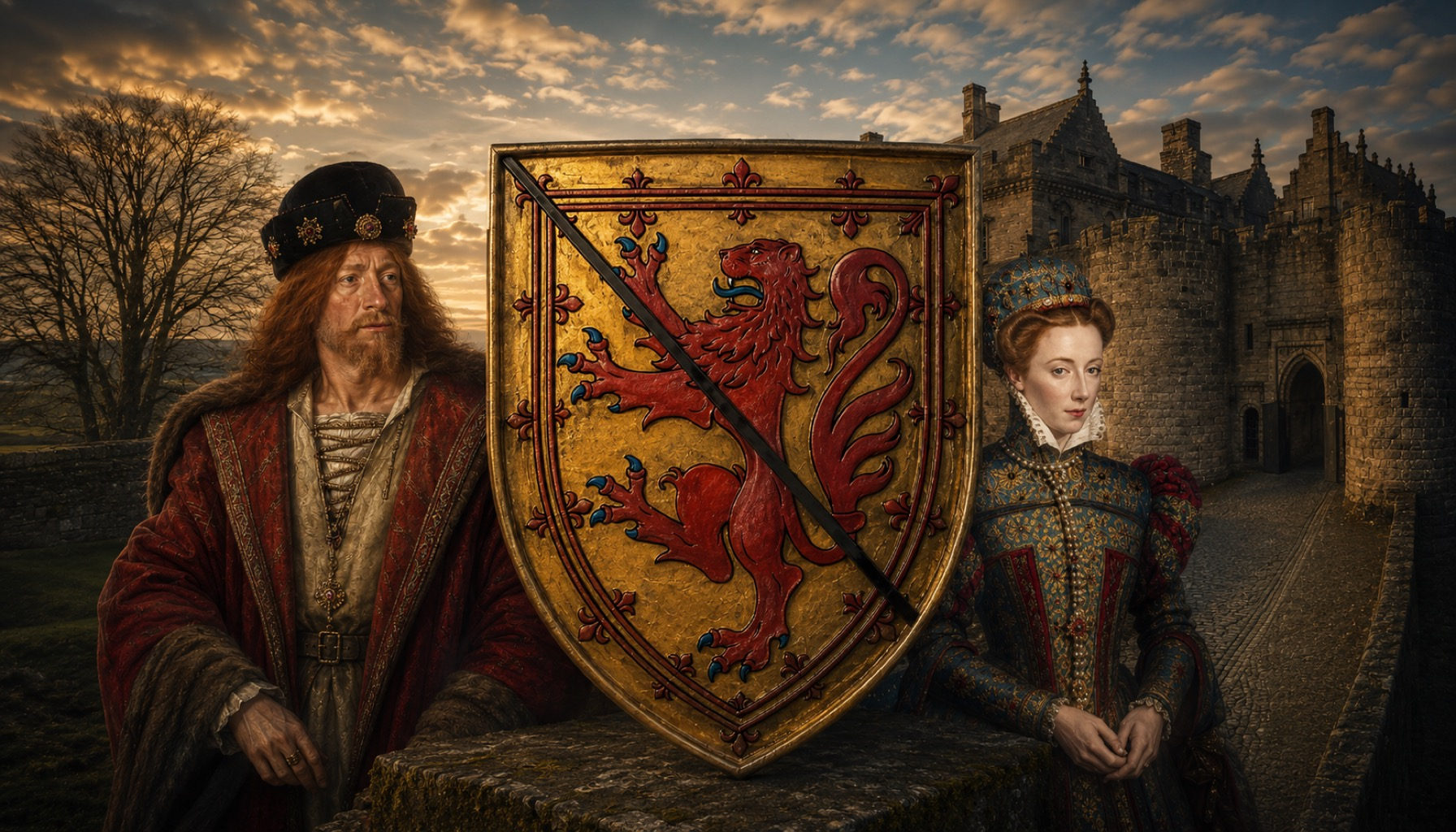
The House of Stewart was one of the great royal dynasties of Scotland and later of England and Ireland, a family that began not as kings but as hereditary stewards of the Scottish realm. Their name came from office before it became a surname: the High Steward of Scotland was a powerful royal servant, and from that role the Stewarts rose into the front rank of medieval nobility. In haplogroup terms, the primary family line is linked here with R1b1a1b1a1a2c1a1d1a1, a branch associated with a wider northwestern European paternal background.
The family's roots lie in the western and central world of medieval Scotland, shaped by Norman, Breton, Anglo-French, and Scottish political culture after the 12th century. This was a hard, practical age of land grants, castle lordship, church patronage, and marriage strategy. By the late 14th century the Stewarts had reached the throne of Scotland, and from there their story became entangled with nearly every great drama of British history: dynastic succession, union of crowns, Reformation conflict, civil war, regicide, restoration, exile, and Jacobite memory. Figures such as Sir John Stewart of Bonkyll (1245-1298) remind us that this was not just a glittering court dynasty in hindsight, but a fighting noble house forged in the bruising politics of medieval Britain. Later came Mary, Queen of Scots, James VI and I, Charles I, Charles II, and James VII and II, rulers whose lives still seem to sit halfway between pageant and catastrophe.
If one place captures Stewart power in stone, it is Stirling Castle. Perched high on a volcanic crag above the River Forth, it commands one of the key gateways between the Scottish Highlands and Lowlands, which is exactly why it mattered so much for centuries. Long before it became closely associated with the Stewart kings, it had already been a strategic fortress of immense importance. Under the Stewarts it developed into a major royal residence as well as a military stronghold. James IV, James V, and Mary, Queen of Scots were all connected with the castle, and much of its surviving grandeur comes from this late medieval and Renaissance royal phase, when it was reshaped into a courtly center fit for ceremony, diplomacy, and display. The Great Hall and royal apartments speak not just of defense, but of monarchy staging itself before subjects and rivals alike. Stirling Castle can still be visited today, and it remains one of the most vivid places in Scotland to get a sense of how Stewart kingship looked, felt, and announced itself to the world.
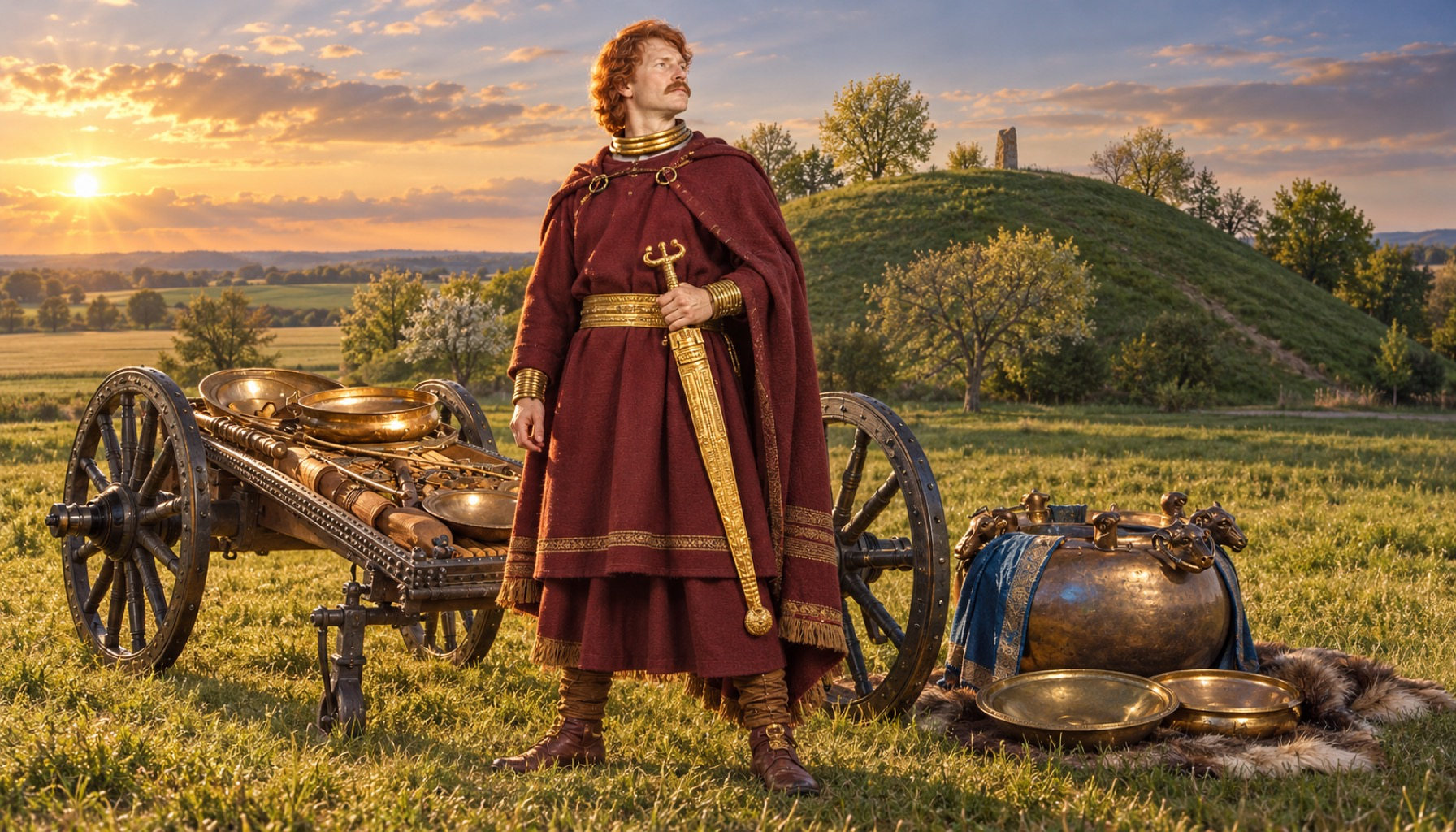
From a DNA perspective, the Stewart-linked haplogroup R1b1a1b1a1a2c1a1d1a1 also appears in a small set of related ancient and medieval samples from across Britain and northern Europe. These include Medieval England Augustinian Friars samples ATP_PSN_512 and ATP_PSN_520, Medieval Vasterhus Sweden sample mbv151, Celtic Briton Oxfordshire Yarnton England sample I21182, and Late Bronze Age Raven Scar Cave North Yorkshire England sample I16469. These are not evidence of direct descent from the Stewarts themselves, and they should not be read that way. What they do offer is a useful glimpse into the deeper and broader paternal landscape in which a later royal house like Stewart emerged: one tied into the long population history of Britain and the North Sea world.
Explore Ancient DNA in Post-Roman Britain
If Stewart heritage appears in your family story, or if you are simply curious whether your DNA connects with this royal house or with related ancient DNA samples, you can explore that further by uploading your results to MyTrueAncestry. It is a fascinating way to place family history into a much bigger human story, from medieval dynasties to the deeper past.

Comments