The Radcliffe Family
– 3 min read


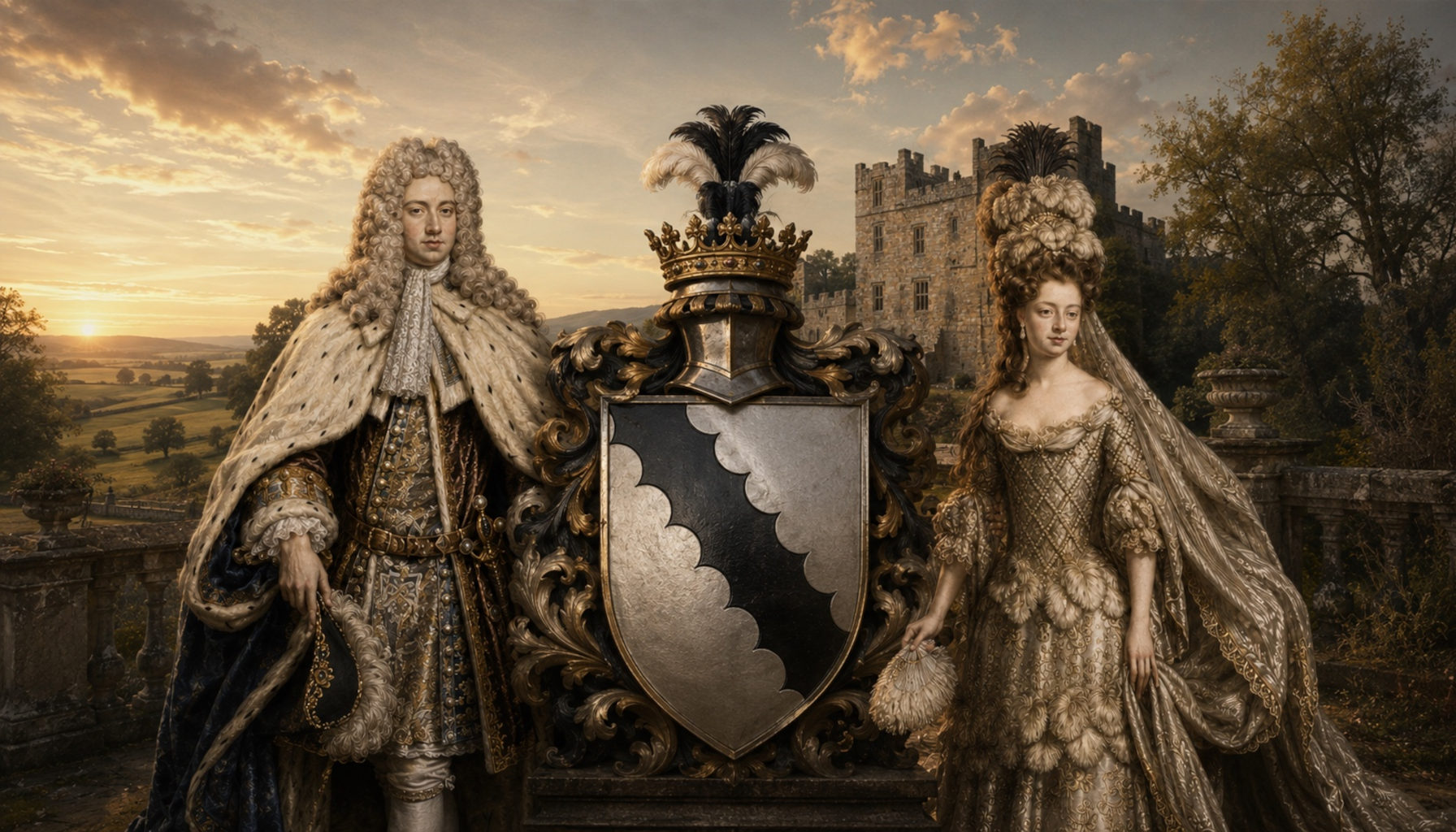
The Radcliffe family was one of the old landed lineages of northern England, rooted above all in Lancashire and remembered as part of that tough, durable county aristocracy which built its standing on land, marriage, office, arms, and local influence. The surname itself comes from place, from a "red cliff" or "red bank," and like many English noble and gentry names it began as a territorial identity before becoming a family banner carried across centuries of medieval and early modern history. In haplogroup terms, the primary family line is linked here with I1a2a1a1a2a1, alongside the broader haplogroup tradition of I1, a lineage often associated with deep northern European paternal history.
What makes the Radcliffes interesting is not simply that they were noble, but that they show how power actually worked in the north of England. This was a world of manors, tower houses, wardship, feuds, military obligation, county administration, and strategic marriages with neighboring families. Over time Radcliffe branches rose into wider prominence, connecting with noble titles and regional office, while navigating the dangerous weather of English politics: dynastic struggle, shifting royal favor, and religious fracture. A figure such as John Radcliffe, 6th Baron Fitzwalter (1452-1496), brings that wider reach into view, showing how a family with northern roots could also stand within the higher aristocratic currents of late medieval England.
Read more about The Stanley Family
The great location anchor for the family is Radcliffe Tower, at Radcliffe in Greater Manchester, historically within Lancashire. The site matters because it ties the surname back to a real seat of lordship rather than leaving it floating as a mere heraldic memory. The original stronghold appears to have medieval origins, with the surviving structure representing the remains of a later fortified manor house, largely 15th century in character and traditionally associated with the Radcliffes of Radcliffe. It was not a vast royal castle but exactly the sort of residence that tells us how local power was exercised in late medieval England: defensible, prestigious, practical, and visibly bound to estate management. The tower was damaged in the Civil War period and survives today as an evocative ruin, restored and protected as a historic monument. Yes, it can still be visited in the sense that the site survives and is publicly accessible as a heritage landmark, which is rather wonderful: the family name is still fixed in the landscape where it began.
For those interested in deeper paternal origins, the Radcliffe line is tagged here to haplogroup I1a2a1a1a2a1. That does not mean we can leap recklessly from a medieval English family straight onto any one excavated skeleton, and it is always worth saying so plainly. What we can say is that a number of ancient DNA samples are linked or related at this haplogroup branch and help sketch the older world from which such a paternal line emerged. These include samples from Migration Period Hungary at Rakoczifalva (RKO002), Gothic contexts in Serbia at Timacum Kuline Ravna Village (I15549) and Timacum Slog Necropolis (I15545), Longobard period Pannonia at Savaria Szeleste Barbaricum in Hungary (SZL028), Merovingian Frankish Buettelborn in Germany (Btb71), medieval Sint-Truiden in Belgium (ST2819), Nordic Bronze Age Denmark at Strandlunden II Gerlev (CGG106515), Iron Age Denmark at Trundholm Mose in Sjaelland Holbaek Fjord (CGG106734), a Saxon settler context in the Frisii Netherlands at Hogebeintum (CGG024694), Viking Age Odense Norrebjerg in Denmark (CGG105541), Anglo-Saxon Sedgeford in Norfolk (SED014), Gothic Kecskemet-Mindszenti in Hungary (A181016), and Viking Age Oland in Sweden (VK337 and VK357). Put together, these linked samples suggest a long northern and north-central European story, moving through Bronze Age Scandinavia, Iron Age Germanic worlds, Migration Period mobility, and into the Anglo-Saxon and Viking-age societies that helped shape medieval England.
Read more about The House of Neville
If you are curious whether your own DNA may connect with the Radcliffe family story, or with related ancient I1a2a1a1a2a1-linked samples from the Gothic, Saxon, Viking, and medieval worlds, you can upload your DNA to MyTrueAncestry and explore the evidence for yourself. That is where family tradition, local history, and ancient archaeology become far more personal.

Comments