The Princely House of Saxe-Coburg
– 3 min read


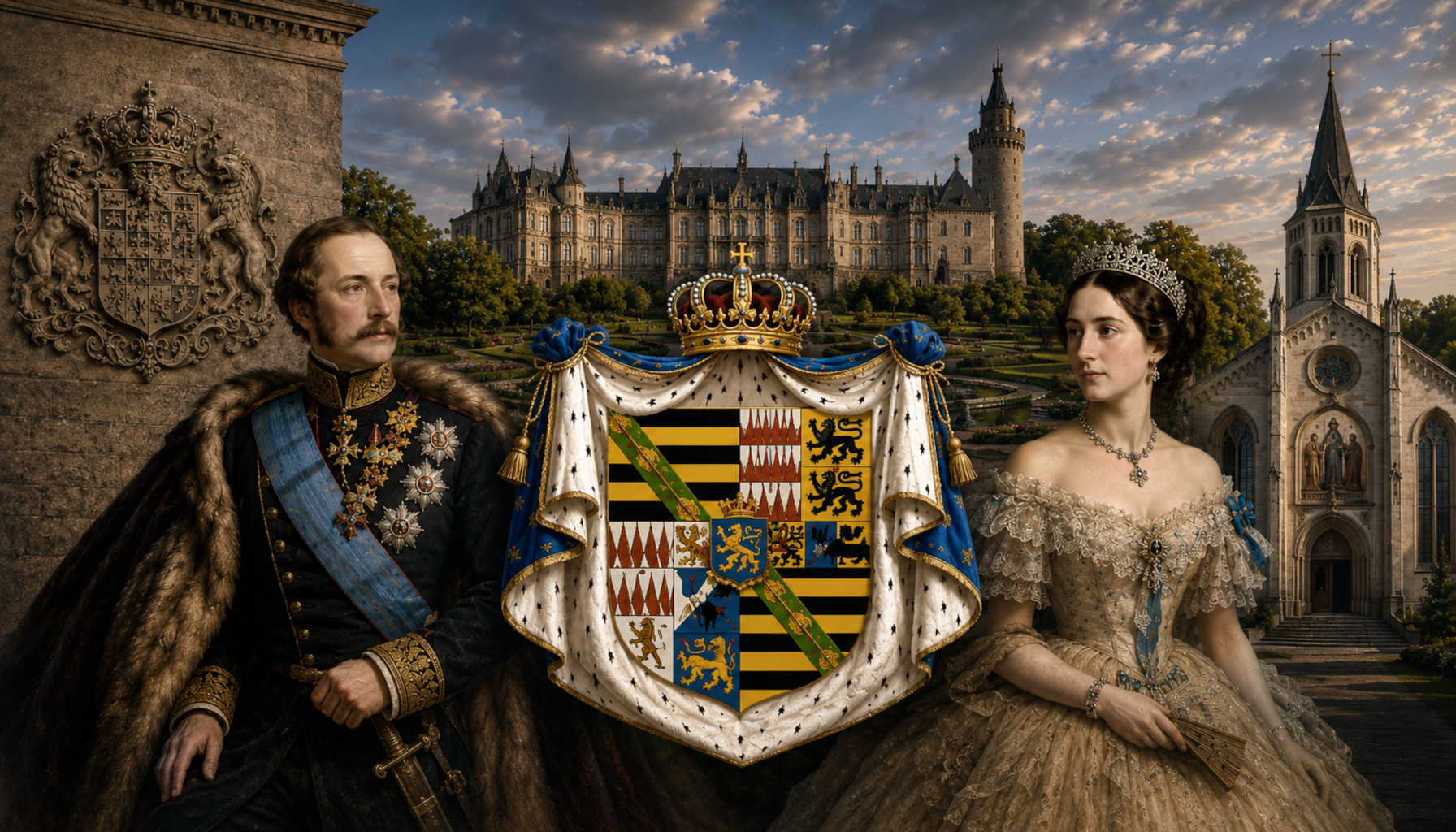
The House of Saxe-Coburg and Gotha was a German princely and ducal dynasty of the Ernestine branch of the House of Wettin, rooted in the old Saxon and Thuringian lands of central Germany, especially Coburg, Gotha, and Saalfeld. Their primary linked Y-DNA haplogroup is R1b1a1b1a1a1c1a1. That rather formidable string belongs to one of the great western Eurasian paternal lineages, and in the case of Saxe-Coburg it gives us a useful genetic tag for thinking about dynasty, inheritance, and the very old male-line histories that sometimes sit behind much later royal houses.
What makes this family so fascinating is that they began from a relatively modest German ducal base and yet became one of the most influential dynasties in 19th-century Europe. This was not a vast empire built by conquest. It was, in the proper dynastic way, built by marriages, court politics, diplomacy, and a sharp sense of opportunity. From these central German lands came figures who would sit on thrones or marry into them across Europe: in Belgium, Portugal, Bulgaria, and above all Britain, where Prince Albert of Saxe-Coburg and Gotha married Queen Victoria. By 1917 the British branch had changed its public name to Windsor, but the family story still runs back to those German courts, their Lutheran culture, heraldry, residences, and the political world of small but ambitious duchies. Ernest I, Duke of Saxe-Coburg and Gotha (1784-1844), was one of the key figures in shaping that house at precisely the moment it began to matter on a European stage.
Explore the Royal House of Wettin
If you want a place that captures the world of Saxe-Coburg power, Ehrenburg Palace in Coburg is the obvious anchor. Originally founded as a Franciscan monastery in the 16th century and later transformed into a ducal residence, it became one of the principal seats of the rulers of Saxe-Coburg. The palace took shape over centuries, with later rebuilding and embellishment producing the grand appearance visitors know today, including its striking neo-Gothic exterior and richly furnished state rooms. Inside, it preserves the atmosphere of a German princely court: ceremonial halls, ducal apartments, and interiors that speak of rank, taste, and the careful performance of authority. This was not just a home. It was a stage set for dynastic identity, where architecture helped announce that a small ducal house belonged in the company of Europe’s ruling families. It remains a well-known historic monument in Coburg and can still be visited.
From an ancient DNA perspective, the haplogroup R1b1a1b1a1a1c1a1 links the Saxe-Coburg line to a wide spread of related or associated ancient samples across western and central Europe. These do not prove direct descent from any one excavated individual, and it is important not to pretend otherwise, but they do place the family within a broad paternal landscape seen in samples such as Lombard Warrior Elite Collegno Northern Italy (COL_069, COL_069b, COL_069x), Elek Bathory Hungarian Knight Pericei (PER01), Ferenc Bathory Hungarian Knight Pericei (PER03-1), Medieval Jutland Denmark Vor Frue Kirkegard Aalborg (CGG100493), several medieval burials from Sint-Truiden in Belgium (ST0052, ST1232, ST0632, ST3006), Belgic Suessiones and Gallic samples from Bucy-le-Long in France, Batavi-associated samples from Valkenburg Marktveld in the Netherlands, Medieval Poland Piast Dynasty Lad (PCA0193), early Anglo-Saxon burials from West Heslerton and Buckland Dover, Saxon Coast Lower Saxony Germany Dunum (DUN010), Longobard Haeven Mecklenburg-Vorpommern (HVN005), Norman-period Lincoln Castle (S3044), Roman and Etruscan-linked Italy and Austria, Late Bronze Age Teplice Bohemia (I13788), Germanic Iron Age Teplice Radosevice Bohemia (I15950), Iron Age Britain and the Netherlands, Bell Beaker De Tuithoorn North Holland (I4070), Elite Germanic Tribe Warrior Bavaria (AED106), and Post Medieval Plague Victim Ellwangen Germany (ELW003). Taken together, these samples sketch a long and mobile northwestern and central European paternal backdrop, very much the sort of deep history one might expect behind a later German princely house with connections stretching across the continent.
Read more about the Princely House of Bathory
The House of Saxe-Coburg and Gotha is a splendid reminder that family history can begin in one small corner of Germany and end up shaping half of royal Europe. If you have tested your DNA, you can upload it to MyTrueAncestry and see whether you match the House of Saxe-Coburg, their linked haplogroup R1b1a1b1a1a1c1a1, or related ancient DNA samples from medieval Belgium, Anglo-Saxon England, Lombard Italy, Bohemia, or the wider Germanic world.





Comments