The Princely House of Bathory

– 3 min read


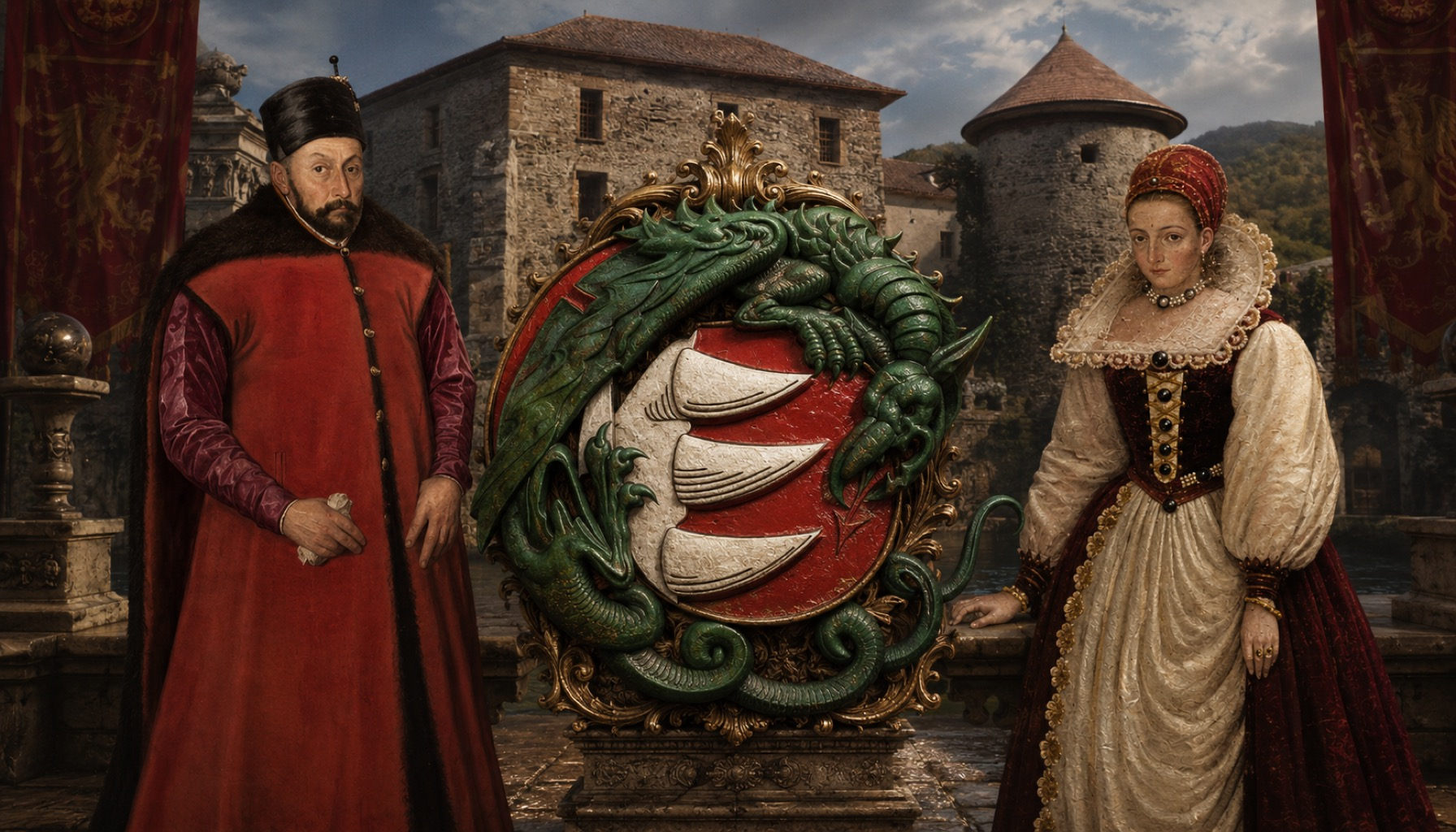
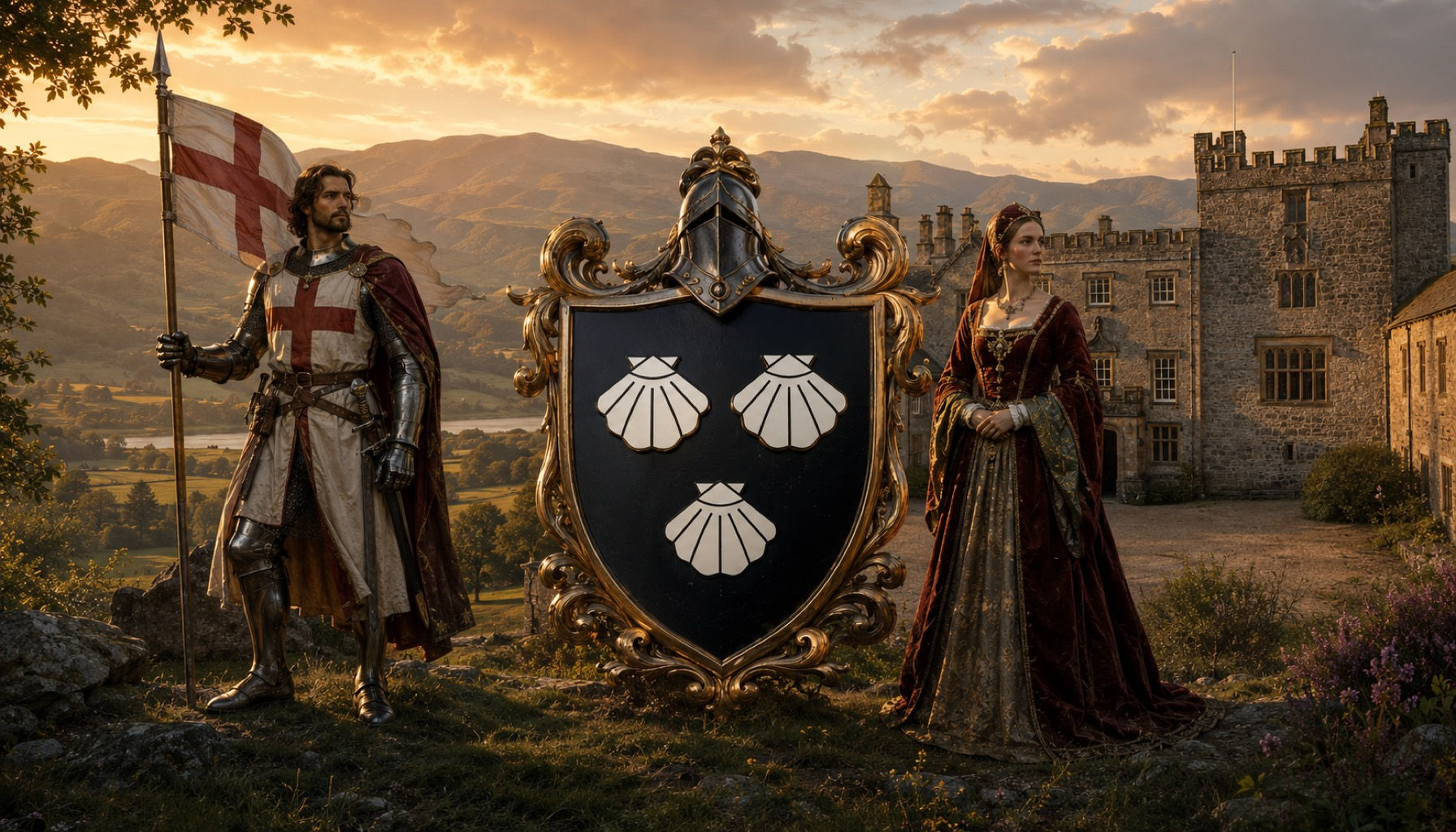
The Bathory family, often written Bathory or Bathori, were one of the great noble and princely houses of Central and Eastern Europe, rooted in the medieval Kingdom of Hungary and later deeply tied to Transylvania and Poland. Their primary linked Y-DNA haplogroup is R1b1a1b1a1a1c1a, a lineage associated here with the documented Bathory line and with a wider spread of related ancient and historic samples across Europe. In historical terms, the Bathorys were not merely local landowners with a dramatic reputation tacked on afterwards. They were major magnates: castle-builders, estate-holders, military commanders, royal servants, power brokers, and, at moments, rulers in their own right.
The family emerged from the aristocratic world of northeastern Hungary, traditionally associated with the settlement of Bathor, now Nyirbator in modern Hungary, in a frontier kingdom where service to the crown, control of land, and successful marriage alliances could turn a regional clan into a dynasty. This was a hard-edged political landscape of fortresses, Ottoman pressure, noble factions, confessional division, and shifting loyalties between Hungary, Transylvania, the Habsburgs, and the Polish-Lithuanian Commonwealth. From that world came figures such as Stephen Bathory (1533-1586), prince of Transylvania and later king of Poland; Gabriel Bathory (1589-1613), prince of Transylvania; Elek Bathory (1568); Ferenc Bathory (1589); and the most notorious name of all, Elizabeth Bathory the Blood Countess (1560-1614), whose later legend has often threatened to swallow the family's larger political story whole.
Explore the Royal House of Basarab
No place is more tightly bound to the popular memory of the Bathorys than Cachtice Castle in western Slovakia. Perched high above the village of Cachtice in the Little Carpathians, the castle began as a medieval fortification, likely established in the 13th century in the aftermath of the Mongol invasion, when the Kingdom of Hungary invested heavily in hilltop stone defenses. Over time it passed through noble hands and became part of a wider network of aristocratic power, administration, and refuge. It is most famous today because of its association with Elizabeth Bathory, who spent part of her life there and whose imprisonment followed the accusations that made her one of Europe's darkest aristocratic legends. The castle is now a ruin rather than a furnished residence, but that is rather part of its power: broken walls, commanding views, and the unmistakable sense of a frontier stronghold looking out over a region where dynastic ambition and violence were never far apart. It can still be visited today, and for anyone interested in the Bathory story it serves as a vivid location anchor, where folklore, tourism, and the real political geography of the old Hungarian kingdom all meet.
Read more about the Royal Arpad Dynasty
From a DNA perspective, the primary family haplogroup linked here is R1b1a1b1a1a1c1a. A directly relevant historic sample is Ferenc Bathory Hungarian Knight Pericei (PER03-1), which provides an especially important anchor for the lineage. Beyond that, there is a broad scatter of related or linked R1b1a1b1a1a1c1a-associated samples across time and geography, not proof of direct descent from the Bathory family, but evidence that this paternal branch appears in many elite, military, and ordinary historical settings. These include Lombard-associated individuals from Collegno in northern Italy such as COL_069, COL_069b, and COL_069x; the Bronze Age Unetice sample LEU007 from Thuringia in Germany; Roman and post-Roman finds like I15527 from Viminacium in Serbia and OSIJ003 from Mursa in Croatia; medieval and early modern samples from Belgium, England, Hungary, Denmark, Sweden, France, the Netherlands, and Germany, including ST0024, ST2969, I11583, urm160, urm160x, BRC006x, RTW012, SWG001, DUN006, DUN009, DUN011, and S3044. Taken together, these linked samples suggest a long and varied European history for this branch, stretching from the Late Neolithic and Bronze Age through Iron Age tribal groups, Roman frontier communities, Migration Period warriors, medieval townspeople, and early modern burials. In other words, the Bathory haplogroup sits inside a much older and wider story than any one dynasty.
See ancient DNA from Hungary's dynastic past
The Bathory story is about much more than a single infamous countess. It is about how noble families rose, ruled, fought, married, and left marks on the landscape and memory of Central Europe. If you have Hungarian, Transylvanian, Slovak, Polish, or broader Central European roots, uploading your DNA can help you explore whether you match the Bathory family line or any of the related ancient DNA samples linked to haplogroup R1b1a1b1a1a1c1a.
Comments