The Piast Dynasty

– 3 min read


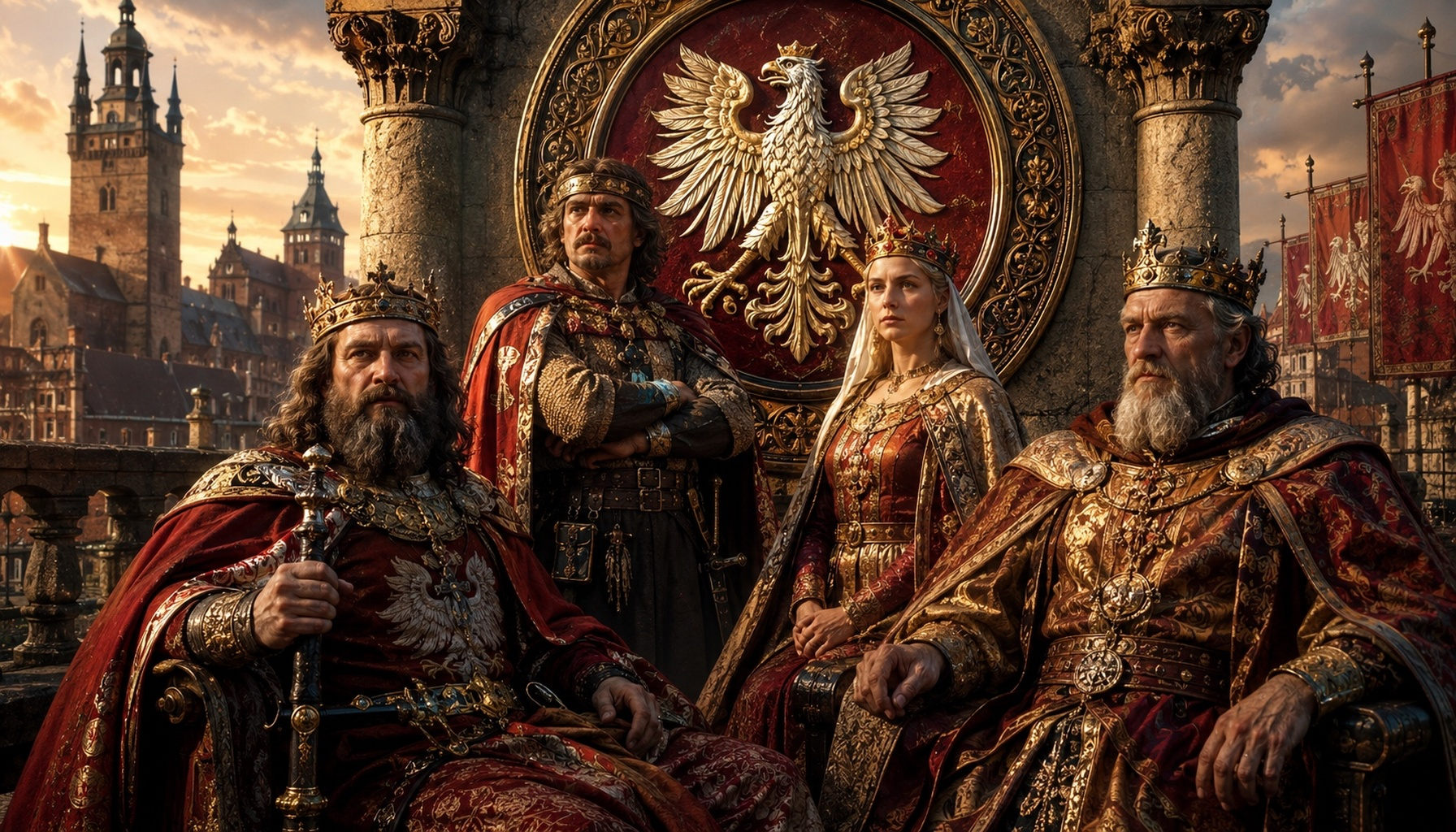
The Piast Dynasty was the first historic ruling house of Poland, the family that stands at the threshold where tribal power became monarchy, and where early medieval lordship hardened into something recognisably Polish statehood. Their story begins in the lands of Greater Poland, especially around Gniezno and Poznan, in the 10th century, when local Slavic rulers were binding territories, tribute, warriors, and sacred authority into a more durable political order. In genetic discussions linked to excavated Piast remains, the primary family haplogroup associated with the dynasty is R1b1a1b1a1a2b. That is not a fairy-tale key to identity, but it is a fascinating paternal marker attached to a ruling house that helped build one of medieval Europe’s enduring kingdoms.
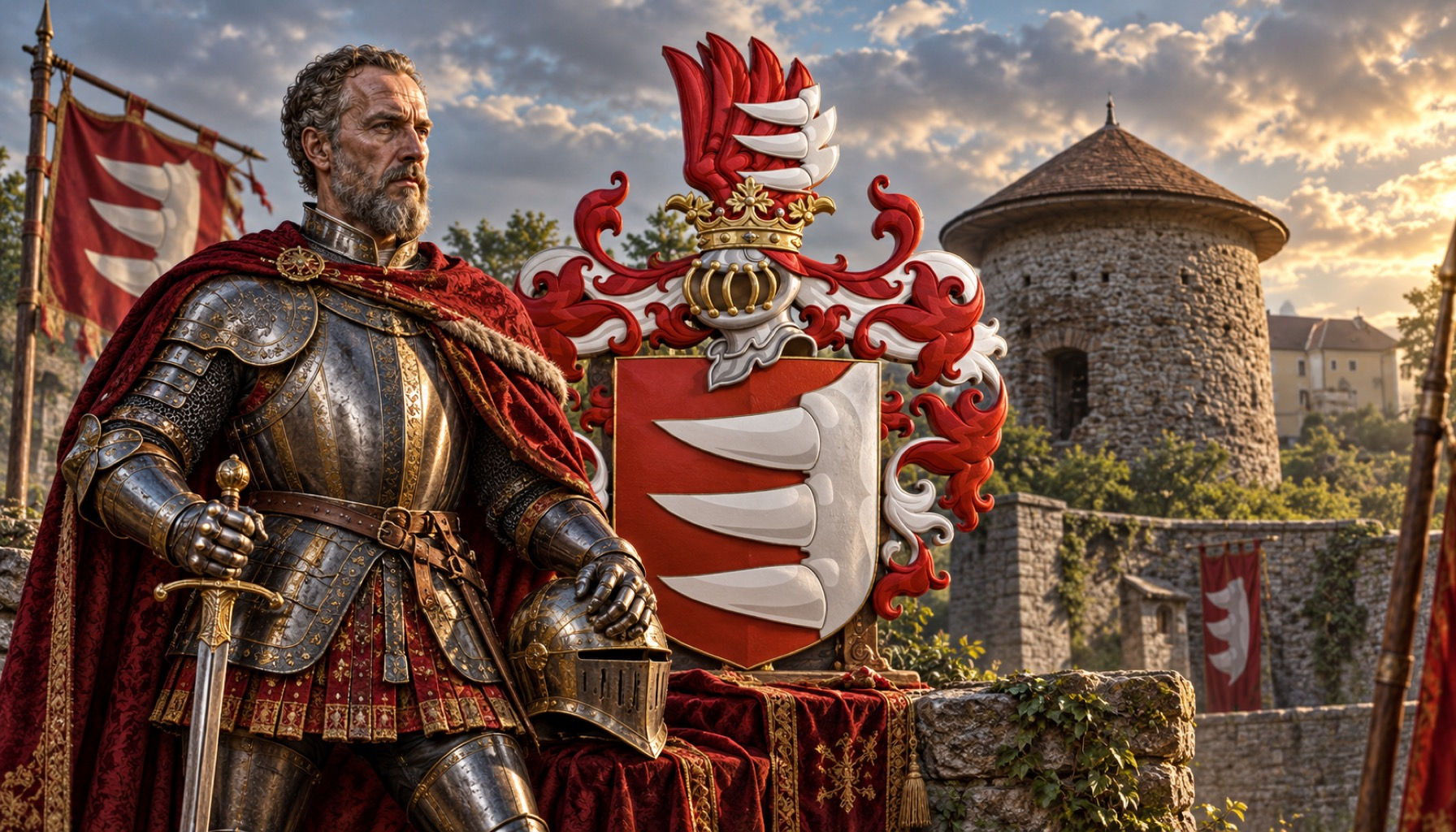
Historically, the Piasts mattered because they did the hard, messy work of state formation. Under Mieszko I (930-992), Poland entered Latin Christendom through baptism, and that single act was not merely religious but diplomatic, legal, and geopolitical. It placed the realm on the map of Christian Europe. His successors developed this inheritance in different ways: Casimir I the Restorer (1016-1058) rebuilt authority after crisis, Wladyslaw I Herman (1044-1102) ruled in a period of contested princely power, Konrad I of Masovia (1187-1247) became one of the great regional Piast dukes, and later lines endured deep into the age of fragmentation, including Boleslaw III of Plock (d. 1351) and Janusz III (d. 1526). Looming above them all in memory is Boleslaw the Brave, the ruler who gave early Piast kingship its most muscular form. The dynasty’s long history was not a smooth march but a family drama of coronations, partitions, duchies, alliances, church patronage, and occasional catastrophe. Yet even when Poland fractured politically, Piast legitimacy remained the grammar of rule.
Read more about the Royal Premyslid Dynasty
If one place anchors the Piast imagination, it is Wawel Castle in Krakow. Perched on Wawel Hill above the Vistula, the site became one of the great political and ceremonial centers of Poland, though its significance grew over centuries rather than appearing all at once in finished form. What visitors see today is the layered result of Romanesque, Gothic, Renaissance, and later rebuilding, but beneath that architectural pageant lies the deep memory of Piast rule. Wawel was both fortress and symbol, a place of princely residence, royal display, ecclesiastical power, and dynastic burial. Nearby stands Wawel Cathedral, where rulers were crowned and entombed, making the hill not just a political hub but a theater of legitimacy. In the Piast period, such places mattered enormously: stone, relics, chapels, halls, and hilltop defenses all said, in effect, that rule here was old, sacred, and meant to last. The good news, and it is genuinely good news, is that Wawel Castle can still be visited today, which means this early medieval story is not trapped in parchment footnotes. You can walk the site where Polish monarchy made itself visible.
Explore the House of Gediminid
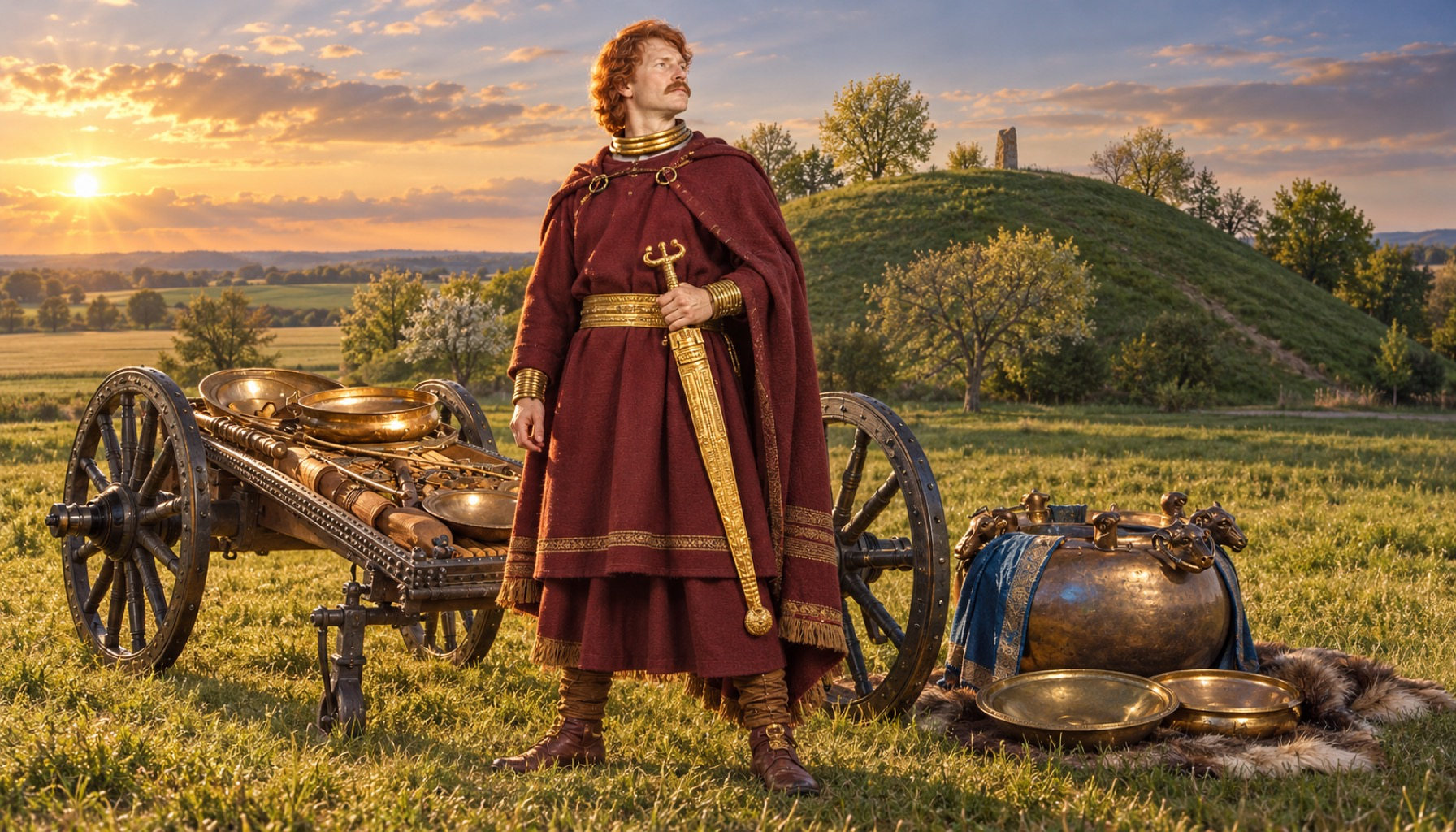
Ancient DNA adds an intriguing extra layer to the Piast story. Samples directly linked to Piast contexts include Piast Dynasty Lubusz-Greater Poland Border Santok Lad (PCA0391), Piast Dynasty Poland Santok Lubusz Province Gorzw Wielkopolski (PCA0503), Piast Prince Konrad I (PCA0665), Piast Masovian Dynasty Male (PCA0646), Piast Dynasty Prince Boleslaw II of Masovia (PCA0657), Piast Dynasty Prince (PCA0621), and Boleslaw III Duke of Plock Piast Dynasty (PCA0659). Beyond these, the same broader paternal branch R1b1a1b1a1a2b also appears in a wide spread of older and medieval individuals across Europe, including Medieval Northern Spain Las Gobas (ldo066, ldo037, ldo046, ldo048, ldo062, ldo040), Hungarian Royal House of Aba Samuel Aba Benedictine Monastary (HUASper55B), Lombard Warrior Elite Collegno Northern Italy (COL_150), Elite Prince Celtic Germany Eberdingen-Hochdorf Biegel (HOC001), Roman Era High Class Burial Cambridgeshire Arbury Wooden Coffin (ARB003), Roman Era England Northwest Cambridgeshire Eddington (NWC009), and Piast-linked Polish samples from Santok and Masovia. These should be described as related or linked, not as proof of direct descent. What they do show is that the Piast paternal signature sits within a very old European tapestry, one that appears among elites, warriors, nobles, and ordinary men across many regions and centuries.
If the Piasts catch your imagination, that is rather understandable. They are the sort of dynasty historians love because they are both foundational and gloriously untidy: Christian kings, quarrelling dukes, regional branches, castles, cathedrals, and a monarchy assembled piece by piece. If you have uploaded DNA, or are thinking about it, MyTrueAncestry lets you see whether you match the Piast family or related ancient DNA samples connected to this wider R1b1a1b1a1a2b network.


Comments