The Royal Premyslid Dynasty
– 3 min read


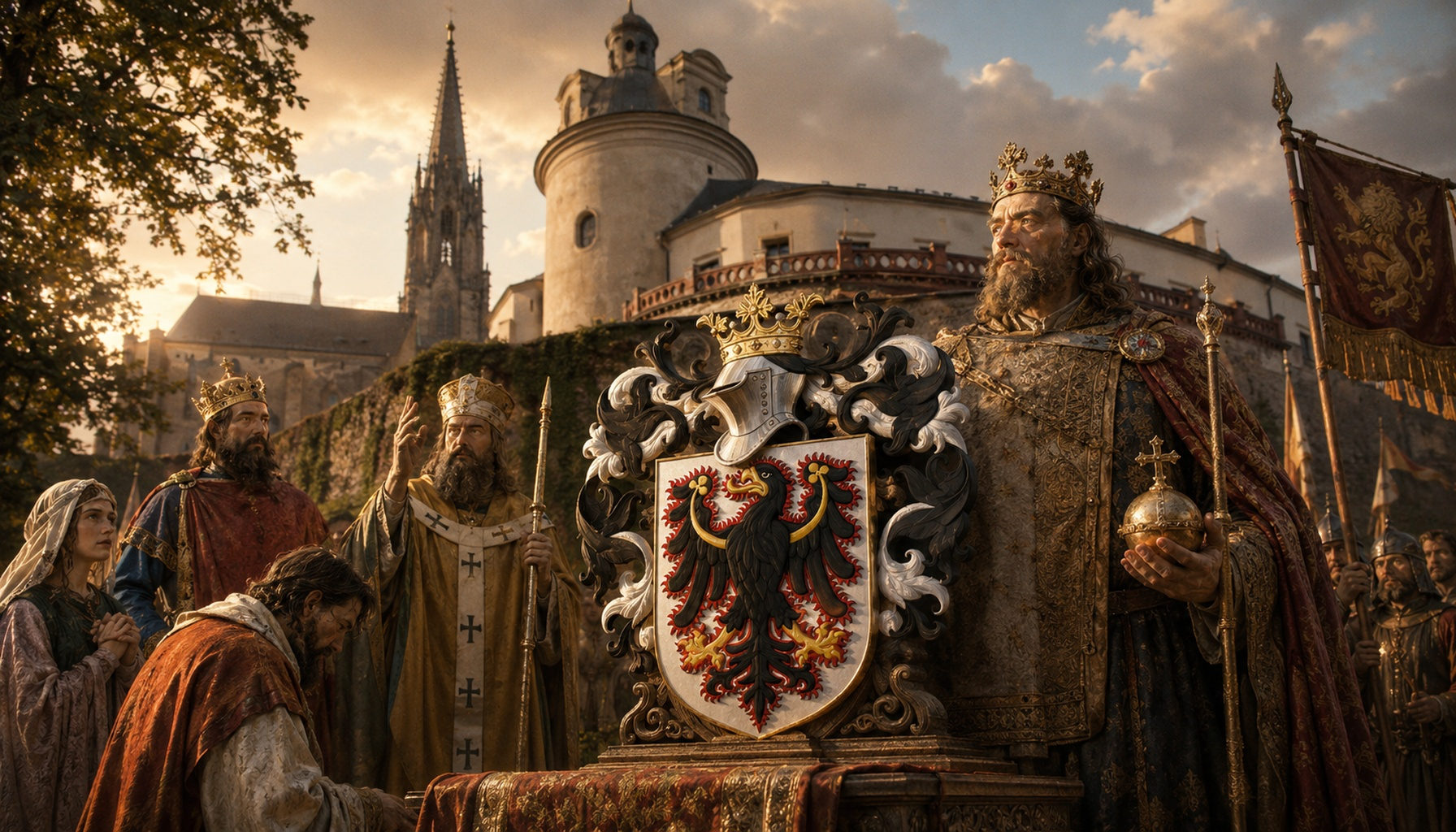
The Premyslid Dynasty was the first great ruling house of Bohemia, the native royal family that helped turn the lands around Prague into the core of the medieval Czech state. Emerging from central Bohemia in the ninth century, in a world shaped by the decline of Great Moravia, the pressure of neighboring powers, and the spread of Christianity, the Premyslids built authority step by careful step. They are closely linked here with the haplogroup R1b1a2a1a2c1b1b1a3a1, the primary family haplogroup tag associated with this lineage. Their story is not simply one of crowns and battles, but of fortresses, churches, marriage politics, tribute, expansion, and the slow making of a dynasty that people could imagine as the natural rulers of the land.
Early figures give the family its human shape. Borivoj I (870-889) is remembered as one of the first clearly historical Premyslid rulers and as a key figure in the Christianization of Bohemia. He was followed by Spythinev (895-915) and Vratislaus (915-921), rulers who helped steady and extend Premyslid control. Then comes Saint Wenceslaus (921-935), the duke who became not only a political figure but a moral and national symbol, before being killed in the fierce family politics of the age. His brother Bolesalus I the Cruel (935-972) was hard, effective, and formidable, consolidating power and expanding Bohemian strength. Bolesalus II the Pious (972-999) reinforced both rulership and church institutions, while Boleslaus III the Red-haired (999-1002) reminds us that dynasties were never serene family trees but often dangerous arenas of rivalry, exile, and violence. In broader historical terms, the Premyslids fit the classic Central European pattern: local rulers becoming Christian monarchs, expanding territorially, and leaving behind a memory far larger than their surviving line.
Read more about the Royal Arpad Dynasty
If the Premyslids have one great location anchor, it is Prague Castle. Rising above the Vltava, this was not just a residence but the beating political heart of their power. The castle began as an early fortified seat in the ninth century and grew over centuries into a sprawling complex of palaces, churches, courtyards, defenses, and later royal buildings. For the Premyslids, it was the place from which rule could be staged and displayed: where envoys arrived, where relics and churches reinforced sacred kingship, and where the dynasty tied military power to Christian legitimacy. The early church foundations there, including the beginnings of what would become the cathedral center of Prague, mattered enormously, because medieval rulership was never only about force. It was also about ceremony, sanctity, and making power visible in stone. Prague Castle can still be visited today, and that continuity is part of its magic: it remains one of the largest ancient castle complexes in the world and one of the clearest surviving places to sense how Premyslid Bohemia helped shape the political landscape of Central Europe.
Explore the Royal House of Wettin
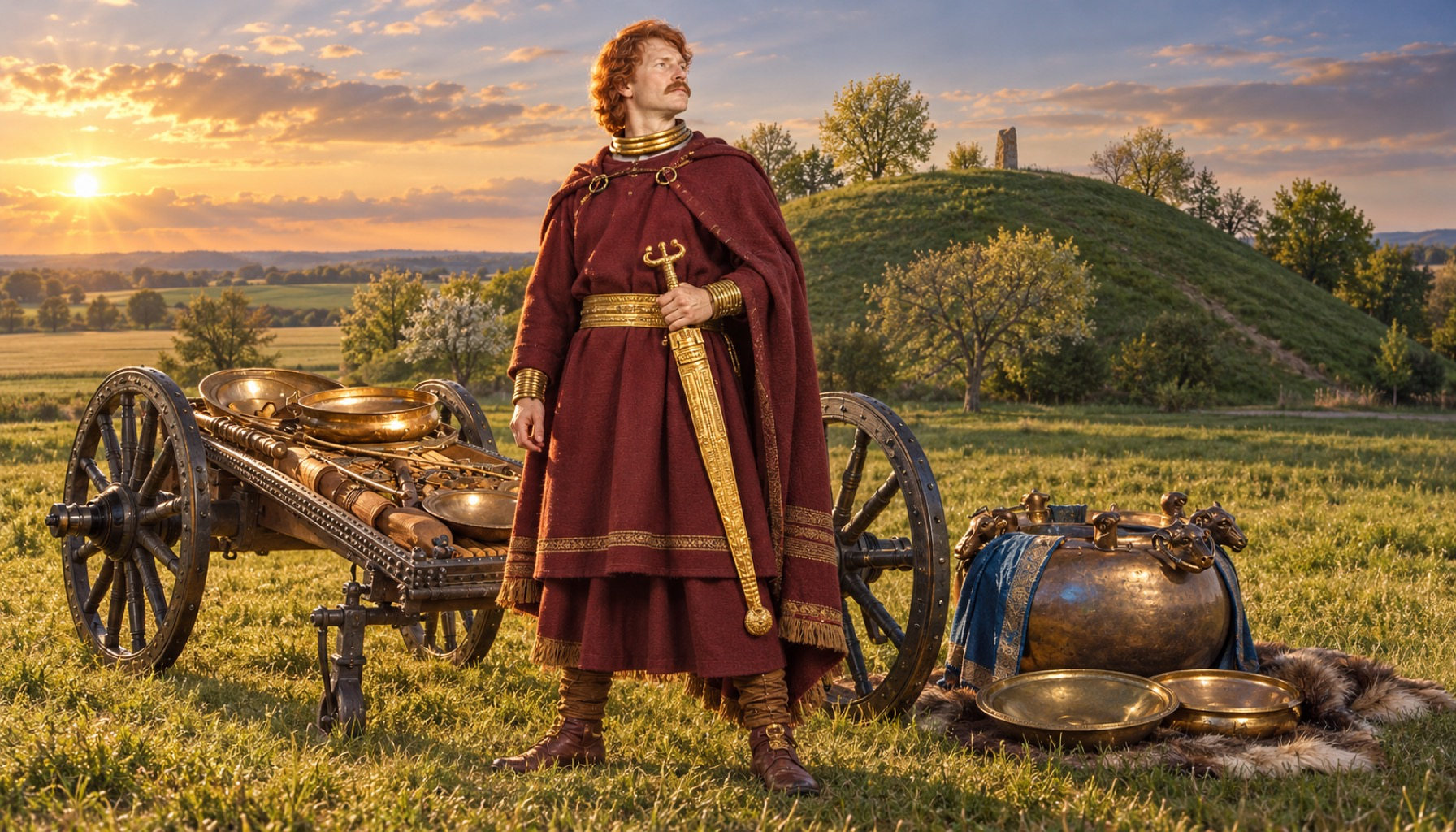
From an ancient DNA perspective, the Premyslid haplogroup tag R1b1a2a1a2c1b1b1a3a1 can be placed against a wider Central European background rather than treated as a neat dynastic fingerprint stretching unchanged through time. Related or linked samples associated with this branch include Post Roman Arrabona Frigyes Laktanya, Pannonia Prima, Hungary (GYR002), as well as Bronze Age Austrian samples from Unterhautzenthal (UZH004 and UZH026), Ulrichskirchen (ULK011), Drasenhofen (DSH027 and DSH006), and Pottenbrunn (PEB004, PEB012, and PEB019). These do not prove direct descent from the Premyslids, nor the reverse. What they do suggest is that the paternal line linked with the dynasty sits within a much deeper Central European genetic landscape, one that reaches back through post-Roman frontier worlds and into Bronze Age communities north and west of the Danube. In other words, dynasties may look sudden in written history, but their genetic background often belongs to very old regional patterns.
Explore the medieval Piast rulers
The Premyslids are a splendid reminder that state formation is never abstract. It happens through families, strongholds, saints, murders, church building, diplomacy, and stubborn local ambition. If you have DNA results, you can upload them to MyTrueAncestry and see whether you match the Premyslid Dynasty or related ancient DNA samples from the wider Central European world.


Comments