The Noble House von Weltzien
– 3 min read


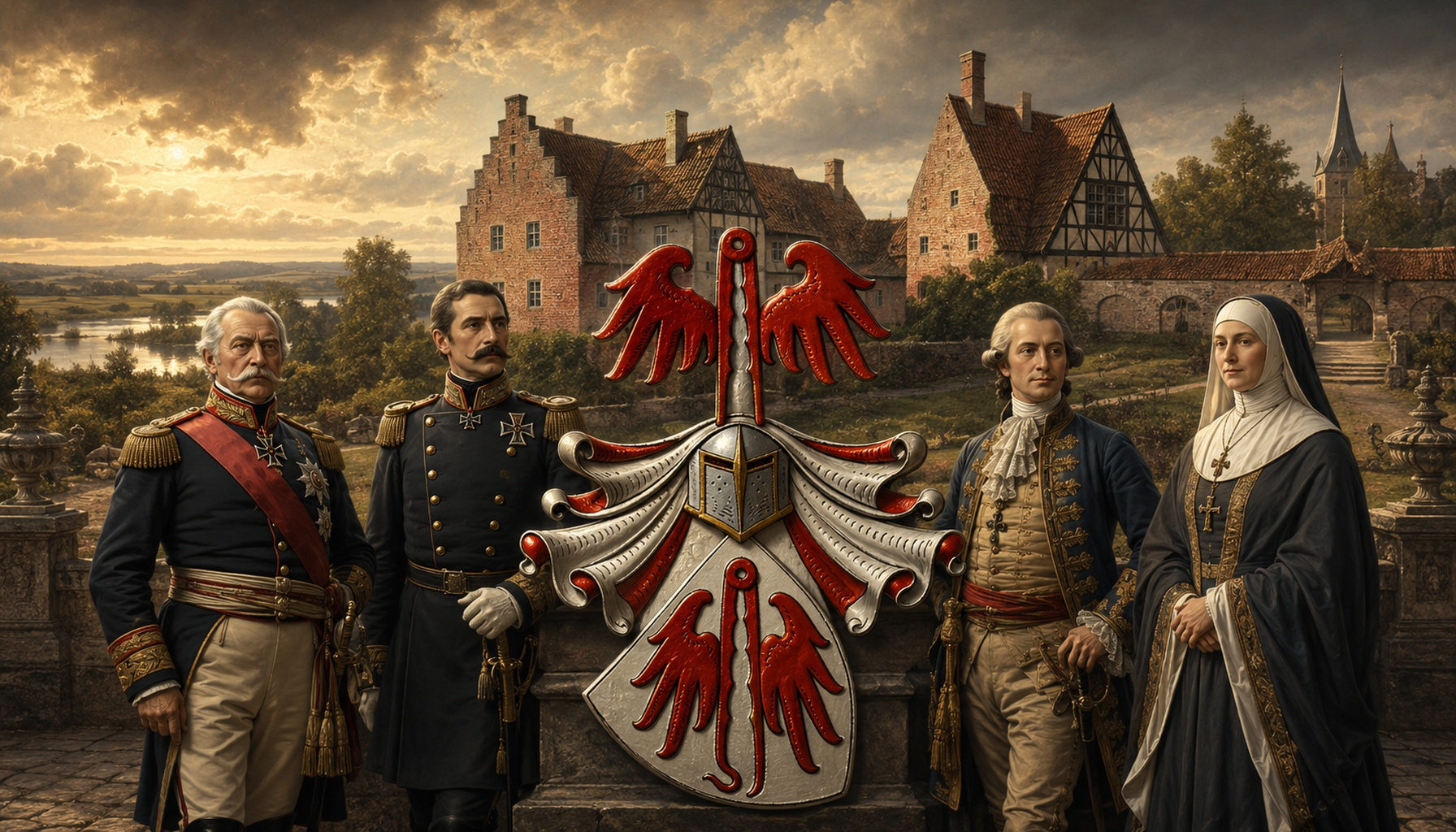
The von Weltzien family was a German noble house rooted in the world of regional aristocratic service, estate culture, and heraldic continuity, with its heritage best understood in the lands of northern Germany, especially old Mecklenburg. The particle von signals that familiar noble association with place and landed identity, and the family belongs to that long historical tradition in which status rested not on kingship or princely sovereignty, but on land, duty, marriage alliances, military service, and the careful preservation of lineage memory. In haplogroup terms, the primary family link is tagged as I2a1b1a2b1a2a1a1a.
That matters because families like von Weltzien were not decorations at the edge of history. They were part of the machinery of it. Across the Holy Roman Empire and later German states, houses of this kind staffed local authority, served in cavalry and administration, held estates, negotiated loyalties, and marked their continuity through coats of arms and remembered descent. Early named figures help anchor that story: Mathias Weltzien appears in the record in the years 1243-1249, placing the family in the medieval framework of feudal lordship and church-linked regional power, while Heinrich Wilhelm von Weltzien, who lived from 1759 to 1827, stands much later in the age of reform, Napoleonic upheaval, and the reshaping of old noble society rather than its disappearance.
Explore the Noble House of Schwerin
A particularly evocative location anchor for the von Weltzien story is Kloster Dobbertin in Mecklenburg, a place that captures the layered world in which landed noble families lived and remembered themselves. Founded in the Middle Ages as a Benedictine monastery and later transformed after the Reformation into a Protestant womens convent for the nobility, Dobbertin is exactly the sort of institution that reveals how German aristocratic identity worked in practice. It was not only about castles and battlefields, but also about patronage, church property, noble daughters, regional estates, and the social architecture of rank. Set beside Dobbertiner See, the complex grew over centuries and includes monastic and later convent buildings, a church, and the wider estate landscape around it. In other words, it is one of those places where the medieval monastery, the post-Reformation noble order, and Mecklenburg estate society all meet in the same brick and stone. It can still be visited today, which makes it a rare and useful physical doorway into the kind of world with which families such as the von Weltziens were historically associated.
Read more about the House of Moltke
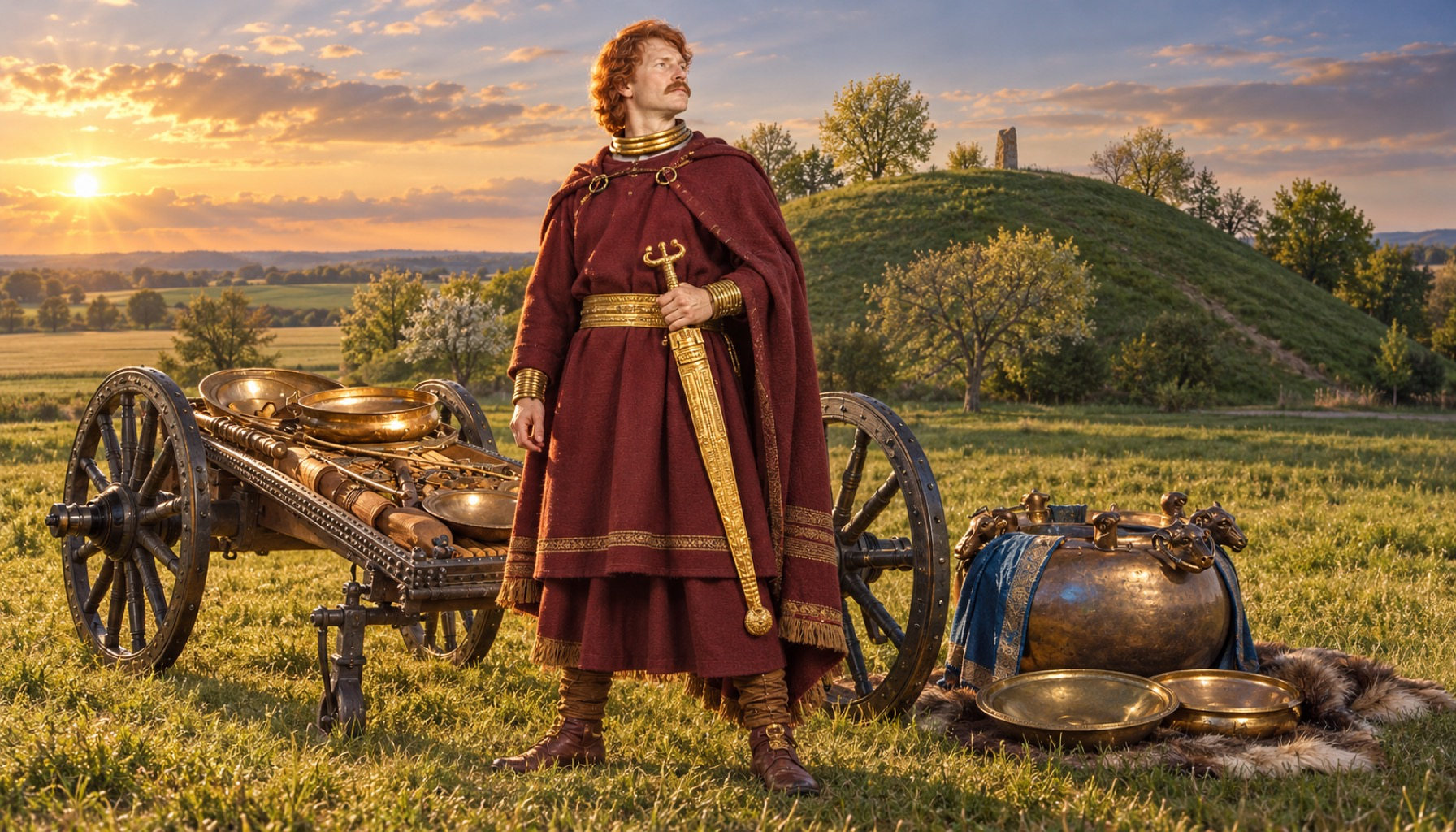
From an ancient-DNA perspective, the familys tagged paternal line I2a1b1a2b1a2a1a1a sits within a much deeper northern and central European story. Related or linked samples include Merovingian Period Frankish Moemlingen, Germany, sample Mln13; Early Roman Era Jutland bog war individuals from Alken Enge in Denmark, samples CGG019201 and CGG019212; a Danii-linked sample from Forevejlegard, Denmark, CGG107532; and Viking Age Oland, Sweden, sample VK348. These do not prove direct descent to the von Weltzien family, and they should not be read that way. What they do offer is a wonderfully textured genetic backdrop: a line appearing across the worlds of early Germanic Europe, from Jutland war deposits to Frankish-period Germany and Viking Age Scandinavia. For a northern German noble house, that is not a family tree, but it is certainly a meaningful historical neighborhood.
Explore medieval DNA from Germany
If you are exploring the heritage of the Noble House von Weltzien, the next step is to test the story against your own DNA. Upload your results to MyTrueAncestry and see whether you match the von Weltzien family profile or any of the related ancient DNA samples connected to haplogroup I2a1b1a2b1a2a1a1a. It is a striking way to place family history beside archaeology, genetics, and the long memory of northern Europe.


Comments