The Noble House of Norreys

– 3 min read


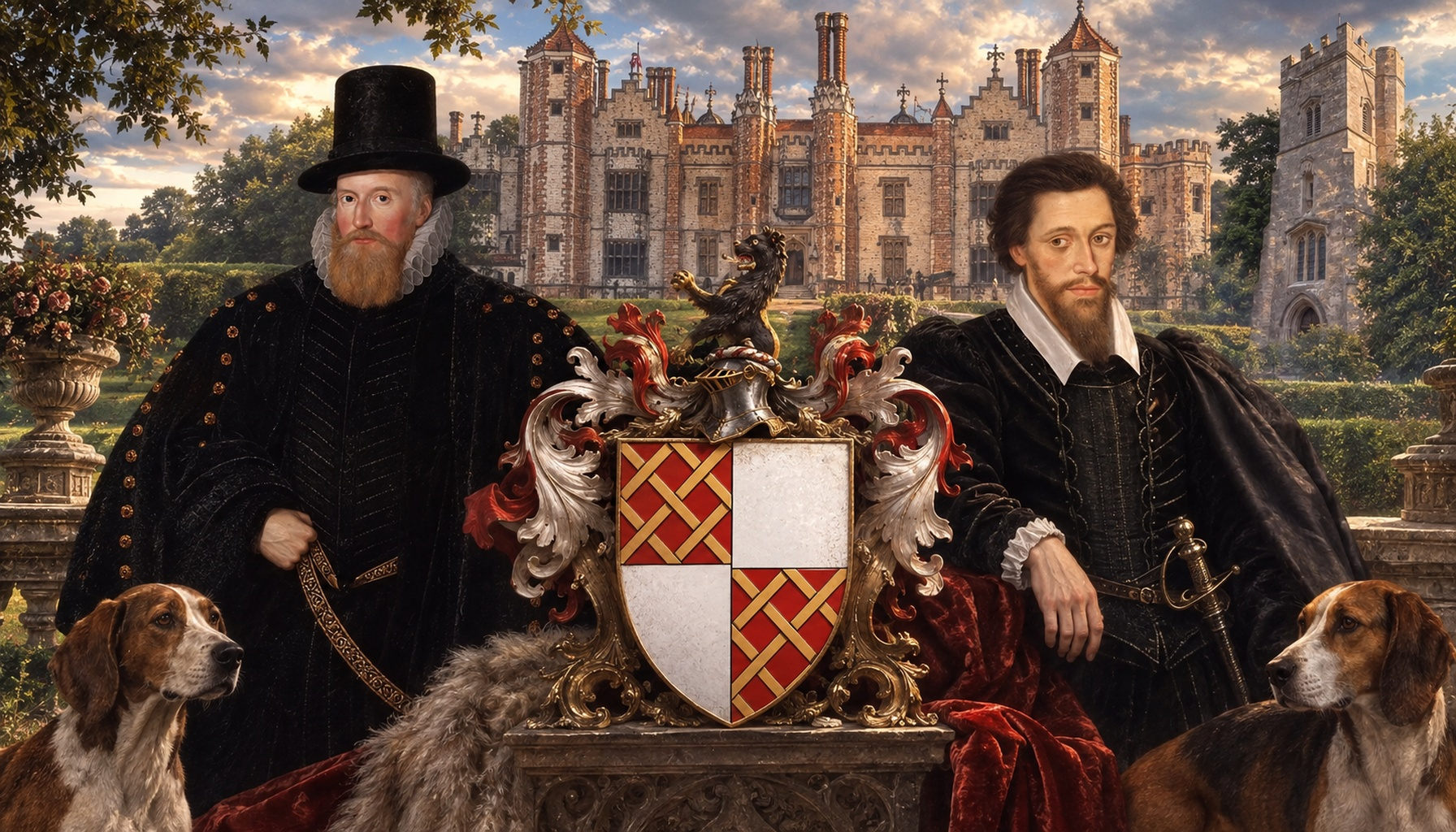
The House of Norreys was an English noble house rooted above all in Oxfordshire, and especially associated with Rycote, landed authority, court service, and the careful business of staying important across generations. Its story fits a very recognisable English pattern: estates gave status, service to the crown gave access, marriage alliances widened influence, and heraldry preserved memory long after particular offices had passed away. The primary haplogroup linked here is R1b1a1b1a1a2c1a4b2c1a, a paternal line found across a wide historical landscape in Britain and parts of western and central Europe.
The family emerged from the world of late medieval and early Tudor gentry and nobility, where local power and royal favour were constantly intertwined. This was not simply a household living grandly behind its walls. The Norreys name moved through landholding, military and courtly service, public office, and the politics of the realm. Sir Henry Norreys of Rycote (1482-1536) stands out as a striking and tragic figure of the Henrician court, while Henry Norreys, 1st Baron Norreys of Rycote (1525-1601), helped restore and elevate the family's standing in the Elizabethan age. Sir John Norreys (1547-1597), famed as a soldier, carried the family name into the military world of England's continental wars. Together they show how noble identity was built not from one thing alone, but from estate, service, reputation, and survival.
Explore the Noble House of Vernon
Rycote was the great geographic and symbolic anchor of the Norreys family. Near Thame in Oxfordshire, Rycote House became one of those places where politics, architecture, and family ambition met in brick and stone. In the Tudor period it was a notable country house with strong aristocratic associations, and it gained wider renown as a setting connected with the world of royal and noble visitation. The old house was substantially reduced over time, but the site still carries the weight of its past, and the surviving buildings and grounds preserve something of that long continuity between land and lineage. In other words, Rycote is not just a pin on a map. It is the sort of estate through which a family like the Norreys made itself visible in the county, at court, and in memory. The place can still be visited in a limited heritage sense through the surviving Rycote Chapel and associated historic setting, which makes it one of those rare aristocratic landscapes where the past is not entirely locked away.
Read more about the Paston Family
From the ancient DNA angle, the Norreys-associated haplogroup R1b1a1b1a1a2c1a4b2c1a can be placed in a broader network of related paternal lines rather than tied directly to one proven medieval forebear. Linked or related samples include Late Medieval England from Clopton, Cambridgeshire (ATP_PSN_1268), an Iron Age individual connected with the Celtic Parisi at Melton in East Yorkshire (I28922), a Bronze Age male from the Tollense Valley battlefield in Mecklenburg-Vorpommern (WEZ59), a Medieval Ireland sample from Kilteasheen, Roscommon, Bishops Seat (KIL020), a Belgic-associated Iron Age sample from Danebury hillfort in Hampshire (I17264), and a Bronze Age individual from Trumpington, England (I7640). These are not evidence of direct descent from the House of Norreys, and it would be quite wrong to pretend otherwise. What they do offer is a fascinating spread of related paternal signatures across Britain, Ireland, and continental Europe, suggesting the deeper prehistoric and historic backdrop from which later English noble lines emerged.
If the House of Norreys catches your imagination, the interesting question is not whether you can simply claim them, but whether your DNA might place you in the wider human story that shaped families like this one. Upload your DNA to MyTrueAncestry to see whether you match the House of Norreys, this haplogroup branch, or any of the related ancient DNA samples from medieval England, Iron Age Britain, Bronze Age Europe, and beyond.



Comments