The Noble House of Gage
– 3 min read


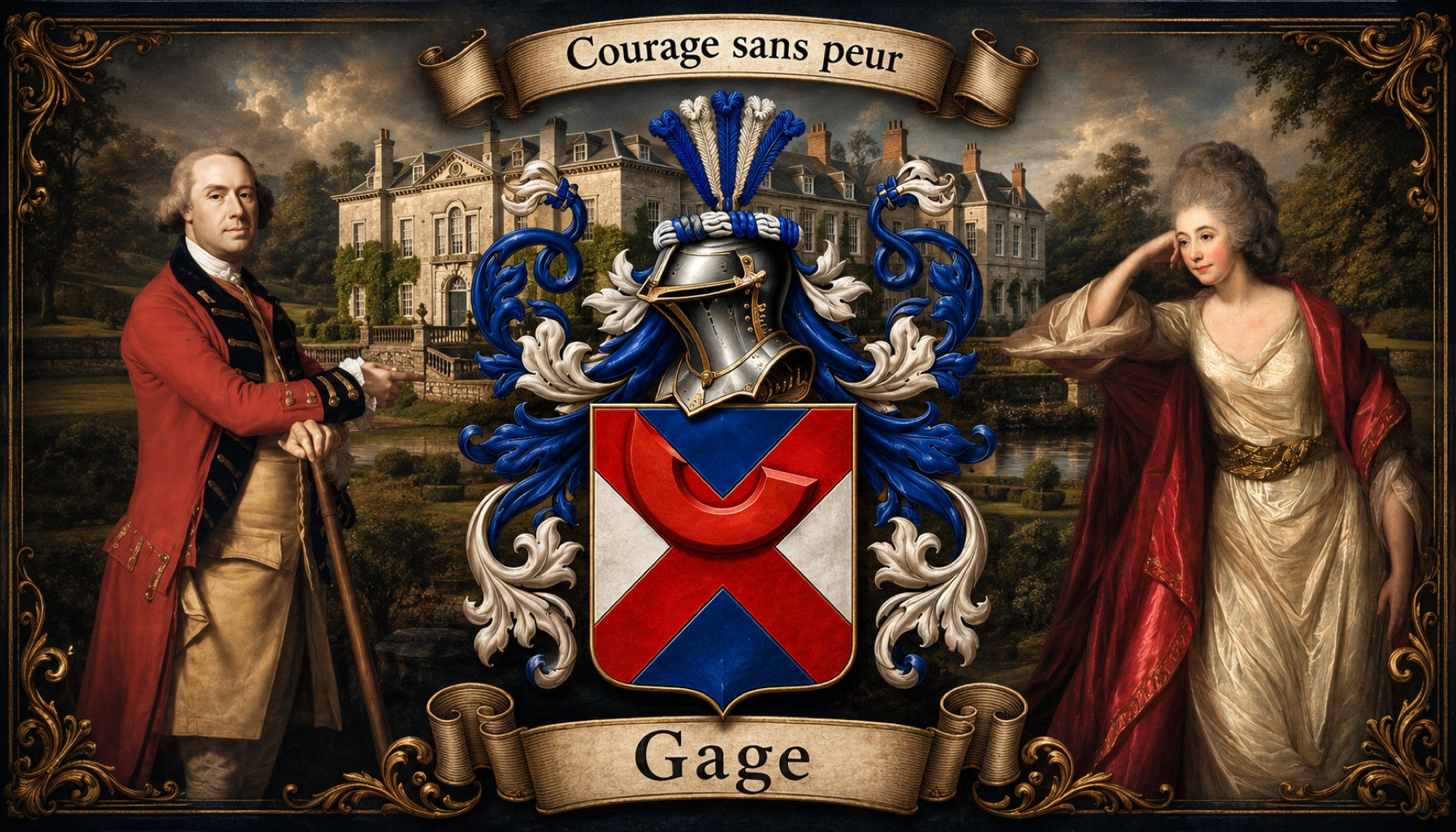
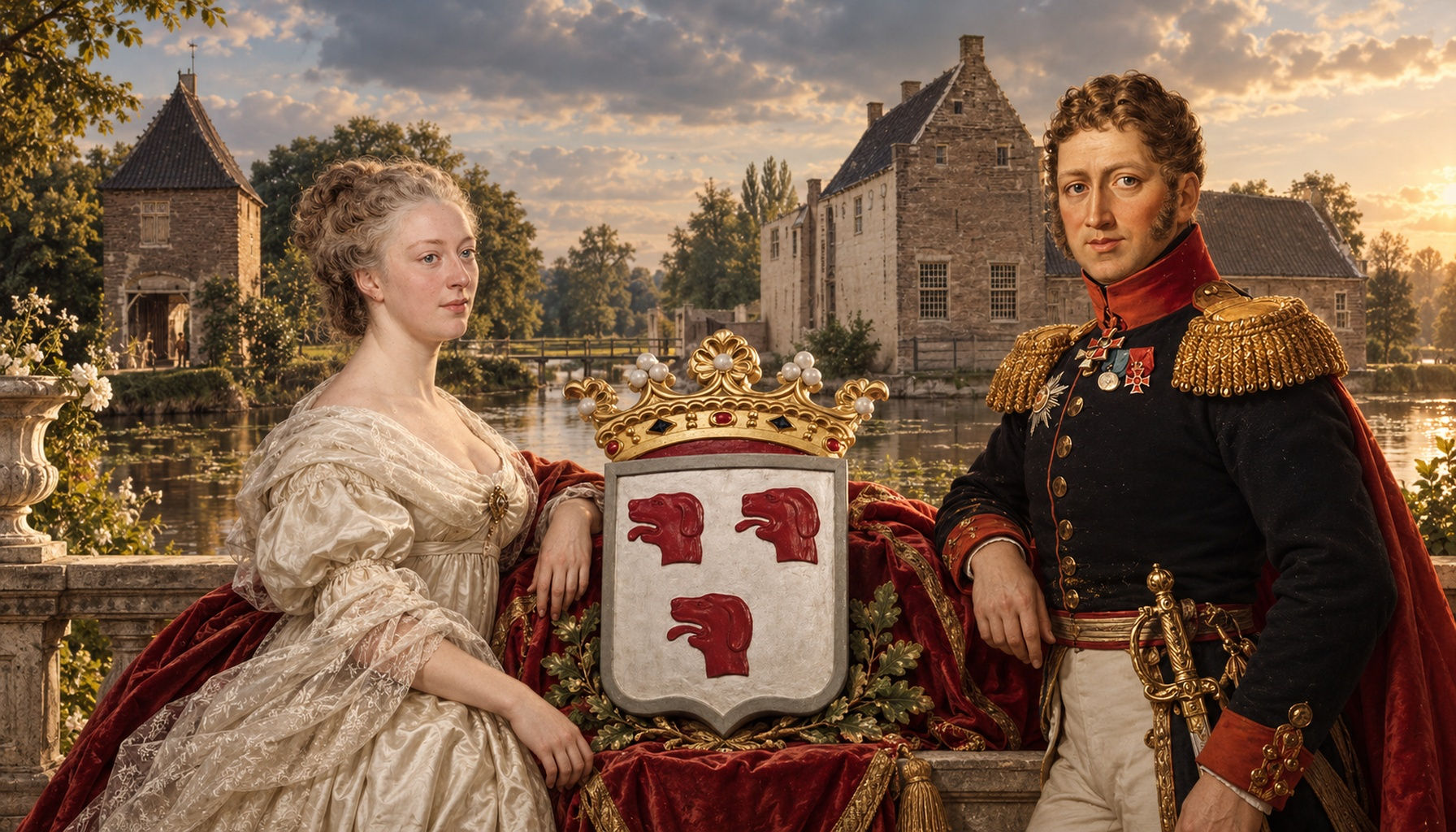
The Gage family was one of those English noble houses that came to seem permanently woven into the fabric of county society, especially in Sussex, where land, office, loyalty, and reputation mattered almost as much as blood itself. In broad historical terms, House Gage belongs to that recognisably English pattern of landed nobility: estates carefully held, marriages sensibly made, military and royal service steadily performed, and titles gathered not in one theatrical leap but over generations of useful prominence. For this family, the primary linked haplogroup tag is E1b1b1a1b1a16a, a paternal-line marker used here as a genetic label associated with the house tradition rather than as a claim about every bearer of the surname.
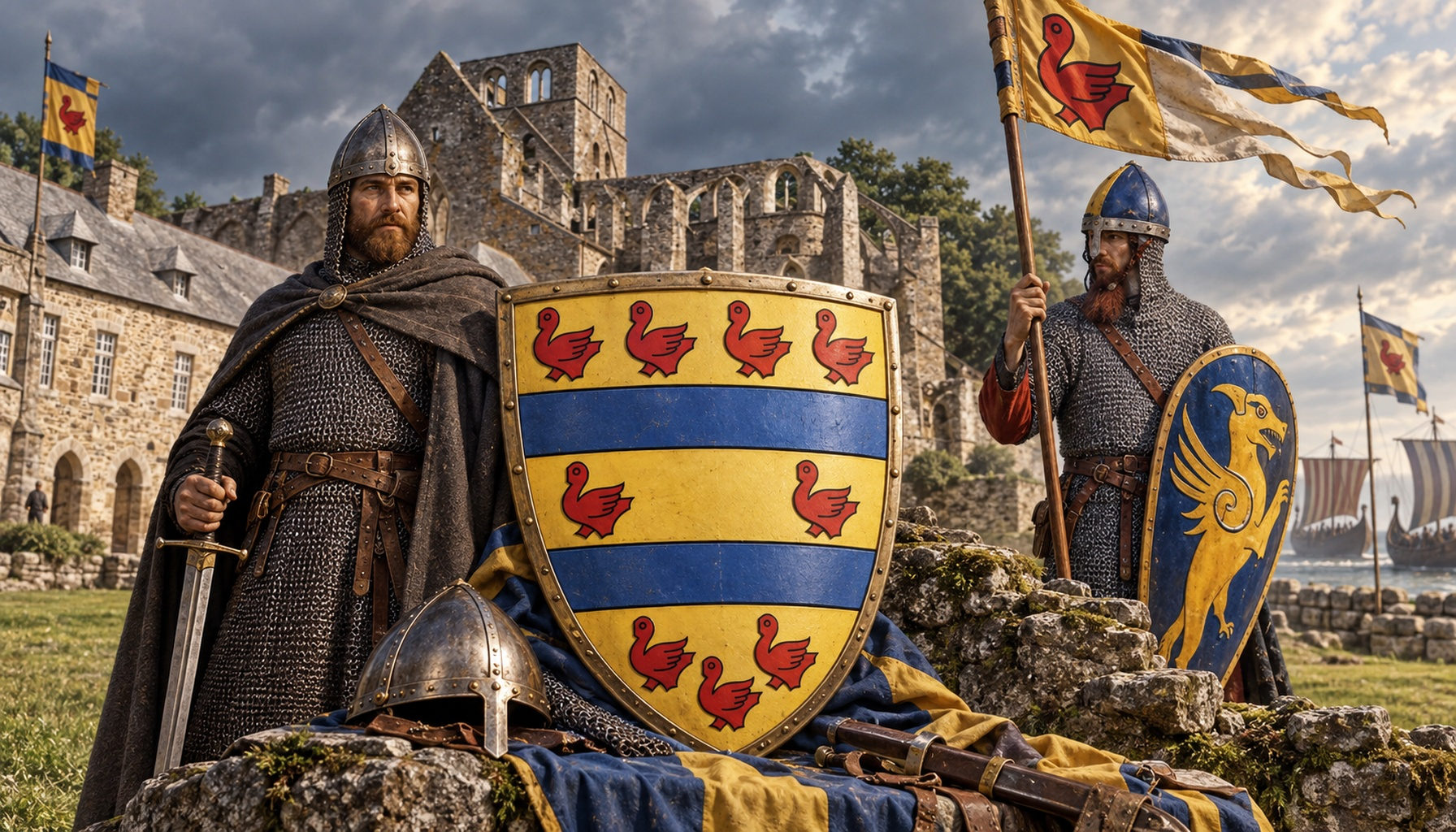
The deeper roots of the family reach back to the Anglo-Norman world that followed the reshaping of England after 1066. The name is commonly connected with de Gauchi or Gace style origins from northern France, part of that flow of knightly and lordly families who crossed the Channel and then, over time, became thoroughly English in landed identity. Ralph de Gauchi, noted in 1165, stands among the early figures linked with this ancestry, while much later Sir John Gage, born in 1479, became one of the family's most prominent Tudor servants, active at court and in government. What is striking about the Gages is not simply antiquity, but continuity: the family managed to translate medieval beginnings into early modern standing, and early modern standing into lasting aristocratic prestige.
Explore the Noble House of Arundell
If you want a single place that anchors the Gage story, it is Firle Place in East Sussex, at the foot of the South Downs. This is not merely a large house with a family attached; it is the sort of estate through which one can read the long history of English noble life. Firle Place is a country house with Tudor origins, later altered and enlarged, and associated with the Gage family from the early modern period onward. Built around the site of an earlier manor, it developed into a substantial seat with a notable art collection, landscaped grounds, and the quiet authority of a house that has seen monarchy, Reformation, civil conflict, Georgian refinement, and modern heritage tourism come and go. It remains one of the best material expressions of Gage status: land, architecture, memory, and social place all concentrated in one Sussex setting. And yes, it is still visitable, with the house and grounds opened to the public at set times, which makes it one of those rare aristocratic sites where the long family narrative can still be walked through rather than merely imagined.
Read more about House of Pelham
From the ancient-DNA angle, the haplogroup tag E1b1b1a1b1a16a links the Gage story into a much older and wider human past. It does not prove direct descent from any excavated individual, and it should not be read that way. But related or linked samples carrying this paternal line appear across a striking range of times and places: Medieval Sicily at Teatro di Segesta with sample SGBN10; Migration Period Hungary at Rakoczifalva with RKF026 and RKF027; Late Imperial and Roman-era Serbia at Timacum Kuline Ravna Village with I15553 and I15554, Timacum Slog Necropolis with I15544, and Viminacium with I15504, I15507, I15513, I15518, I15490, and I15525; Dark Ages Italy in South Tyrol with sample 2425; Post-Roman and Late Antique Pannonia with MFC014, GYS044, and GYS008; Merovingian Bavaria with Alh_154; Piast-era Poland with PCA0400 and PCA0255; Gothic and Migration Age contexts from Gdansk and Saxony-Anhalt with PCA0495 and BRC014x; and even early medieval England in Kent with EAS006 from the Saxon palace site at Eastry. In other words, this is a lineage seen in Roman frontiers, post-Roman mobility, medieval courts, and mixed frontier societies. That wide spread is a useful reminder that noble family identity is historical and social, while haplogroups trace one narrow paternal thread through a much messier human tapestry.
Explore Medieval Sicily's DNA history
The Gages are a fine example of how an English noble house was made: not by title alone, but by the patient accumulation of land, office, alliances, heraldic identity, and public service over centuries. If your own DNA or family history points toward old English gentry, Norman-linked surnames, or the wider E1b1b1a1b1a16a story, you may find unexpected connections in both the documentary and genetic record. Upload your DNA to MyTrueAncestry and see whether you match the Gage family story or any of the related ancient DNA samples that illuminate the deeper past behind it.


Comments