The Noble House of Arundell
– 2 min read


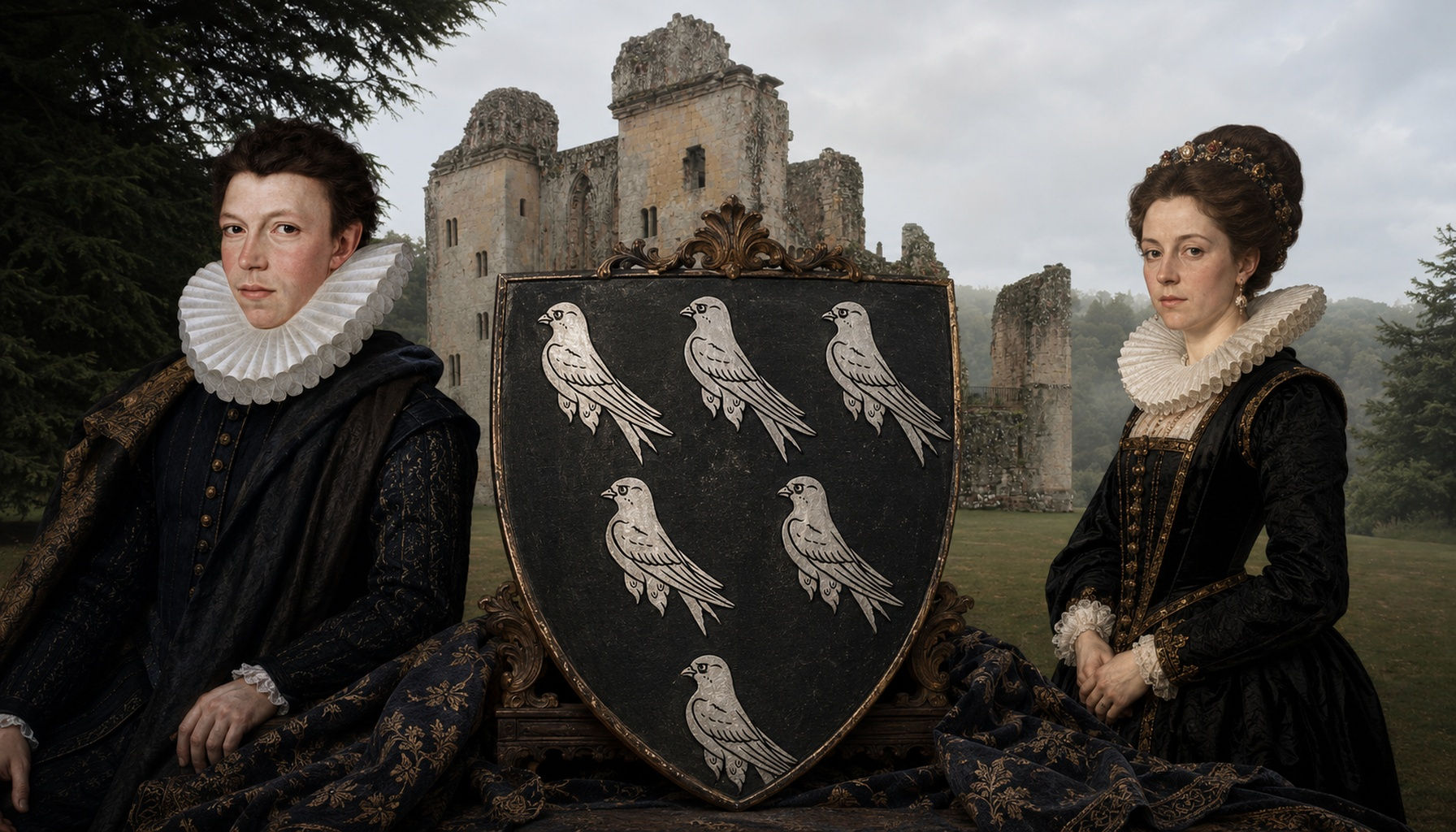
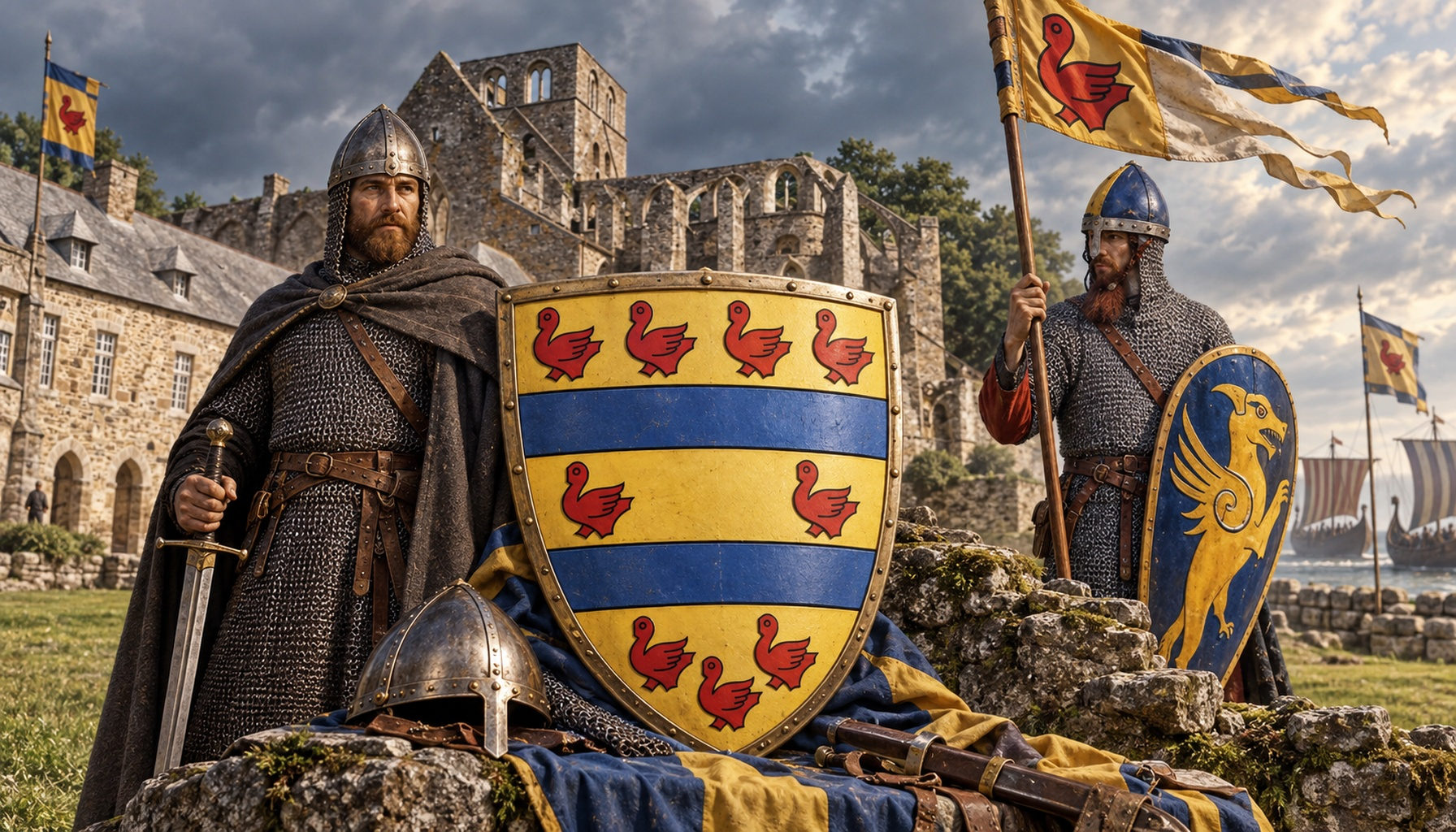
The Arundell family was one of the notable noble houses of southwestern England, rooted above all in Cornwall and later strongly connected with Devon and other estates further east. Their story is not the story of a family appearing suddenly in a blaze of court glamour, but of a lineage built in the long English way: manor by manor, marriage by marriage, office by office. In heraldic and genealogical terms, the house became part of the enduring landed aristocracy, preserving status through property, public duty, military service, and a stubborn continuity of family name. For this family, the primary haplogroup linked here is I2a1b1a1a1a1a1.
Historically, the Arundells grew from a regional power base in the West Country, in a landscape where landownership meant influence, and influence meant responsibility as much as privilege. Their heritage includes manor houses, armorial identity, parliamentary and royal service, and a pronounced religious loyalty that shaped parts of the family story, especially in the early modern period. Figures such as Sir Thomas Arundell of Wardour Castle (1560-1639), Sir John Arundell of Lanherne (1590), and Sir Richard Arundell (1687) show the range of the family record: soldiers, courtiers, estate-holders, and local grandees whose names recur across English civic and political life.
Read more about the Noble House of Luttrell
One of the most evocative anchors of Arundell memory is Wardour Castle in Wiltshire, closely associated with the Arundells of Wardour. The original castle, now known as Old Wardour Castle, was built in the 14th century and later became the seat of the family after Sir Matthew Arundell acquired the estate in the 16th century. It is a striking hexagonal fortified manor, more elegant than grim, and that tells you something important about late medieval and early modern noble life: these places were not simply fortresses, but statements of lineage, taste, and lordship. During the English Civil War the castle was famously besieged and badly damaged, becoming one of those aristocratic ruins that later generations found almost too picturesque to resist. In the 18th century a new Wardour Castle was built nearby, while the old ruin survived as a powerful monument to loyalty, conflict, and family prestige. Old Wardour Castle can still be visited today, and it remains one of the most atmospheric survivals connected with the Arundell name.
Explore the Noble House of Noel
From a DNA perspective, the Arundell-linked haplogroup I2a1b1a1a1a1a1 sits within a very old European paternal branch with deep time depth across Britain and nearby regions. Related or linked ancient samples include Medieval England Augustinian Friars (ATP_PSN_527), Celtic Briton Cliffs End Farm England (I14866), Neolithic Wales Orchid Cave Denbighshire (I16491), Iron Age East Lothian Scotland (I16418), MacAurthur Cave Oban Argyll and Bute Scotland (I2657), Bell Beaker Wiltshire Upavon England (I4949), Ancient Carrowmore Ireland (car004), and Pabay Mor Isle of Lewis Scotland (I2655). These do not prove direct descent from any one ancient individual to the Arundell family. What they do show is a broader web of paternal ancestry linked to the long population history of Britain and Ireland, from Neolithic cave burials and Bell Beaker horizons to Iron Age and medieval communities.
Read more about Ancient DNA in Post-Roman Britain
If the House of Arundell interests you, whether for its Cornish roots, its heraldic prestige, or its possible genetic echoes in the ancient past, you can explore your own links further. Upload your DNA to MyTrueAncestry and see whether you match the family haplogroup I2a1b1a1a1a1a1 or any of the related ancient DNA samples connected with medieval and prehistoric Britain.

Comments