The Noble House of Luttrell

– 3 min read


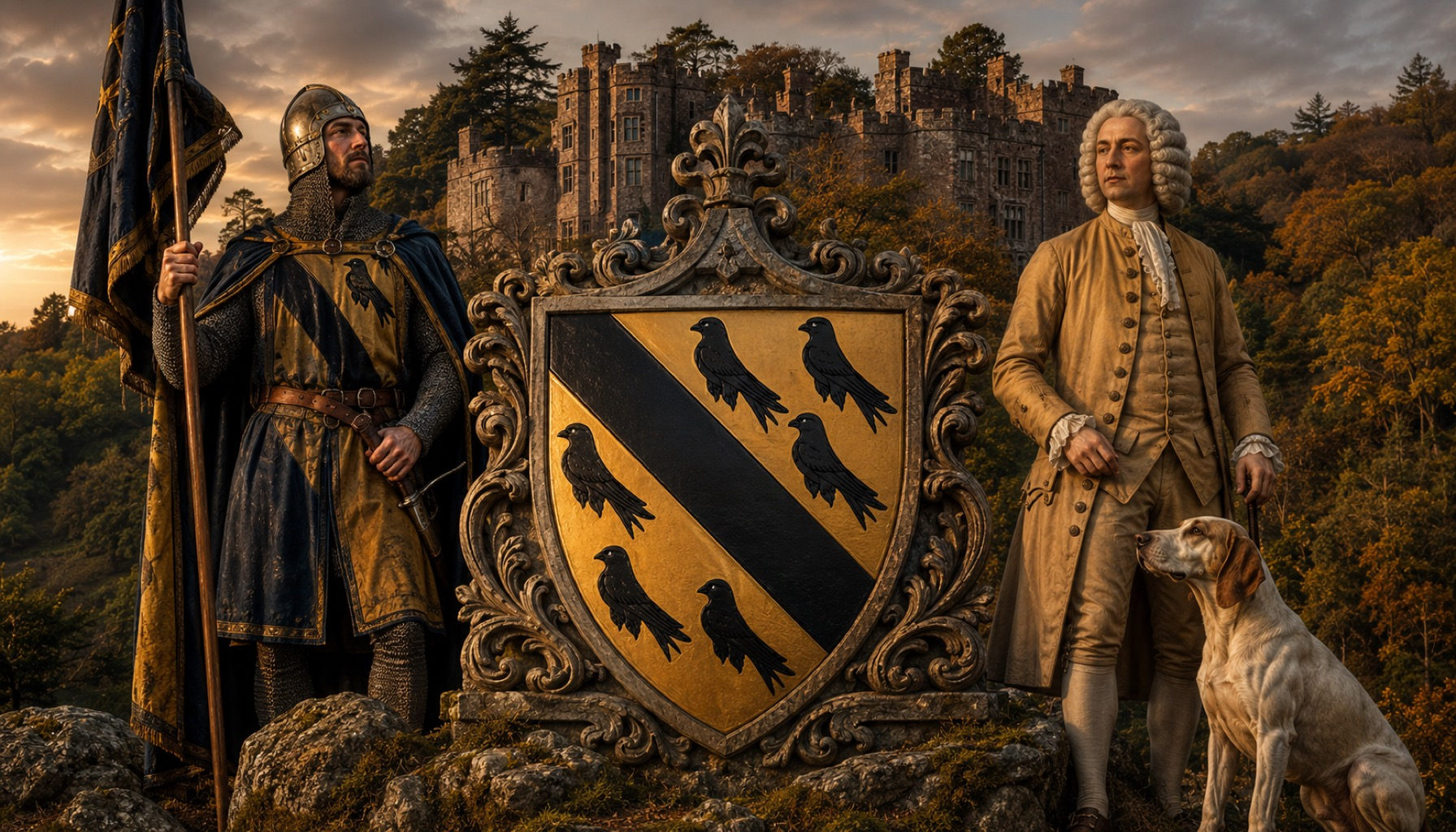
The Luttrell family was an Anglo-Norman noble and landed house whose story belongs to that great medieval movement of people, loyalties, and property that followed the Norman world into England and later into Ireland. Their name is usually traced to a Norman place-name background, fitting the pattern of families who arrived from the cross-Channel aristocratic world and then rooted themselves in local landscapes through service, marriage, and landholding. In genetic terms, the primary family haplogroup linked here is R1b1a1b1a1a2c1a4b2a1a, a lineage that sits comfortably within the broad paternal story so often seen across western Europe.
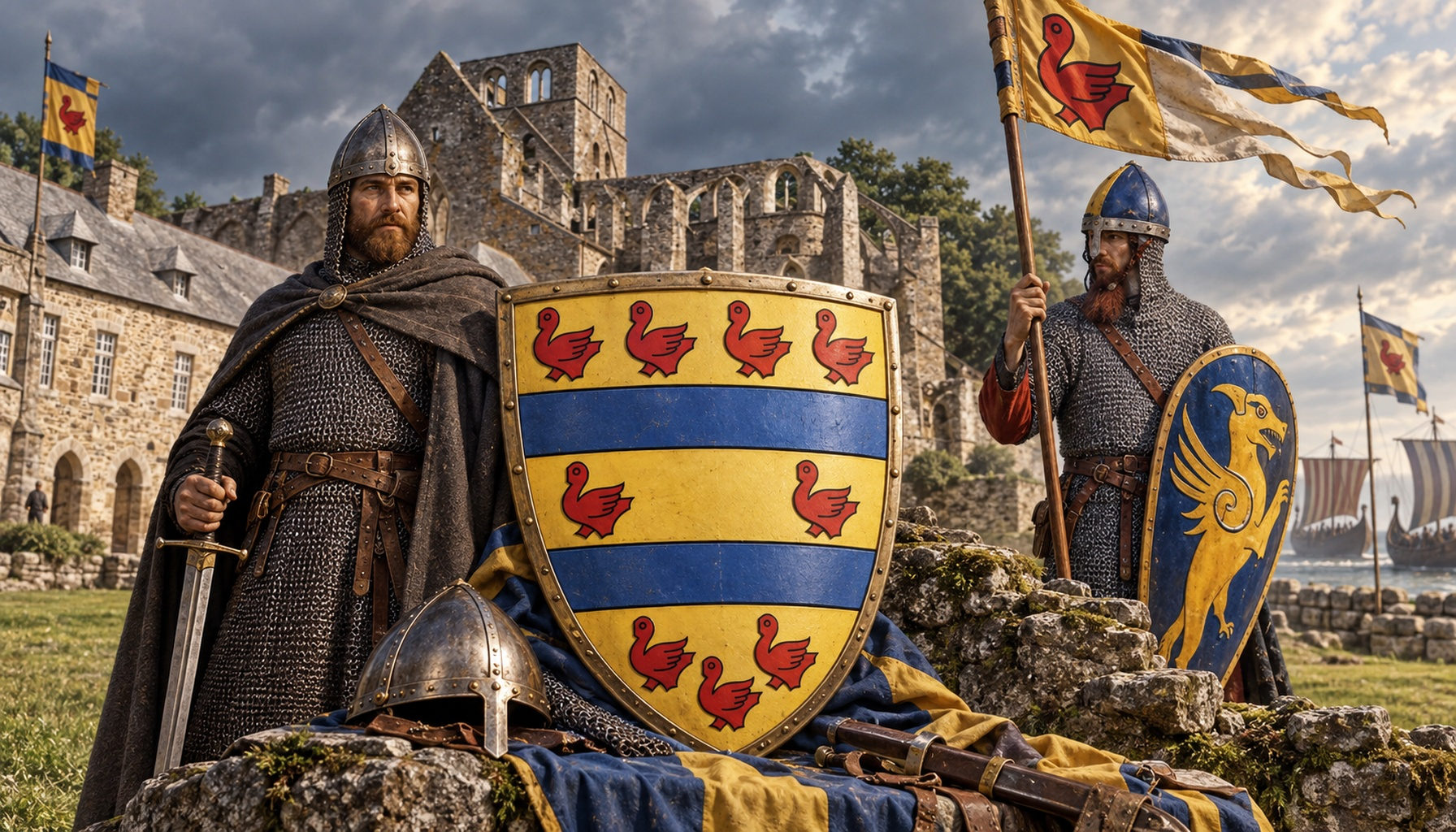
What makes House Luttrell interesting is not just that they were gentry or noble landholders, but that they exemplify the Anglo-Norman habit of turning conquest into continuity. They built reputation through military duty, estate management, public office, and a very careful sense of family identity. Over generations the family became associated with castles, manor houses, heraldry, and regional authority, while branches took root in both England and Ireland. Figures such as Sir Geoffrey de Luterel I (1160-1222) show the family in its earlier medieval form, when land, lordship, and service were tightly braided together, while Sir John Luttrell (1518-1551) represents a later Tudor-era phase, when old landed houses had to navigate a changing political world without surrendering their prestige.
Explore the House of de Courcy
If there is one place that anchors the Luttrell name in the public imagination, it is Dunster Castle in Somerset. The site itself is much older than the family, beginning as a Norman motte-and-bailey stronghold commanding the surrounding area and the approach to the Bristol Channel. Over the centuries it was altered, rebuilt, and softened from fortress into great country house without ever quite losing the sense that it began life as a place of command. The Luttrell family became closely associated with Dunster from the 14th century onward, and the castle grew into a statement of estate power, local status, and dynastic memory. Architecturally it is a mixture, which is really what one wants from such a place: medieval bones, later domestic grandeur, gardens, and the accumulated marks of adaptation rather than a frozen fairy-tale relic. Better still, it can still be visited today, which means Luttrell history is not shut away in pedigrees and parchment but remains physically present in the landscape.
Read about the Noble House of Arundell
From the DNA angle, the Luttrell-linked haplogroup R1b1a1b1a1a2c1a4b2a1a connects the family story to a much deeper and wider western European past. Related or linked ancient DNA examples include several Celtic Durotriges burials from Duropolis, Winterborne Kingston in England, such as WBK12, WBK20, WBK29, WBK41, WBK05, WBK30, WBK43, WBK06, WBK08, WBK18, and WBK191, along with later and wider examples like Medieval England Cambridge St Johns Hospital (ATP_PSN_192), Post Roman Worth Matravers Dorset (I11580), Iron Age Worlebury Somerset (I11991), Iron Age Battlesbury Bowl (I21309), Bell Beaker Upavon Wiltshire (I4950), Bronze Age Amesbury Down (I2417), Bronze Age Trumpington Meadows (I3256), Early Bronze Age England Thames (I5377), Ireland Copper Age Rathlin2B, and continental samples such as Imperial Roman Zadar Croatia (I26776), Early Medieval Belgium Sint-Truiden Groenmarkt (ST2025), Medieval Belgium outsider ST1308, Merovingian Alt-Inden (IND013), Late Roman Klosterneuburg (R10656), Late Roman Conimbriga (R10488), Gallic France Parancot (CGG023699), Bronze Age Orkney KD061, and Bronze Age Calabria GMO015. These are not proof of direct descent from any named Luttrell, of course. What they do show is that the paternal line linked to this family belongs to an old and well-travelled historical tapestry stretching from prehistoric Britain to Iron Age communities, Roman provincial worlds, and medieval populations across western Europe.
Explore Ancient DNA in Post-Roman Britain
The Luttrells are a fine example of how a family could begin in the Anglo-Norman sphere and become deeply woven into the local histories of England and Ireland, leaving behind not just names in records but buildings, offices, heraldry, and a lasting estate identity. If you have Luttrell roots, or simply want to see whether your DNA matches this family story or any of the related ancient samples, you can upload your DNA to MyTrueAncestry and explore the connections for yourself.
Comments