The Noble House of Beauclerk
– 2 min read


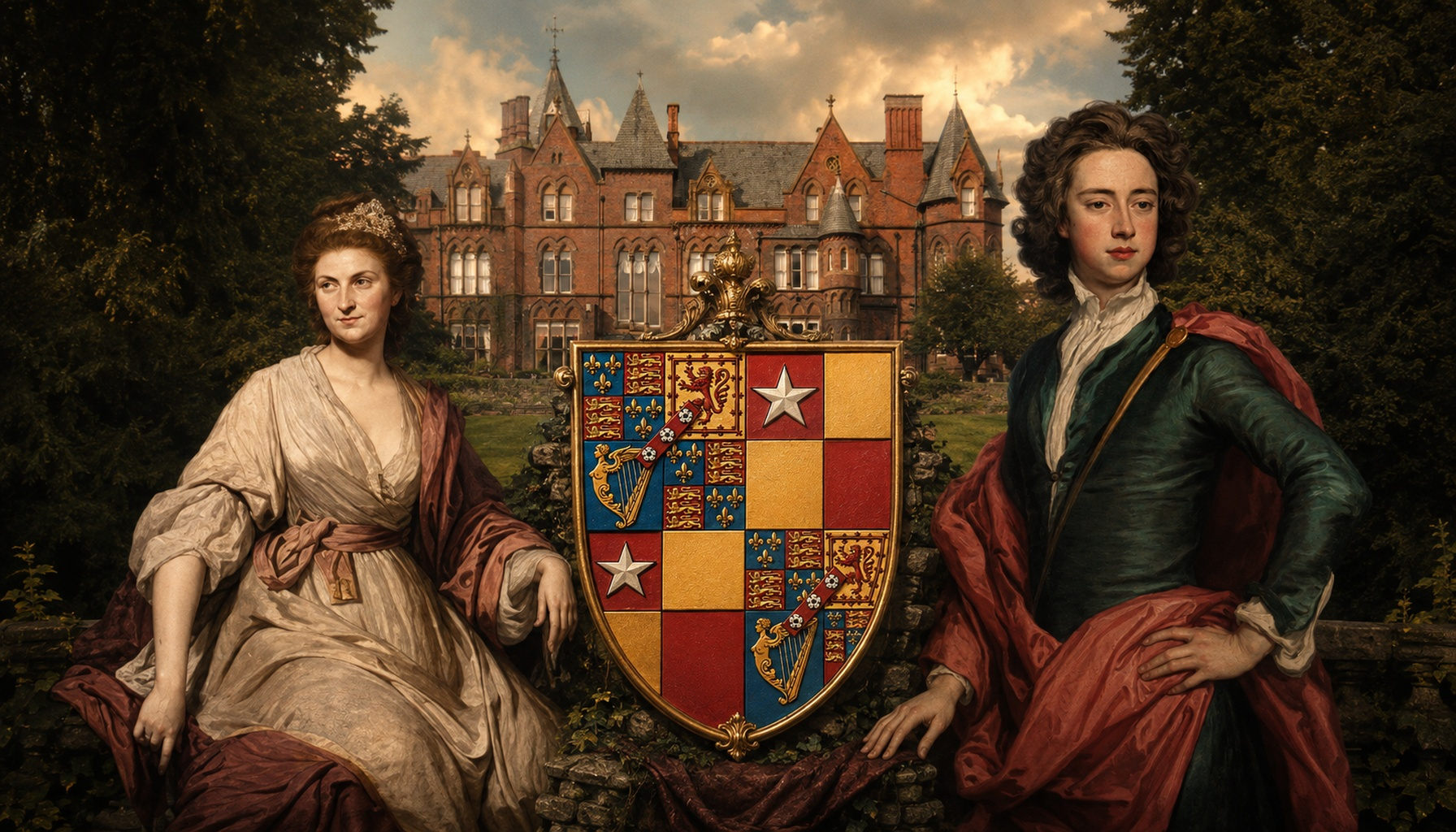
The House of Beauclerk was one of those distinctly English noble houses whose importance rested not simply on acreage and title, but on proximity to the crown itself. The family emerged from the Stuart royal world, with its prestige most famously tied to King Charles II (1630-1685) and the line founded through his son Charles Beauclerk, 1st Duke of St Albans (1670-1726). In haplogroup terms, the primary family association here is R1b1a1b1a1a2c1a1d1a, a branch linked with long-standing paternal lineages in Britain and western Europe.
What makes the Beauclerks so interesting is that they fit a very recognisable pattern in English history: royal descent translated into peerage rank, courtly authority, heraldic display, and generations of aristocratic service. Their roots lie in late 17th-century England, in the Restoration world that followed civil war, monarchy overturned, and monarchy restored. From that setting the Beauclerks became the ducal House of St Albans, building status through royal favour, marriage alliances, landed interests, and visible participation in elite society. Figures such as King Charles II, Charles Beauclerk 1st Duke of St Albans, and Aubrey Beauclerk 5th Duke of St Albans (1740-1802) help mark the family's path across court, politics, and noble reputation.
Read more about the Royal House of Stewart
A key Beauclerk location anchor is Bestwood Lodge in Nottinghamshire, north of Nottingham, on the edge of what was once Bestwood Park. The estate has deep royal associations: the medieval park was long connected with the crown, and in the 19th century the 10th Duke of St Albans commissioned a new lodge there, designed in a striking Gothic Revival style by Samuel Sanders Teulon. Later it became known as a substantial country house with landscaped grounds and a rather theatrical silhouette of towers and steep roofs, exactly the sort of building that advertises noble continuity while quietly nodding to older royal hunting landscapes. In more recent times Bestwood Lodge has had new lives beyond ducal residence, and the building and grounds remain known and accessible today, so it is reasonable to say that visitors can still see the place and experience this Beauclerk landmark in the landscape.
From a DNA perspective, the Beauclerk-associated haplogroup R1b1a1b1a1a2c1a1d1a sits within a wider paternal landscape that appears across ancient and medieval Britain. Related or linked samples include Medieval England Augustinian Friars individuals ATP_PSN_512 and ATP_PSN_520, the Celtic Parisi Iron Age England East Yorkshire Melton sample I28778, the Celtic Briton from Yarnton in Oxfordshire I21182, and the Late Bronze Age individual from Raven Scar Cave in North Yorkshire I16469. These do not prove direct descent to the Beauclerks, and should not be read that way. What they do show is that lineages connected to this branch were present in Britain across very different periods and settings, from Iron Age communities to medieval religious houses. That gives the Beauclerk story a broader time depth: not a simple family tree reaching neatly into prehistory, but a paternal signature linked to the long human history of Britain.
Explore ancient DNA in Iron Age Britain
If the Beauclerks catch your imagination, that is probably because they sit at the meeting point of monarchy, aristocracy, place, and inheritance. Upload your DNA to MyTrueAncestry and see whether you match the House of Beauclerk or any of the related ancient DNA samples linked with haplogroup R1b1a1b1a1a2c1a1d1a.
Comments