The Noble House of Askew

– 2 min read


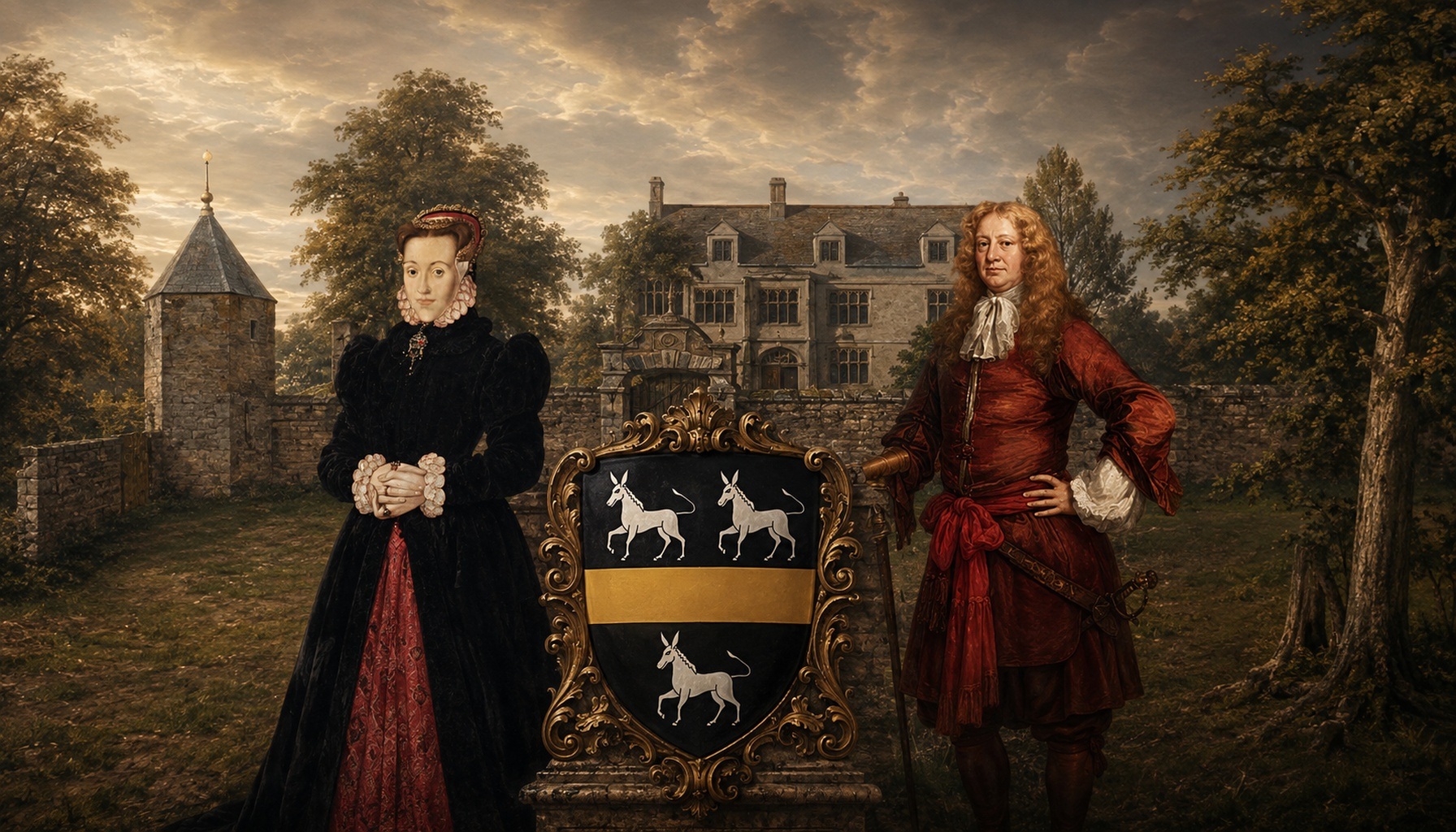
The House of Askew was an English noble and landed family rooted above all in Lincolnshire, with a long association with South Kelsey and the wider life of the county. In the old English gentry pattern, this was not a house built only on grand titles or court glitter, but on something often more durable: landholding, marriage alliances, local office, military or civic duty, heraldic identity, and a stubborn continuity of family memory from one generation to the next. The primary haplogroup linked here is I2a1b1a2b1a2a1a1a1a3b2, and as a heritage tag it offers one more way of thinking about deep paternal connections alongside the documentary record.
The surname appears in forms such as Askew and Ayscough, which is itself a small reminder of how fluid spelling could be in medieval and Tudor England. The family belongs to that historical world in which county society mattered enormously: who held land, who married whom, who served the crown locally, who sat in the web of neighborhood reputation. Among the best known figures are Sir William Askew of Stallingborough (1486-1540), Anne Askew (1521-1546), whose dramatic Protestant martyrdom made her one of the most famous women of the English Reformation, and Sir Francis Ayscough of South Kelsey (1509-1564), who helped anchor the family name in Lincolnshire's political and social landscape.
Read more about the Howard Family
South Kelsey Hall is the great location anchor for Askew heritage, because houses like this were never just buildings. They were statements of continuity, authority, and belonging. Historic England lists South Kelsey Hall as a significant historic structure, reflecting its long architectural development and its place within the village setting of South Kelsey, Lincolnshire. What survives today carries the accumulated marks of change over centuries, the sort of place where additions, rebuilding, and adaptation tell their own story about the ambitions and fortunes of the family connected to it. In other words, this is exactly what one hopes to find with an English gentry house: not a frozen relic, but a lived-in historical record in brick, stone, and plan. As a listed historic site, it can still be seen and visited from the outside at minimum, and anyone interested should check current access arrangements before making a special trip.
Explore the House of Yarborough
From the DNA side, the Askew heritage tag is linked with haplogroup I2a1b1a2b1a2a1a1a1a3b2. That does not prove direct descent from any ancient excavated individual, and it is important not to pretend otherwise. What it does do is place the family within a broader map of related paternal lines found in ancient samples across northern Europe. Among the linked or related examples are the Merovingian Period Frankish sample from Moemlingen, Germany, Mln13; Jute Early Roman Era Denmark Jutland Bog War Alken Enge samples CGG019201 and CGG019212; the Danii tribe sample from Denmark Forevejlegard, CGG107532; and a Viking Age sample from Oland, Sweden, VK348. Taken together, these samples sketch a deep-time backdrop of Germanic and Scandinavian-associated male lineages that helps illuminate the wider ancestral world from which later English families ultimately emerged.
If you carry the Askew or Ayscough name, have roots in Lincolnshire, or simply want to see whether your DNA connects with the House of Askew or with related ancient DNA samples tied to haplogroup I2a1b1a2b1a2a1a1a1a3b2, you can upload your DNA and explore the evidence for yourself at MyTrueAncestry.



Comments